.webp&w=384&q=75)

Loading, please wait...
Loading, please wait...
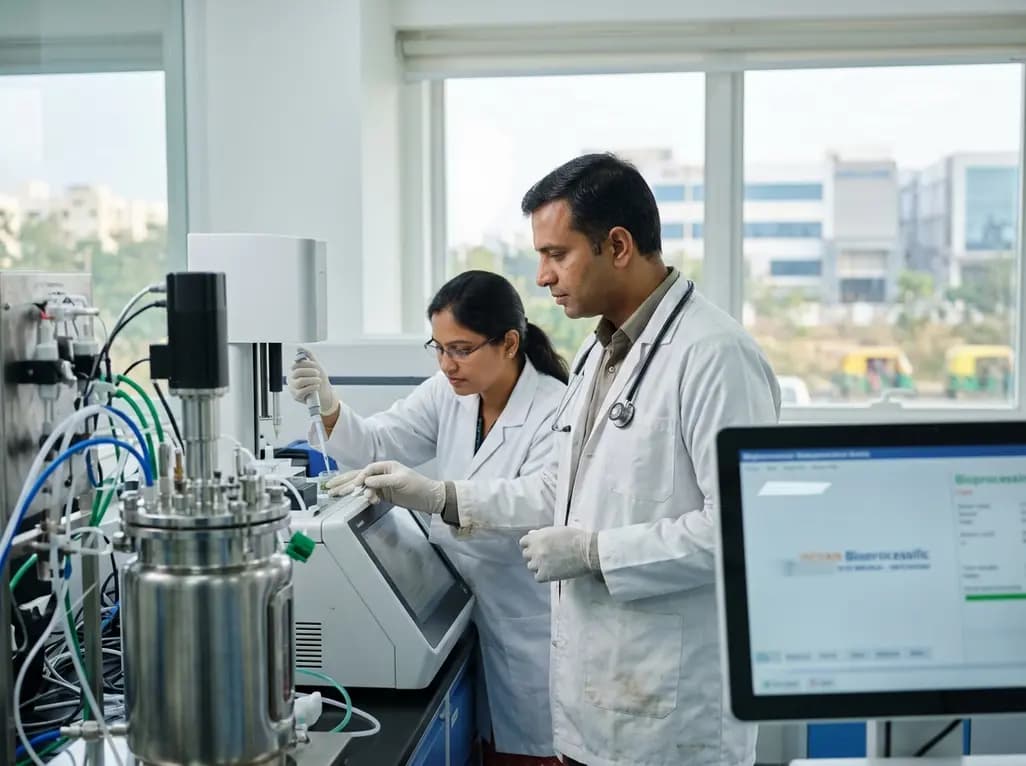
The global life sciences landscape is witnessing a notable transition as leading scientific equipment manufacturers expand their footprint in developing hubs. Consequently, biopharmaceutical innovation in India is rapidly moving to the forefront of international attention. Thermo Fisher Scientific, a global leader in high-end laboratory equipment and automation systems, is significantly accelerating its capital commitments across the country. This expansion directly addresses the increasing focus of domestic pharmaceutical manufacturers on developing complex biologics, novel therapeutics, and affordable biosimilars. Moreover, India has achieved the fastest annual growth rate within the Asia-Pacific and Middle East region for lab technologies, creating sustained momentum. Industry leaders expect double-digit financial returns over the next five years, which underlines the strategic importance of the subcontinent. As pharmaceutical enterprises shift their operational focus from basic generic manufacturing toward advanced biotechnology, cutting-edge analytical infrastructure plays a vital role in ensuring stringent product quality, safety, and regulatory compliance.
Domestic pharmaceutical companies are actively redefining their research priorities to meet sophisticated global healthcare needs. Therefore, biopharmaceutical innovation in India is receiving substantial backing from multinational technology suppliers. Thermo Fisher Scientific is channeling resources into advanced automation, analytical solutions, and characterisation systems that empower local researchers. Industry executives note that both mature biopharma leaders and dynamic emerging startups are advancing into biologics development. This transition is further supported by proactive governmental initiatives and progressive regulatory frameworks designed to streamline clinical trial pipelines. Consequently, researchers can compress product development cycles while upholding rigorous scientific standards. In addition, global pharmaceutical suppliers recognize that Indian research hubs offer unmatched operational agility and extensive technical talent. As private equity and venture capital investments in life sciences continue to climb, modern laboratory ecosystems bridge critical infrastructure gaps. By equipping local laboratories with world-class bioreactors and automation platforms, technology providers help domestic manufacturers transition seamlessly from early discovery to commercial manufacturing. Ultimately, these targeted investments strengthen India's reputation as a competitive life sciences engine.
Modern biologic therapies require intricate molecular validation to ensure therapeutic equivalence and immunological safety. Hence, analytical instrumentation such as high-resolution mass spectrometers, liquid chromatography systems, and automated bio-analyzers has become essential. Tony Acciarito, regional president at Thermo Fisher Scientific, highlighted that protein characterisation technologies and advanced bioprocessing equipment are witnessing robust commercial adoption across Indian facilities. Because therapeutic proteins possess complex tertiary structures, precise analytical verification is indispensable during clone selection and downstream purification. Furthermore, automated bioprocessing systems reduce human error and minimize batch variations, which directly enhances batch-to-batch consistency. Homegrown biotechnology companies are adopting single-use bioreactor systems to achieve rapid turnaround times and prevent cross-contamination. This technological evolution allows developers to evaluate cellular kinetics and glycosylation patterns with remarkable accuracy. As analytical workflows become increasingly automated, Indian laboratories can adhere to stringent data integrity standards mandated by global regulatory agencies. Consequently, modern analytical platforms ensure that domestic biotherapeutics fulfill international pharmacopoeial benchmarks without costly operational delays.
Biosimilar therapeutics represent a crucial avenue for reducing worldwide healthcare costs and improving patient access to lifesaving treatments. Recent data from a comprehensive Boston Consulting Group report titled 'Built on Scale, Turning to Science' illustrates this remarkable trajectory. India's biosimilar exports, currently valued at approximately $800 million, are projected to reach $4.2 billion by 2030. Homegrown manufacturers are specifically targeting highly regulated markets such as the United States and the European Union. However, penetrating mature pharmaceutical markets requires exhaustive clinical comparability data, advanced bioassays, and comprehensive pharmacokinetic evaluations. Therefore, access to state-of-the-art analytical equipment is vital for validating structural similarity between biosimilars and reference biologics. As major reference biologic patents expire worldwide over the coming decade, Indian drugmakers are strategically positioning themselves to bridge global supply shortages. Furthermore, lowering production expenditures through automated bioprocessing translates into substantial price reductions for chronic therapies, including monoclonal antibodies for oncology and autoimmune disorders. In turn, these manufacturing advancements significantly enhance equitable access to specialized biological therapies worldwide.
Bridging the gap between laboratory research and commercial production requires not only advanced hardware but also specialized technical expertise. To address this necessity, Thermo Fisher Scientific unveiled a state-of-the-art Bioprocess Design Centre and Customer Experience Centre in Hyderabad's Genome Valley. Developed in partnership with state governmental bodies, this dedicated facility serves as an advanced scale-up platform for biopharmaceutical engineers. The center provides hands-on exposure to single-use bioprocessing workflows, analytical testing protocols, and upstream cell cultivation techniques. Consequently, over two hundred scientists and bioprocess specialists receive hands-on training annually, thereby expanding the local talent pool. Srinath Venkatesh, managing director of Thermo Fisher Scientific India, emphasized that Indian biotech startups demonstrate growing maturity when supported by suitable infrastructure. Moreover, collaborative facilities allow small-scale enterprises to prototype and validate their bioprocesses without incurring prohibitive initial capital investments. By offering direct access to integrated workflows spanning gene therapy, proteomics, and analytical science, these innovation hubs accelerate the translation of academic research into commercially viable clinical therapies.
From a clinician's viewpoint, the rapid modernization of domestic bioprocessing infrastructure carries direct benefits for daily patient management. First, enhanced characterisation tools guarantee that biosimilars and novel biologics exhibit reproducible safety and efficacy profiles. Because biological molecules are highly sensitive to manufacturing variations, sophisticated quality monitoring systems mitigate the risk of adverse immunogenic reactions. In addition, expanded domestic production capabilities safeguard the steady supply of vital therapies, preventing acute drug shortages in critical care and oncology units. Clinicians can confidently prescribe affordable domestic biosimilar alternatives for indications such as rheumatoid arthritis, inflammatory bowel disease, and metastatic malignancies. Furthermore, the growth of local R&D ecosystems fosters the development of therapies tailored specifically to domestic epidemiological priorities. As Indian pharmaceutical companies build proprietary pipelines alongside biosimilars, patients gain earlier access to novel therapeutic modalities. Ultimately, strengthening upstream and downstream laboratory capabilities establishes a resilient healthcare ecosystem that balances rigorous clinical safety, broad availability, and economic viability.
Q1: Why are multinational laboratory equipment makers increasing investments in India?
Multinational companies are expanding investments in India because domestic pharmaceutical manufacturers are aggressively advancing from generic medicines into complex biologics and biosimilars. India represents the fastest-growing market in the Asia-Pacific and Middle East region for life sciences equipment. Consequently, technology providers are establishing local customer experience hubs and scaling infrastructure to meet rising demands for automated bioprocessing, analytical characterisation, and regulatory compliance solutions.
Q2: What is driving the projected growth of India's biosimilar export market?
India's biosimilar exports are projected to surge from $800 million to $4.2 billion by 2030 due to patent expirations on major global biologics, cost-effective manufacturing capabilities, and strategic expansion into regulated Western markets. Furthermore, increased adoption of high-precision protein characterisation tools and automated single-use bioprocessing systems enables Indian manufacturers to meet stringent international quality and bioequivalence standards required by major regulatory agencies.
Q3: How do advanced bioprocessing design centers benefit Indian healthcare professionals and patients?
Advanced bioprocessing facilities provide hands-on training for hundreds of scientists, enabling rigorous quality control, minimal batch variation, and reduced immunogenicity risks for biological drugs. For clinicians and patients, this infrastructure ensures a steady supply of affordable, high-quality biosimilars for severe chronic diseases like cancer and autoimmune conditions, while accelerating local research into novel therapeutics tailored to regional clinical needs.
Disclaimer: This content is for informational and educational purposes only. It does not constitute medical advice or replace professional judgment. Refer to the latest local and national guidelines for clinical practice.
References

Read summarized clinical updates, watch expert medical content, and earn CME certifications right from your smartphone.
Open your smartphone camera to scan and install.





Thermo Fisher Scientific is stepping up investments across India, driven by the rapid growth of domestic biopharmaceutical innovation and surging demand for biosimilars. Advanced bioprocessing platforms and local training facilities are accelerating drug development pipelines for complex therapies.
last month

A clinical report details delayed metal hypersensitivity following laparoscopic surgery, manifesting as progressive neuropathy and autonomic failure. Surgical clip removal and kink correction stabilized symptoms, underscoring the necessity of diagnostic vigilance when standard workups remain negative.
Today
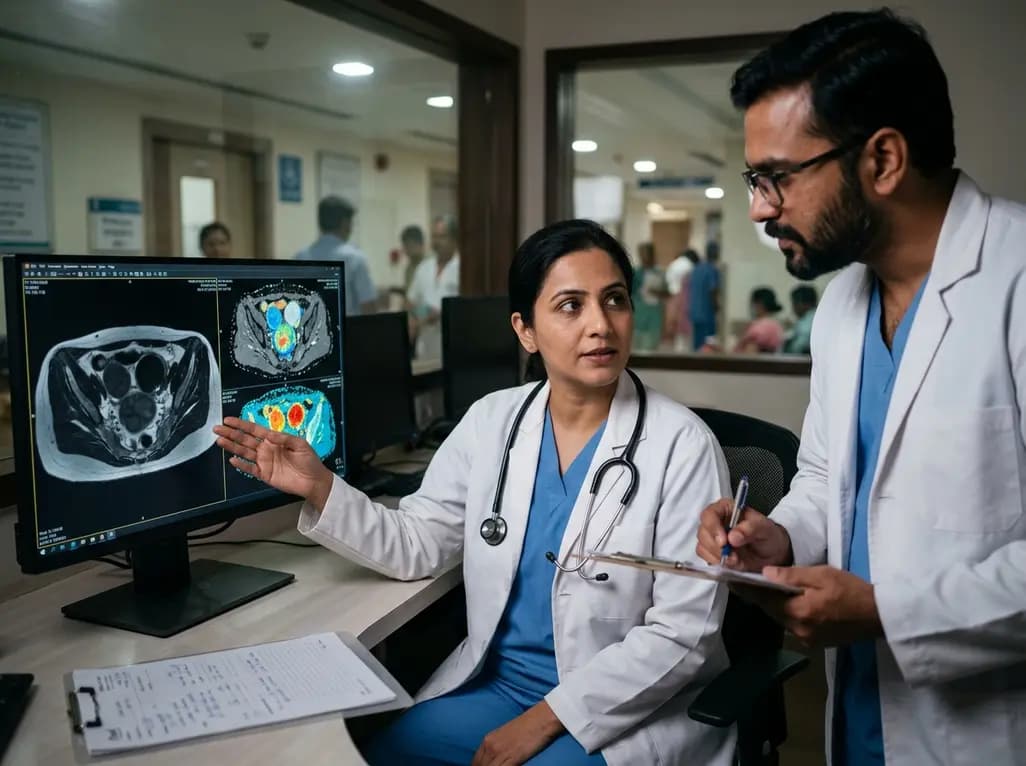
A multiparametric MRI approach combining quantitative T2 shading, apparent diffusion coefficient (ADC) measurements, and morphological signs provides superior diagnostic accuracy over subjective evaluation to differentiate ovarian endometriomas from benign hemorrhagic cysts.
Today
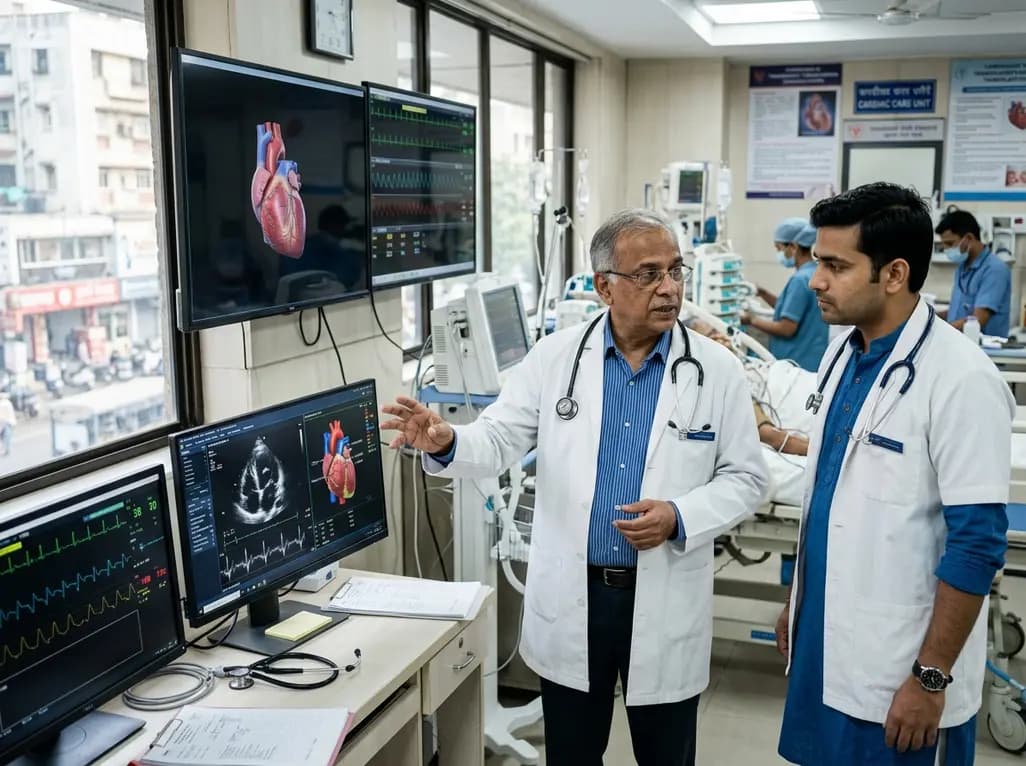
A landmark case report reveals a donor heart beating for a century in a 63-year-old recipient, challenging conventional age limits in cardiac transplantation and offering critical lessons on organ longevity, donor selection, and long-term graft survival.
Today
A randomized trial compared myofascial release and dry needling for chondromalacia patellae in adult females. While both reduced knee pain, myofascial release combined with exercise produced superior quadriceps strength and improved the hamstring-to-quadriceps torque ratio.
Today
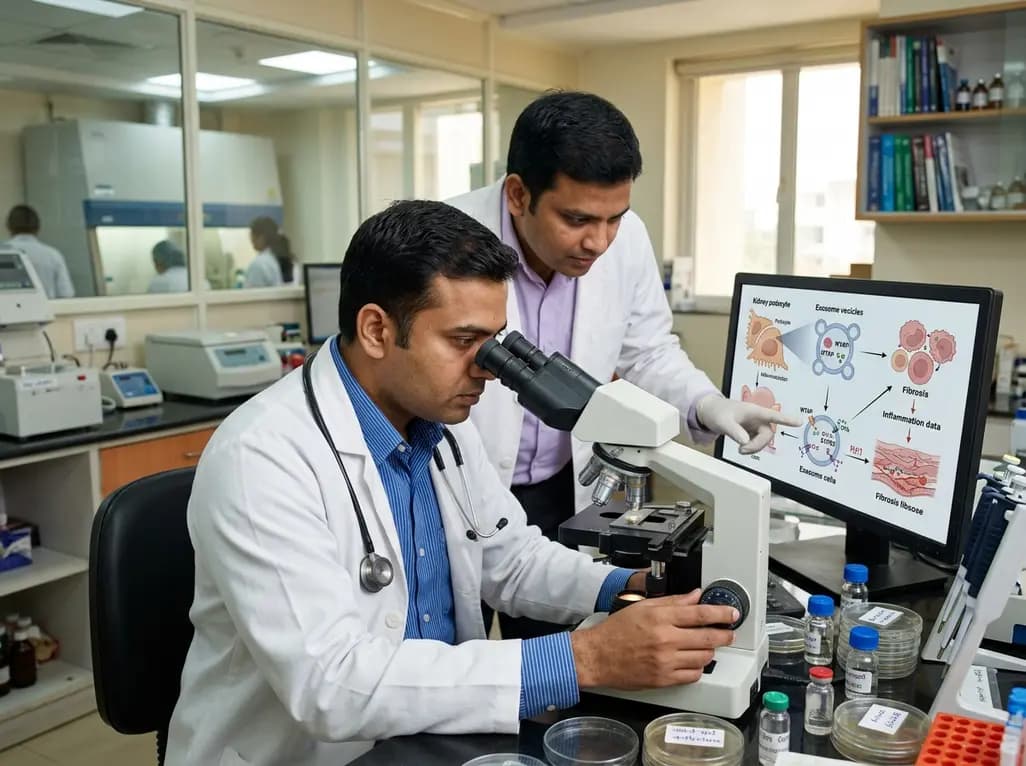
New research reveals that M1 macrophage-derived exosomes aggravate diabetic nephropathy by transferring WTAP to stabilize S1PR2 mRNA. Silencing WTAP in these vesicles attenuates endothelial injury and renal fibrosis, pointing toward innovative nanomedicine therapies.
Yesterday
