.webp&w=384&q=75)

Loading, please wait...
Loading, please wait...
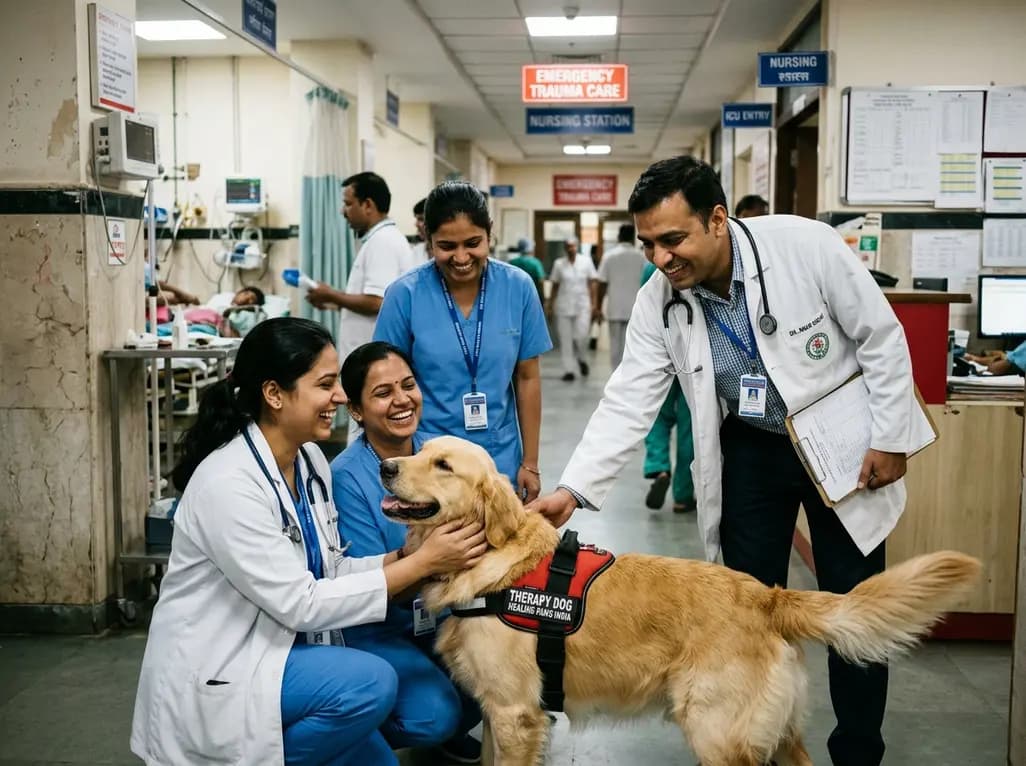
Emergency departments represent some of the most demanding clinical work environments in modern healthcare. Clinicians, triage nurses, and administrative staff routinely navigate high patient volumes, severe clinical trauma, and rapid diagnostic dilemmas. Consequently, chronic occupational strain contributes significantly to emotional exhaustion and professional burnout among acute care personnel. To address this persistent crisis, healthcare systems are actively exploring innovative wellbeing strategies. Among these novel approaches, structured therapy dog visits have emerged as an accessible and compassionate supportive intervention. Animal-assisted encounters consistently demonstrate psychological benefits for hospitalized patients across various clinical settings. However, clinical researchers have only recently begun investigating how these interactions influence acute care clinicians. A recent nonrandomized interventional study investigated the physiological and perceived stress responses of emergency staff encountering trained therapy dogs. By evaluating both biological biomarkers and subjective reports, the trial provides critical insights into workplace wellness. Ultimately, understanding these complex dynamics allows hospital administrators and emergency leadership to design targeted, evidence-based wellness programs.
Emergency department personnel operate under continuous sympathetic nervous system activation throughout typical clinical shifts. Healthcare workers frequently encounter unpredictable patient surges, critical resuscitations, and occasional workplace aggression. Consequently, this relentless pace elevates baseline stress hormones and destabilizes autonomic cardiovascular regulation. Over time, persistent hypercortisolemia and elevated blood pressure impair cognitive processing, situational awareness, and clinical empathy. Furthermore, chronic occupational distress increases absenteeism and accelerates career turnover among skilled emergency clinicians. Hospital administrators traditionally implemented educational seminars or passive relaxation modules to mitigate these systemic challenges. Nevertheless, many healthcare professionals find it difficult to engage in conventional stress-reduction techniques during active clinical duties. In contrast, brief animal-assisted interventions provide an immediate, experiential pause within demanding workflows. By interrupting rapid cognitive cycles, animal interactions encourage spontaneous mindfulness and emotional decompression. Researchers therefore seek robust objective evidence to quantify the physiological impacts of canine visits during active shifts. Identifying reliable biomarkers helps clinicians understand whether perceived psychological relief translates directly into systemic autonomic recovery.
The recent interventional trial implemented a pragmatic, descriptive protocol to evaluate acute stress responses among emergency personnel. Specifically, the study enrolled seventy-six healthcare team members across patient-facing and nonpatient-facing roles, documenting one hundred distinct therapy dog visits. Participants included attending physicians, resident doctors, bedside nurses, triage officers, and administrative support personnel. Investigators collected objective physiological markers alongside subjective psychological ratings immediately before and immediately after each animal encounter. To assess endocrine stress pathways, the research team measured salivary cortisol concentrations across standardized collection intervals. Additionally, investigators recorded pre-intervention and post-intervention blood pressure readings to evaluate acute hemodynamic alterations. Participants also completed validated perceived stress instruments and submitted descriptive qualitative feedback detailing their momentary emotional state. This mixed-methods design captured both quantifiable biological shifts and nuanced psychological experiences in real time. Moreover, the study design preserved normal operational workflows, allowing staff to engage naturally during brief clinical pauses. By including non-clinical staff alongside frontline medical providers, the trial generated a comprehensive assessment of hospital-wide occupational stress relief.
The trial demonstrated striking disparities between subjective psychological experiences and objective endocrine biomarkers. Most notably, participants reported statistically significant reductions in perceived stress scores following brief canine interactions. Staff members described feeling markedly calmer, emotionally refreshed, and more resilient when resuming patient care duties. Qualitative responses highlighted feelings of joy, reassurance, and shared camaraderie among multidisciplinary team members during the visits. In contrast, overall pre-to-post changes in salivary cortisol levels did not achieve statistical significance across the cohort. Several physiological variables likely explain this dissociation between subjective relief and stable hormonal measurements. Salivary cortisol reflects delayed endocrine kinetics, typically peaking fifteen to thirty minutes following psychological stress or relaxation. Furthermore, the acute sensory stimulation of interacting with an energetic therapy dog may maintain baseline physiological arousal. Autonomic parameters such as blood pressure showed modest, stabilizing trends without drastic hypotension or bradycardia. Consequently, these findings indicate that short canine visits deliver rapid cognitive and emotional decompression without abruptly suppressing necessary physiological vigilance.
Integrating animal-assisted modalities into fast-paced emergency settings requires structured operational protocols and rigorous multidisciplinary planning. First, hospital infection control committees must establish stringent hygiene standards to prevent pathogen transmission in sensitive areas. Handlers must sanitize canine coats, maintain current veterinary health certifications, and provide dedicated hand hygiene stations. Furthermore, emergency leadership should designate specific quiet zones or staff break areas for animal interactions. This spatial segregation prevents canine encounters from disrupting emergency resuscitation bays, sterile procedure rooms, or patient transport corridors. Additionally, department managers must respect staff preferences, accommodating individuals with severe pet allergies or animal phobias. Volunteer canine teams should undergo specialized behavioral screening to ensure calm temperaments amid loud alarms and sirens. When executed systematically, brief therapy sessions require minimal financial investment while generating substantial morale improvements. Moreover, regular scheduling enables healthcare workers to anticipate these supportive pauses during exhausting shift rotations. Ultimately, practical implementation bridges the gap between scientific evidence and tangible workplace wellness in high-stress medical environments.
Healthcare organizations increasingly recognize that clinician burnout demands multifaceted, institutional wellness solutions rather than isolated self-care recommendations. While animal-assisted programs offer meaningful psychological respite, institutions must pair them with broader systemic reforms. For example, hospital leaders should address unmanageable patient-to-nurse ratios, excessive electronic medical record burdens, and inadequate rest periods. When deployed alongside comprehensive organizational reforms, canine visits serve as a visible signal of institutional empathy. These brief interactions foster social connection among colleagues, dismantling departmental silos and encouraging open discussions about mental health. Furthermore, future research must examine optimal intervention duration, encounter frequency, and long-term retention benefits across multi-center healthcare cohorts. Tracking longitudinal metrics will clarify whether recurrent animal therapy reduces cumulative burn-out scores and clinical turnover over multi-year periods. In the interim, acute care departments can confidently adopt canine programs as safe, accessible adjuncts to staff wellness. By prioritizing holistic healthcare provider support, medical institutions ultimately cultivate safer, more compassionate environments for clinical staff and patients alike.
Research shows that brief therapy dog visits significantly lower subjective perceived stress without immediately altering salivary cortisol concentrations. Cortisol exhibits delayed endocrine kinetics, meaning brief interactions may not immediately shift systemic hormone levels during active shifts. However, clinicians experience profound psychological relief, enhanced mood, and emotional decompression, demonstrating that meaningful cognitive relaxation occurs independently of acute fluctuations in salivary cortisol biomarkers.
Yes, animal-assisted interventions can operate safely within acute care settings when hospitals implement strict infection control and operational guidelines. Certified therapy dogs undergo thorough temperament testing and veterinary health evaluations before entering clinical areas. Furthermore, establishing designated staff break zones and enforcing strict hand hygiene protocols prevents contamination, ensuring that animal visits do not interfere with sterile clinical procedures or emergency resuscitations.
Healthcare professionals interacting with therapy dogs consistently report immediate reductions in perceived workplace stress and emotional exhaustion. Participants describe enhanced mood, feelings of comfort, and renewed mental clarity during challenging clinical shifts. Additionally, canine visits encourage positive social interactions and shared camaraderie among multidisciplinary team members, fostering a supportive work environment and mitigating the daily psychological toll of emergency medicine.
Disclaimer: This content is for informational and educational purposes only. It is not intended to provide medical advice, diagnosis, or treatment recommendations. Clinical decisions should always be made by qualified healthcare professionals based on individual patient assessments and established medical standards. Refer to the latest local and national guidelines for clinical practice.
References

Read summarized clinical updates, watch expert medical content, and earn CME certifications right from your smartphone.
Open your smartphone camera to scan and install.





A recent interventional study evaluates how therapy dog visits alleviate perceived stress and impact physiological markers among emergency department staff.
4 weeks back

This clinical review examines the dangerous intersection of climate change and antimicrobial resistance (AMR). It highlights thermal selection, altered transmission pathways, and the imperative for One Health and Planetary Health adaptation frameworks to preserve therapeutic efficacy.
Today
Discover the crucial distinctions between mesonephric and mesonephric-like proliferations of the female genital tract. Learn the key histomorphologic, immunohistochemical, and molecular differences essential for accurate diagnosis and clinical management.
Today
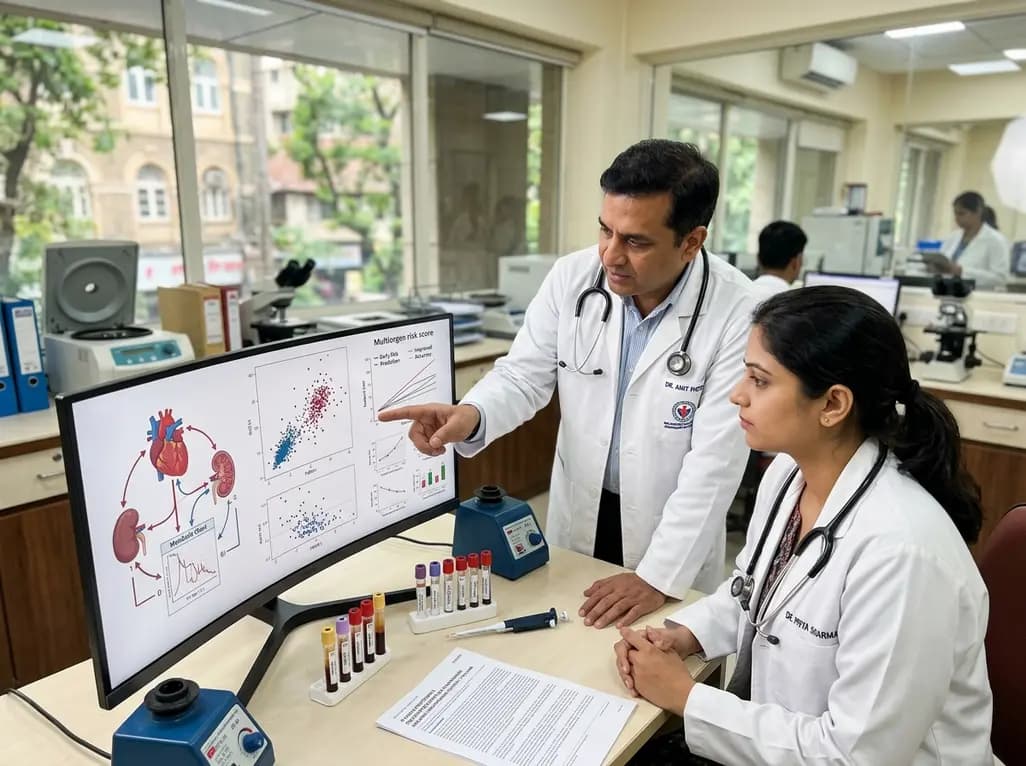
A large UK Biobank study reveals that plasma proteomic signatures capture preclinical organ damage and improve multiorgan risk prediction across early CKM syndrome stages 0 to 2 beyond traditional PREVENT clinical models.
Today

A narrative review investigates whether the articularis genus muscle functions as an independent anatomical entity or blends with the vastus intermedius. We evaluate its morphology, role in retracting the suprapatellar bursa, and direct clinical significance in anterior knee pain and arthroplasty.
Today

A Bayesian multilevel meta-analysis reveals that aerobic training combined with moderate carbohydrate restriction modestly lowers HbA1c in type 2 diabetes. However, sparse data and very low certainty leave incremental benefits over exercise or diet alone unproven, highlighting the need for individualized care.
Today
