.webp&w=384&q=75)

Loading, please wait...
Loading, please wait...
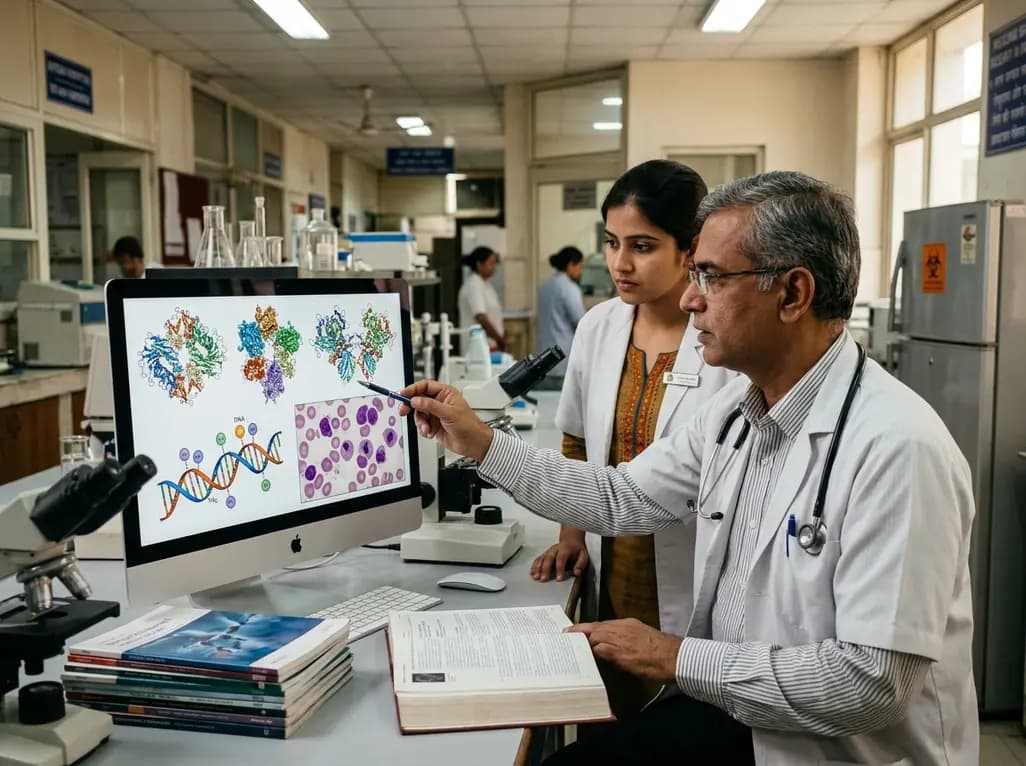
Epigenetic homeostasis remains a cornerstone of cellular identity and developmental precision. Within this framework, Ten-Eleven Translocation (TET) proteins function as pivotal regulators of DNA methylation states. These enzymes are essential for the dynamic removal of methyl groups from cytosine bases, a process that ensures gene expression profiles remain appropriate for specific cell types. Consequently, any disruption in TET protein regulation can lead to profound clinical consequences, ranging from developmental abnormalities to the onset of aggressive hematologic malignancies. Researchers have long recognized that TET2, a prominent member of this family, frequently undergoes mutation in various blood disorders. These mutations often result in a loss of function, leading to DNA hypermethylation and the silencing of tumor-suppressor genes. However, the regulatory landscape of these enzymes extends far beyond their primary catalytic activity. Recent insights have revealed that these proteins do not work in isolation. Instead, they operate within a highly organized network of protein partners. This complex interactome provides the necessary spatial and temporal control for DNA demethylation. Understanding these molecular interactions is crucial for clinicians who manage patients with myeloid and lymphoid neoplasms. By mapping the regulatory pathways of TET enzymes, we gain a clearer picture of how epigenetic stability is maintained and how its failure drives disease progression in the hematopoietic system.
TET enzymes perform a unique biochemical feat by catalyzing the iterative oxidation of 5-methylcytosine (5mC). This process begins with the conversion of 5mC into 5-hydroxymethylcytosine (5hmC). This intermediate is not merely a transient state but serves as an important epigenetic mark in its own right. Subsequently, TET proteins further oxidize 5hmC into 5-formylcytosine (5fC) and 5-carboxylcytosine (5caC). These higher-order oxidized derivatives are eventually recognized and removed by the base excision repair machinery. This pathway effectively restores an unmethylated cytosine to the DNA strand, facilitating active gene transcription. Furthermore, the efficiency of this pathway depends heavily on the availability of specific cofactors and the precise recruitment of TET enzymes to genomic targets. Specifically, the presence of vitamin C and alpha-ketoglutarate is required for optimal catalytic performance. Beyond this enzymatic role, TET proteins also participate in non-enzymatic functions that influence chromatin architecture. They often recruit other chromatin-modifying enzymes to specific loci, thereby coordinating a multi-layered epigenetic response. This dual functionality highlights why TET protein regulation is so complex and why its dysregulation is so damaging. When the balance of iterative oxidation is lost, cells may accumulate abnormal methylation patterns that promote uncontrolled proliferation and block normal differentiation pathways, particularly within the bone marrow microenvironment.
A major breakthrough in the field of epigenetics is the discovery of the TOPD complex. This higher-order regulatory unit stands for TET-OGT-PROSER1-DBHS. This complex represents a sophisticated assembly that integrates multiple regulatory signals to control TET function. For years, scientists studied the interactions between TET proteins and O-Linked N-acetylglucosamine transferase (OGT) or Drosophila behavior/human splicing (DBHS) proteins independently. However, recent findings demonstrate that these components actually form a stable and functional unit. The TOPD complex ensures that TET protein regulation is integrated with the cell's metabolic status. For instance, OGT serves as a nutrient sensor, modifying proteins with O-GlcNAc based on glucose availability. By linking OGT to TET proteins, the cell can adjust its DNA methylation patterns in response to environmental changes. Moreover, the DBHS protein family members, such as SFPQ and NONO, provide a structural framework that aids in the localization of the complex within the nucleus. This cooperative binding suggests that the loss of any single component could destabilize the entire regulatory apparatus. For hematologists, this complex offers a new perspective on why some patients develop disease even in the absence of direct TET2 mutations. Alterations in other members of the TOPD complex may produce similar epigenetic phenotypes.
Proline and serine-rich protein 1, known as PROSER1, has emerged as a central figure in the TOPD complex. It functions primarily as a molecular scaffold that bridges TET proteins with OGT and DBHS family members. Without PROSER1, the assembly of the TOPD complex becomes inefficient, leading to a significant reduction in TET-mediated DNA demethylation. Interestingly, PROSER1 ensures that TET proteins are correctly positioned to interact with their substrates. This spatial control is vital during embryogenesis and hematopoietic development, where precise timing of gene activation is mandatory. Furthermore, PROSER1 appears to protect TET proteins from premature degradation, thereby maintaining a steady pool of active enzymes within the cell. Research indicates that when PROSER1 levels are depleted, there is a corresponding decrease in 5hmC levels across the genome. This observation underscores the importance of PROSER1 in the overarching scheme of TET protein regulation. In the context of hematology, investigating PROSER1 expression may provide insights into the mechanisms of clonal hematopoiesis. If PROSER1 function is compromised, the resulting epigenetic instability could predispose hematopoietic stem cells to malignant transformation. Therefore, the study of PROSER1 is not just a biochemical exercise; it is a search for the fundamental drivers of blood-based pathologies.
The clinical relevance of TET protein regulation is most evident in the study of hematologic malignancies. Mutations in TET2 are hallmark features of myelodysplastic syndromes (MDS), acute myeloid leukemia (AML), and chronic myelomonocytic leukemia (CMML). These mutations typically occur early in the disease process, often during the stage of clonal hematopoiesis of indeterminate potential (CHIP). When TET2 function is lost, the hematopoietic stem cell compartment undergoes expansion, but the cells fail to differentiate properly. This differentiation block is a direct result of the inability to demethylate key lineage-specific promoters. Furthermore, the discovery of the TOPD complex suggests that the mutational landscape of these diseases may be broader than previously thought. Patients who are wild-type for TET2 might still harbor mutations in PROSER1 or OGT that disrupt the TOPD complex. Consequently, clinical laboratories may need to expand their sequencing panels to include these newly identified regulatory factors. Moreover, understanding the TOPD complex opens doors for novel therapeutic strategies. Small molecules that stabilize the interaction between PROSER1 and TET2 could potentially restore enzymatic activity in cells with partial loss of function. Such targeted therapies would aim to reverse the hypermethylation phenotype, allowing malignant cells to resume normal differentiation. This approach represents a significant shift toward precision epigenetics in oncology.
Looking ahead, the study of TET protein regulation via the TOPD complex will likely transform our approach to treating epigenetic disorders. Future research must focus on the structural biology of the TOPD complex to identify drug-accessible pockets. Furthermore, clinicians should monitor how different mutations within the complex affect patient responses to hypomethylating agents like azacitidine or decitabine. It is possible that the presence of specific TOPD alterations could serve as a predictive biomarker for treatment efficacy. Additionally, the role of this complex in developmental syndromes remains an active area of investigation. Since TET proteins are vital for early embryonic patterning, defects in the TOPD assembly could explain various congenital malformations. The synergy between metabolic signaling through OGT and epigenetic modification through TET proteins also suggests that dietary interventions might influence disease outcomes. In summary, the integration of PROSER1 and the TOPD complex into our understanding of hematology provides a more holistic view of cellular regulation. As we move closer to the era of personalized medicine, these molecular insights will be indispensable for developing next-generation diagnostics and therapies. The goal remains to achieve precise control over the epigenome, ultimately improving the survival and quality of life for patients with hematologic and developmental conditions.
The TOPD complex is a multi-protein regulatory unit composed of TET proteins, OGT, PROSER1, and DBHS family members. It is critical because it coordinates the spatial and metabolic regulation of DNA demethylation. By bringing these diverse proteins together, the cell ensures that TET enzymes are correctly targeted and stabilized. This coordination is essential for maintaining epigenetic homeostasis and preventing the abnormal gene silencing that leads to cancer and developmental disorders.
PROSER1 acts as a central scaffolding protein that facilitates the assembly and stability of the TOPD complex. It specifically bridges the interaction between TET enzymes and other regulatory partners like OGT. By maintaining this structural integrity, PROSER1 ensures that TET proteins are not degraded and can efficiently catalyze the oxidation of 5-methylcytosine. Its role is vital for providing the spatial control necessary for accurate DNA demethylation during hematopoiesis and development.
Yes, disruptions in the TOPD complex are closely linked to hematologic malignancies. While TET2 mutations are well-known drivers of leukemia, alterations in other complex members like PROSER1 can also lead to epigenetic instability. When the complex fails to function, cells develop a hypermethylation phenotype that blocks normal cell differentiation and promotes malignant growth. Therefore, the TOPD complex represents a critical pathway where mutations can initiate or drive the progression of blood-based cancers.
Disclaimer: This content is for informational and educational purposes only... Refer to the latest local and national guidelines for clinical practice.
References
Li X et al. Regulation of TET function by PROSER1 in development and hematologic malignancies. Epigenomics. 2026 Jul 09. doi: 10.1080/17501911.2026.2698006. PMID: 42423046.
Cimmino L et al. TET family proteins and their role in the management of hematologic malignancies. Blood Reviews. 2023; 58:101018.
Rasmussen KD, Helin K. Role of TET enzymes in DNA methylation, development, and cancer. Genes & Development. 2016; 30(7):733-750.
"
Read summarized clinical updates, watch expert medical content, and earn CME certifications right from your smartphone.
Open your smartphone camera to scan and install.





This clinical review examines the regulatory mechanisms of TET proteins through the newly defined TOPD complex. It highlights the role of PROSER1 in maintaining epigenetic homeostasis and the implications of TET2 mutations in the development of hematologic malignancies and various developmental syndromes.
3 months ago

An observational study from the NIH All of Us Research Program reveals that adding a multi-ancestry polygenic risk score to machine learning models provides only modest improvements in predicting adult weight gain, underscoring the enduring significance of routine clinical and lifestyle factors.
Today

A study in JAMIA Open shows lightweight open-source reasoning LLMs achieve up to 95% sensitivity and accelerate evidence synthesis screening by nearly twentyfold, presenting a cost-effective, scalable AI solution for biomedical research and systematic reviews.
Today

A landmark study details how an enterprise pediatric remote patient management model expanded from a single cardiology pilot to 16 diverse specialty programs by combining centralized digital operations with specialty clinical leadership.
Today

A comparative review of tension band wiring and intramedullary screw fixation in thumb metacarpophalangeal arthrodesis, evaluating union rates, hardware complications, and clinical outcomes.
Yesterday

A breakthrough ultrathin multimodal sensor decouples physical hemodynamic monitoring from disposable electrochemical calibration, achieving long-term wearable glucose prediction with 81.36% accuracy and a 9.12% MARD. This offers a robust, drift-free solution for outpatient metabolic surveillance.
Yesterday
