.webp&w=384&q=75)

Loading, please wait...
Loading, please wait...

Tinnitus affects approximately 14% of the adult population globally, creating a substantial demand for accessible and affordable care. Consequently, telerehabilitation for tinnitus has emerged as a promising strategy to reduce treatment costs without compromising clinical outcomes. A recent systematic review update highlights the growing effectiveness of digital self-management tools. Therefore, healthcare providers can now offer patients flexible options to manage their symptoms effectively.
Researchers recently evaluated 24 papers published between 2022 and 2025 to determine the efficacy of digital interventions. The review included various modalities such as internet-based cognitive behavioral therapy (ICBT), smartphone applications, and technological self-help devices. Notably, smartphone apps involved the largest cohort, with over 23,000 participants showing positive results. These digital categories effectively reduced tinnitus severity and relieved associated distress across multiple study populations. Moreover, ICBT guided by professionals remains a cornerstone of digital auditory rehabilitation. Furthermore, technological advancements have made these tools more user-friendly and accessible for real-world clinical use.
While the results are encouraging, clinicians must remain cautious regarding the quality of existing evidence. The review identified some concerns regarding the risk of bias in the included studies. Consequently, the overall certainty of the evidence ranges from low to moderate. Additionally, many studies failed to account for crucial confounding factors such as hearing loss, hyperacusis, or underlying psychological conditions like depression. Therefore, while telerehabilitation represents a valuable addition to in-person care, practitioners should tailor these interventions to individual patient needs. Addressing barriers like patient motivation and high dropout rates will be essential for long-term success in clinical practice.
Current research suggests that telerehabilitation effectively reduces tinnitus severity and distress, performing similarly to certain in-person interventions. It provides a cost-effective and accessible alternative for patients who cannot visit a clinic regularly.
The most common tools include smartphone applications, internet-based cognitive behavioral therapy (ICBT) with professional guidance, and digital self-help manuals. Smartphone apps have seen the most significant growth in recent years.
While generally safe, the primary challenges include high patient dropout rates due to a lack of engagement or motivation. Additionally, these tools may not fully address comorbid conditions like severe hearing loss without professional audiological oversight.
Disclaimer: This content is for informational and educational purposes only and does not constitute medical advice or a professional relationship. Always seek the advice of a physician or other qualified health provider with any questions you may have regarding a medical condition. Refer to the latest local and national guidelines for clinical practice.
References
Demoen S et al. Effectiveness of Telerehabilitation Interventions for Self-Management of Tinnitus: Update of a Systematic Review. J Med Internet Res. 2026 Feb 27. doi: 10.2196/83529. PMID: 41758545.
Tunkel DE, Bauer CA, Sun GH, et al. Clinical Practice Guideline: Tinnitus. Otolaryngology–Head and Neck Surgery. 2014;151(2_suppl):S1-S40.
World Health Organization. World Report on Hearing. Geneva: World Health Organization; 2021.

Read summarized clinical updates, watch expert medical content, and earn CME certifications right from your smartphone.
Open your smartphone camera to scan and install.





A systematic review update reveals that telerehabilitation for tinnitus is effective in reducing severity and distress through digital self-management tools...
7 months ago

Recent epidemiological data reveals a dramatic surge in summer heat mortality driven by human-induced climate warming. This analysis explores the pathophysiological impacts on cardiac and renal systems, diagnostic dilemmas in death certification, and essential emergency cooling protocols for acute clinical care.
Today

Odisha has established India's first state-level clinical protocol specifically tailored for pregnant women with sickle cell disease. Developed with NHM and UNICEF, the framework provides structured antenatal screening, crisis mitigation, standardized referral pathways, and specialized interdisciplinary care.
Today

India is advancing preventive healthcare by integrating genomics, artificial intelligence, and quantum technologies. With the SANGAM programme sequencing one million Indian genomes, clinicians can unlock personalized therapies, detect cardiometabolic risks early, and curb the burden of diabetes and heart disease.
Today
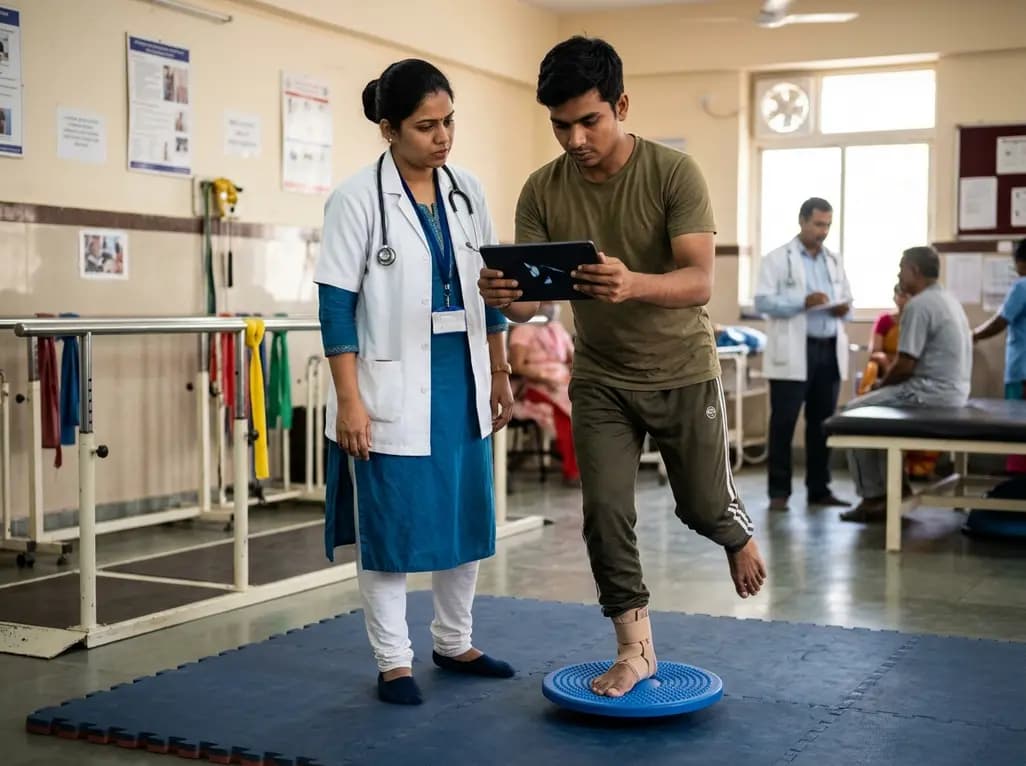
A randomized controlled trial demonstrates that an eight-week dual-task training intervention significantly improves static and dynamic postural control over standard balance exercises in individuals with chronic ankle instability, addressing critical neurocognitive deficits during athletic and daily activities.
Today

A retrospective cohort study of 7,716 ICU patients from the MIMIC-IV database demonstrates that Gradient Boosting Decision Trees significantly outperform traditional SOFA scores in predicting in-hospital mortality among patients with sepsis and diabetes, with SHAP analysis providing clinical interpretability.
Today
