.webp&w=384&q=75)

Loading, please wait...
Loading, please wait...

Technology-facilitated sexual violence remains a critical yet often overlooked issue within modern sporting environments. A recent analysis of 91 legal cases in Canadian sport highlights how digital technologies enable harm against women and children. These violations often occur within sporting cultures that normalize toxic masculinity and misogyny. Consequently, medical professionals must recognize the unique trauma associated with these digital violations.
Survivors of technology-facilitated sexual violence frequently present with severe psychological distress. Clinical studies indicate that victims often experience post-traumatic stress disorder (PTSD), anxiety, and depression. Furthermore, the permanent nature of digital evidence can prolong trauma through repeated dissemination. Therefore, clinicians must adopt trauma-informed approaches when treating athletes who have experienced digital harm. Moreover, this form of violence can lead to social isolation and significant barriers to professional participation.
Digital evidence plays a varying role in the criminal legal system. In many instances, legal professionals view digital records as more credible than the testimony of victims. However, the misuse of technology continues to facilitate violence across various platforms. Specifically, perpetrators use digital tools to harass, intimidate, or coerce victims. Thus, a multidisciplinary response involving healthcare, law, and technology experts is essential to support survivors effectively.
In conclusion, the intersection of technology and sexual violence requires urgent attention from sports medicine and mental health providers. Addressing these issues involves understanding the cultural roots of violence and the clinical implications of digital abuse. By fostering safe environments, the sporting community can better protect vulnerable individuals from technology-facilitated harm.
This term describes a range of harmful behaviors where digital tools, such as social media or messaging apps, are used to harass, intimidate, or coerce victims into sexual acts.
Victims often suffer from long-term mental health issues, including PTSD, anxiety, and suicidal ideation. The persistent nature of digital content can make recovery particularly challenging.
Digital evidence is often considered highly credible in legal settings. However, its presence does not always guarantee a favorable outcome for the victim due to systemic biases in the law.
Disclaimer: This content is for informational and educational purposes only. It does not constitute professional medical advice, diagnosis, or treatment. Always seek the advice of your physician or other qualified healthcare provider with any questions you may have regarding a medical condition. Refer to the latest local and national guidelines for clinical practice.
References
Quinlan A et al. Digital Violations: Technology-Facilitated Sexual Violence in Canadian Sport. Violence Against Women. 2026 Mar 10. doi: 10.1177/10778012261425945. PMID: 41804747.
Holladay KR, Hagedorn W, Boote D. The Influence of Cyber-Sexual Assault on the Mental Health Outcomes of Survivors. Journal of Counseling Sexology & Sexual Wellness: Research, Practice, and Education. 2021;2(2):93-103.
UN Women. Global Trends to Prevent and Respond to Technology-Facilitated Violence against Women and Girls. Compendium of Emerging Practices. 2025.

Read summarized clinical updates, watch expert medical content, and earn CME certifications right from your smartphone.
Open your smartphone camera to scan and install.





This study examines 91 cases of technology-facilitated sexual violence in Canadian sport, focusing on digital evidence, toxic culture, and health impacts....
7 months ago

Explore vital recurrent stroke predictors in lacunar stroke patients managed with intensive blood pressure lowering. This analysis examines trial findings from SPS3 to uncover residual vascular risks, metabolic factors, and targeted secondary prevention strategies for high-risk neurological patients.
Today

Odisha has established India's first state-level clinical protocol specifically tailored for pregnant women with sickle cell disease. Developed with NHM and UNICEF, the framework provides structured antenatal screening, crisis mitigation, standardized referral pathways, and specialized interdisciplinary care.
Today

India is advancing preventive healthcare by integrating genomics, artificial intelligence, and quantum technologies. With the SANGAM programme sequencing one million Indian genomes, clinicians can unlock personalized therapies, detect cardiometabolic risks early, and curb the burden of diabetes and heart disease.
Today
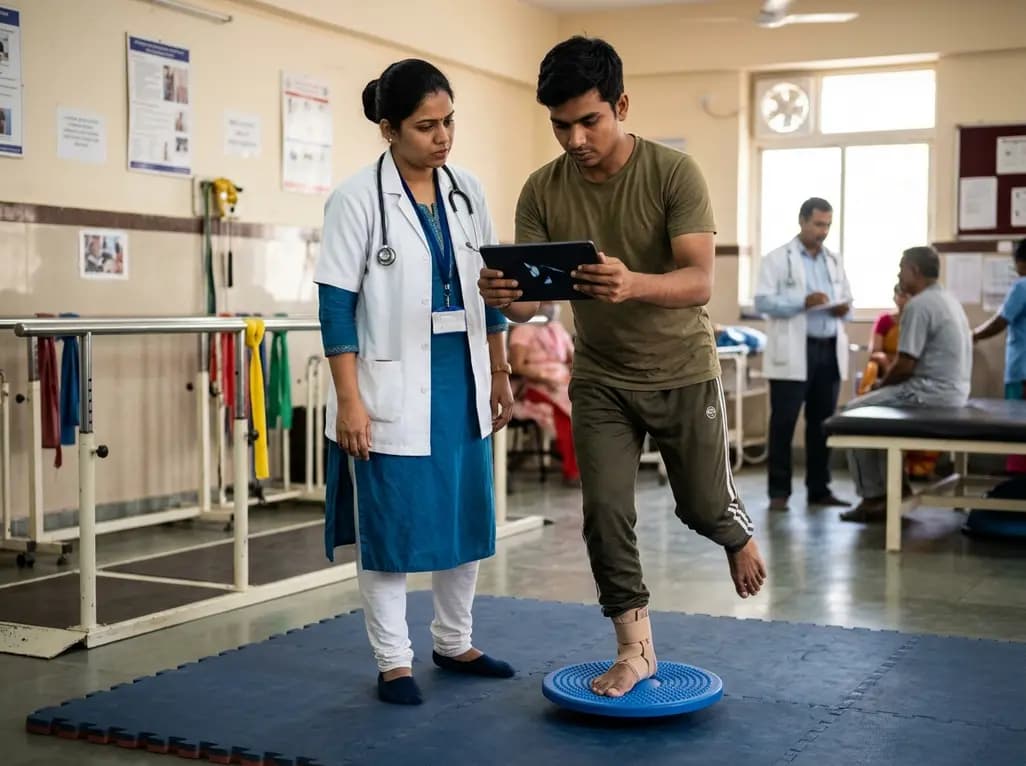
A randomized controlled trial demonstrates that an eight-week dual-task training intervention significantly improves static and dynamic postural control over standard balance exercises in individuals with chronic ankle instability, addressing critical neurocognitive deficits during athletic and daily activities.
Today

A retrospective cohort study of 7,716 ICU patients from the MIMIC-IV database demonstrates that Gradient Boosting Decision Trees significantly outperform traditional SOFA scores in predicting in-hospital mortality among patients with sepsis and diabetes, with SHAP analysis providing clinical interpretability.
Today
