

Loading, please wait...
Loading, please wait...

Surviving critical illness often marks the beginning of a protracted recovery trajectory. Consequently, family members frequently shoulder substantial caregiving duties once patients transition out of the intensive care unit (ICU). These informal caregivers must manage complex rehabilitation needs, medical equipment, and medication regimens. Unfortunately, many relatives feel unprepared and overwhelmed because they receive minimal structured instruction during the acute admission. Critical care nurses occupy an ideal vantage point at the bedside to deliver hands-on instruction. By actively teaching relatives foundational care skills before discharge, nurses can prevent readmissions and mitigate post-intensive care syndrome. Nevertheless, clinicians lacked an objective, standardized metric to gauge bedside staff readiness to instruct families. To address this persistent gap, investigators developed and conducted pilot testing of the TEACH-ICU scale. This novel instrument quantifies nurses' willingness to engage and educate family caregivers of critically ill patients.
Researchers derived the TEACH-ICU scale from the previously validated Family Willingness for Caregiving Scale. Initially, the team refined the instrument through cognitive debriefing interviews with experienced critical care nurses to establish strong content validity. Following these modifications, investigators launched a descriptive, cross-sectional pilot study to examine survey administration feasibility. They recruited a convenience sample of 30 registered nurses practicing in adult ICUs. The authors leveraged professional research portals and critical care networks to secure diverse participation. During the survey battery, participants completed the TEACH-ICU instrument alongside two validated measurement tools. Specifically, the protocol incorporated the Hospital Ethical Climate Survey (HECS) and the Marlowe-Crowne Social Desirability Scale-Short Form (MCSDS-Short Form). This rigorous design allowed investigators to explore underlying institutional correlations while controlling for potential self-reporting bias among nursing staff.
The pilot investigation yielded encouraging initial results regarding staff attitudes. Across all survey items, participating nurses demonstrated exceptionally high mean willingness scores for teaching family members. Furthermore, statistical relationship testing revealed significant positive correlations between TEACH-ICU total scores and overall HECS ratings. More importantly, this association held true across four vital HECS domains: peer support, nursing leadership, hospital environment, and physician collaboration. These findings illustrate that ethical, communicative, and supportive workplace environments directly bolster a nurse's motivation to educate families. When clinicians experience mutual trust with colleagues and physicians, they allocate more cognitive bandwidth to proactive caregiver training. Importantly, the analysis revealed no significant correlation between TEACH-ICU scores and social desirability scores. Therefore, the favorable willingness reported by nurses reflects authentic clinical dedication rather than a tendency to give socially acceptable answers.
Although nurses display high intrinsic motivation to train families, substantial institutional hurdles frequently impede execution. Bedside providers routinely navigate tight nurse-to-patient ratios, fluctuating patient acuity, and relentless administrative tasks. Under such demanding conditions, informal patient teaching is often delayed or omitted entirely. However, recognizing family education as a core clinical intervention rather than an optional task can transform transitional care. Nurse leaders must actively establish protected time during daily routines for family demonstrations, such as tracheostomy management or enteral tube maintenance. In addition, interprofessional alignment between physicians and nursing teams fosters an empowering atmosphere that normalizes bedside family participation. By systematically applying the TEACH-ICU tool, hospital administrators can pinpoint units experiencing educational distress. Consequently, health systems can implement targeted workflow adjustments, peer mentorship programs, and structured caregiver curricula.
The findings offer vital insights for critical care teams operating across India and other emerging healthcare ecosystems. In Indian hospitals, formal step-down facilities and home nursing resources remain limited, placing the burden of post-discharge care directly on relatives. As a result, family-centered empowerment within Indian ICUs is an urgent clinical necessity. Critical care physicians and nurse supervisors must champion collaborative protocols that instruct relatives in pressure injury prevention, passive limb mobilization, and infection control. Utilizing validated frameworks like the TEACH-ICU instrument enables Indian tertiary care centers to evaluate nursing engagement systematically. Moreover, cultivating an open ethical climate and fostering mutual respect between intensivists and bedside nurses will elevate caregiving instruction. Ultimately, equipping families with hands-on competencies inside the ICU protects patient safety, reduces readmission rates, and improves long-term functional recovery.
The instrument measures a critical care nurse's willingness to teach essential caregiving tasks to family members. These competencies encompass routine physical hygiene, patient repositioning, mobility assistance, enteral feeding protocols, and device management. By evaluating these specific dimensions, the scale identifies how prepared nurses feel to partner with family members during acute hospitalizations.
A positive hospital ethical climate creates a psychologically safe and collaborative workplace. When nurses feel valued by leadership, supported by peers, and respected by physicians, moral distress decreases significantly. Consequently, nurses gain the emotional bandwidth and institutional backing needed to invest extra time into bedside family coaching and compassionate discharge education.
Critical illness frequently leaves survivors with cognitive, physical, and psychological deficits known as post-intensive care syndrome. When family members receive proactive, hands-on training prior to hospital discharge, they gain confidence and procedural competence. Consequently, this structured preparation reduces caregiver anxiety, minimizes hospital readmissions, and ensures consistent outpatient care at home.
Disclaimer: This content is for informational and educational purposes only and should not be construed as medical, legal, or health advice. Healthcare professionals should always rely on their clinical judgment, institutional protocols, and current published evidence. Refer to the latest local and national guidelines for clinical practice.
References

Read summarized clinical updates, watch expert medical content, and earn CME certifications right from your smartphone.
Open your smartphone camera to scan and install.





The pilot evaluation of the TEACH-ICU scale highlights intensive care nurses' willingness to train family caregivers. Strong hospital ethical climates, supportive leadership, and physician collaboration significantly enhance nurse-led family education, bridging critical post-ICU transitional care gaps.
Today
Modern management of adrenal incidentalomas is shifting away from universal testing toward risk-stratified biochemical evaluation. Guidelines suggest omitting metanephrine testing in lipid-rich adenomas (≤10 HU), while maintaining autonomous cortisol testing to prevent cardiometabolic complications.
Today
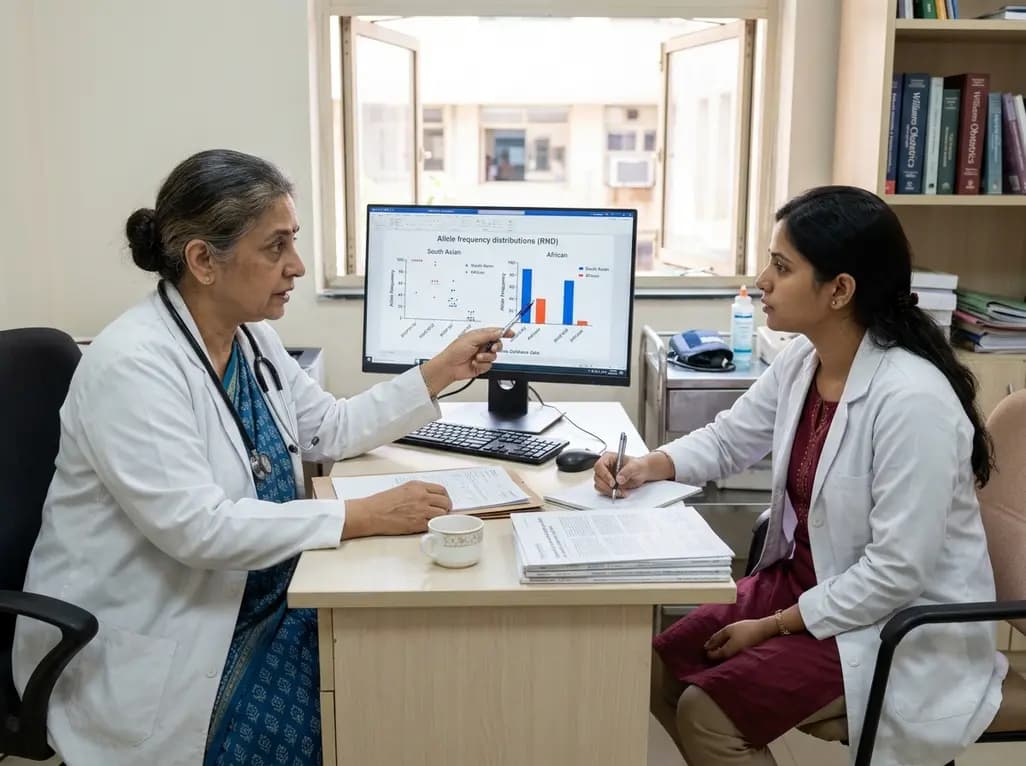
Large genomic databases like gnomAD and All of Us offer crucial insights into the population prevalence of partial RHD genotypes. Identifying these variants helps clinicians mitigate anti-D alloimmunization risks in transfusion medicine and obstetric care across diverse ancestral populations.
Yesterday
A prospective cohort study demonstrates that feeding tubes, formula exposure, aortic cross-clamp duration, and socioeconomic deprivation disrupt the neonatal gut microbiome in congenital heart disease, emphasizing the need for targeted nutritional and perioperative gut-protective strategies.
Today
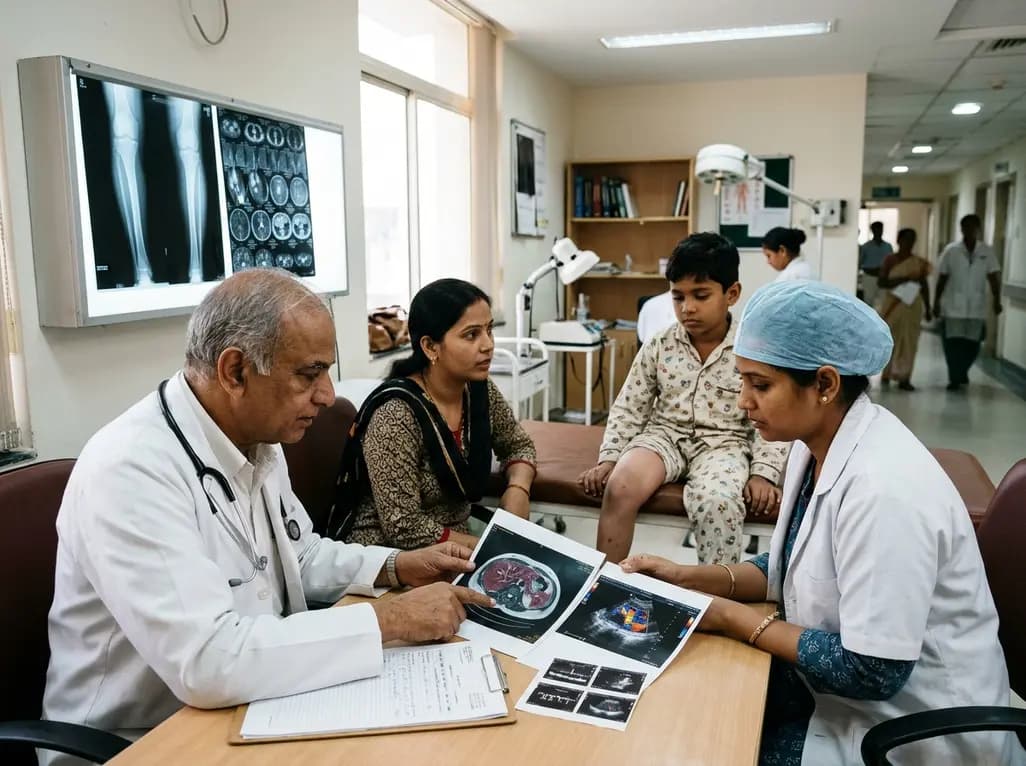
Deep intramuscular vascular malformations in pediatric Klippel-Trenaunay syndrome can mimic Maffucci syndrome. Multimodality imaging with Doppler ultrasound and MRI, along with histopathology, ensures prompt differential diagnosis, targeted surgical debulking, and optimized conservative surveillance.
Today
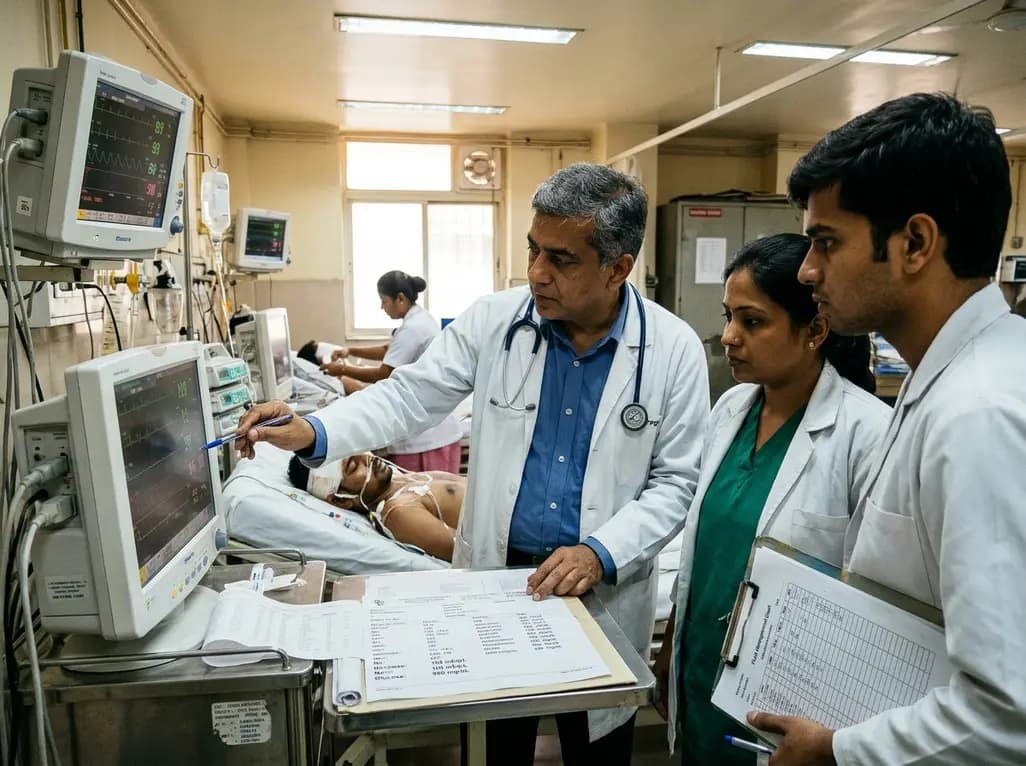
A complex clinical case reveals how adipsic hypernatremia after traumatic brain injury, combined with hyperosmolar hyperglycemic state, triggers life-threatening dehydration and extensive venous thromboembolism, emphasizing the vital role of meticulous fluid management and vigilance.
Today
