.webp&w=384&q=75)

Loading, please wait...
Loading, please wait...
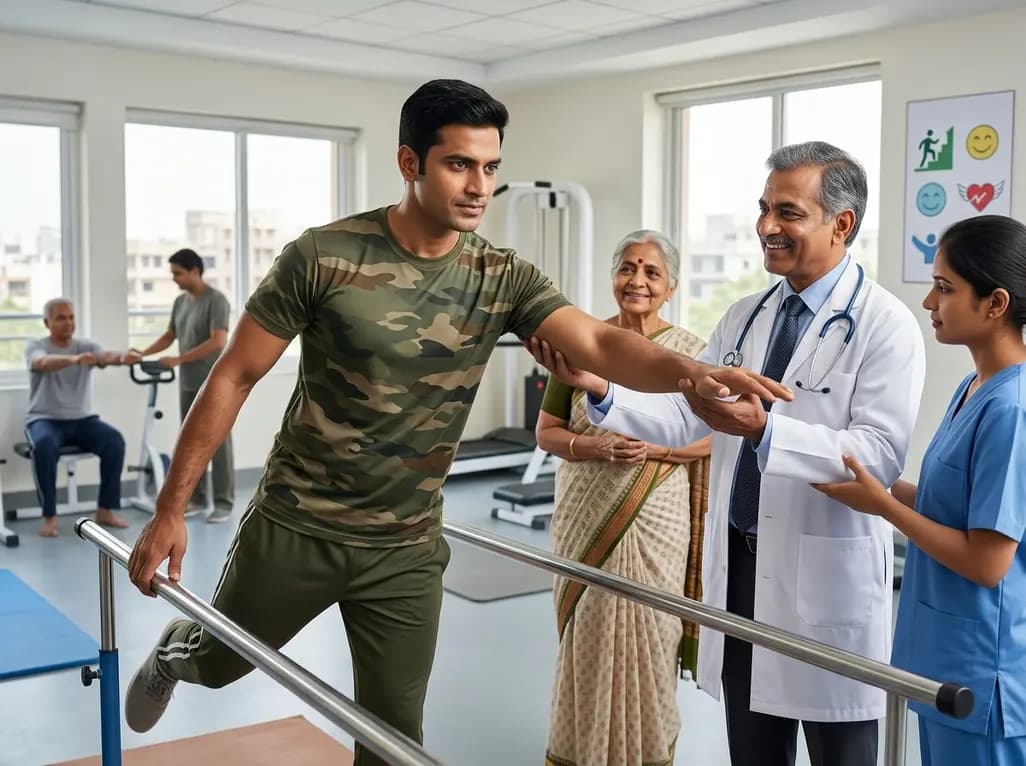
Integrating TBI recovery positive psychology into clinical practice marks a significant shift from traditional deficit-based models to strength-based frameworks. Historically, clinicians focused predominantly on pathology and cognitive deficits following a traumatic brain injury (TBI). However, recent research emphasizes that focusing on positive psychology constructs (PPCs) can significantly enhance the rehabilitation process for military personnel and veterans. Consequently, understanding these factors allows healthcare providers to foster a more holistic recovery environment.
Researchers recently conducted a scoping review to map the landscape of positive psychology in military TBI populations. They analyzed 55 peer-reviewed studies published between 2000 and 2024. The results revealed that social support, resilience, and quality of life are the most frequently studied constructs. While the majority of these studies involved veterans in the United States who sustained mild TBIs, the findings offer universal insights into how internal and external strengths influence long-term outcomes. Furthermore, investigators observed that most research relied on quantitative, cross-sectional methods, suggesting a need for more longitudinal intervention data.
Applying an ecological framework to TBI recovery positive psychology helps situate these constructs across individual, social, and environmental domains. At the individual level, resilience helps patients adapt to the life-altering changes caused by brain injury. Socially, strong support networks act as a buffer against psychological distress. Environmentally, inclusive community settings facilitate better reintegration. Therefore, rehabilitation plans should not only address physical impairments but also intentionally nurture these positive traits. Specifically, developing coherent theoretical frameworks will help clarify the complex relationships between these psychological constructs and functional outcomes.
For medical professionals, especially in multidisciplinary settings, these findings suggest that incorporating PPCs into standard care could improve patient engagement. Although intervention-specific studies remain sparse, the existing data highlights that a positive mindset correlates with better psychosocial functioning. Clinicians should encourage patients to identify personal strengths and leverage social resources. Ultimately, moving beyond the 'setbacks' of TBI to focus on 'strengths' offers a more optimistic and effective pathway for patient rehabilitation and long-term well-being.
Resilience enables individuals to manage stress more effectively and adapt to the changes following a brain injury. It is associated with lower levels of anxiety, better emotional regulation, and higher life satisfaction during the rehabilitation phase.
The three most studied constructs are social support, resilience, and quality of life. These factors interact to create a supportive environment that enhances the patient\'s ability to navigate the recovery journey.
An ecological framework recognizes that recovery does not happen in isolation. It considers the individual\'s psychology, their social circle, and the broader environment, ensuring that all spheres of influence are addressed for a successful outcome.
Disclaimer: This content is for informational and educational purposes only. It is not a substitute for professional medical advice, diagnosis, or treatment. Always seek the advice of your physician or other qualified health provider with any questions you may have regarding a medical condition. Refer to the latest local and national guidelines for clinical practice.
References
Malhotra B et al. Setbacks to strengths: A scoping review of positive psychology constructs among veterans and service members with traumatic brain injury. Rehabil Psychol. 2026 Jun 01. doi: 10.1037/rep0000681. PMID: 42224018.
Indian Federation of Neurorehabilitation (IFNR). Guidelines for Multidisciplinary Neurorehabilitation in India. 2024.
Psychiatric Times. Resilience and Renewal: Enhancing Positivity and Functional Recovery After Traumatic Brain Injury. April 2025.
"
Read summarized clinical updates, watch expert medical content, and earn CME certifications right from your smartphone.
Open your smartphone camera to scan and install.





This scoping review highlights the shift toward strength-based approaches in TBI recovery, emphasizing resilience and social support for military personnel....
4 months ago

A retrospective cohort study of 7,716 ICU patients from the MIMIC-IV database demonstrates that Gradient Boosting Decision Trees significantly outperform traditional SOFA scores in predicting in-hospital mortality among patients with sepsis and diabetes, with SHAP analysis providing clinical interpretability.
Today

A prenatal case highlights severe glutaric acidemia type II presenting as bilateral hyperechoic cystic kidneys at 18 weeks. Whole-exome sequencing revealed a novel homozygous ETFDH frameshift variant, demonstrating the power of rapid genetic testing in fetal renal anomalies.
Today
This article reviews the forensic and clinical complexities of acute myocarditis arising on left ventricular hypertrophy in children, highlighting early diagnostic red flags and multidisciplinary postmortem autopsy protocols.
Today

This comparative study evaluates posterior labral tears with and without glenohumeral instability, highlighting distinct demographic patterns, MRI underestimation in stable shoulders, and successful arthroscopic repair outcomes.
Yesterday

A clinical study demonstrates that early intervention with tocilizumab, either as monotherapy or bridged with corticosteroids, achieves significant proptosis reduction and resolves active inflammation in treatment-naive thyroid eye disease.
Yesterday
