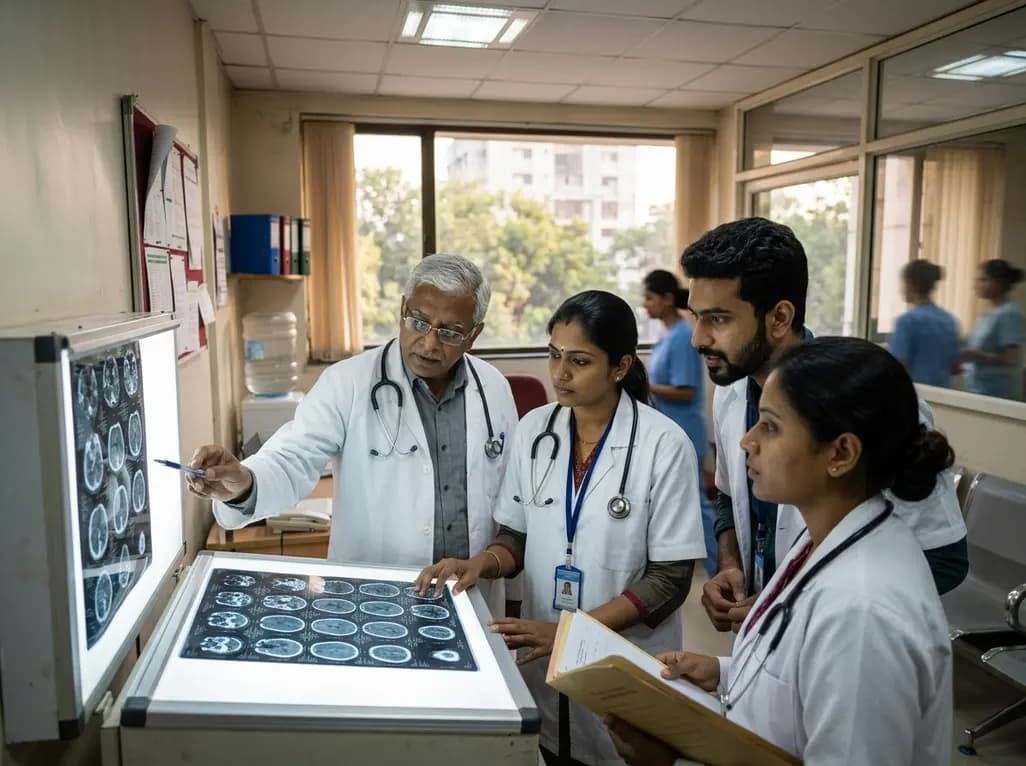
Tuberculosis remains a critical public health challenge in India, contributing to the largest share of the global disease burden. Specifically, high early mortality rates present a formidable obstacle for clinicians trying to save severely ill patients. To address this gap, Indian researchers have developed an innovative
TB death prediction calculator that identifies high-risk individuals right at the time of diagnosis. This clinical decision-support tool utilizes routine, easily obtained measurements. Consequently, healthcare providers can immediately initiate aggressive triage protocols instead of waiting for complex laboratory analyses. By prioritizing vulnerable patients for early hospitalization, this evidence-based strategy offers a practical pathway to reduce overall TB deaths.
Understanding the Need for a TB Death Prediction Calculator
Clinicians often struggle to identify which newly diagnosed tuberculosis patients face the highest risk of mortality. Indeed, many tuberculosis deaths occur unexpectedly early in the course of treatment. A recent statewide cohort study in Tamil Nadu analyzed data from 55,971 adult tuberculosis patients. Strikingly, the study found that 7.4 percent of these individuals died within a single year of diagnosis. Furthermore, nearly 68 percent of those fatalities occurred during the first two months following diagnosis. This critical window highlights the urgent need for rapid, objective triage systems at the point of care. Without such tools, healthcare workers might rely on subjective assessments that inadvertently delay lifesaving inpatient admission. Therefore, utilizing the
TB death prediction calculator provides a standardized, data-driven methodology to estimate patient vulnerability immediately. This tool bridges the gap between diagnosis and timely hospitalization for severely ill patients.
Key Clinical Variables in the Prediction Model
Instead of relying on complicated or delayed laboratory tests, the newly developed algorithm leverages basic clinical indicators that are readily accessible. Specifically, the calculator relies on five simple triage variables recorded by frontline healthcare workers at the diagnosing facility. These critical indicators include body mass index, peripheral oxygen saturation, respiratory rate, the presence of pedal oedema, and the patient's physical ability to stand without support. Additionally, the predictive model integrates these physical triage parameters with standard demographic and baseline disease characteristics. These baseline factors include age, sex, site of the tuberculosis infection, previous treatment history, and microbiological confirmation status. By combining these variables, the model accurately calculates the probability of early and overall mortality. Healthcare workers can quickly input these parameters into a digital application to obtain an objective risk score. Consequently, this simple approach eliminates clinical guesswork and streamlines clinical workflows in busy public health settings.
Validating the Predictive Model with Real-World Data
Developing clinical calculators requires rigorous validation to ensure they perform reliably in diverse programmatic environments. To achieve this, researchers from the ICMR-National Institute of Epidemiology and the Tamil Nadu TB programme tested various predictive models. Surprisingly, the model using only the five simple triage variables performed nearly as well as far more complex models. Specifically, the complex models utilized multiple late-appearing variables stored in the government's Ni-kshay database. However, adding easily capturable demographic and clinical baseline characteristics to the five triage variables significantly improved the calculator's predictive accuracy. The resulting model achieved an area under the receiver operating characteristic curve of 0.754. This high predictive accuracy demonstrates that simple clinical markers recorded at diagnosis are highly powerful tools. Consequently, this validation proves that resource-constrained clinics do not need expensive diagnostic machinery to identify high-risk individuals. Instead, they can confidently rely on this standardized algorithm to guide life-saving clinical decisions.
Impact of Differentiated Care Initiatives in Tamil Nadu
The clinical utility of this tool is heavily supported by the successful implementation of the Tamil Nadu Kasanoi Erappila Thittam. This state-wide differentiated care initiative aimed specifically at reducing preventable tuberculosis deaths through proactive triaging. Under this program, healthcare workers classified patients who exhibited severe undernutrition, respiratory insufficiency, or poor performance status as triage-positive. Subsequently, the program prioritized these severely ill patients for immediate referral to nodal inpatient care facilities. This rapid hospitalization strategy dramatically cut down the time from diagnosis to inpatient care. As a direct result, six implementing districts reported a sustained and significant decline in their tuberculosis death rates. In fact, early studies of the initiative demonstrated a 20 percent drop in early mortality within the first six months. This real-world success showcases how implementing a structured triage system can directly save lives. Therefore, the researchers strongly advocate for other high-burden Indian states to adopt this highly effective model.
Addressing the Global and National Tuberculosis Burden
India continues to grapple with the world's largest tuberculosis burden, making mortality reduction an absolute public health priority. Although diagnostic technologies and treatment regimens have improved dramatically over the last decade, early mortality remains stubbornly high. This persistent challenge stems partly from delayed healthcare seeking and a lack of timely risk stratification at diagnosis. Consequently, many vulnerable patients deteriorate rapidly at home during the initial weeks of treatment. The open-access availability of this predictive tool allows clinical teams across India to implement structured triaging immediately. Moreover, other high-burden countries can adapt this scalable, data-driven framework to match their local healthcare infrastructure. By shifting from a uniform outpatient model to a risk-stratified, differentiated care model, clinics can allocate scarce hospital beds to those who need them most. Ultimately, this paradigm shift in clinical management represents a massive leap forward in the global fight to eliminate tuberculosis deaths.
Frequently Asked Questions
Q1: What are the primary triage indicators used in the TB death prediction calculator?
The calculator utilizes five basic clinical indicators that healthcare workers can easily record at the time of diagnosis. Specifically, these parameters include body mass index, peripheral oxygen saturation, respiratory rate, the presence of pedal oedema, and the patient's physical ability to stand without support. Additionally, the model combines these triage variables with baseline clinical characteristics like age, gender, previous treatment history, and microbiological confirmation to accurately predict mortality risk.
Q2: Why is early triaging so critical for newly diagnosed tuberculosis patients?
Early triaging is absolutely vital because a large percentage of tuberculosis-related deaths occur very shortly after diagnosis. In fact, research shows that nearly 68 percent of tuberculosis deaths occur within the first two months of starting treatment. Consequently, identifying high-risk patients immediately at the diagnosing facility allows clinicians to prioritize them for inpatient care. This rapid intervention effectively prevents severe clinical deterioration and significantly reduces early treatment mortality rates.
Q3: How successful was the implementation of this clinical tool in Tamil Nadu?
The predictive model has demonstrated exceptional real-world success through the Tamil Nadu Kasanoi Erappila Thittam initiative. By utilizing this structured triage system, healthcare workers successfully identified severely ill patients and prioritized them for immediate hospital admission. As a direct result, participating districts achieved a 20 percent reduction in early tuberculosis deaths within the first six months. Therefore, this model provides highly scalable and proven results for other high-burden regions.
Disclaimer: This content is for informational and educational purposes only. It does not constitute medical advice or replace professional judgment. Refer to the latest local and national guidelines for clinical practice.
References
- New tool can predict TB death risk at diagnosis, says study - ETHealthworld
- Suseendar Shanmugasundaram, Hemant Deepak Shewade, et al. Tuberculosis death prediction calculator for prospective use at diagnosis in resource-constrained programme settings: a statewide cohort study. BMJ Open, 2026.
.webp&w=384&q=75)