.webp&w=384&q=75)

Loading, please wait...
Loading, please wait...

Recent breakthroughs in geroscience reveal that T-cell immunosenescence is a central driver of organismal aging and chronic systemic decline. As the immune system matures, T cells undergo profound changes, losing their ability to eliminate pathogens and senescent cells. This decline does not merely weaken immunity; it actively promotes "inflammaging" through the secretion of pro-inflammatory cytokines. For clinicians in India, where the geriatric population is expanding, understanding these molecular shifts is vital for managing age-related multi-morbidity.
Several factors accelerate the aging of the T-cell compartment. Thymic involution progressively reduces the output of naïve T cells, while chronic antigenic stimulation leads to T-cell exhaustion. Metabolic dysfunction and mitochondrial stress further compromise cellular integrity. Consequently, these aged cells fail to perform effective immune surveillance. This failure allows senescent "zombie" cells to accumulate in vital organs, leading to tissue dysfunction and chronic low-grade inflammation. Furthermore, these dysfunctional T cells actively contribute to systemic damage by releasing high levels of inflammatory mediators.
The intersection of immune aging and neurodegeneration is particularly striking in the context of Alzheimer’s disease. Murine models show that T cells infiltrating the brain can be either protective or pathogenic depending on the disease stage. During early stages, certain T-cell subsets may help clear amyloid debris. However, as T-cell immunosenescence progresses, these cells may instead exacerbate neuroinflammation, accelerating cognitive decline. This dual role suggests that the timing of immune-targeted therapies is critical for neuroprotection.
Translational research is exploring several avenues to reverse or mitigate immune aging. Preclinical murine studies have shown success with PD-1/PD-L1 blockade and senolytic CAR-T cells designed to purge senescent populations. Additionally, the transcriptional regulatory network driven by the NR4a family has emerged as a key target. By modulating NR4a, researchers aim to "reprogram" exhausted T cells, restoring their effector functions and improving organ health. Human trials involving caloric restriction, low-dose mTOR inhibitors like rapamycin, and mesenchymal stem cell (MSC) therapy also show early promise in improving healthspan.
While both involve loss of function, T-cell exhaustion is typically driven by chronic antigen exposure and is potentially reversible through checkpoint inhibition. Senescence is a more terminal state of cell cycle arrest often linked to telomere shortening and DNA damage markers like p16.
Yes, early-stage human studies suggest that caloric restriction and specific nutritional interventions can modulate immune markers. These changes may delay the onset of immunosenescence and its associated inflammatory effects on the body.
Disclaimer: This content is for informational and educational purposes only and does not constitute medical advice. Always seek the advice of a qualified healthcare provider with any questions regarding a medical condition. Refer to the latest local and national guidelines for clinical practice.
References
Ohyagi M et al. Senescence of T cells and organ aging. Inflamm Regen. 2026 Apr 24. doi: undefined. PMID: 42032757.
Iske J et al. The Impact of T-cell Aging on Alloimmunity and Inflammaging. Transplantation. 2024 Mar 1;108(3):634-642. doi: 10.1097/TP.0000000000004715.
Chen M et al. Targeting T-cell Aging to Remodel the Aging Immune System and Revitalize Geriatric Immunotherapy. Aging Dis. 2026;17(2):607-624. doi: 10.14336/AD.2025.0061.

Read summarized clinical updates, watch expert medical content, and earn CME certifications right from your smartphone.
Open your smartphone camera to scan and install.





A review of how T-cell immunosenescence contributes to organ aging, inflammaging, and neurodegeneration, plus emerging strategies for clinical rejuvenation....
4 months ago
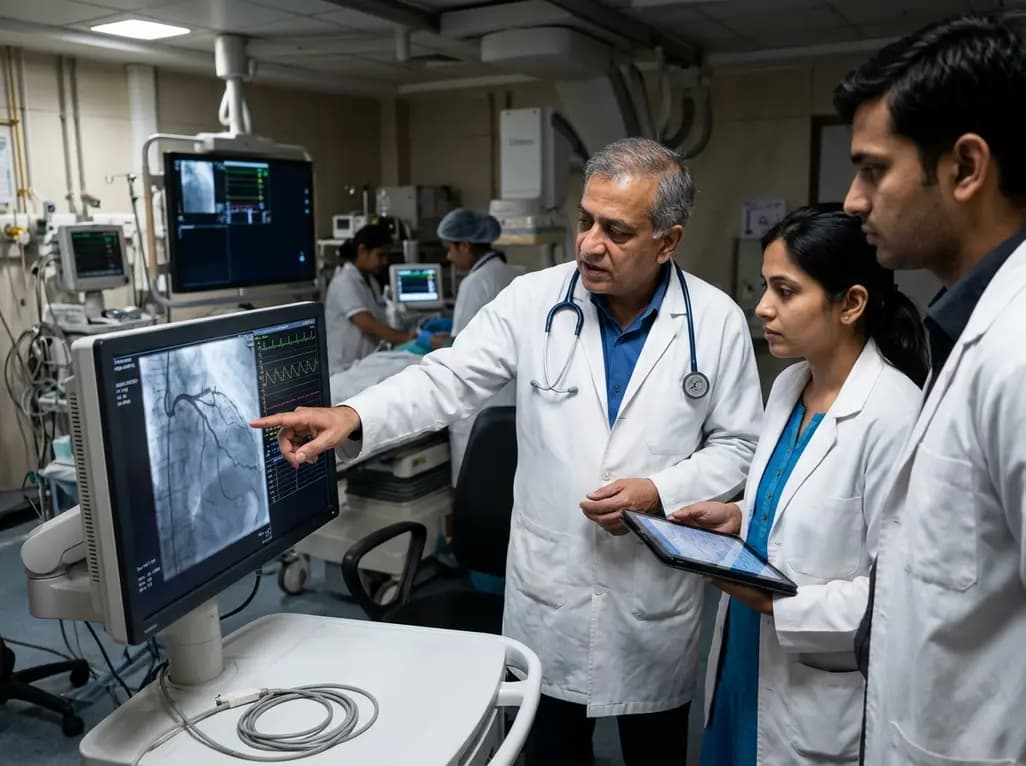
New evidence demonstrates that the atherogenic index of plasma (AIP) is an independent predictor of the slow flow/no-reflow phenomenon in acute myocardial infarction patients undergoing emergency PCI, offering clinicians a valuable tool for early risk stratification and targeted microvascular protection.
Today

New evidence evaluates MoUNets, a static-weighted ensemble of UNet experts for automated levator hiatus segmentation in pelvic floor ultrasound. Learn how deep learning architectures perform in pelvic organ prolapse diagnostics and clinical practice.
Today

Mitochondrial deubiquitinases regulate organelle turnover by editing ubiquitin tags on damaged mitochondria. Discover how targeting these enzymes, notably USP30, offers therapeutic strategies for neurodegenerative, cardiovascular, and metabolic disorders.
Today

Investigating the influence of walking speed on mechanosensitive joint biomarkers reveals how gait velocity modulates COMP, MMP-3, IL-6, and lubricin kinetics. These findings provide vital physiological insights for orthopedics and sports medicine to personalize exercise prescriptions and preserve joint health.
Today

A cross-sectional study reveals that elevated METS-IR is independently associated with higher myopia odds in adolescents, showing biological synergy with obesity and highlighting the need for metabolic screening in pediatric eye care.
Today
