.webp&w=384&q=75)

Loading, please wait...
Loading, please wait...

Non-traumatic intracerebral hemorrhage represents a devastating subtype of stroke with high morbidity and mortality. After the initial neurovascular disruption, systemic inflammatory cascades exacerbate secondary brain injury and systemic complications. Clinicians continuously look for reliable biological markers that reflect early pathophysiological deterioration. Recently, dynamic tracking of the systemic inflammation response index has emerged as a valuable prognostic tool in intensive care units. Traditional prognostic models rely heavily on baseline neurological assessments or single blood draws at admission. However, inflammatory responses evolve rapidly during the initial 72 hours of hospital admission. Consequently, point-in-time assessments may fail to capture the true inflammatory burden experienced by critically ill patients. Evaluating time-averaged systemic inflammatory markers provides a comprehensive picture of ongoing immune activation. By analyzing accumulated hematological trends, clinicians can better predict severe clinical outcomes and tailor neurocritical care interventions.
Systemic immune activation plays a key role in propagating neuroinflammation, brain edema, and peri-hematomal cell death following acute intracerebral hemorrhage. Neutrophils invade early into the damaged brain parenchyma, releasing cytotoxic cytokines and reactive oxygen species. Simultaneously, monocytes migrate to the injury site, while lymphocytes often undergo apoptosis, leading to stress-induced immunosuppression. To quantify this complex cellular crosstalk, researchers developed integrated composite indices. Specifically, the systemic inflammation response index combines neutrophil, monocyte, and lymphocyte counts to capture peripheral immune balance. Similarly, the neutrophil-to-lymphocyte ratio and systemic immune-inflammation index incorporate circulating blood cell ratios to reflect physiological stress. While baseline values offer immediate prognostic clues, they fail to account for therapeutic responses or secondary inpatient complications. Medical interventions such as surgical evacuation, osmotherapy, and mechanical ventilation continuously alter immune signaling. Therefore, monitoring cumulative inflammatory exposure throughout the critical early period offers superior prognostic accuracy compared to isolated admission labs.
To capture ongoing immune fluctuations, recent retrospective studies examined time-averaged values calculated over the initial 72 hours of intensive care stay. Investigators analyzed serial complete blood counts from critically ill patients admitted with non-traumatic intracerebral hemorrhage who survived the initial 72-hour window. They calculated mean levels for neutrophil-to-lymphocyte ratio, systemic immune-inflammation index, and systemic inflammation response index during this monitoring interval. Multivariable logistic regression revealed that higher time-averaged indices strongly correlated with increased in-hospital mortality. Notably, patients positioned in the highest quartile of time-averaged systemic inflammation response index exhibited a significantly elevated mortality risk compared to lower quartiles. Furthermore, bootstrap validation confirmed that integrating time-averaged indices improved overall model calibration and risk reclassification. These findings demonstrate that sustained inflammatory elevation represents a major driver of poor clinical outcomes. Consequently, calculating temporal averages over the first three days yields a reliable summary marker that reflects both baseline severity and early clinical evolution.
A critical finding from contemporary biomarker research involves the non-linear relationship between systemic inflammatory indices and patient survival. Historically, clinical risk models assumed a linear correlation, where mortality risk increased uniformly with higher lab values. However, restricted cubic spline analyses demonstrate distinct non-linear patterns with clear physiological inflection points. Below specific thresholds, mortality risk increases at a modest, predictable rate. Once inflammatory indices cross a critical threshold, the risk curve steepens dramatically, indicating exponentially higher mortality. This threshold effect explains why minor elevations in systemic inflammation might be tolerated, whereas severe hyperinflammation triggers cascading organ dysfunction and secondary brain damage. Recognizing non-linear patterns enables clinicians to establish concrete cut-offs for risk stratification. Patients whose indices cross these physiological inflection points require intensified monitoring and targeted anti-inflammatory or supportive strategies. As a result, identifying these critical boundaries allows neurointensive care teams to intervene before irreversible secondary neurological deterioration occurs.
Integrating time-averaged inflammatory markers into routine neurocritical care workflow offers significant practical benefits for intensive care teams. Standard neurological scoring tools like the Intracerebral Hemorrhage Score provide important baseline prognostication. However, they remain static and do not adapt as patient conditions evolve over subsequent days. Incorporating continuous inflammatory trends allows clinicians to refine prognosis dynamically during the critical early ICU stay. For instance, a patient presenting with moderate neurological deficits who maintains persistently elevated inflammatory indices may face hidden secondary risks. Such elevated trends can signal expansion of peri-hematomal edema, occult systemic infection, or neurogenic pulmonary complications. Consequently, recognizing rising inflammatory trends prompts timely diagnostic imaging or laboratory workups to identify underlying causes. Moreover, these indices rely on routine, inexpensive complete blood count panels that are routinely performed in every hospital. Thus, tracking systemic inflammation response index provides an accessible, cost-effective method to enhance bedside clinical decision-making without adding expensive testing burdens.
Although retrospective cohort data provide compelling prognostic insights, translating these research findings into standardized clinical protocols requires careful consideration. Time-averaged systemic inflammation response index should be viewed as an integrative biomarker rather than a standalone diagnostic tool. Clinicians must interpret inflammatory trends alongside comprehensive clinical data, including repeated neurological examinations, intracranial pressure readings, and advanced neuroimaging. Additionally, persistent systemic inflammation may reflect extracranial medical complications such as pneumonia, sepsis, or acute kidney injury rather than isolated secondary brain injury. Future prospective clinical trials must evaluate whether targeted anti-inflammatory therapies can effectively modify these indices and improve functional survival. Furthermore, validating these findings across diverse patient populations and low-resource healthcare settings will ensure broad generalizability. In the meantime, neurointensive care providers can readily utilize daily blood counts to track inflammatory trajectory. By identifying patients with sustained hyperinflammation, clinicians can optimize supportive care, prevent secondary insults, and deliver personalized neurocritical management.
The systemic inflammation response index evaluates peripheral immune status by combining neutrophil, monocyte, and lymphocyte counts. High values signal excessive innate immune activation alongside lymphocyte depletion. In intracerebral hemorrhage, sustained elevation reflects severe secondary brain injury, peri-hematomal edema, and systemic organ stress. Consequently, tracking this index over early ICU admission helps identify patients at significantly higher risk of in-hospital mortality.
Baseline blood samples taken at hospital admission offer only a single snapshot of early physiological stress. In contrast, time-averaged indices calculate cumulative inflammatory exposure over the initial 72 hours of intensive care. This temporal tracking captures ongoing pathophysiological changes, therapeutic responses, and emerging secondary complications, providing superior prognostic accuracy and risk reclassification compared to isolated initial laboratory measurements.
Tracking time-averaged inflammatory markers allows neurocritical care teams to monitor disease progression dynamically. Persistent elevations prompt clinicians to investigate underlying complications such as hematoma expansion, peri-lesional edema, or systemic infections. Because these calculations utilize standard, low-cost complete blood count panels, ICUs can easily implement routine tracking to refine mortality risk stratification and guide personalized supportive management.
Disclaimer: This content is for informational and educational purposes only and does not constitute medical advice, diagnosis, or treatment. Always seek the advice of a qualified healthcare provider with any questions you may have regarding a medical condition. Refer to the latest local and national guidelines for clinical practice.
References

Read summarized clinical updates, watch expert medical content, and earn CME certifications right from your smartphone.
Open your smartphone camera to scan and install.





Evaluating time-averaged systemic inflammation response index (SIRI) over the first 72 hours of ICU stay provides superior prognostic accuracy for in-hospital mortality after non-traumatic intracerebral hemorrhage, revealing non-linear risk patterns and threshold effects.
last month

Explore the emerging role of Brixadi, an extended-release buprenorphine injection, for managing stimulant use disorder through kappa opioid receptor antagonism and steady plasma levels.
Today

A premature neonate developed upper limb compartment syndrome after uterine rupture extruded the arm through a scar defect. Conservative management with continuous monitoring yielded complete functional recovery and normal limb growth at 10-year follow-up, highlighting non-operative safety in selected cases.
Today
Dendritic cells bridge innate and adaptive immunity in myocardial infarction. This review explores their pathological roles, circulating dynamics, novel tolerogenic interventions, and how standard cardiovascular medications modulate dendritic cells to improve post-infarction myocardial repair and patient outcomes.
Today
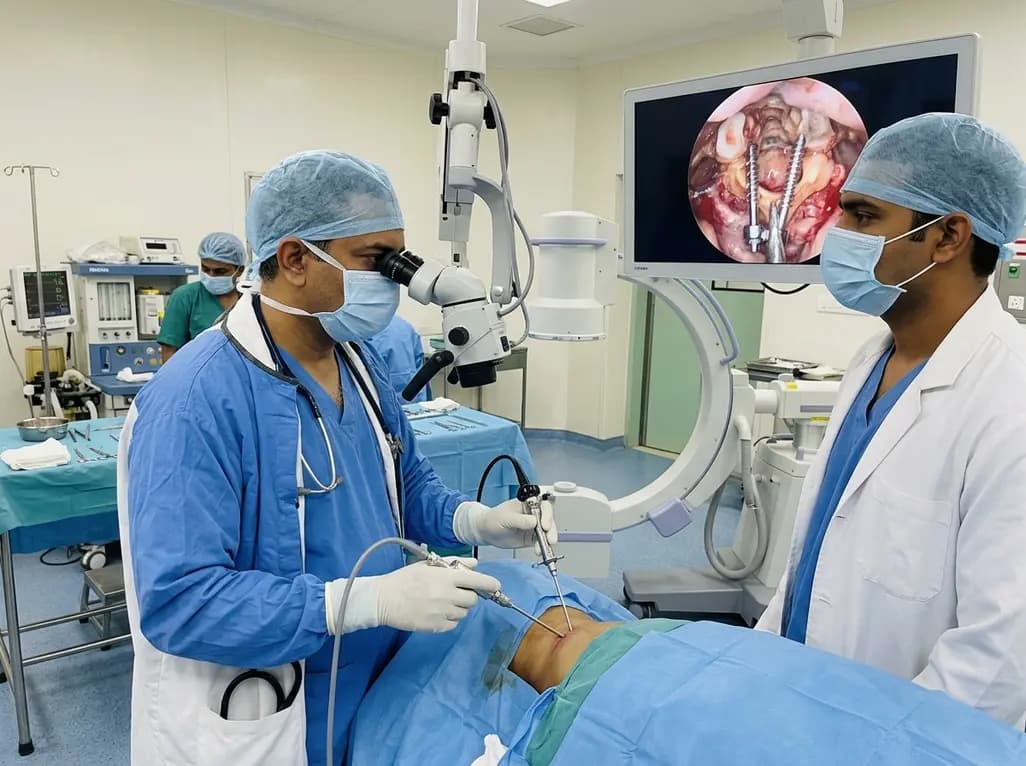
Endoscopic posterior cervical fusion combines minimally invasive decompression, joint preparation, and rigid screw-rod fixation for atlantoaxial pathologies. Early clinical findings demonstrate solid bony union, excellent symptom relief, and minimal soft-tissue morbidity without significant vascular compromise.
Yesterday
Atherosclerosis involves extensive glycometabolic reprogramming across immune and vascular cells. This review examines how glycolysis, the pentose phosphate pathway, and lactate-driven epigenetic shifts fuel plaque vulnerability, while highlighting novel therapeutic targets like PFKFB3 and LDHA.
Today
