.webp&w=384&q=75)

Loading, please wait...
Loading, please wait...

The Syrian hamster (Mesocricetus auratus) serves as a critical animal model for human infectious diseases. Because they exhibit similar disease progression and immune responses to humans, they are especially useful for studying respiratory tract infections. However, researchers have faced challenges because the genomic characterization of hamster B and T cell receptor loci remained incomplete. Consequently, a new study has revolutionized Syrian hamster immune profiling by establishing a robust reference set for immunoglobulin (IG) and T cell receptor (TR) sequences.
The research team performed long-read transcriptome sequencing across six different tissue types. This process yielded 43,090 full-length IG/TR transcripts, which allowed the construction of a reference set containing 22 IG/TR constant (C) regions. Furthermore, the scientists validated this reference using independent single-cell transcriptome datasets. Interestingly, allelic variations appeared in only two subclasses: IGHE and TRBC1. While IGHE produced a synonymous variant, TRBC1 resulted in a non-synonymous variant (S71G) with minimal predicted impact on protein structure. Therefore, these resources provide an unprecedented level of accuracy for future immunological studies.
In addition to characterization, the team designed and experimentally validated species-specific primers. These primers target the IG/TR C regions, making them essential tools for high-throughput immune repertoire analysis. As a result, researchers can now capture the full diversity of the hamster immune response more comprehensively. This development is particularly significant for the evaluation of vaccines and therapeutics against respiratory pathogens such as COVID-19 and influenza.
Syrian hamsters are preferred because their disease progression and immune responses closely mirror those of humans, particularly in the context of respiratory infections like COVID-19 and influenza.
The new primers allow for precise and comprehensive immune repertoire profiling. This enables scientists to track how B and T cells respond to infections or vaccinations with much higher resolution than previously possible.
Disclaimer: This content is for informational and educational purposes only. It does not constitute medical advice or a substitute for professional healthcare. Refer to the latest local and national guidelines for clinical practice.
References

Read summarized clinical updates, watch expert medical content, and earn CME certifications right from your smartphone.
Open your smartphone camera to scan and install.





New genomic resources for Syrian hamsters will enable better immune profiling in models of human respiratory infections like COVID-19 and influenza....
7 months ago

India is advancing preventive healthcare by integrating genomics, artificial intelligence, and quantum technologies. With the SANGAM programme sequencing one million Indian genomes, clinicians can unlock personalized therapies, detect cardiometabolic risks early, and curb the burden of diabetes and heart disease.
Today

Odisha has established India's first state-level clinical protocol specifically tailored for pregnant women with sickle cell disease. Developed with NHM and UNICEF, the framework provides structured antenatal screening, crisis mitigation, standardized referral pathways, and specialized interdisciplinary care.
Today

This article reviews the forensic and clinical complexities of acute myocarditis arising on left ventricular hypertrophy in children, highlighting early diagnostic red flags and multidisciplinary postmortem autopsy protocols.
Today
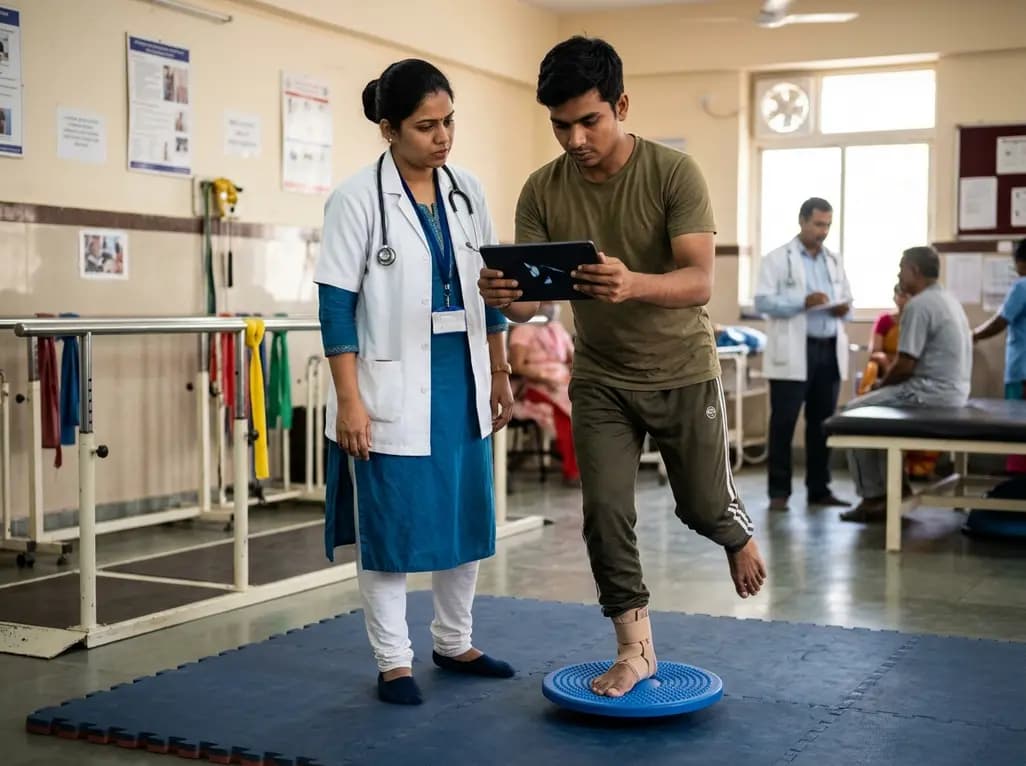
A randomized controlled trial demonstrates that an eight-week dual-task training intervention significantly improves static and dynamic postural control over standard balance exercises in individuals with chronic ankle instability, addressing critical neurocognitive deficits during athletic and daily activities.
Today

A retrospective cohort study of 7,716 ICU patients from the MIMIC-IV database demonstrates that Gradient Boosting Decision Trees significantly outperform traditional SOFA scores in predicting in-hospital mortality among patients with sepsis and diabetes, with SHAP analysis providing clinical interpretability.
Today
