.webp&w=384&q=75)

Loading, please wait...
Loading, please wait...

Modern medicine is currently undergoing a significant transition from reactive treatment to proactive health management. Central to this evolution is the development of sweat-based wearable electronic devices, which offer a non-invasive window into the body's internal physiology. Unlike traditional blood tests that provide only a single snapshot in time, these wearables enable continuous, real-time tracking of various biomarkers. Consequently, clinicians can now monitor patients in their natural environments, capturing data that was previously inaccessible during standard hospital visits. Furthermore, the accessibility of sweat glands across nearly the entire human body makes this biofluid an ideal candidate for long-term health surveillance. However, the transition from successful laboratory prototypes to reliable clinical tools remains a complex endeavor. Specifically, researchers must bridge fragmented progress in materials science and system integration to ensure these devices meet rigorous medical standards. This article explores the current state of sweat-sensing technology and the challenges that define its future implementation.
The performance of any wearable sensor depends heavily on the interface between the electronic hardware and the human skin. Therefore, materials science plays a pivotal role in the success of sweat-based wearable electronic devices. Recent advancements have focused on flexible substrates, such as polydimethylsiloxane (PDMS) and various hydrogels, which allow for conformal contact with the skin's irregular surface. Additionally, the emergence of two-dimensional materials like MXenes and transition metal dichalcogenides has significantly enhanced sensor sensitivity and selectivity. These nanomaterials provide a high surface-area-to-volume ratio, which is essential for detecting low concentrations of analytes in sweat. Moreover, conductive textiles are now being integrated into everyday clothing, transforming garments into active diagnostic tools. By utilizing these soft, stretchable materials, developers can minimize motion artifacts that typically plague wearable electronics. Consequently, this allows for more accurate data collection during vigorous physical activity or prolonged daily wear. Such innovations are fundamental to creating devices that patients will actually use, as comfort and reliability are key drivers of compliance in long-term health monitoring scenarios.
One of the most significant hurdles in the field of wearable sensors is what researchers identify as the stability-reliability paradox. This paradox refers to the inherent difficulty of maintaining a stable electronic signal while interacting with a dynamic biological interface like the skin. Because the chemical composition of sweat changes rapidly based on metabolic activity, environmental temperature, and hydration levels, the sensor must adapt to these fluctuations without losing accuracy. Furthermore, biofouling represents a persistent threat, as proteins and other large molecules in sweat can accumulate on the sensor surface, eventually degrading its performance. Therefore, achieving long-term operational stability requires sophisticated surface coatings and microfluidic designs that protect the sensing electrodes. In addition, movement-induced changes in the skin-sensor contact can lead to significant noise in the collected data. Addressing this paradox involves developing intelligent signal processing algorithms that can distinguish between physiological changes and environmental interference. Thus, the goal is to create systems that remain reliable over days or even weeks of continuous use, which is a prerequisite for any device intended for clinical diagnostics or chronic disease management.
The potential applications for sweat-sensing technology span across multiple medical specialties, including endocrinology and sports medicine. For instance, these devices are increasingly being investigated for their role in monitoring glucose levels in patients with diabetes. Although blood glucose remains the gold standard, sweat-based sensors offer a promising supplementary tool for detecting trends and preventing hypoglycemia. Additionally, the analysis of lactate and electrolytes in sweat provides invaluable insights for athletes and individuals in high-stress occupations. By tracking sodium and potassium loss in real-time, these sensors can help prevent severe dehydration and heat-related illnesses. Furthermore, the ability to measure cortisol levels through sweat opens new avenues for stress management and mental health monitoring. In clinical settings, these devices could assist in the early diagnosis of conditions like cystic fibrosis, which is already characterized by high chloride levels in sweat. Consequently, the integration of these wearables into routine clinical practice could lead to more personalized treatment plans. By providing a continuous stream of metabolic data, physicians can tailor interventions to the specific needs of each patient, ultimately improving health outcomes.
To move beyond simple proof-of-concept demonstrations, the industry requires a systematic development roadmap. This roadmap must focus on creating intelligent, autonomous systems that can handle the entire process of sweat stimulation, sampling, and data transmission. Crucially, the integration of artificial intelligence and machine learning is necessary to interpret the massive amounts of data generated by these sensors. These technologies can identify patterns that might indicate the early onset of disease or predict metabolic crises before they occur. Additionally, clinicians require validated systems that adhere to standardized protocols for data privacy and accuracy. Therefore, future research must emphasize large-scale clinical trials to confirm the correlation between sweat biomarkers and systemic health metrics. Moreover, the development of self-powered devices, using energy harvesting from body heat or movement, will be vital for ensuring long-term autonomy. As these systems become more sophisticated, they will likely transition from basic tracking tools to comprehensive diagnostic platforms. Consequently, this shift will empower patients to take a more active role in their own healthcare while providing doctors with the objective data needed for informed decision-making.
Sweat-based sensors provide a non-invasive and continuous method of monitoring health, whereas blood tests are typically invasive and offer only a snapshot of a patient's condition at a specific moment. By using sweat-based wearable electronic devices, clinicians can observe dynamic changes in metabolites and electrolytes over several hours or days. This continuous data flow allows for the detection of subtle physiological trends that single blood draws often miss.
The most significant challenge is the stability-reliability paradox, where the dynamic nature of the skin and sweat composition makes it difficult to maintain consistent sensor accuracy. Factors such as sensor biofouling, varying sweat rates, and motion artifacts can interfere with signal quality. Overcoming these issues requires advanced microfluidic sampling systems and robust data processing algorithms to ensure that the information remains accurate and actionable for medical professionals during daily life.
Yes, these devices hold immense potential for managing chronic conditions like diabetes and hypertension. By monitoring glucose or inflammatory markers in sweat, patients and doctors can gain a better understanding of how lifestyle choices and medications affect the body. While still transitioning from the lab to the clinic, the goal is to provide a reliable, pain-free alternative for frequent monitoring, which would significantly enhance patient compliance and overall quality of life.
Disclaimer: This content is for informational and educational purposes only and does not constitute medical advice or a professional relationship between the reader and the author. It should not be used as a substitute for professional medical advice, diagnosis, or treatment. Always seek the advice of your physician or other qualified health provider with any questions you may have regarding a medical condition. Refer to the latest local and national guidelines for clinical practice.
References
Zheng L et al. Sweat-Based Wearable Electronic Devices for Health Monitoring: Materials, Devices, and Applications. ACS Sens. 2026 Jun 25. doi: 10.1021/acssensors.6c01211. PMID: 42345192.
Santos TF et al. Emerging Technologies in Wearable Sweat Sensors for Next-Generation Real-Time Health Monitoring. ACS Materials Letters. 2025 Sep 4;7(3):3341-3362.
Javey A et al. The challenges and promise of sweat sensing. Nature Biotechnology. 2024;42(1):1-12. doi: 10.1038/s41587-023-02059-1.
"
Read summarized clinical updates, watch expert medical content, and earn CME certifications right from your smartphone.
Open your smartphone camera to scan and install.





Explore the evolution of sweat-based wearable electronic devices. This review covers material science, the stability-reliability paradox, and a roadmap for clinical validation in sports and metabolic health.
3 months ago

Health authorities recently identified the first documented human infection of Shamonda virus in an immunocompromised individual in France. While the World Health Organization currently assesses wider transmission risk as very low, the event highlights critical One Health vectors and arboviral diagnostic awareness.
Today
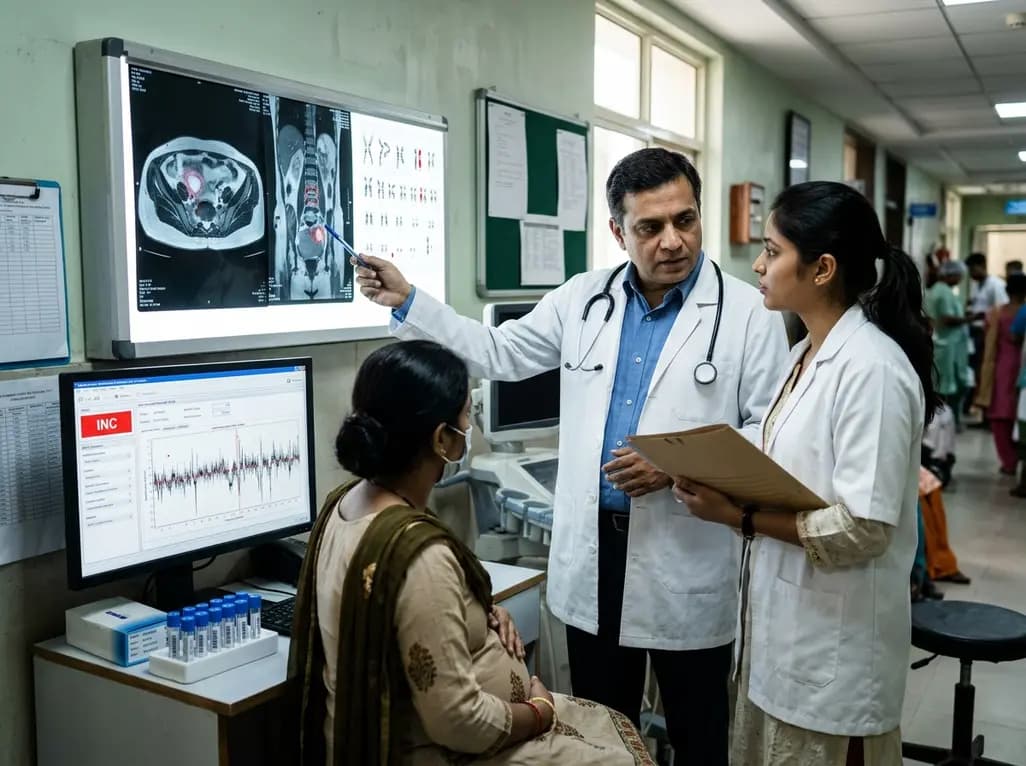
Occult maternal malignancy accounts for 3.82% of persistent unreportable NIPT results with genomic noise. Multiple chromosomal aberrations, notably on chromosome 18, warrant thorough oncological evaluation and whole-body MRI to ensure timely maternal diagnosis while preserving fetal care.
Today

This article reviews the forensic and clinical complexities of acute myocarditis arising on left ventricular hypertrophy in children, highlighting early diagnostic red flags and multidisciplinary postmortem autopsy protocols.
Today

A randomized controlled trial demonstrates that an eight-week dual-task training intervention significantly improves static and dynamic postural control over standard balance exercises in individuals with chronic ankle instability, addressing critical neurocognitive deficits during athletic and daily activities.
Today

A retrospective cohort study of 7,716 ICU patients from the MIMIC-IV database demonstrates that Gradient Boosting Decision Trees significantly outperform traditional SOFA scores in predicting in-hospital mortality among patients with sepsis and diabetes, with SHAP analysis providing clinical interpretability.
Today
