

Loading, please wait...
Loading, please wait...

The World Health Organization recently acknowledged the first documented human infection caused by Shamonda virus, an arbovirus historically confined to ruminant livestock. French health authorities reported the index case in an elderly patient who suffered from severe immunosuppression. Although public health agencies currently assess the likelihood of wider community transmission as low, this cross-species event underscores growing arboviral threats. Furthermore, clinicians worldwide must maintain vigilance regarding novel zoonotic pathogens emerging at the human-animal interface. Understanding how vector-borne pathogens traverse ecological boundaries remains vital for modern clinical and diagnostic practice. Consequently, medical professionals require updated clinical insights into transmission pathways, host risks, and diagnostic strategies.
Historically, researchers first isolated Shamonda virus from cattle in Nigeria during 1965. Over subsequent decades, surveillance confirmed sporadic circulation across several African and Asian agricultural settings. However, European veterinary authorities detected the pathogen unexpectedly during the summer of 2026. Multiple European nations reported acute outbreaks among dairy cattle, sheep, and domestic goats. Affected livestock presented with sudden fever, reduced milk yields, and adverse reproductive outcomes. In late 2026, French physicians identified the virus in a hospitalized patient residing in eastern France. Unfortunately, this immunocompromised patient subsequently succumbed to complications of severe underlying illness. Consequently, international public health bodies initiated rapid epidemiological investigations to assess public vulnerability. The World Health Organization confirmed that this case represents an isolated spillover occurrence. In addition, health agencies found no evidence showing secondary human-to-human transmission. European health authorities continue to monitor regional ruminant herds alongside entomological surveillance networks. Nevertheless, ongoing genomic sequencing remains critical to detect any signs of viral adaptation. Therefore, global clinicians should track these ecological developments closely.
Biologically, Shamonda virus belongs to the Orthobunyavirus genus within the Peribunyaviridae family. It forms part of the Simbu serogroup, which also includes the veterinary pathogen Schmallenberg virus. These enveloped, negative-sense RNA viruses possess a tripartite genome that permits genetic reassortment. Hematophagous biting midges of the genus Culicoides primarily drive viral transmission among animal reservoirs. Specifically, infected midges transmit the viral particles during blood meals taken from livestock hosts. In Europe, midge populations peak during warm spring and summer months before receding in autumn. French health authorities suspect that an infected local midge bit the French patient. Because midges feed opportunistically on various mammals, accidental human inoculation can occasionally occur. However, humans generally act as dead-end hosts for these specific bunyaviruses. Thus, sustained transmission between individuals remains biologically improbable without an effective intermediate vector. Furthermore, typical household contacts do not transmit the virus via respiratory or mucosal routes. Health authorities therefore do not recommend quarantine measures for casual contacts of infected livestock. Ongoing laboratory studies continue to analyze viral replication kinetics in human endothelial cells. Ultimately, vector control remains the primary countermeasure against potential arboviral dissemination.
The documented fatality in France highlights the profound vulnerability of severely immunocompromised patients to opportunistic arboviruses. Notably, the deceased patient had received intensive therapy for severe preexisting illness prior to viral exposure. Impaired cellular immunity often permits exotic pathogens to establish unchecked systemic replication. In contrast, healthy individuals with competent immune defenses typically clear dead-end zoonotic infections without symptoms. For example, related Simbu serogroup viruses rarely cause manifest clinical illness in healthy adult humans. Consequently, immunocompromised hosts serve as sentinels for novel zoonotic spillovers. When opportunistic pathogens bypass compromised mucosal or integumentary barriers, they can induce severe systemic inflammation. Furthermore, pre-existing organ dysfunction complicates clinical management and masks specific viral symptomatology. Treating physicians must maintain high clinical suspicion when immunocompromised individuals present with unexplained pyrexia. Additionally, clinicians should obtain thorough exposure histories covering rural travel, animal contact, and insect exposure. Because therapeutic options remain largely supportive, prevention serves as the cornerstone of patient safety. Immunosuppressed patients traveling through rural endemic areas should consistently apply effective insect repellents. Therefore, personalized counseling regarding vector avoidance remains crucial for vulnerable patient cohorts.
Diagnosing unusual arboviral illnesses presents significant diagnostic hurdles for clinical practitioners. Initial symptoms often mimic common vector-borne diseases such as dengue, chikungunya, West Nile, or malaria. Consequently, clinicians must utilize a systematic diagnostic approach when assessing acute febrile illnesses. Molecular detection through real-time reverse transcription-polymerase chain reaction serves as the diagnostic gold standard. However, conventional commercial multiplex panels do not detect rare livestock bunyaviruses. Therefore, hospital laboratories must collaborate with national reference laboratories when investigating unidentifiable fevers. Serological testing provides another diagnostic pathway, although antibody cross-reactivity within the Simbu serogroup can confound interpretation. Moreover, clinicians should perform paired acute and convalescent serology to confirm active infection. In rural healthcare settings, syndromic surveillance systems help identify unusual clusters of febrile illness. Furthermore, integrating metagenomic next-generation sequencing accelerates the identification of novel viral genomes in clinical specimens. Advanced sequencing tools successfully identified the viral pathogen in the recent European patient. Clinicians must remember that early diagnostic identification facilitates timely supportive therapy and public health reporting. Thus, robust laboratory networks remain indispensable for effective epidemic containment and vector-borne surveillance.
The isolated emergence of this livestock pathogen in humans reinforces the urgent necessity of One Health frameworks. Climate change and altered agricultural ecosystems directly modify the geographical distribution of Culicoides midges. Consequently, vector species now inhabit regions previously deemed climatically unsuitable for their survival. Veterinary authorities and human healthcare practitioners must communicate dynamically to intercept zoonotic threats before widespread propagation. Furthermore, collaborative surveillance between livestock sectors and infectious disease registries provides essential early warning data. In nations like India, where extensive livestock farming interfaces with dense human settlements, vector monitoring is paramount. Rural physicians frequently evaluate acute encephalitis syndromes and undifferentiated tropical fevers of unknown origin. Therefore, expanding regional genomic diagnostic capacity will prevent emerging zoonotic pathogens from escaping detection. Additionally, public health departments must promote integrated vector management, including environmental water clearance and targeted larvicide application. Educating rural farmers and animal handlers about personal insect repellent reduces exposure risks significantly. Ultimately, proactive global surveillance protects vulnerable communities against unexpected spillover events. By fostering interdisciplinary cooperation, healthcare systems can effectively mitigate future zoonotic epidemics.
Q1: What is Shamonda virus, and how does it typically infect livestock?
Shamonda virus is an enveloped Orthobunyavirus belonging to the Simbu serogroup, primarily infecting domestic ruminants including cattle, sheep, and goats. Hematophagous biting midges belonging to the Culicoides genus transmit the virus during blood meals. In livestock herds, the virus causes pyrexia, sudden drops in milk yield, diarrhea, and severe congenital malformations in newborns. Historically identified across Africa and Asia, it recently emerged in several European livestock herds during 2026.
Q2: Can Shamonda virus spread directly from human to human?
Currently, global health organizations confirm that Shamonda virus does not transmit from person to person. Humans act exclusively as accidental, dead-end hosts who contract the pathogen through infected midge bites rather than respiratory or direct contact. Furthermore, extensive epidemiological contact tracing around the index case revealed no secondary infections. Consequently, public health bodies do not recommend patient isolation or general quarantine measures for hospital staff or family members.
Q3: How should clinicians evaluate and manage suspected zoonotic arboviral cases?
Clinicians must maintain high suspicion when patients with unexplained fevers report rural exposures or insect bites in endemic areas. Diagnostic verification requires molecular testing via reverse transcription-polymerase chain reaction or specialized reference serology. Because no targeted antiviral therapeutics or commercial human vaccines currently exist, clinical care focuses on supportive therapy, fluid management, and organ support. Additionally, physicians must advise immunocompromised patients regarding diligent insect repellent use and protective clothing.
Disclaimer: This content is for informational and educational purposes only. It does not constitute medical advice or replace professional judgment. Refer to the latest local and national guidelines for clinical practice.
References

Read summarized clinical updates, watch expert medical content, and earn CME certifications right from your smartphone.
Open your smartphone camera to scan and install.





Health authorities recently identified the first documented human infection of Shamonda virus in an immunocompromised individual in France. While the World Health Organization currently assesses wider transmission risk as very low, the event highlights critical One Health vectors and arboviral diagnostic awareness.
Today

Occult maternal malignancy accounts for 3.82% of persistent unreportable NIPT results with genomic noise. Multiple chromosomal aberrations, notably on chromosome 18, warrant thorough oncological evaluation and whole-body MRI to ensure timely maternal diagnosis while preserving fetal care.
Today

This article reviews the forensic and clinical complexities of acute myocarditis arising on left ventricular hypertrophy in children, highlighting early diagnostic red flags and multidisciplinary postmortem autopsy protocols.
Today
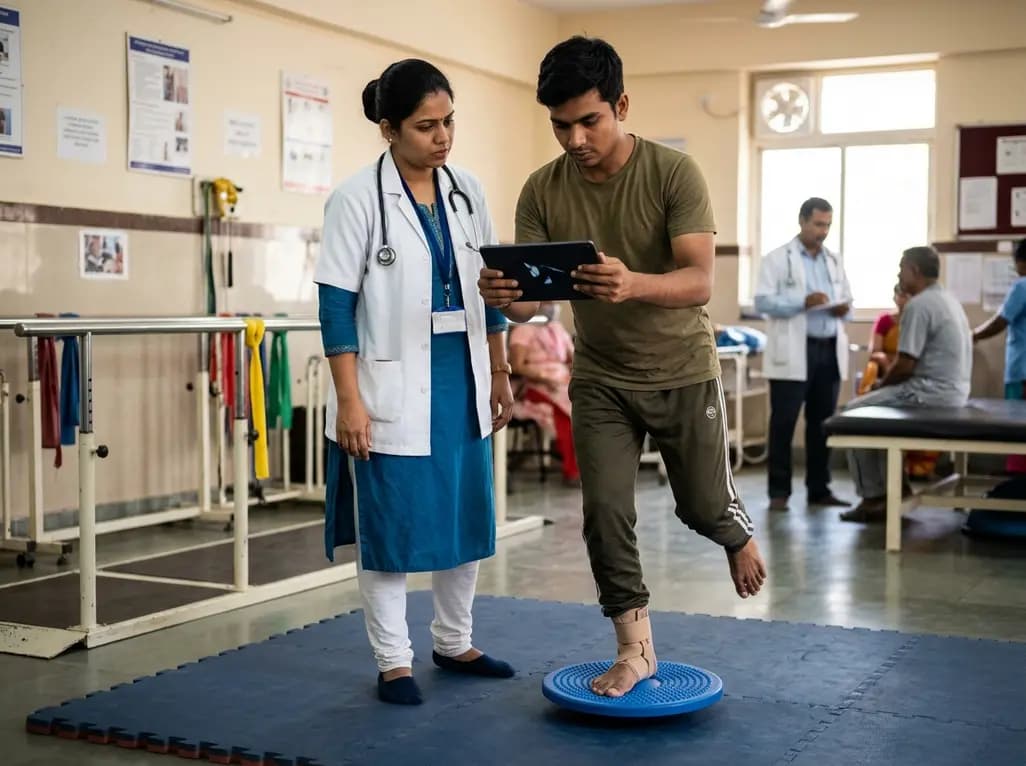
A randomized controlled trial demonstrates that an eight-week dual-task training intervention significantly improves static and dynamic postural control over standard balance exercises in individuals with chronic ankle instability, addressing critical neurocognitive deficits during athletic and daily activities.
Today

A retrospective cohort study of 7,716 ICU patients from the MIMIC-IV database demonstrates that Gradient Boosting Decision Trees significantly outperform traditional SOFA scores in predicting in-hospital mortality among patients with sepsis and diabetes, with SHAP analysis providing clinical interpretability.
Today
