.webp&w=384&q=75)

Loading, please wait...
Loading, please wait...
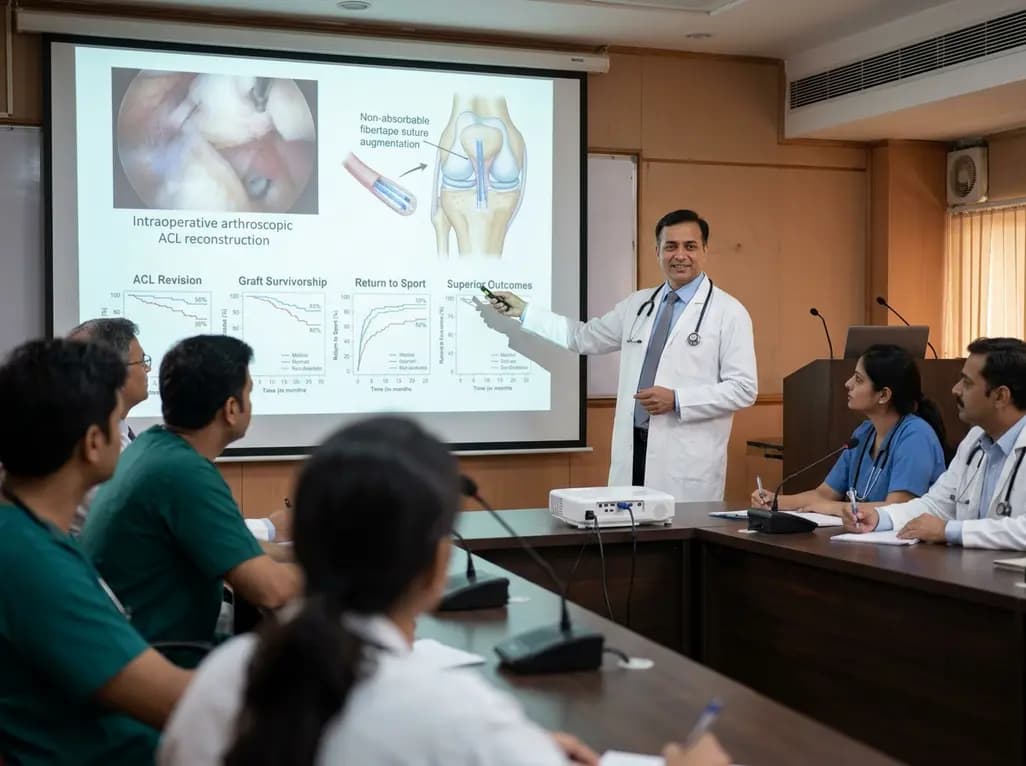
Managing failed primary knee stabilizations presents a formidable challenge for orthopedic surgeons worldwide. Specifically, revision ACL reconstruction demands careful planning because surgeons frequently encounter altered osseous tunnels, extensive scarring, and secondary capsular laxity. Furthermore, all-soft-tissue grafts face substantial biological and mechanical hurdles throughout the extended remodeling phase. Consequently, orthopedic registries demonstrate noticeably higher re-rupture rates and poorer functional outcomes following secondary surgeries than after primary procedures. In particular, tendon-to-bone integration requires prolonged mechanical protection against physiologic stresses. During early rehabilitation, premature cyclical loading can easily stretch or disrupt an unprotected biological substitute. Therefore, contemporary sports medicine specialists seek refined techniques that shield healing collagen fibers from dangerous peak forces. In addition, persistent microscopic instability undermines patient confidence, preventing individuals from returning to pre-injury performance levels. Accordingly, researchers have investigated internal bracing technologies to provide vital structural backup during this vulnerable biological window. Indeed, stabilizing the joint envelope effectively minimizes catastrophic failure while protecting knee longevity. Ultimately, optimizing graft survivorship in active populations remains a paramount clinical objective for reconstructive surgeons.
Suture augmentation functions as an independent, load-sharing internal brace that protects the biological graft. Specifically, surgeons tension high-strength ultra-high-molecular-weight polyethylene tape alongside the all-soft-tissue construct. Consequently, the synthetic tape absorbs critical tensile forces during early postoperative mobilization. However, the construct does not act as a permanent ligament replacement or induce stress-shielding when calibrated appropriately. Instead, biomechanical evaluations show that independently tensioned suture tape shares peak loads when sudden displacement occurs. In addition, synthetic augmentation significantly diminishes graft elongation under repetitive cyclic stresses. Animal and laboratory models confirm that this supplementary support preserves native tissue biology without compromising vascularization or ligamentization. Furthermore, the synthetic brace prevents micro-motion at the graft-tunnel interface, which substantially accelerates tendon integration. Thus, the mechanical scaffold grants the knee immediate structural stability during dynamic movements. As a result, physical therapists can implement functional rehabilitation protocols with greater confidence and lower risk of early elongation. Ultimately, this biomechanical synergy bridges the dangerous gap between initial fixation strength and mature biological tissue incorporation. Moreover, reinforced constructs resist abrupt rotational torques that typically threaten secondary stability.
Recent comparative clinical evidence highlights profound functional advantages for suture-augmented revision procedures over isolated techniques. Specifically, investigators evaluated patients undergoing revision surgery with all-soft-tissue grafts across a minimum two-year follow-up period. Using robust inverse probability of treatment weighting, the comparative analysis accounted for confounding baseline surgical and demographic variables. Notably, patients receiving suture augmentation demonstrated significantly higher postoperative Tegner activity scores than those receiving isolated reconstructions. Furthermore, a significantly higher proportion of augmented patients achieved the minimal clinically important difference for activity measures. Although general subjective scores like Lysholm and IKDC metrics remained comparable, functional performance distinctly favored the augmented cohort. Most importantly, suture-augmented procedures produced an impressive eighty percent reduction in graft failure rates compared to isolated reconstructions. Patients in the augmented group also achieved nearly fourfold higher odds of successfully returning to their pre-injury sports. In addition, these functional and survivorship gains occurred without increasing hardware complications or surgical revisions. Consequently, athletes regain competitive functional capacity while avoiding the devastating psychological and physical trauma of repeated graft disruption. Therefore, suture augmentation significantly bolsters clinical success.
Beyond subjective outcome metrics, objective radiological evaluation provides critical insights into residual knee joint laxity. In particular, magnetic resonance imaging allows precise measurement of passive anterior tibial subluxation across both compartments. Persistent subluxation after revision surgery indicates unresolved biomechanical deficiency and predicts premature graft degeneration. Notably, recent exploratory imaging data showed significantly lower postoperative lateral passive anterior tibial subluxation in suture-augmented knees. Isolated revision cohorts, in contrast, exhibited nearly double the amount of lateral anterior subluxation. Consequently, the augmented construct demonstrates superior control over resting rotational and translational kinematics under passive imaging conditions. In addition, restraining excessive lateral compartment displacement shields delicate meniscal repairs and preserves articular cartilage health. Furthermore, eliminating abnormal static laxity restores normal joint mechanics and reduces abnormal contact stresses during dynamic weight-bearing tasks. Thus, achieving objective radiological normalization represents a pivotal structural milestone in complex revision scenarios. Accordingly, incorporating suture augmentation delivers quantifiable anatomical stability that extends far beyond simple symptom relief. Indeed, precise restoration of resting joint alignment protects the articular surface against long-term osteoarthritic wear.
The compelling evidence supporting suture augmentation requires thoughtful integration into contemporary clinical algorithms and orthopedic workflows. Importantly, surgeons must not view suture bracing as a substitute for anatomical tunnel placement or rigid fixation. Instead, practitioners should consider suture tape augmentation as a protective biomechanical co-pilot during all-soft-tissue graft incorporation. Furthermore, this technique proves especially beneficial in young, active patients who demand an accelerated or rigorous return to sporting activities. Clinicians must maintain meticulous surgical discipline, ensuring independent tensioning of the tape to avoid overtightening or graft stress-shielding. In addition, clinical teams can safely employ standard accelerated rehabilitation pathways without fear of early stretch-out. Importantly, long-term registry surveillance remains essential to assess tissue response and confirm enduring survivorship over subsequent decades. Meanwhile, sports medicine specialists can confidently recommend this augmentation method to minimize rerupture risks in challenging revision settings. Therefore, implementing reinforced constructs elevates the current standard of care for secondary knee ligament reconstruction. Consequently, orthopedic surgeons can achieve predictable joint restoration and empower patients to resume active lifestyles safely.
Suture augmentation significantly reduces the risk of graft failure by acting as a protective load-sharing internal brace. Furthermore, clinical investigations demonstrate that augmented constructs improve postoperative Tegner activity scores and achieve nearly fourfold higher odds of return to sport. Additionally, this internal stabilization reduces lateral passive anterior tibial subluxation on postoperative imaging. Consequently, patients experience superior mechanical knee stability, faster functional recovery, and enhanced graft protection during crucial healing intervals.
Current clinical research indicates that suture tape augmentation does not increase the risk of arthrofibrosis, knee stiffness, or hardware irritation. Because surgeons fix and tension the synthetic tape independently from the soft-tissue graft, normal joint kinematics are preserved throughout knee flexion and extension. Consequently, patients achieve full physiological range of motion under standard postoperative rehabilitation protocols without experiencing excessive joint over-constraint, intra-articular inflammation, or heightened complication rates compared to isolated revision procedures.
Passive anterior tibial subluxation on magnetic resonance imaging provides an objective measurement of resting anteroposterior and rotational joint laxity. Persistent subluxation after reconstruction indicates unaddressed kinematic instability, which subjects the biological graft to excessive shear forces and increases failure risks. Furthermore, ongoing abnormal subluxation accelerates degenerative cartilage wear. Minimizing subluxation through suture augmentation successfully restores native anatomical alignment, protects concurrent meniscal repairs, and fosters optimal long-term joint survivorship in active individuals.
Disclaimer: This content is for informational and educational purposes only. It is not intended to provide medical advice, diagnosis, or treatment recommendations. Refer to the latest local and national guidelines for clinical practice.
References

Read summarized clinical updates, watch expert medical content, and earn CME certifications right from your smartphone.
Open your smartphone camera to scan and install.





A comparative study demonstrates that suture-augmented revision ACL reconstruction using all-soft-tissue grafts achieves superior activity scores, quadrupled return to sport rates, and an 80% reduction in graft failure compared to isolated revision procedures.
Today
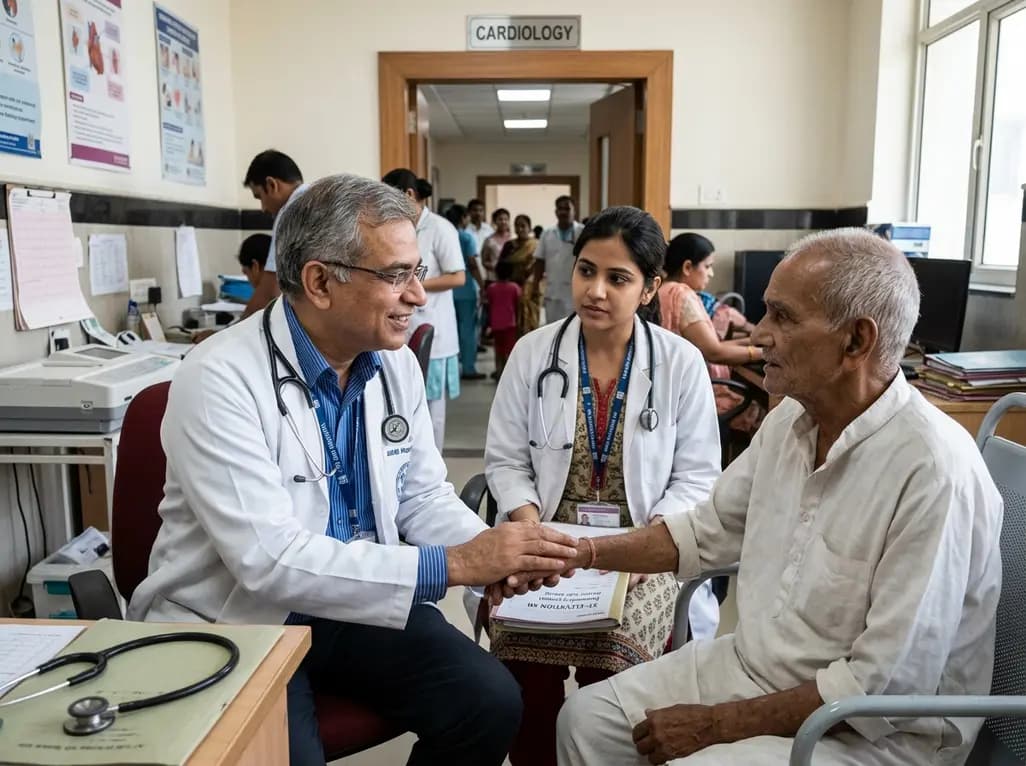
A landmark nationwide cohort study reveals that older adults with dementia who undergo cardiac catheterization for STEMI spend meaningful time alive at home, particularly community-dwelling individuals. Cognitive impairment alone should not preclude acute invasive revascularization.
Today

Prelacteal feeding persists in South Asian communities despite known clinical risks. This review examines determinants from Chitral, pathophysiological hazards, and pediatric strategies to eliminate harmful feeds and support exclusive breastfeeding.
Today

A randomized controlled trial demonstrates that theory-driven personalized mobile messaging reduces the risk of consecutive walking goal failures by 33 percent, highlighting the vital role of digital health tools in sustaining long-term exercise habits and chronic disease prevention.
Today
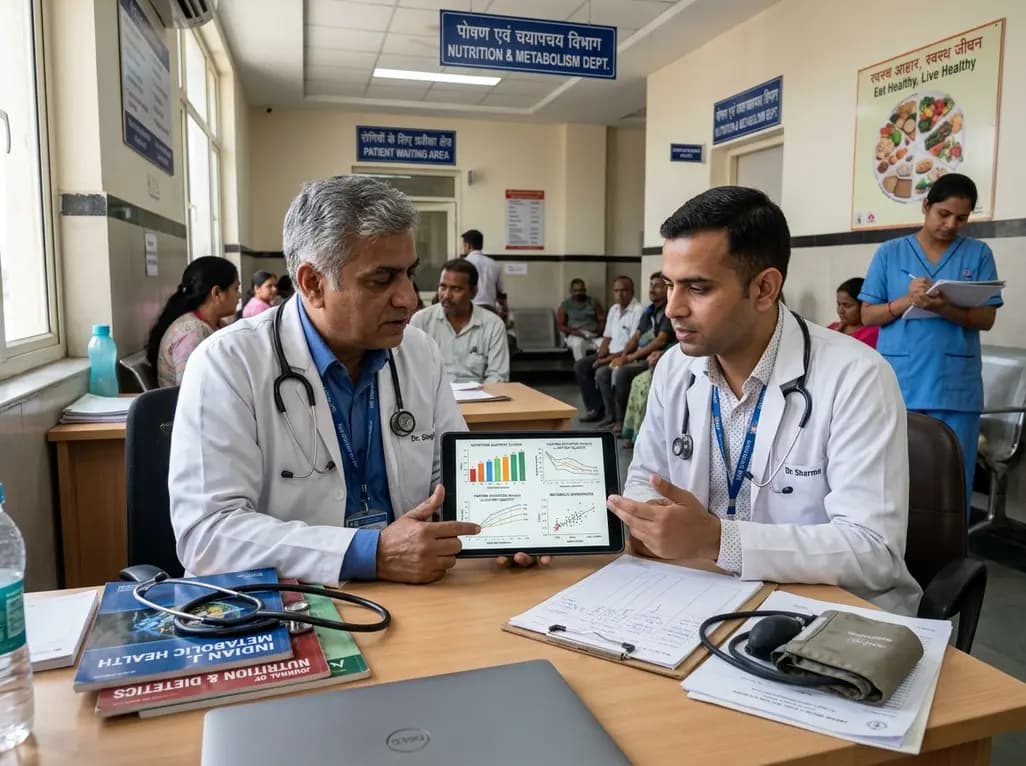
A cross-sectional study of 320 adults evaluated the link between habitual fasting duration and dietary quality using Nutrition Quotient scores, highlighting the clinical necessity of balancing time-restricted eating with nutrient density and meal quality in routine metabolic practice.
Today
