.webp&w=384&q=75)

Loading, please wait...
Loading, please wait...
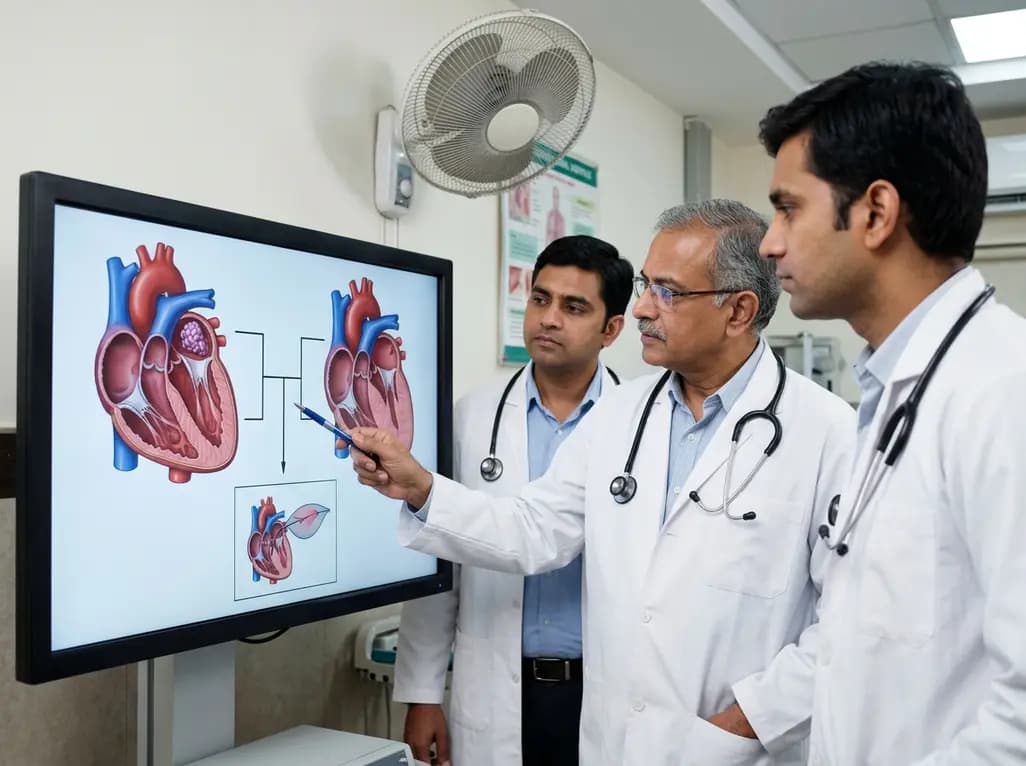
The simultaneous presentation of cardiac myxoma and hypertrophic cardiomyopathy (HCM) represents an exceptionally rare clinical scenario. Both conditions independently threaten cardiac hemodynamics, yet their coexistence creates a unique diagnostic puzzle for clinicians. While atrial myxomas typically cause acute symptoms due to valvular obstruction or embolism, HCM often presents with chronic left ventricular outflow tract obstruction (LVOTO). Therefore, managing a patient with both pathologies requires a delicate balance of timing and surgical precision. In many instances, the immediate threat of a mobile tumor overshadows the underlying cardiomyopathy. However, neglecting the septal hypertrophy during the initial surgery may lead to persistent symptoms or the need for a secondary intervention later. Consequently, clinicians must perform a comprehensive structural and functional assessment to identify all contributing factors. This approach ensures that Surgical Septal Myectomy is considered alongside tumor resection when necessary. By addressing both issues in one procedure, surgeons can optimize long-term outcomes and stabilize the patient's cardiovascular health more effectively.
Specifically, a 38-year-old male recently presented to the emergency department with acute dyspnea and hypoxemia. Initial physical examinations and imaging revealed significant pulmonary congestion, suggesting a rapid decline in cardiac function. Transthoracic echocardiography soon identified a large, mobile mass in the left atrium, which appeared consistent with a classic atrial myxoma. Notably, this mass was causing functional mitral stenosis by obstructing the valve during diastole. Furthermore, the echocardiogram demonstrated asymmetric septal hypertrophy with a maximum thickness of 25 mm. This thickening resulted in dynamic LVOTO, even though the patient had not previously been diagnosed with HCM. The combination of these two obstructive forces explained the patient's severe clinical state. Because the myxoma posed an immediate risk of embolic stroke or sudden hemodynamic collapse, the surgical team prioritized an urgent intervention. This case illustrates how acute symptoms can unmask underlying structural heart diseases that might otherwise remain latent for years.
Understanding the interaction between these two diseases is vital for effective management. Atrial myxomas generally produce symptoms by physically blocking the mitral valve or causing systemic emboli. In contrast, HCM causes dynamic obstruction through septal thickening and the systolic anterior motion of the mitral valve. When both conditions exist, they can amplify the pressure gradients across different cardiac segments. For instance, the functional mitral stenosis from the myxoma may reduce left ventricular filling, which paradoxically might alter the severity of the LVOTO. Moreover, the chronic pressure overload from HCM might lead to left atrial dilatation, which potentially creates a favorable environment for tumor development or symptom exacerbation. Consequently, the clinical team must decide if the resting LVOT gradient warrants immediate septal reduction. In this specific case, the surgeons recognized that the HCM was significant enough to require definitive treatment. Therefore, they opted for a multi-faceted surgical plan to ensure that the patient would not suffer from residual obstruction after the tumor was removed.
The decision to perform a Surgical Septal Myectomy alongside the resection of an atrial myxoma aligns with modern individualized treatment strategies. Typically, surgeons reserve myectomy for patients with resting or provocable gradients exceeding 50 mmHg who remain symptomatic despite medical therapy. However, in the context of a concomitant cardiac surgery, these thresholds may be adjusted. In young patients with significant septal thickness, early intervention can prevent future disease progression and heart failure. Furthermore, the 2024 AHA/ACC and 2023 ESC guidelines on cardiomyopathies emphasize the importance of shared decision-making and comprehensive structural assessment. By performing the myectomy during the same session as the tumor removal, the team avoids the risks associated with a redo sternotomy. Additionally, this proactive strategy addresses the potential for the LVOT gradient to increase once the myxoma no longer restricts ventricular inflow. Thus, the surgical team utilized a transaortic approach to perform a Morrow-type myectomy, ensuring the relief of the subaortic obstruction while simultaneously clearing the left atrium of the neoplastic mass.
Despite the success of the dual procedure, the case highlights the inherent risks of extensive cardiac surgery. Surgical myectomy, in particular, involves the resection of myocardial tissue near the heart's conduction system. Consequently, atrioventricular (AV) block remains a known and significant complication of this intervention. In this patient’s journey, he developed a complete AV block during the immediate postoperative period. While some conduction disturbances are transient, this patient required the implantation of a permanent dual-chamber pacemaker. This outcome serves as a critical reminder for perioperative planning and patient counseling. Surgeons must meticulously map the resection area to minimize damage to the bundle of His, yet the risk can never be entirely eliminated. Nevertheless, the patient’s primary symptoms of dyspnea and hypoxemia resolved following the surgery. At the short-term follow-up, the patient remained asymptomatic with only mild residual LVOTO. Therefore, while the pacemaker was a life-long consequence, the surgery successfully addressed the life-threatening dual obstruction.
In conclusion, this case report provides an instructive example of how to handle complex, overlapping cardiac pathologies. The coexistence of atrial myxoma and HCM is rare, but it requires a high index of clinical suspicion and detailed imaging. Moreover, the decision to perform a concomitant myectomy proved beneficial for this young patient, as it provided a more definitive solution to his hemodynamic challenges. Clinicians should follow the latest international guidelines, which support early intervention in selected cases of obstructive HCM. Specifically, when a patient is already undergoing cardiac surgery for another indication, the threshold for septal reduction may be lowered. This approach prioritizes long-term stability and prevents the morbidity associated with secondary operations. Ultimately, the successful management of such cases depends on a multidisciplinary team's ability to integrate surgical skill with advanced diagnostic insights. By sharing these rare presentations, the medical community can better prepare for the diagnostic and therapeutic nuances of the "two diseases, one heart" phenomenon.
Addressing hypertrophic cardiomyopathy (HCM) during a myxoma resection is crucial because the tumor removal alone may not resolve all hemodynamic issues. If the septal hypertrophy is significant, the patient may continue to suffer from left ventricular outflow tract obstruction even after the tumor is gone. Therefore, performing a concomitant myectomy prevents the need for a high-risk secondary surgery and ensures comprehensive relief of all intracardiac obstructions in a single operative session.
The primary risks include increased operative time and potential damage to the heart's electrical conduction system. Specifically, resecting septal tissue near the conduction pathways can lead to a complete atrioventricular block, as seen in this case. This complication often necessitates the lifelong use of a permanent pacemaker. Additionally, surgeons must be careful to avoid creating a ventricular septal defect during the myectomy, which would require further complex surgical repair and increase morbidity.
Modern guidelines from the AHA/ACC and ESC suggest that individualized surgical decision-making is paramount, especially in young patients. While traditional thresholds for myectomy focus on specific pressure gradients, guidelines now support earlier intervention when prognostic features are favorable or when the patient is already undergoing cardiac surgery. This proactive approach aims to improve the long-term quality of life and prevent the progression of heart failure by addressing structural abnormalities before they cause irreversible damage.
Disclaimer: This content is for informational and educational purposes only... Refer to the latest local and national guidelines for clinical practice.
References
Garcia LR et al. Surgical Septal Myectomy and Atrial Myxoma Resection: Two Diseases, One Heart, and a Case Report. Am J Case Rep. 2026 Jul 05. doi: 10.12659/AJCR.953036. PMID: 42401996.
Ommen SR et al. 2024 AHA/ACC/AMSSM/HRS/PACES/SCMR Guideline for the Management of Hypertrophic Cardiomyopathy. Circulation. 2024. doi: 10.1161/CIR.0000000000001212.
Arbelo E et al. 2023 ESC Guidelines for the management of cardiomyopathies. Eur Heart J. 2023 Oct 1;44(37):3503-3626. doi: 10.1093/eurheartj/ehad194.

Read summarized clinical updates, watch expert medical content, and earn CME certifications right from your smartphone.
Open your smartphone camera to scan and install.





This case report details the rare coexistence of atrial myxoma and hypertrophic cardiomyopathy in a 38-year-old patient. It explores the diagnostic challenges and the successful use of concomitant surgical septal myectomy to address both conditions simultaneously, highlighting perioperative risks like AV block.
3 months ago

A retrospective cohort study of 7,716 ICU patients from the MIMIC-IV database demonstrates that Gradient Boosting Decision Trees significantly outperform traditional SOFA scores in predicting in-hospital mortality among patients with sepsis and diabetes, with SHAP analysis providing clinical interpretability.
Today

A prenatal case highlights severe glutaric acidemia type II presenting as bilateral hyperechoic cystic kidneys at 18 weeks. Whole-exome sequencing revealed a novel homozygous ETFDH frameshift variant, demonstrating the power of rapid genetic testing in fetal renal anomalies.
Today
This article reviews the forensic and clinical complexities of acute myocarditis arising on left ventricular hypertrophy in children, highlighting early diagnostic red flags and multidisciplinary postmortem autopsy protocols.
Today

This comparative study evaluates posterior labral tears with and without glenohumeral instability, highlighting distinct demographic patterns, MRI underestimation in stable shoulders, and successful arthroscopic repair outcomes.
Yesterday

A clinical study demonstrates that early intervention with tocilizumab, either as monotherapy or bridged with corticosteroids, achieves significant proptosis reduction and resolves active inflammation in treatment-naive thyroid eye disease.
Yesterday
