.webp&w=384&q=75)

Loading, please wait...
Loading, please wait...

When managing neuromuscular blockade in patients undergoing complex posterior spinal procedures, selecting the optimal reversal agent is essential for patient safety and operative efficiency. For years, clinicians relied on acetylcholinesterase inhibitors combined with antimuscarinic agents to restore neuromuscular function. However, the evaluation of sugammadex vs neostigmine in surgical patients highlights substantial differences in clinical outcomes. Prone positioning during lumbar spinal fusion presents distinct physiological challenges, including altered chest wall compliance, increased intrathoracic pressure, and heightened cardiovascular strain. Consequently, smooth and rapid emergence from anesthesia is vital. Traditional reversal strategies using neostigmine paired with glycopyrrolate often introduce autonomic instability, such as severe bradycardia or tachycardia, which can compromise hemodynamic stability during emergence. In contrast, sugammadex offers a selective encapsulation mechanism that avoids anticholinergic side effects. Recent institutional data indicates that utilizing sugammadex significantly improves recovery parameters, lowers adverse cardiac events, and shortens total operating room duration for adult patients undergoing primary posterior lumbar fusion.
Cardiovascular complications during surgical emergence pose significant clinical risks, particularly in patients undergoing spinal procedures in the prone position. Neostigmine acts by inhibiting acetylcholinesterase, which increases acetylcholine levels at both nicotinic neuromuscular junctions and muscarinic autonomic receptors. To counteract profound muscarinic stimulation like bradycardia, co-administration of glycopyrrolate is necessary. However, this drug combination frequently causes unpredictable heart rate fluctuations, transient arrhythmias, and autonomic imbalance. In comparison, examining sugammadex vs neostigmine demonstrates a superior cardiovascular safety profile for sugammadex. Because sugammadex selectively encapsulates aminosteroidal neuromuscular blocking agents without interacting with cholinergic receptors, it avoids systemic muscarinic side effects. Consequently, clinical findings confirm a meaningful reduction in postoperative cardiac complications, such as severe bradycardia, tachyarrhythmias, and ischemic events, among patients receiving sugammadex. Furthermore, stable intraoperative hemodynamics simplify patient recovery, minimizing the necessity for rescue vasoactive medications in the post-anesthesia care unit. Therefore, avoiding autonomic disturbance is a primary advantage of neuromuscular encapsulation strategies.
Beyond direct clinical benefits, perioperative efficiency represents a critical metric for surgical suites. Operating room time is a major driver of healthcare resource utilization and institutional cost. When analyzing sugammadex vs neostigmine, research consistently demonstrates that sugammadex achieves complete neuromuscular recovery significantly faster than traditional reversal agents. Neostigmine requires residual end-plate activity and exhibits a ceiling effect, which often leads to delayed reversal and prolonged extubation times. Conversely, sugammadex encapsulates rocuronium or vecuronium in a 1:1 molecular ratio, restoring full muscle strength rapidly even from deep levels of neuromuscular block. In prone lumbar spinal fusion procedures, rapid recovery allows anesthesiologists to extubate patients promptly and safely immediately after skin closure. As a result, total operating room occupancy time drops significantly. Shorter operating room times optimize surgical scheduling, decrease staffing overtime, and reduce perioperative delays. Furthermore, predictable extubation mitigates airway emergencies and smooths the transition to recovery units.
Understanding distinct pharmacological mechanisms clarifies why clinical outcomes differ between reversal agents. Traditional reversal relies on neostigmine, an acetylcholinesterase inhibitor that indirectly increases synaptic acetylcholine concentrations to outcompete non-depolarizing muscle relaxants. However, this indirect mechanism requires a minimum degree of spontaneous recovery before administration and carries a risk of paradoxical weakness if given after full recovery. Additionally, neostigmine cannot effectively reverse deep neuromuscular blockade. On the other hand, sugammadex is a modified gamma-cyclodextrin designed specifically to encapsulate lipophilic aminosteroidal relaxants such as rocuronium and vecuronium. By binding free plasma relaxant molecules, sugammadex creates a concentration gradient that draws muscle relaxant away from neuromuscular junctions into the intravascular space. This direct mechanism functions independently of acetylcholinesterase and cholinergic receptors. Consequently, recovery occurs rapidly and predictably regardless of blockade depth. Furthermore, complete reversal eliminates the incidence of postoperative residual blockade, a known contributor to adverse respiratory events and hypoxia.
The practical implications of choosing sugammadex over traditional reversal combinations extend across the entire perioperative continuum. For spine surgeons and anesthesiologists, prone lumbar fusion demands careful airway management, meticulous hemodynamic monitoring, and prompt post-procedure neurological evaluation. Delayed emergence or residual weakness complicates lower extremity neurological assessments immediately following spinal instrumentation. By facilitating rapid, reliable awakening without lingering weakness, sugammadex enables immediate and accurate postoperative neurological testing. Furthermore, avoiding antimuscarinic side effects like severe dry mouth, urinary retention, and blurred vision improves patient recovery quality. Although direct drug acquisition costs for sugammadex exceed those of neostigmine, overall cost-effectiveness is often achieved through reduced operating room time and fewer postoperative complications. Therefore, incorporating sugammadex into standardized perioperative protocols for spine surgery optimizes clinical outcomes, enhances patient safety, and streamlines institutional resource allocation.
Adopting evidence-based reversal protocols influences institutional quality metrics beyond individual operative cases. Postoperative complications such as cardiac arrhythmias, myocardial injury, and respiratory distress significantly extend hospital stay length and elevate readmission rates. By reducing cardiac complications in prone spinal procedures, sugammadex contributes directly to lower postoperative morbidity. Moreover, predictable extubation and stable emergence decrease the burden on post-anesthesia care unit staff, allowing for smoother patient transitions to inpatient wards. In addition, enhanced patient safety profiles align with modern perioperative surgical home models and Enhanced Recovery After Surgery pathways. As surgical volumes for degenerative spinal disease continue to grow among aging populations, optimizing perioperative drug selection becomes increasingly vital. Consequently, replacing traditional cholinesterase inhibitors with targeted encapsulating agents represents a crucial step toward refining anesthesia care and standardizing surgical recovery standards across health centers.
Sugammadex is preferred because it provides rapid, complete reversal of neuromuscular blockade without cholinergic side effects. In prone spinal fusion, it reduces cardiac complications, eliminates residual paralysis, and allows prompt postoperative neurological assessment, whereas neostigmine combined with glycopyrrolate often causes heart rate instability and slower recovery.
Sugammadex rapidly encapsulates aminosteroidal muscle relaxants, restoring full muscle strength within minutes regardless of blockade depth. This rapid mechanism significantly shortens time to extubation after surgical closure, thereby reducing total operating room duration, minimizing operative delays, and optimizing surgical suite workflow and resource utilization.
Yes, financial benefits often outweigh drug acquisition costs. Although sugammadex costs more per dose than neostigmine, the reduction in operating room occupancy time and lower rates of postoperative cardiac and respiratory complications translate into substantial overall cost savings for healthcare facilities and surgical units.
Disclaimer: This content is for informational and educational purposes only and does not constitute medical advice, diagnosis, or treatment. Always seek the advice of a qualified healthcare provider with any questions regarding a medical condition or clinical management. Refer to the latest local and national guidelines for clinical practice.
References
Dalton J et al. Neuromuscular Blockade Reversal With Sugammadex Reduces Cardiac Complications and OR Time for Prone Lumbar Spinal Fusion Compared With Neostigmine. Spine (Phila Pa 1976). 2025 Oct 01. doi: 10.1097/BRS.0000000000005242. PMID: 39670290.
Kadam VR. Sugammadex vs Neostigmine Side Effects in Functional Endoscopic Sinus Surgery with Total Intravenous Anaesthesia and Rocuronium Neuromuscular Blockade: Observational Study. J Surg. 2018;1120.
Geldner G, Niskanen M, Laurila P, et al. A randomised controlled trial comparing sugammadex and neostigmine at different depths of neuromuscular blockade in patients undergoing laparoscopic surgery. Anaesthesia. 2012;67(9):991-998.

Read summarized clinical updates, watch expert medical content, and earn CME certifications right from your smartphone.
Open your smartphone camera to scan and install.





A retrospective cohort study demonstrates that neuromuscular blockade reversal with sugammadex significantly reduces postoperative cardiac complications and operating room duration compared with neostigmine/glycopyrrolate in adult patients undergoing prone posterior lumbar spinal fusion.
last month

A recent clinical report details an atypical presentation of bilateral proptosis as the primary manifestation of aggressive multiple myeloma. Explore the diagnostic pathway, imaging findings, and critical multidisciplinary management strategies essential for handling extramedullary plasma cell dyscrasias.
Today

Prenatal evaluation of fetal growth restriction requires an integrated diagnostic approach. While chromosomal microarray remains fundamental, exome sequencing offers significant diagnostic yield in isolated and syndromic cases, especially when ultrasound shows skeletal anomalies or normal placental function.
Today
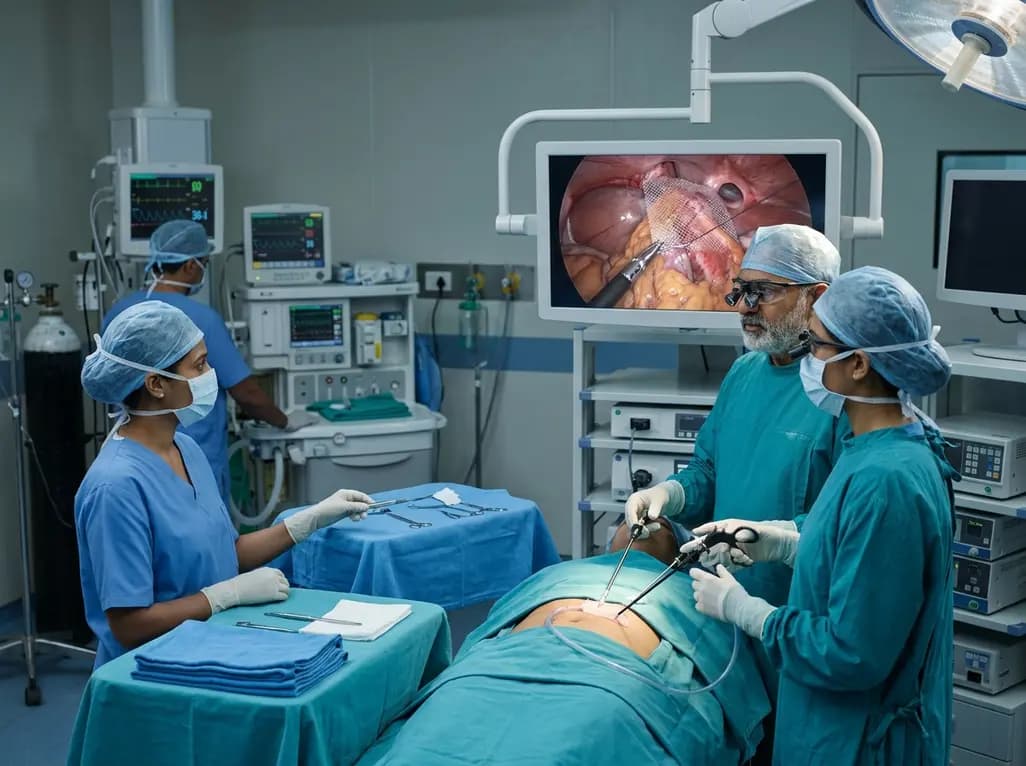
Discover a novel laparoscopic approach for iatrogenic diaphragmatic hernia repair following pedicled omentoplasty. This modified Sugarbaker technique integrates dorsal pedicle lateralization and round ligament reinforcement to secure the diaphragmatic defect while preserving vital omental vascularity.
Today

High-grade trochlear dysplasia disrupts patellofemoral stability. Although the patellotrochlear index measures cartilage overlap on MRI, cartilage contact does not ensure osseous containment. Relying solely on two-dimensional metrics may lead surgeons to overlook necessary tibial tubercle osteotomy procedures.
Today

New research reveals that M1 macrophage-derived exosomes aggravate diabetic nephropathy by transferring WTAP to stabilize S1PR2 mRNA. Silencing WTAP in these vesicles attenuates endothelial injury and renal fibrosis, pointing toward innovative nanomedicine therapies.
Today
