.webp&w=384&q=75)

Loading, please wait...
Loading, please wait...
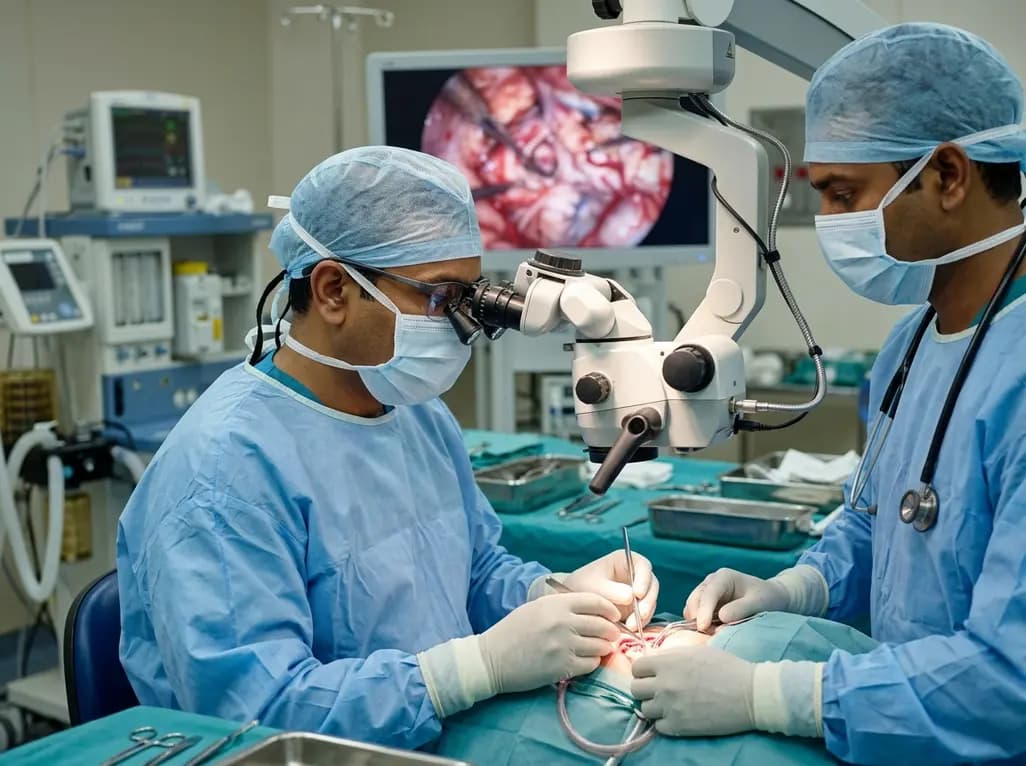
Modern skull base neurosurgery demands a delicate balance between complete tumor clearance and neural preservation. Vestibular schwannomas represent benign yet anatomically challenging neoplasms arising within the cerebellopontine angle. Historically, neurosurgeons prioritized aggressive gross-total resection to eliminate tumor recurrence. However, extensive capsular dissection frequently compromised the facial nerve, resulting in severe postoperative palsy and diminished patient quality of life. Consequently, many modern skull base teams shifted toward planned subtotal resection combined with stereotactic radiosurgery. Although this hybrid approach minimizes acute cranial nerve trauma, it introduces risks of long-term radiation exposure and elevated recurrence rates tied to substantial residual volume. Therefore, skull base specialists are re-evaluating microsurgical techniques to determine whether maximal resection and functional preservation can coexist reliably. Recent clinical evidence highlights the subperineural onion-peeling dissection technique as an innovative method that redefines onco-functional balance. By leveraging intrinsic microanatomical planes, this operative strategy offers a durable alternative to routine planned subtotal resection. Ultimately, modern vestibular schwannoma surgery aims to eradicate pathological tissue while safeguarding facial nerve integrity, thereby optimizing long-term outcomes without routine secondary radiation.
The subperineural onion-peeling technique relies on a nuanced microanatomical understanding of the eighth cranial nerve sheath. During neoplastic growth, the vestibular nerve perineurium creates a natural biological interface between the expanding tumor and adjacent motor pathways. Rather than violating this protective barrier, the neurosurgeon identifies and develops the subperineural plane overlying the tumor capsule. The surgeon then meticulously debulks and peels the tumor away in concentric, ultra-thin layers, mimicking the layered peeling of an onion. Consequently, this controlled internal decompression frees the central mass before surgeons address the adhering periphery. Furthermore, leaving a microscopic layer of perineurium provides an essential anatomical buffer directly overlying the facial nerve axons. This biological shield protects fragile motor fibers from mechanical traction, microvascular devascularization, and thermal injury caused by bipolar electrocautery. In addition, maintaining the perineural interface preserves critical arachnoid planes around the brainstem and neighboring neurovascular structures. As a result, surgical teams achieve extensive tumor mobilization with minimal lateral tension on stretched facial nerve fibers, transforming high-risk adhesiolysis into a safe, layered microdissection.
Clinical evaluation of the subperineural onion-peeling technique demonstrates outstanding oncological and functional efficacy. In a rigorous cohort of 146 consecutive patients, maximal safe resection was achieved in the vast majority of cases. Specifically, 97.3 percent of patients underwent either gross-total resection or near-total resection, effectively minimizing residual neoplastic burden. Simultaneously, long-term postoperative assessments confirmed excellent facial nerve preservation. Overall, 95.2 percent of patients achieved normal or near-normal facial motor function, corresponding to House-Brackmann Grade I or II. These findings strongly challenge the traditional assumption that high resection rates inevitably produce unacceptable rates of facial palsy. Moreover, preserving the perineural sheath allows surgeons to safely resect adherent tumor portions from the internal acoustic canal and brainstem junction. Whenever dense adhesions or declining electrical thresholds indicate imminent axonal danger, the surgeon halts dissection precisely at the perineural layer. Consequently, this stratified approach delivers an optimal onco-functional balance, avoiding both reckless radical resection and unnecessary large tumor remnants.
The comparative balance between primary maximal microsurgery and hybrid subtotal resection with stereotactic radiosurgery represents a critical clinical consideration. Planned subtotal resection intentionally leaves substantial tumor volume behind to safeguard facial nerve integrity. However, residual tumor volume correlates directly with long-term recurrence, frequently requiring salvage radiosurgery or complex re-operations. Stereotactic radiosurgery carries documented long-term risks, including radiation-induced cranial neuropathies, hydrocephalus, and rare malignant transformation. In contrast, the subperineural onion-peeling method maximizes surgical resection during the index procedure. Therefore, it markedly reduces the necessity for adjuvant or salvage radiotherapy. Furthermore, historical data from hybrid protocols reveal occasional late functional deterioration due to delayed radiation injury to the facial nerve. In contrast, patients undergoing definitive microsurgical resection with perineural preservation experience rapid postoperative recovery and durable local control. Additionally, complete or near-complete pathological clearance spares young patients from decades of imaging anxiety. Thus, subperineural microdissection provides a definitive, radiation-sparing strategy for challenging tumors.
Flawless execution of subperineural dissection requires continuous, high-resolution intraoperative neurophysiological monitoring. Continuous electromyographic monitoring of facial musculature alerts the surgeon instantly to mechanical irritation or traction strain. Moreover, handheld monopolar and bipolar stimulating probes help map the displaced facial nerve path along the tumor capsule. When electrical stimulation confirms nerve proximity, the surgeon initiates internal onion-peeling to hollow the core mass safely. Sharp micro-scissors and low-voltage micro-bipolar forceps facilitate controlled layer-by-layer debulking without transmitting kinetic force to adjacent neural tissue. Furthermore, constant dynamic irrigation prevents thermal accumulation while preserving tissue visualization. If stimulation thresholds drop significantly during dissection, indicating impending axonal strain, the surgeon respects the perineural buffer and terminates local resection. Consequently, real-time neuromonitoring guides the anatomical limits of resection dynamically throughout the entire intervention. This harmonious integration of neurophysiology and microdissection ensures reproducible nerve preservation across varying tumor volumes.
The successful implementation of subperineural dissection highlights an evolving standard in skull base neuro-oncology. This technique proves that surgeons do not need to sacrifice oncological control to achieve superior facial nerve outcomes. By treating natural nerve sheaths as biological shields, skull base teams can individualize resection strategies based on tumor geometry, preoperative hearing, and patient age. For large lesions causing brainstem compression, maximal safe resection remains the gold standard frontline therapy. Additionally, standardizing the onion-peeling technique offers reproducible educational frameworks for skull base training programs worldwide. Continued multicenter surveillance will further clarify long-term progression-free survival rates. Ultimately, adopting subperineural onion-peeling dissection empowers surgeons to maximize tumor clearance, reduce radiation dependence, and preserve essential quality of life.
Subperineural onion-peeling dissection is a specialized microsurgical technique where the surgeon removes the vestibular schwannoma in concentric, thin layers while preserving a thin layer of perineurium. This perineural buffer protects the closely adherent facial nerve from mechanical traction, thermal injury, and devascularization during maximal tumor resection.
The subperineural technique achieves excellent functional preservation, with over 95 percent of patients maintaining House-Brackmann Grade I or II facial function. Compared to hybrid subtotal resection with stereotactic radiosurgery, it provides comparable or superior functional outcomes while delivering higher resection rates, lower recurrence risk, and reduced radiation exposure.
Surgeons transition to near-total resection when dense adhesions or falling electromyographic stimulation thresholds indicate that dissecting the final microscopic tumor fragment threatens facial nerve axonal integrity. Leaving a tiny perineural remnant protects motor function while still achieving more than 95 percent tumor volume reduction for excellent control.
Disclaimer: This content is for informational and educational purposes only. It is not intended to provide medical advice, diagnosis, or treatment. Always seek the advice of your healthcare provider with any questions you may have regarding a medical condition. Refer to the latest local and national guidelines for clinical practice.
References

Read summarized clinical updates, watch expert medical content, and earn CME certifications right from your smartphone.
Open your smartphone camera to scan and install.





A study evaluates subperineural onion-peeling dissection in vestibular schwannoma surgery, achieving a 97.3% maximal resection rate and 95.2% facial nerve preservation, presenting a potent alternative to hybrid subtotal resection and radiosurgery paradigms.
last month

Targeting ferroptosis provides a compelling strategy to dismantle hypoxia- and acidosis-driven immunosuppression in solid tumors, enhancing response to modern immunotherapy.
Today

Findings from Project Viva indicate that sustained postpartum weight retention, rather than excessive gestational weight gain alone, directly worsens women's mid-life cardiovascular health, degrading blood pressure and glycemic parameters decades after delivery.
Today

A large UK Biobank study reveals that plasma proteomic signatures capture preclinical organ damage and improve multiorgan risk prediction across early CKM syndrome stages 0 to 2 beyond traditional PREVENT clinical models.
Today

A retrospective CBCT study reveals that superior TMJ space asymmetry correlates moderately with occipital condyle-atlas-axis asymmetry in unilateral TMJ osteoarthritis, highlighting an imaging correlate between jaw biomechanics and upper cervical alignment rather than a standalone diagnostic marker.
Today

A Bayesian multilevel meta-analysis reveals that aerobic training combined with moderate carbohydrate restriction modestly lowers HbA1c in type 2 diabetes. However, sparse data and very low certainty leave incremental benefits over exercise or diet alone unproven, highlighting the need for individualized care.
Today
