

Loading, please wait...
Loading, please wait...

Modern primary healthcare systems increasingly rely on telemedicine to deliver prompt and flexible outpatient care. Consequently, understanding strategic video consultation implementation has become essential for clinicians, policy leaders, and clinic administrators. Recent qualitative evidence reveals that scaling virtual consultations involves much more than deploying new software. Instead, healthcare organizations must actively manage complex organizational trade-offs. Stakeholders frequently encounter competing operational priorities between convenience, equity, clinical safety, and professional independence. Examining these underlying tensions provides actionable insights for medical practitioners who want to build sustainable and responsive digital services.
Health systems globally promote virtual clinics to modernize primary care workflows and reduce wait times. However, effective video consultation implementation demands a structured organizational approach rather than a simple technological update. Health authorities, clinician associations, and patient advocacy groups often view digital visits through divergent professional lenses. For instance, administrators frequently celebrate rapid scalability and cost containment. Meanwhile, practicing family doctors prioritize diagnostic rigor and patient rapport. A qualitative evaluation of implementation leaders highlighted four core dilemmas: access versus digital inequity, throughput versus relational quality, rapid change versus operational uncertainty, and rigid adoption metrics versus clinical autonomy. Therefore, clinics cannot treat virtual communication as an automatic upgrade. Instead, practices must assess local patient demographics, chronic disease burdens, and infrastructural capacity before mandating virtual care pathways. Successful programs coordinate technological investments directly with ongoing clinician training. This alignment ensures that virtual encounters complement rather than disrupt standard in-person primary care delivery.
Proponents frequently argue that virtual appointments democratize healthcare access by eliminating geographic boundaries and travel burdens. Patients with demanding employment schedules, childcare commitments, or mobility limitations benefit immensely from remote visits. Nevertheless, widespread digitalization introduces a substantial risk of widening existing socioeconomic disparities. Vulnerable demographics often lack high-speed connectivity, modern digital devices, or the health literacy required to navigate complex scheduling portals. Geriatric individuals, migrant communities, and socioeconomically disadvantaged families frequently experience acute digital exclusion. Consequently, healthcare organizations must not assume that digital availability equals equitable accessibility. Primary care networks must preserve low-barrier alternatives, such as telephone triage, community health worker assistance, and traditional walk-in availability. In addition, user interfaces should accommodate diverse linguistic backgrounds and accessibility requirements. Clinicians must actively identify patients who struggle with digital tools and offer structured support rather than penalizing their non-engagement. Safeguarding digital equity guarantees that convenience for tech-literate cohorts does not compromise primary care access for marginalized populations.
Virtual encounters can streamline routine administrative reviews and straightforward triage encounters. However, relying excessively on screens introduces distinct risks to clinical communication and diagnostic precision. Subtle diagnostic clues, including tactile feedback, subtle odors, peripheral edema, or nuanced nonverbal distress, remain difficult or impossible to evaluate remotely. Furthermore, building therapeutic trust often requires shared physical presence, particularly during sensitive psychiatric discussions or initial chronic disease assessments. When health systems prioritize speed over thoroughness, diagnostic errors and fragmented continuity inevitably rise. Therefore, general practitioners must establish clear clinical boundaries regarding which conditions suit remote evaluation. Stable medication renewals, basic lifestyle counseling, and routine laboratory reviews adapt well to video platforms. Conversely, acute abdominal pain, undifferentiated respiratory symptoms, and complicated multi-morbidity demand direct physical examination. Medical organizations must empower doctors to convert virtual sessions into in-person visits whenever clinical ambiguity arises. Prioritizing diagnostic safety over quick consultation turnaround protects both patient welfare and professional liability.
Even motivated clinicians struggle when digital platforms fail to integrate seamlessly with existing electronic medical records. Furthermore, healthcare delivery relies on cross-sector coordination between community clinics, diagnostic laboratories, specialty centers, and retail pharmacies. When virtual platforms operate in technical silos, communication breaks down rapidly. For example, doctors often encounter duplicate documentation burdens, missing diagnostic reports, and disjointed prescription transfers across regional portals. Technical glitches, unstable connections, and confusing log-in interfaces frustrate both patients and practice teams. To mitigate these operational bottlenecks, healthcare leaders must invest in robust, interoperable software architectures. Software systems should integrate scheduling, live video transmission, digital consent capture, and prescription modules within a single unified workflow. Additionally, administrative teams require comprehensive onboarding and dedicated technical assistance to resolve platform failures promptly. Removing digital friction enables healthcare providers to concentrate fully on clinical decision-making rather than troubleshooting software errors during patient encounters.
Healthcare governance bodies frequently establish aggressive digital adoption targets to demonstrate modernization and productivity gains. Nevertheless, top-down quotas that mandate specific percentages of virtual consultations create significant professional resistance. When authorities judge general practices solely on consultation volume or digital uptake rates, clinical judgment suffers. Clinicians may feel pressured to evaluate unsuitable conditions remotely simply to fulfill bureaucratic digital quotas. Consequently, sustainable governance models must balance executive oversight with clinical autonomy. Regulatory bodies should formulate flexible guidelines that emphasize patient outcomes, care safety, and appropriate triaging rather than rigid utilization numbers. Furthermore, professional reimbursement structures must fairly compensate physicians for the preparation, review, and documentation time that remote visits require. When governance frameworks respect clinical discretion, practitioners embrace digital tools with greater confidence and enthusiasm. Collaborative policymaking ensures that digitalization supports professional medical ethics while advancing system-wide healthcare objectives.
Video consultations suit stable chronic follow-ups, routine medication reviews, lab result interpretations, and uncomplicated triage. However, conditions requiring palpation, auscultation, or comprehensive physical assessments mandate in-person evaluations. Clinicians must exercise clinical judgment, confirming that remote modalities provide sufficient diagnostic information without compromising patient safety.
Practices should maintain hybrid appointment systems that preserve accessible face-to-face and telephone options. Additionally, clinics can implement intuitive multilingual software, offer assisted digital check-ins through clinic staff, and collaborate with community health workers. These targeted measures help vulnerable or digitally illiterate patients navigate remote care safely.
Statutory standards, such as India's Telemedicine Practice Guidelines, mandate clear clinician and patient identification, explicit informed consent, and robust data protection. Furthermore, these frameworks limit remote prescribing for high-risk medications and hold remote consultations to the same professional ethical standards as physical visits.
Disclaimer: This content is for informational and educational purposes only. It is not intended to be a substitute for professional medical advice, diagnosis, or treatment. Always seek the advice of your physician or other qualified health provider with any questions you may have regarding a medical condition. Refer to the latest local and national guidelines for clinical practice.
References
Kirk UB et al. Strategic Considerations for Video Consultation Implementation in General Practice: Qualitative Study of Organizational Interest-Holders' Perspectives. J Med Internet Res. 2026 Oct 19. doi: 10.2196/106707. PMID: 42896169.
National Medical Commission, Ministry of Health and Family Welfare, Government of India. Telemedicine Practice Guidelines: Enabling Registered Medical Practitioners to Provide Healthcare Using Telemedicine. New Delhi: MoHFW; 2020.
World Health Organization. Consolidated Telemedicine Implementation Guide: Considerations for Policy, Regulatory Frameworks, and Clinical Governance. Geneva: WHO; 2022.

Read summarized clinical updates, watch expert medical content, and earn CME certifications right from your smartphone.
Open your smartphone camera to scan and install.





Strategic video consultation implementation in primary care requires balancing access with equity, clinical safety with speed, and sound governance with digital targets. Exploring organizational tensions helps clinicians and health administrators ensure safe, sustainable virtual healthcare.
Today

A case-control study reveals that severe poverty and silica dust exposure significantly increase tuberculosis risk among artisanal miners. This analysis reviews pathophysiology, clinical management, and targeted screening protocols relevant to clinicians treating occupational lung disease in high-burden settings.
Today

New research reveals that HPV16 E7 exosomes significantly upregulate PD-L1 on tumor-infiltrating lymphocytes in cervical cancer, driving local immune suppression and correlating with poorer patient survival. These findings expose key mechanisms of immune evasion with direct relevance to checkpoint blockade therapies.
Today
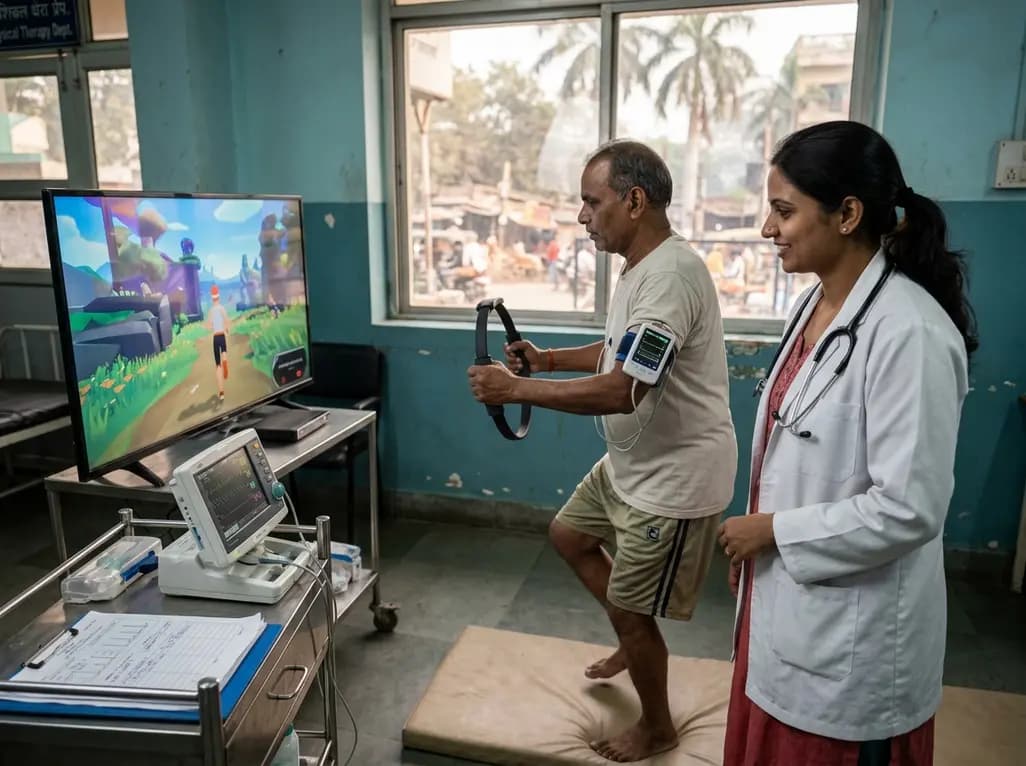
A clinical study evaluated Ring Fit Adventure in adults with chronic conditions, revealing that exergaming achieves moderate-to-vigorous exercise intensity while maintaining hemodynamic stability, high enjoyment, and zero adverse events.
Today
A retrospective cohort study reveals that selecting the touched vertebra as the lowest instrumented vertebra in thoracic adolescent idiopathic scoliosis yields a 20.8% distal add-on rate, driven by remnant motion segments and axial rotational discrepancies.
Today

A study evaluates a cardiometabolic HFpEF model combining metabolic stress with chronic mineralocorticoid excess. The findings reveal profound diastolic stiffness, endothelial dysfunction, and pulmonary hypertension, illuminating key pathophysiological mechanisms for targeted cardiopulmonary therapies.
Today
