.webp&w=384&q=75)

Loading, please wait...
Loading, please wait...

Psychodynamic psychotherapists often look beyond traditional psychometrics to understand the practical application of assessment tools. A recent study explored how clinicians integrate the Structured Interview of Personality Organization - Revised (STIPO-R) during their training. By examining these early experiences, researchers identified how STIPO-R clinical utility emerges through active practice and relational engagement.
Therapists frequently modify and personalize the tool to align with their clinical style. While the STIPO-R provides a solid structure, practitioners must navigate complex relational dynamics during the interview. This process helps them shape a deeper understanding of patient functioning through observation and interpretation. Furthermore, this approach allows clinicians to move beyond symptom checklists into the nuances of personality structure.
The STIPO-R enables clinicians to evaluate five core domains: identity, object relations, primitive defenses, aggression, and moral values. Consequently, this tool offers a nuanced dimensional assessment that exceeds traditional categorical systems. However, the study also notes that therapists may struggle with specific elements during the diagnostic process. Successfully embedding the STIPO-R in object relations theory remains a critical step for improving clinical effectiveness. In addition, these insights provide valuable guidance for training future mental health professionals in India and globally.
The STIPO-R evaluates five specific domains of personality functioning: identity integration, quality of object relations, primitive defenses, aggression, and moral values.
The tool provides a structured framework that helps early-career therapists observe and interpret patient responses through the lens of object relations theory.
It does not replace them but rather supplements them by providing a dimensional view of personality organization and severity, which is increasingly encouraged by the DSM-5 Alternative Model.
Disclaimer: This content is for informational and educational purposes only. It does not constitute medical advice or establish a doctor-patient relationship. Always seek the advice of a qualified healthcare provider regarding a medical condition or treatment. Refer to the latest local and national guidelines for clinical practice.
References
Soroko E et al. How Clinical Utility Emerges: Experiences of Psychotherapists Using the Structured Interview of Personality Organization - Revised (STIPO-R). J Pers Assess. 2026 May 08. doi: 10.1080/00223891.2026.2661985. PMID: 42101885.
Clarkin JF, Caligor E, Stern B, Kernberg OF. Manual for the Structured Interview of Personality Organization-Revised (STIPO-R). International Society of Transference-Focused Psychotherapy. 2017.
Doering S, et al. The Structured Interview of Personality Organization (STIPO): Psychometric Properties and Clinical Utility. J Pers Assess. 2013;95(4):327-35. doi: 10.1080/00223891.2012.753874.

Read summarized clinical updates, watch expert medical content, and earn CME certifications right from your smartphone.
Open your smartphone camera to scan and install.





A study explores how psychotherapists integrate the STIPO-R into clinical practice, highlighting its role in dimensional personality assessment and training...
5 months ago
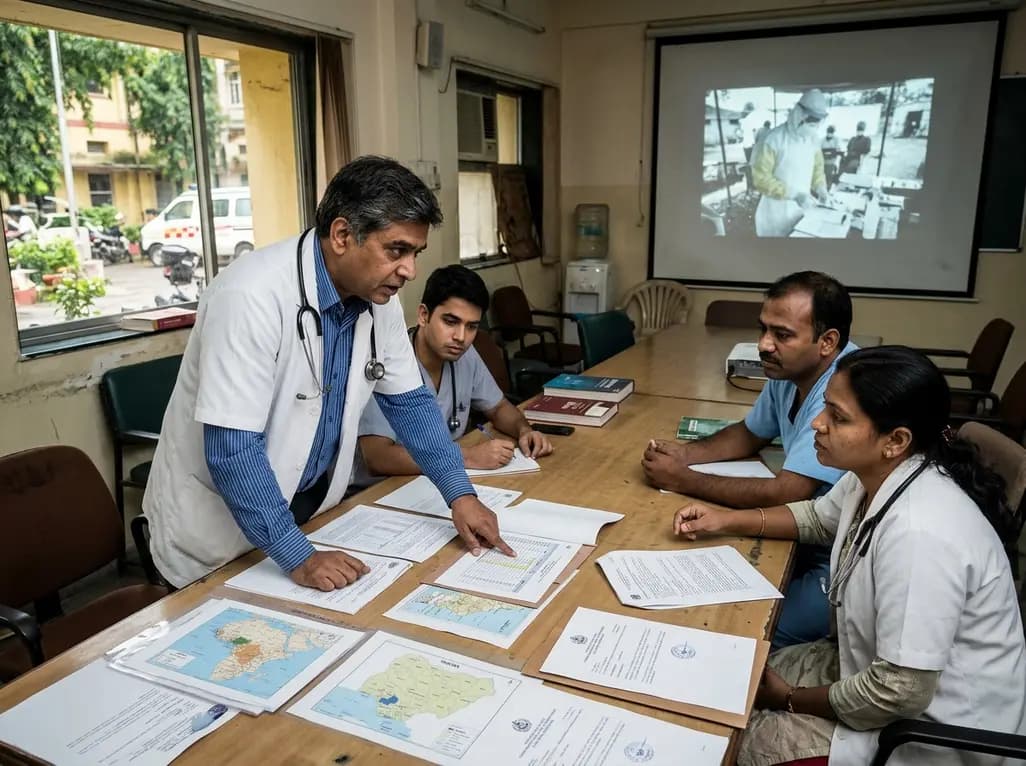
Following Nigeria's first recorded Ebola case linked to regional travel, the Africa CDC has convened an emergency ministerial summit. This alert underscores critical clinical priorities for healthcare professionals, including differentiating early viral infection from malaria, implementing barrier nursing, and triage.
Today

Leucine Rich Bio has introduced South Asia's first comprehensive vaginal microbiome test, BugSpeaks. By profiling microbial dysbiosis, pathogens, and antimicrobial resistance, this next-generation diagnostic platform provides clinicians with deeper insights into recurrent infections, fertility, and reproductive health.
Today

Review how tailored exercise programs benefit frail older patients with heart failure. Explore pathophysiological mechanisms, individualized training prescriptions, and strategies to overcome adherence barriers in clinical practice.
Today

This comparative study evaluates posterior labral tears with and without glenohumeral instability, highlighting distinct demographic patterns, MRI underestimation in stable shoulders, and successful arthroscopic repair outcomes.
Today

A clinical study demonstrates that early intervention with tocilizumab, either as monotherapy or bridged with corticosteroids, achieves significant proptosis reduction and resolves active inflammation in treatment-naive thyroid eye disease.
Today
