.webp&w=384&q=75)

Loading, please wait...
Loading, please wait...

Recent breakthroughs in the management of systemic autoinflammatory conditions highlight the importance of identifying high-risk biomarkers. A study recently published in Arthritis & Rheumatology indicates that the Still's disease interferon signature serves as a major predictor of severe clinical complications. These complications include life-threatening lung disease (LD) and drug-associated immune reactions (DAIR), particularly in patients receiving IL-1 or IL-6 inhibitors.
Researchers evaluated 57 patients, including both children and adults. They found that individuals with an elevated interferon-stimulated gene (ISG-28) score had a significantly higher prevalence of lung disease compared to those without the signature. Specifically, the rate of lung disease was 44% in the high-score group versus only 10% in the control group. Furthermore, drug reactions were remarkably more common in the high-interferon group, affecting 63% of these patients.
The study also analyzed genetic factors to improve patient stratification. The combination of the HLA-DRB1*15 allele and a high Still's disease interferon signature showed high specificity for predicting lung complications and drug reactions. Conversely, the absence of both markers provided a strong negative predictive value, helping clinicians rule out high-risk phenotypes. Consequently, these findings suggest that genetic and molecular profiling could lead to safer treatment decisions. If clinicians prospectively validate these results, targeted therapies may soon include medications specifically directed at Type I interferon pathways.
Moreover, exome sequencing identified rare genetic variants in several immune pathways. These pathways include autophagy, Type I interferon production, and toll-like receptor signaling. Because these variations appear to drive the inflammatory response, they offer new targets for precision medicine. Therefore, molecular risk assessment is becoming a vital tool for preventing severe outcomes in complex rheumatological cases.
An elevated ISG-28 score identifies patients with Still's disease who are at a significantly higher risk for developing lung complications and adverse reactions to IL-1 or IL-6 inhibitors.
Testing for the HLA-DRB1*15 allele, when combined with interferon signature monitoring, allows for high-specificity screening. This combination helps clinicians identify patients who may need alternative therapy or closer monitoring for lung involvement.
Disclaimer: This content is for informational and educational purposes only. It does not constitute medical advice or establish a doctor-patient relationship. Always seek the advice of a qualified healthcare provider regarding any medical condition or treatment. Refer to the latest local and national guidelines for clinical practice.
References
Marques MC et al. Type I interferon signature associates with lung disease, drug-associated immune reactions, and genetic variation in interferon-linked pathways in Still's disease. Arthritis Rheumatol. 2026 Feb 11. doi: 10.1002/art.70079. PMID: 41669914.
Schulert GS, et al. Systemic Juvenile Idiopathic Arthritis-Associated Lung Disease: Characterization and Risk Factors. Arthritis Rheumatol. 2019;71(11):1943-1954.
Saper VE, et al. Emergent high fatality lung disease in systemic juvenile arthritis. Ann Rheum Dis. 2019;78(12):1722-1731.

Read summarized clinical updates, watch expert medical content, and earn CME certifications right from your smartphone.
Open your smartphone camera to scan and install.





Research links high Type I interferon signature to lung disease and drug-associated reactions in Still's disease, emphasizing HLA-DRB1*15 risk assessment....
8 months ago
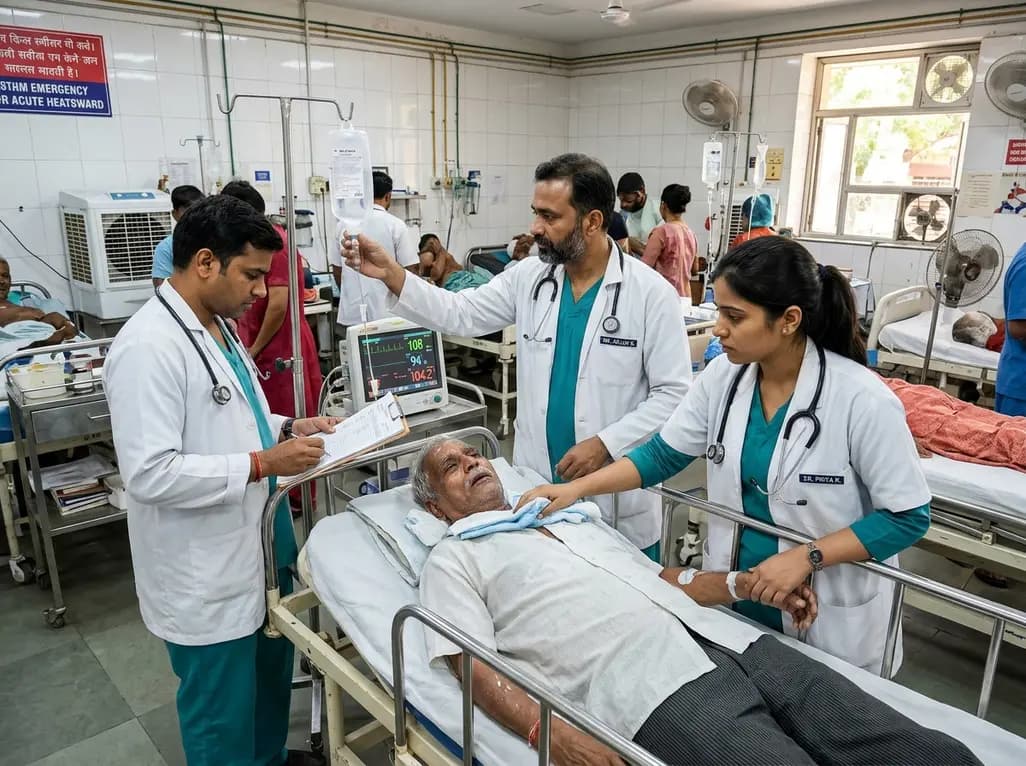
Recent epidemiological data reveals a dramatic surge in summer heat mortality driven by human-induced climate warming. This analysis explores the pathophysiological impacts on cardiac and renal systems, diagnostic dilemmas in death certification, and essential emergency cooling protocols for acute clinical care.
Today

Odisha has established India's first state-level clinical protocol specifically tailored for pregnant women with sickle cell disease. Developed with NHM and UNICEF, the framework provides structured antenatal screening, crisis mitigation, standardized referral pathways, and specialized interdisciplinary care.
Today

India is advancing preventive healthcare by integrating genomics, artificial intelligence, and quantum technologies. With the SANGAM programme sequencing one million Indian genomes, clinicians can unlock personalized therapies, detect cardiometabolic risks early, and curb the burden of diabetes and heart disease.
Today

A randomized controlled trial demonstrates that an eight-week dual-task training intervention significantly improves static and dynamic postural control over standard balance exercises in individuals with chronic ankle instability, addressing critical neurocognitive deficits during athletic and daily activities.
Today

A retrospective cohort study of 7,716 ICU patients from the MIMIC-IV database demonstrates that Gradient Boosting Decision Trees significantly outperform traditional SOFA scores in predicting in-hospital mortality among patients with sepsis and diabetes, with SHAP analysis providing clinical interpretability.
Today
