.webp&w=384&q=75)

Loading, please wait...
Loading, please wait...
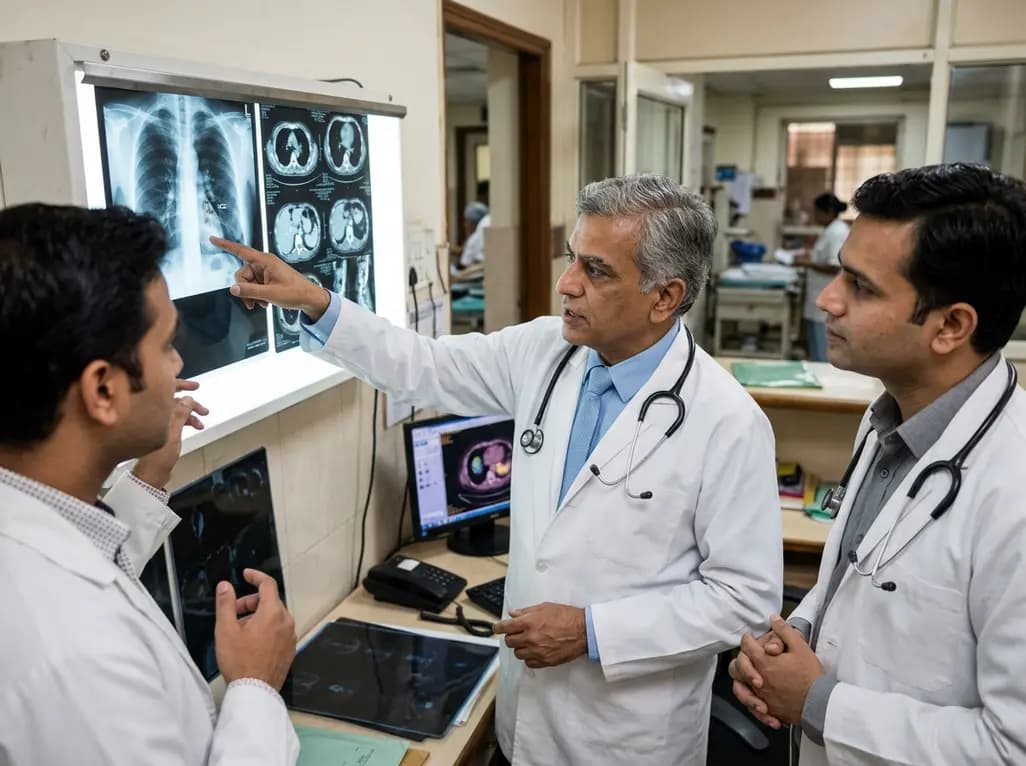
Historically, clinicians have regarded stage IV esophageal cancer as an incurable systemic disease where palliative systemic chemotherapy or best supportive care represents the standard treatment pathway. Because advanced esophageal malignancies exhibit aggressive biological behavior, national and international oncology guidelines have routinely discouraged radical surgical resection for metastatic presentations. Consequently, 5-year overall survival rates in metastatic cohorts have historically remained below six percent. However, modern oncological concepts around oligometastatic disease challenge this strictly palliative dogma. Advances in systemic therapy, high-resolution diagnostic imaging, and refined operative techniques now allow multidisciplinary teams to reconsider local surgical consolidation for carefully selected patients.
Traditional staging frameworks classify advanced disease uniformly, but clinical behavior varies widely among individuals with metastatic presentations. In recent years, surgical oncologists have recognized that patients with limited, low-volume metastatic spread may harbor distinct tumor biology compared to those with widespread visceral dissemination. Consequently, the concept of oligometastatic disease has gained significant traction across thoracic oncology. By combining potent neoadjuvant chemoradiotherapy regimens with aggressive local tumor clearance, clinicians aim to eradicate micro-metastases while achieving durable locoregional control. Therefore, identifying patients who truly benefit from major surgical interventions like esophagectomy represents an urgent clinical priority. Multi-institutional clinical registries and retrospective cohorts increasingly investigate whether carefully selected cohorts achieve prolonged disease control through definitive surgery. Although skepticism remains high regarding the morbidity of complex thoracic procedures in advanced stages, emerging evidence suggests that therapeutic nihilism might deny meaningful longevity to a distinct subset of surgical candidates.
A comprehensive retrospective analysis examining prospectively collected data from 437 esophagectomies identified 60 patients with pathological stage IV disease treated between 2013 and 2024. Investigators stratified these patients into stage IV-A and stage IV-B categories according to established classification frameworks. The results revealed striking survival differences between these two distinct subgroups. Specifically, patients with stage IV-A disease achieved a median overall survival of 18.0 months, compared to only 8.0 months among those with stage IV-B disease. Furthermore, the median disease-free survival demonstrated a statistically significant advantage for the stage IV-A cohort, reaching 10.0 months versus 3.0 months in stage IV-B patients. Interestingly, among individuals diagnosed with stage IV-B disease, survival outcomes varied markedly based on the anatomical distribution of metastases. Patients presenting with isolated non-regional nodal metastases exhibited superior disease control compared to those with visceral involvement, emphasizing the profound prognostic heterogeneity embedded within metastatic disease classifications.
Performing an esophagectomy in patients with advanced malignancy naturally raises concerns regarding postoperative complications, quality of life, and treatment-related mortality. In this multi-year cohort, neoadjuvant chemoradiotherapy was administered to approximately 48.3% of patients prior to surgical resection. Importantly, the overall postoperative morbidity rate was 43.3%, and the in-hospital mortality rate remained at 5.0%. Furthermore, statistical analysis showed no significant increase in operative morbidity or perioperative mortality between stage IV-A and stage IV-B cohorts. These clinical findings demonstrate that esophagectomy is technically feasible and safe when performed in specialized, high-volume centers with dedicated critical care teams. Nevertheless, because postoperative complications can delay vital adjuvant therapies, clinicians must rigorously evaluate baseline performance status, cardiopulmonary reserve, and nutritional parameters before scheduling surgical resections in this vulnerable patient population.
The OligoMetastatic Esophagogastric Cancer (OMEC) consensus platform provides standardized criteria to delineate true oligometastatic states from widely disseminated systemic disease. By applying OMEC definitions, surgical teams can identify individuals with limited tumor burden who might benefit from local consolidative therapies. For instance, single-organ involvement or isolated retroperitoneal lymph node metastases often demonstrate superior response kinetics under induction systemic therapy. In contrast, diffuse hematogenous spread to multiple visceral sites typically signals aggressive disease biology that derives negligible benefit from extensive surgical trauma. Therefore, restaging with positron emission tomography and computed tomography after induction therapy is essential. Patients demonstrating objective radiological tumor regression or metabolic stabilization represent the ideal candidates for radical resection. Conversely, rapid disease progression during systemic therapy clearly contraindicates surgical intervention, redirecting care toward palliative regimens and symptom optimization.
The contemporary management of advanced esophageal carcinoma requires dynamic, multidisciplinary collaboration among surgical oncologists, medical oncologists, radiation oncologists, and gastroenterologists. While systemic chemotherapy and immunotherapy continue to form the cornerstone of metastatic management, local therapy should not remain universally excluded. For selected patients with stage IV-A disease or limited non-regional nodal involvement, multimodal treatment incorporating radical esophagectomy offers a realistic opportunity to achieve extended locoregional control and prolonged survival. However, clinicians must counsel patients transparently regarding realistic prognostic expectations, potential operative risks, and the high likelihood of eventual disease recurrence. Future prospective randomized trials must validate precise predictive biomarkers and genomic signatures to identify which patients will achieve durable survival benefit from surgery, moving the field beyond empirical decision-making toward individualized precision oncology.
Surgery rarely provides a permanent cure for metastatic esophageal cancer, but it can significantly prolong overall survival and enhance locoregional tumor control in carefully selected patients. When integrated into a multimodal regimen following effective systemic therapy, radical esophagectomy removes macroscopic primary tumors, helping prevent severe local complications such as dysphagia, perforation, or massive bleeding while maximizing systemic disease control.
Oligometastatic esophageal cancer generally refers to an intermediate disease state characterized by limited systemic spread, typically involving one to three metastatic lesions in a single organ or isolated non-regional lymph node stations. Standardized frameworks like the OMEC classification help clinicians differentiate this low-volume, potentially consolidable disease from widespread visceral dissemination, identifying optimal candidates for targeted local and surgical interventions.
Stage IV-A esophageal cancer typically involves regional and adjacent non-regional lymph nodes or localized spread, yielding significantly better survival outcomes compared to stage IV-B disease. In clinical studies, patients with stage IV-A disease achieve median survival times exceeding 18 months following multimodal surgical therapy, whereas stage IV-B patients, especially those with visceral metastases, face markedly shorter survival.
Disclaimer: This content is for informational and educational purposes only. It is not intended to substitute for professional medical advice, diagnosis, or treatment. Always seek the advice of your physician or other qualified health provider with any questions you may have regarding a medical condition. Refer to the latest local and national guidelines for clinical practice.
References
Milito P et al. Stage IV Esophageal Cancer: Room for Improvement? J Laparoendosc Adv Surg Tech A. 2026 Sep 01. doi: 10.1177/10926429261486385. PMID: 42680702.
Kroese TE, van Rossum PSN, Ruurda JP, et al. Definition and treatment of oligometastatic esophagogastric cancer: a Delphi consensus study (OMEC-4). Eur J Cancer. 2023;187:172-184.
Smyth EC, Verheij M, Allum W, et al. Gastric cancer: ESMO Clinical Practice Guidelines for diagnosis, treatment and follow-up. Ann Oncol. 2016;27(suppl 5):v38-v49.

Read summarized clinical updates, watch expert medical content, and earn CME certifications right from your smartphone.
Open your smartphone camera to scan and install.





A study evaluating surgical resection in pathological stage IV esophageal cancer shows meaningful survival improvements for selected stage IV-A oligometastatic cases, while stage IV-B outcomes remain constrained and highly dependent on metastatic site distribution.
4 weeks back

Targeting ferroptosis provides a compelling strategy to dismantle hypoxia- and acidosis-driven immunosuppression in solid tumors, enhancing response to modern immunotherapy.
Today

Findings from Project Viva indicate that sustained postpartum weight retention, rather than excessive gestational weight gain alone, directly worsens women's mid-life cardiovascular health, degrading blood pressure and glycemic parameters decades after delivery.
Today
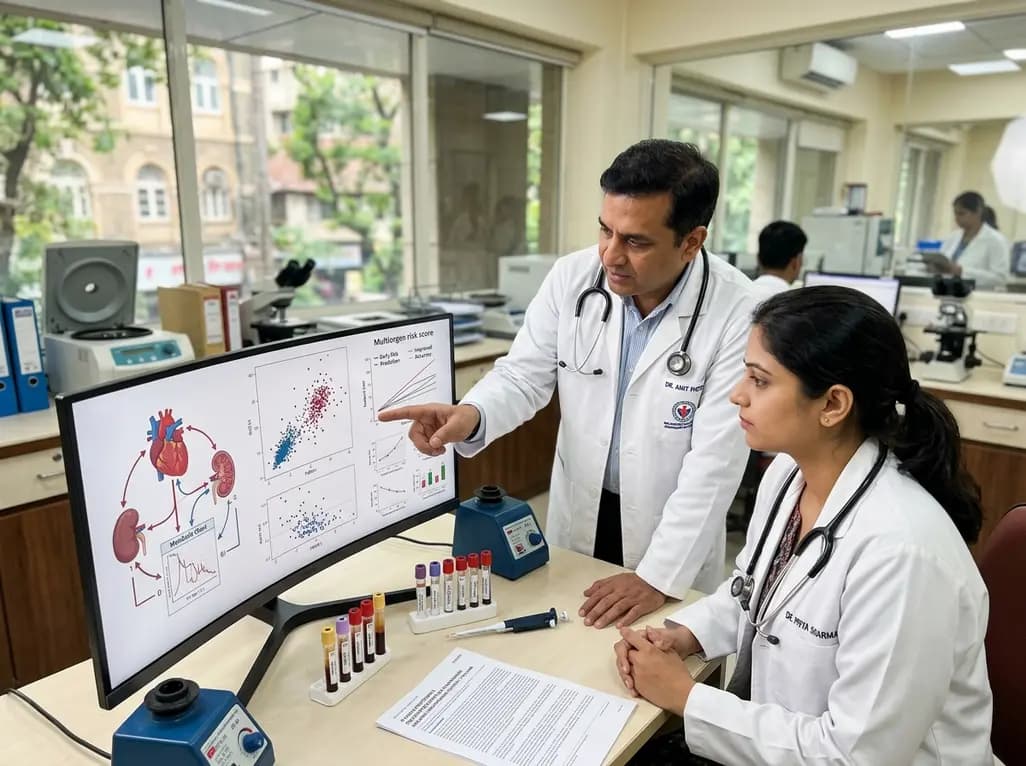
A large UK Biobank study reveals that plasma proteomic signatures capture preclinical organ damage and improve multiorgan risk prediction across early CKM syndrome stages 0 to 2 beyond traditional PREVENT clinical models.
Today

A retrospective CBCT study reveals that superior TMJ space asymmetry correlates moderately with occipital condyle-atlas-axis asymmetry in unilateral TMJ osteoarthritis, highlighting an imaging correlate between jaw biomechanics and upper cervical alignment rather than a standalone diagnostic marker.
Today

A Bayesian multilevel meta-analysis reveals that aerobic training combined with moderate carbohydrate restriction modestly lowers HbA1c in type 2 diabetes. However, sparse data and very low certainty leave incremental benefits over exercise or diet alone unproven, highlighting the need for individualized care.
Today
