.webp&w=384&q=75)

Loading, please wait...
Loading, please wait...
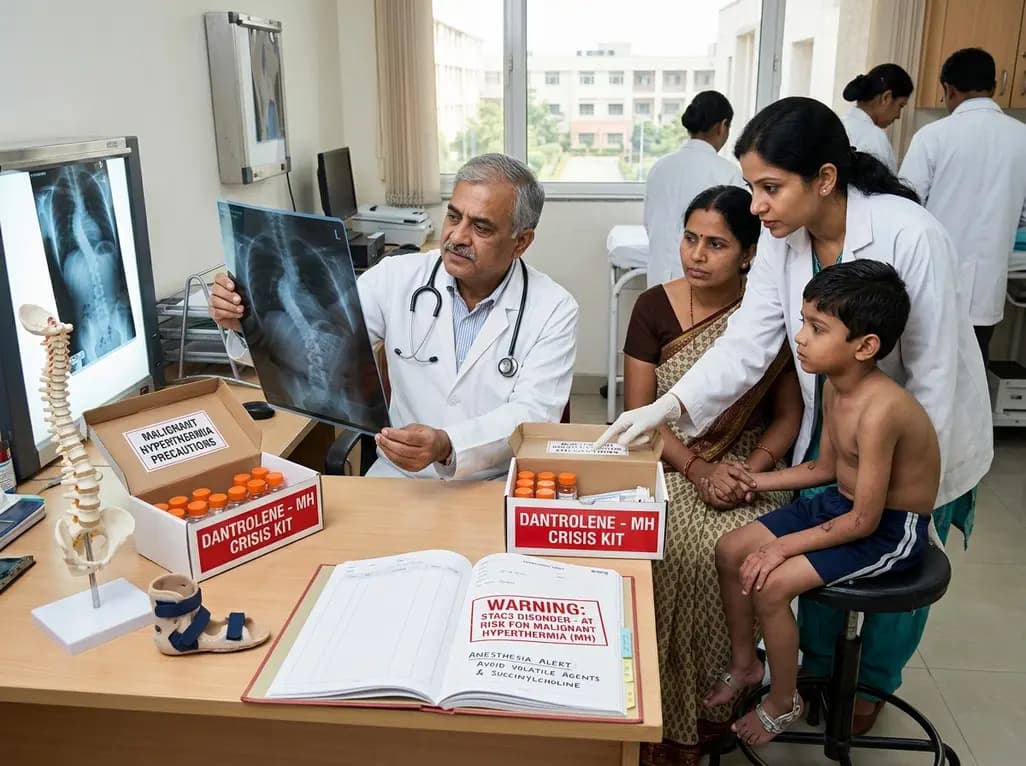
STAC3 disorder, previously recognized primarily as Native American myopathy, represents a rare autosomal recessive congenital myopathy caused by pathogenic biallelic variants in the SH3 and cysteine-rich domain-containing protein 3 (STAC3) gene. Affected individuals present with early-onset muscle weakness, congenital hypotonia, characteristic myopathic facies, palatal abnormalities, micrognathia, short stature, and an elevated risk for malignant hyperthermia. While initially identified within the Lumbee Native American population of North Carolina, recent global reports demonstrate that STAC3 mutations occur across diverse ethnic backgrounds, including patients from African, Middle Eastern, and South American ancestries. Despite its recognition, the comprehensive clinical spectrum of orthopaedic deformities in affected individuals has remained inadequately quantified until recently. A landmark retrospective cohort study published in the Journal of Pediatric Orthopaedics evaluated a significant group of patients to systematically characterize the STAC3 disorder musculoskeletal phenotype. This exhaustive analysis provides crucial insights into structural spinal deformities, extremity contractures, congenital foot abnormalities, and the high frequency of surgical and anaesthetic interventions required by these complex patients.
The STAC3 gene encodes a cytosolic protein that plays an essential structural role in skeletal muscle excitation-contraction coupling by interacting directly with the voltage-gated calcium channel Cav1.1 and the ryanodine receptor RyR1. Homozygous or compound heterozygous variants in STAC3 disrupt sarcoplasmic reticulum calcium release upon membrane depolarization, leading to severe weakness and abnormal muscle tone. Consequently, these physiological deficits impair embryonic motor activity, which directly induces downstream structural malformations during fetal development.
In the retrospective study examining twenty-six patients diagnosed between 2014 and 2025, twenty-three individuals provided detailed musculoskeletal data for comprehensive analysis. The median age at diagnosis was twenty-two days, whereas the median age at data collection was four years. Significantly, affected individuals demonstrated severe growth restrictions, with median height and weight percentiles both hovering at the first percentile. The clinical findings confirm that progressive axial and appendicular deformities develop early in life. Early recognition of these skeletal manifestations allows pediatric orthopaedists, geneticists, and neurologists to anticipate progressive structural complications, implement early non-surgical interventions, and counsel families regarding long-term functional mobility expectations.
Spinal pathology represents one of the most prominent orthopaedic challenges observed in patients with STAC3 gene mutations. According to recent clinical findings, eighty-three percent of analyzed patients developed scoliosis, making spinal curvature the most frequently identified skeletal abnormality in this cohort. Furthermore, forty-eight percent of patients exhibited hyperkyphosis, often co-occurring with coronal curvature to produce severe kyphoscoliosis. These axial spinal deformities stem directly from persistent paraspinal muscle weakness and uncoupled excitation-contraction kinetics.
The rapid progression of scoliosis in young children with congenital myopathies can severely compromise pulmonary mechanics, leading to restrictive lung disease and impaired thoracic cage development. Consequently, regular physical examinations and serial full-length standing or seated spine radiographs are mandatory for early detection. Management strategies often involve custom spinal orthoses to maintain seated balance and delay curve progression during early childhood. However, due to severe underlying muscular hypotonia, many patients eventually require surgical stabilization. Spinal fusion or growing-rod constructs are often necessary to preserve chest wall volume and prevent fatal cardiopulmonary compromise.
Appendicular musculoskeletal abnormalities cause substantial motor impairment in children diagnosed with STAC3 disorder. The recent study revealed that sixty-one percent of patients presented with significant joint contractures. Upper extremity contractures were documented in eight patients, lower extremity contractures occurred in three patients, and three patients had contractures at unspecified locations. These restricted joint movements result from inadequate intrauterine fetal movement secondary to profound muscle weakness.
In addition to arthrogryposis-like contractures, sixty-one percent of patients suffered from congenital foot deformities. Clubfoot, or talipes equinovarus, was diagnosed in thirteen patients, whereas one patient exhibited a bilateral vertical talus. These structural foot abnormalities present immediate treatment challenges during early infancy. Standard non-surgical correction methods, such as the Ponseti serial casting technique, should be initiated promptly after birth. Nevertheless, soft-tissue rigidity and intrinsic muscle weakness frequently result in incomplete correction or recurrent deformity. Consequently, pediatric orthopaedic surgeons must monitor these children closely, as secondary surgical release, tendon transfers, or corrective osteotomies are frequently needed to achieve a plantigrade foot suitable for braced standing or walking.
Managing patients with STAC3 gene mutations requires multi-specialty surgical coordination due to the high burden of disease across multiple organ systems. In the evaluated study cohort, fifty-seven percent of patients required at least one orthopaedic surgical procedure to correct spinal or limb deformities. Furthermore, seventy-eight percent of patients underwent at least one non-orthopaedic surgical procedure, such as cleft palate repair, gastrostomy tube placement, or ptosis correction. Overall, eighty-seven percent of patients experienced at least one general anesthesia event during their early life.
The high frequency of surgical procedures highlights a critical safety concern: susceptibility to malignant hyperthermia. Because STAC3 is directly involved in calcium homeostasis via the excitation-contraction coupling machinery, exposure to volatile halogenated anesthetics or succinylcholine can trigger life-threatening hypermetabolic crises. Anesthesiologists must maintain a high index of suspicion and strictly avoid triggering agents in any patient suspected of having STAC3 disorder. Trigger-free anesthetic protocols, utilizing total intravenous anesthesia with propofol and non-depolarizing neuromuscular blockers, are essential to ensure patient safety during necessary surgical interventions.
Given the multifaceted clinical presentation of STAC3 disorder, early genetic confirmation is essential for optimizing clinical care. Clinicians evaluating neonates or infants presenting with hypotonia, myopathic facies, cleft palate, micrognathia, and clubfoot should order comprehensive congenital myopathy multigene panels that include the STAC3 gene. Sequence analysis and deletion/duplication testing can confirm biallelic pathogenic variants rapidly, avoiding unnecessary invasive diagnostic procedures like muscle biopsies.
Once a diagnosis is established, clinicians should establish a coordinated, multidisciplinary care model. Pediatric orthopaedists must collaborate closely with pediatric neurologists, pulmonologists, clinical geneticists, and anesthesiologists. Early physical and occupational therapy programs help preserve joint range of motion and prevent worsening contractures. Furthermore, routine pulmonary function monitoring and sleep studies are recommended to detect progressive respiratory insufficiency secondary to chest wall restriction. Early nutritional support via speech therapy or gastrostomy tube placement ensures adequate caloric intake despite feeding difficulties. By establishing a proactive management framework, medical teams can significantly improve quality of life and functional independence for affected children and their families.
Historically, STAC3 disorder was viewed as an isolated condition restricted to Lumbee Native American populations. However, expanding genomic studies across Europe, Africa, the Middle East, and South America demonstrate that STAC3 mutations represent a globally relevant cause of congenital myopathy. Recognizing the wide phenotypic spectrum and international distribution of this disorder is vital for global healthcare providers, including those practicing in India and other developing nations where rare genetic conditions are often underdiagnosed.
Emerging research focusing on gene therapy and small-molecule modulators of excitation-contraction coupling offers hope for future targeted treatments. Preclinical mouse models evaluating STAC3 gene replacement have shown promising preliminary results in restoring sarcoplasmic calcium release and improving muscle strength. Until disease-modifying therapies become available in clinical practice, comprehensive phenotypic studies remain the foundation for guiding clinical management, setting realistic functional expectations, and preventing life-threatening anesthetic complications in individuals living with STAC3 disorder.
STAC3 disorder is caused by autosomal recessive pathogenic variants in the STAC3 gene, which encodes a critical cytosolic protein involved in skeletal muscle excitation-contraction coupling. Affected individuals inherit two mutated copies of the gene, one from each parent. The disease severely impairs intracellular calcium release during muscle contraction, leading to congenital weakness, facial dysmorphism, structural musculoskeletal deformities, and an increased risk of malignant hyperthermia.
General anesthesia poses a severe threat to patients with STAC3 disorder because mutations in the STAC3 gene disrupt excitation-contraction coupling and calcium regulation in skeletal muscle cells. Exposure to volatile inhalational anesthetics or depolarizing muscle relaxants like succinylcholine can trigger malignant hyperthermia. This life-threatening hypermetabolic crisis causes severe hyperthermia, muscle rigidity, and metabolic acidosis, requiring trigger-free total intravenous anesthesia during surgical procedures.
The most frequent musculoskeletal abnormalities in STAC3 disorder include scoliosis, observed in over eighty percent of patients, and hyperkyphosis, found in nearly half of affected individuals. Joint contractures affect approximately sixty-one percent of patients, involving upper or lower extremities. Additionally, congenital foot deformities, particularly clubfoot (talipes equinovarus) and vertical talus, occur in sixty-one percent of individuals, frequently requiring specialized orthopaedic interventions.
Disclaimer: This content is for informational and educational purposes only and does not constitute medical advice, diagnosis, or treatment. Always seek the advice of a qualified healthcare provider with any questions you may have regarding a medical condition. Refer to the latest local and national guidelines for clinical practice.
References

Read summarized clinical updates, watch expert medical content, and earn CME certifications right from your smartphone.
Open your smartphone camera to scan and install.





STAC3 disorder is a rare congenital myopathy causing scoliosis, hyperkyphosis, joint contractures, and clubfoot, along with malignant hyperthermia risk. Learn about the musculoskeletal phenotype and surgical implications.
2 months ago
Following Nigeria's first recorded Ebola case linked to regional travel, the Africa CDC has convened an emergency ministerial summit. This alert underscores critical clinical priorities for healthcare professionals, including differentiating early viral infection from malaria, implementing barrier nursing, and triage.
Today

Leucine Rich Bio has introduced South Asia's first comprehensive vaginal microbiome test, BugSpeaks. By profiling microbial dysbiosis, pathogens, and antimicrobial resistance, this next-generation diagnostic platform provides clinicians with deeper insights into recurrent infections, fertility, and reproductive health.
Today

Review how tailored exercise programs benefit frail older patients with heart failure. Explore pathophysiological mechanisms, individualized training prescriptions, and strategies to overcome adherence barriers in clinical practice.
Today

This comparative study evaluates posterior labral tears with and without glenohumeral instability, highlighting distinct demographic patterns, MRI underestimation in stable shoulders, and successful arthroscopic repair outcomes.
Today

A clinical study demonstrates that early intervention with tocilizumab, either as monotherapy or bridged with corticosteroids, achieves significant proptosis reduction and resolves active inflammation in treatment-naive thyroid eye disease.
Today
