.webp&w=384&q=75)

Loading, please wait...
Loading, please wait...

Glioblastoma represents the most common and lethal primary malignant brain tumor in adults. Despite aggressive multimodal management consisting of maximal safe surgical resection, concurrent chemoradiotherapy with temozolomide, and maintenance therapy, disease recurrence remains virtually universal. Determining glioblastoma progression patterns is critical for neuro-oncologists, radiation oncologists, and neurosurgeons. This anatomical insight guides patient eligibility for focal salvage interventions, such as stereotactic re-irradiation, repeat craniotomy, and targeted device therapies. However, historical literature on tumor recurrence exhibits substantial variation due to disparate spatial definitions, inconsistent radiographic criteria, and heterogeneous reporting standards. To resolve these discrepancies, investigators conducted an exhaustive systematic review and meta-analysis synthesizing data from over a quarter-century of clinical reports.
Following initial standard-of-care chemoradiation with or without tumor-treating fields, tumor recurrence predominantly manifests within the original radiation field. The meta-analysis harmonized data from 107 studies encompassing 122 treatment arms and 10,529 patients. Among evaluable cases experiencing initial relapse, the pooled random-effects rate of local or in-field enhancing failure reached 79.2%. In contrast, distant or out-of-field progression occurred in approximately 16.9% of evaluable patients. Consequently, these findings confirm that the primary site of initial treatment failure remains overwhelmingly local. Therefore, primary resistance mechanisms operate predominantly within the initial high-dose radiation target volume. Radiation oncologists frequently observe that despite delivering radical radiation doses, infiltrating glioma cells persist within the peri-tumoral parenchyma. These residual cells ultimately drive local radiographic recurrence in nearly four out of five patients.
When glioblastoma progresses following upfront therapy, clinicians often deploy second-line salvage therapies. These strategies include re-resection, systemic regimens, anti-angiogenic agents, or re-irradiation. Interestingly, the spatial distribution of failure evolves but retains a strong local component. The meta-analysis identified that after salvage treatment, local or in-field failure remained the majority pattern at 59.8%. Meanwhile, distant or out-of-field failures occurred in 17.5% of cases. Additionally, researchers evaluated a broader escape-pattern construct, defined as failure extending beyond purely local enhancing recurrence. This escape pattern was observed in 38.6% of patients receiving salvage therapies. Thus, while salvage interventions may alter regional tumor kinetics, most patients still suffer from local failure. Consequently, clinicians must recognize that local disease control remains a formidable challenge even in heavily pretreated cohorts.
A critical observation highlighted by this meta-analysis is the underreporting and selective characterization of non-enhancing tumor spread. Standard response criteria historically emphasized contrast-enhancing T1-weighted lesions. However, glioblastoma frequently exhibits infiltrative non-enhancing growth that manifests primarily on T2-weighted fluid-attenuated inversion recovery sequences. The systematic review revealed that only six salvage treatment arms reported dedicated non-enhancing or FLAIR-dominant progression data. From this limited sample, the exploratory pooled estimate of non-enhancing progression was 27.8%. Because anti-angiogenic agents like bevacizumab normalize abnormal tumor vasculature, they frequently suppress contrast enhancement without halting infiltrative tumor invasion. As a result, relying solely on contrast enhancement underestimates true disease dissemination. Neuro-oncology teams must therefore rigorously evaluate T2/FLAIR signal abnormalities to detect non-enhancing progression early.
Understanding these spatial recurrence patterns directly influences daily clinical decision-making. Because approximately 80% of upfront failures and 60% of post-salvage failures occur locally, focal salvage therapies remain viable treatment options for carefully selected patients. Neurosurgeons evaluating patients for repeat resection can anticipate that tumor recurrence will frequently align with previous resection margins. Similarly, radiation oncologists considering stereotactic radiosurgery or fractionated stereotactic re-irradiation must balance local tumor coverage against the cumulative risk of radionecrosis. Furthermore, because nearly 40% of salvage cases demonstrate an escape pattern involving marginal or distant recurrence, comprehensive neuro-axis surveillance is warranted. Integrating advanced metabolic imaging, such as amino acid positron emission tomography, can significantly aid in distinguishing true local progression from treatment-induced radiation necrosis.
The meta-analysis underscored significant methodological heterogeneity across published neuro-oncology literature, with statistical heterogeneity (I²) consistently exceeding 75% to 85%. Historically, studies have employed variable spatial frameworks, defining in-field progression anywhere from 80% to 95% isodose line overlap. Moreover, anatomical locations such as the posterior fossa, brainstem, and subventricular zone were inconsistently tracked. To improve translational oncology and clinical trial design, the neuro-oncology community must adopt standardized spatial classification systems. Reporting guidelines should uniformly document enhancing recurrence, non-enhancing infiltration, leptomeningeal dissemination, and field-edge failures. Through rigorous standardization, future multi-center trials can better identify which patient subsets will achieve meaningful survival benefits from aggressive focal interventions versus novel systemic therapies.
The most common pattern is local or in-field enhancing progression. Meta-analytic data indicate that approximately 79.2% of patients experience local failure following initial chemoradiotherapy. In contrast, isolated distant or out-of-field recurrences occur in only about 16.9% of evaluable patients, demonstrating that treatment resistance remains predominantly localized within the original tumor bed.
Following salvage interventions, local failure remains the predominant pattern, occurring in roughly 59.8% of patients. However, broader escape patterns involving marginal or distant disease increase to approximately 38.6%. This shift suggests that subsequent lines of treatment encounter both persistent local resistance and evolving invasive tumor phenotypes.
Non-enhancing progression represents invasive, infiltrative tumor growth that does not breach the blood-brain barrier. Meta-analytic estimates suggest non-enhancing recurrence occurs in about 27.8% of salvage cases. Failing to monitor T2/FLAIR changes can lead to underestimating tumor burden, particularly in patients receiving anti-angiogenic agents that suppress contrast enhancement.
Disclaimer: This content is for informational and educational purposes only and does not constitute formal medical advice. Healthcare professionals should make clinical decisions based on individual patient circumstances and refer to the latest local and national guidelines for clinical practice.
References

Read summarized clinical updates, watch expert medical content, and earn CME certifications right from your smartphone.
Open your smartphone camera to scan and install.





A systematic review and meta-analysis of over 10,000 glioblastoma patients reveals that nearly 80% of initial recurrences and 60% of post-salvage failures occur locally within the radiation field, providing crucial insights for focal salvage therapy and clinical decision-making.
last month

A retrospective clinical analysis reveals that hemodialysis-associated cognitive dysfunction arises from synergistic pathological mechanisms, including severe chronic anemia, worsening renal clearance, abnormal regional brain iron deposition, and an imbalance between neuroinflammatory and neurotrophic factors.
Today

A multiparametric MRI approach combining quantitative T2 shading, apparent diffusion coefficient (ADC) measurements, and morphological signs provides superior diagnostic accuracy over subjective evaluation to differentiate ovarian endometriomas from benign hemorrhagic cysts.
Today
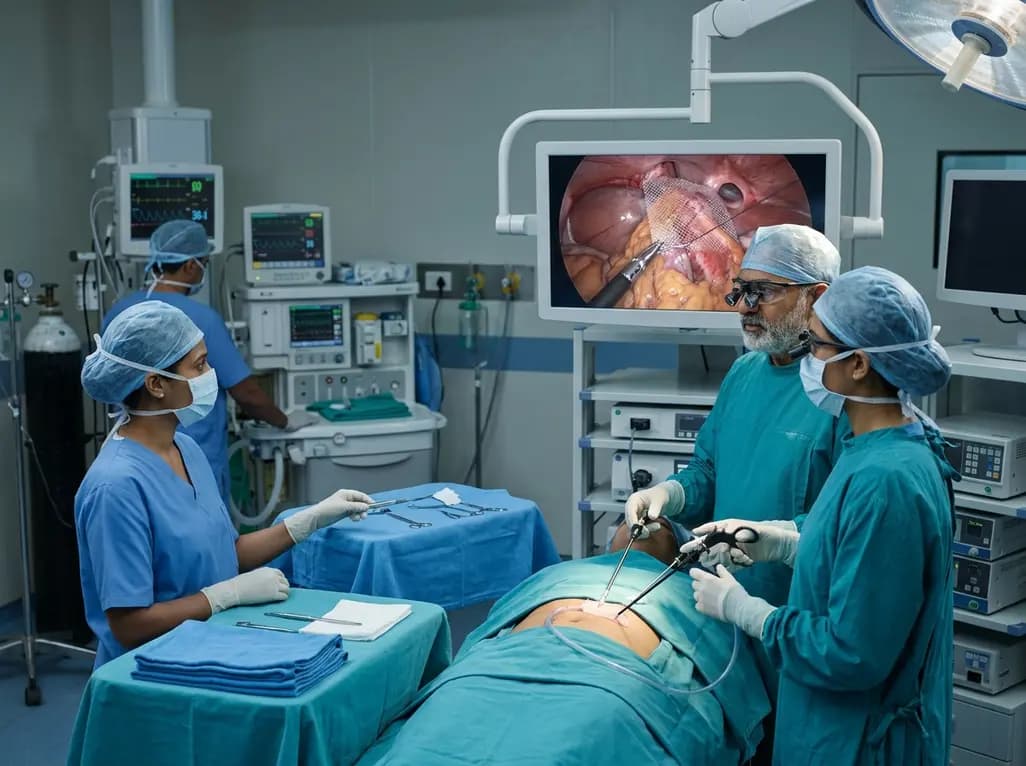
Discover a novel laparoscopic approach for iatrogenic diaphragmatic hernia repair following pedicled omentoplasty. This modified Sugarbaker technique integrates dorsal pedicle lateralization and round ligament reinforcement to secure the diaphragmatic defect while preserving vital omental vascularity.
Today

Evaluating Hill-Sachs lesion size and the distance to dislocation is critical in recurrent shoulder instability. As bone loss concepts shift from binary on-track classifications to continuous risk assessment, clinicians must identify when isolated Bankart repair is insufficient and supplementary procedures are needed.
Today

New research reveals that M1 macrophage-derived exosomes aggravate diabetic nephropathy by transferring WTAP to stabilize S1PR2 mRNA. Silencing WTAP in these vesicles attenuates endothelial injury and renal fibrosis, pointing toward innovative nanomedicine therapies.
Today
