

Loading, please wait...
Loading, please wait...

Acute wheezing episodes and asthma exacerbations represent frequent emergencies in pediatric practice. Inhaled bronchodilators form the cornerstone of urgent treatment. However, therapeutic success depends entirely on proper administration. Recent clinical evidence underscores that mastery of spacer device technique remains inconsistent among pediatric patients and their caregivers. When children experience bronchospasm, correct drug delivery directly prevents clinical deterioration. Consequently, understanding the knowledge deficits and performance pitfalls that occur during acute crises is essential for improving clinical outcomes.
A recent observational study evaluated 134 children presenting to an emergency department with acute wheezing. All participants had prior experience with spacer devices and a documented history of recurrent wheezing or asthma. Clinicians scored inhaler competency using a structured checklist based on established international pediatric guidelines. Overall, 63.4 percent of participants demonstrated adequate baseline knowledge. However, closer analysis revealed a substantial performance gap between caregivers and autonomous children. Caregivers achieved adequate technique scores in 77.7 percent of evaluations. In contrast, children managing their devices independently achieved a competent score in only 30 percent of cases.
These findings illustrate an alarming clinical paradox. Although older children often assume full responsibility for their asthma maintenance, their technical execution frequently deteriorates. During an acute attack, anxiety and respiratory fatigue exacerbate these execution failures. Therefore, emergency clinicians cannot assume that prior device familiarity guarantees proper drug delivery during an active flare.
Caregiver involvement provides a significant protective buffer in pediatric asthma management. Specifically, younger caregivers in the study showed superior knowledge compared to older guardians. Conversely, among autonomous children, younger age and active follow-up within specialized pediatric pulmonology clinics predicted better performance. This contrast highlights distinct behavioral patterns between parent-guided therapy and independent adolescent self-care.
Adolescents frequently develop non-adherent habits and take shortcuts with their inhalation routines. Furthermore, parents often withdraw supervision prematurely as children enter school age. When supervision wanes, subtle technical errors go unnoticed. In addition, autonomous youth rarely undergo formal technique re-evaluation during routine visits unless they experience severe exacerbations. Consequently, their mechanical competence degrades over time. Specialist pulmonology follow-up counteracts this decline through structured, repetitive reinforcement. Thus, regular outpatient review by pediatric respiratory specialists preserves device proficiency and prevents therapeutic failure.
Despite generally encouraging overall caregiver scores, critical administration errors occurred repeatedly across all cohorts. The most common mistakes involved inadequate shaking of the pressurized metered-dose inhaler prior to actuation. Furthermore, many patients failed to ensure an airtight seal with the facial mask or mouthpiece. A loose seal allows significant aerosol leakage, drastically reducing intrathoracic drug deposition.
Similarly, participants frequently demonstrated flawed breathing patterns after actuation. Effective delivery requires slow, deep tidal breathing or immediate single-breath inhalation followed by an appropriate breath-hold. Instead, many children engaged in rapid, shallow respirations that precipitated medication impact in the oropharynx. Additionally, several patients actuated multiple puffs simultaneously into the chamber. This error promotes aerosol aggregation and severely degrades respirable fraction output. Therefore, eliminating these mechanical errors is vital for optimizing acute bronchodilation.
The observational data demonstrate that children managed in pediatric pulmonology clinics maintain significantly higher technical accuracy. Subspecialty clinics routinely incorporate dedicated nurse educators and hands-on simulation into consultations. As a result, patients receive consistent corrections before improper habits become permanent.
In contrast, primary care and acute emergency settings often face significant time constraints. During an emergency encounter, clinicians understandably prioritize acute stabilization over educational review. However, missing this teachable moment leaves the child vulnerable to recurrent emergency attendances. Educational interventions must therefore move beyond passive verbal instructions. Instead, clinicians must use active teach-to-goal strategies. In this model, providers demonstrate proper steps, observe the patient performing the maneuvers, and provide instant corrective feedback. Structured educational pathways within hospital discharge protocols ensure that families leave the facility with verified competency.
Clinicians must establish routine verification protocols across all levels of care. First, healthcare teams should assess device performance at every clinical interaction, including acute emergency visits and routine check-ups. Second, practitioners should avoid delegating spacer use entirely to children without ongoing parental oversight. Even capable adolescents benefit from periodic parental verification.
Third, clinics should utilize standardized, multi-step checklists to evaluate every step, from device assembly to post-inhalation mouth rinsing. Fourth, healthcare facilities should provide accessible physical or digital demonstration tools to reinforce learning at home. Finally, clinicians must carefully select the right interface for each patient. Young children require properly sized silicone masks that prevent leaks, whereas older children should transition to mouthpieces once developmental maturity allows. By standardizing these practical steps, medical teams can bridge the gap between medication prescription and effective clinical delivery.
Caregiver supervision remains essential because autonomous older children frequently develop mechanical shortcuts and faulty inhalation habits over time. Although adolescents understand the basic purpose of inhalers, their execution during stressful, acute wheezing episodes often fails. Regular parental monitoring ensures that the patient maintains an airtight seal, actuates single doses correctly, and performs proper breath-holding maneuvers, thereby preventing acute treatment failure and reducing emergency department visits.
The most common errors include failing to shake the canister before actuation, actuating multiple puffs simultaneously into the chamber, and maintaining an improper mask seal. Additionally, patients frequently inhale too rapidly or fail to hold their breath for the recommended duration after inhalation. These mechanical mistakes dramatically reduce pulmonary drug deposition, causing medication to deposit on the chamber walls or within the patient's oropharynx instead.
Specialized pulmonology follow-up improves device competency through structured, repeated, and hands-on educational interventions. Unlike fast-paced emergency settings, subspecialty clinics routinely dedicate time to observe patient technique directly using validated checklists. Respiratory nurses and pediatric pulmonologists identify subtle errors, demonstrate proper physical mechanics, and utilize teach-back methodology. Consequently, patients receiving specialist care maintain higher procedural knowledge, which directly translates into superior long-term asthma control.
Disclaimer: This content is for informational and educational purposes only. It is not intended to substitute for professional medical advice, diagnosis, or treatment. Always seek the advice of your physician or other qualified healthcare provider with any questions you may have regarding a medical condition. Refer to the latest local and national guidelines for clinical practice.
References
de la Rosa Roch B et al. Inhaler technique in acute wheezing: Factors associated with adequate knowledge. An Pediatr (Engl Ed). 2026 Nov 06. doi: undefined. PMID: 42995138.
Samady W, Rodriguez VA, Gupta R, Palac H, Karamanis M, Press VG. Critical Errors in Inhaler Technique among Children Hospitalized with Asthma. J Hosp Med. 2019 Jun 01;14(6):361-365.
Almomani BA, Al-Qawasmeh BS, Al-Shatnawi SF, Awad S, Alzoubi SA. Predictors of proper inhaler technique and asthma control in pediatric patients with asthma. Pediatr Pulmonol. 2021 May;56(5):866-874.

Read summarized clinical updates, watch expert medical content, and earn CME certifications right from your smartphone.
Open your smartphone camera to scan and install.





A cross-sectional study in a pediatric emergency setting reveals that while caregivers often master spacer use, autonomous children show high error rates during acute wheezing. Findings highlight the need for continuous education and specialist follow-up.
Today
Metal-dependent cell death modalities like ferroptosis and cuproptosis dictate immune recognition in cancer. By integrating cell-derived danger signals and local metal dynamics, these pathways can transform immune-cold lesions into responsive tumors, providing new therapeutic avenues to overcome immunotherapy resistance.
Today

A prospective study reveals that over 54% of women with non-celiac wheat sensitivity experience uro-gynecological disorders, including dysmenorrhea and abacterial cystitis. Adherence to a wheat-free diet provides significant, long-term symptom resolution over 24 months.
Today
Arch-to-vertex CT angiography revealed a rare right aortic arch variant with a true bicarotid trunk and aberrant left subclavian artery in an adult with stroke and chronic dysphagia. The case highlights crucial diagnostic and procedural implications for vascular, surgical, and neurointerventional teams.
Today
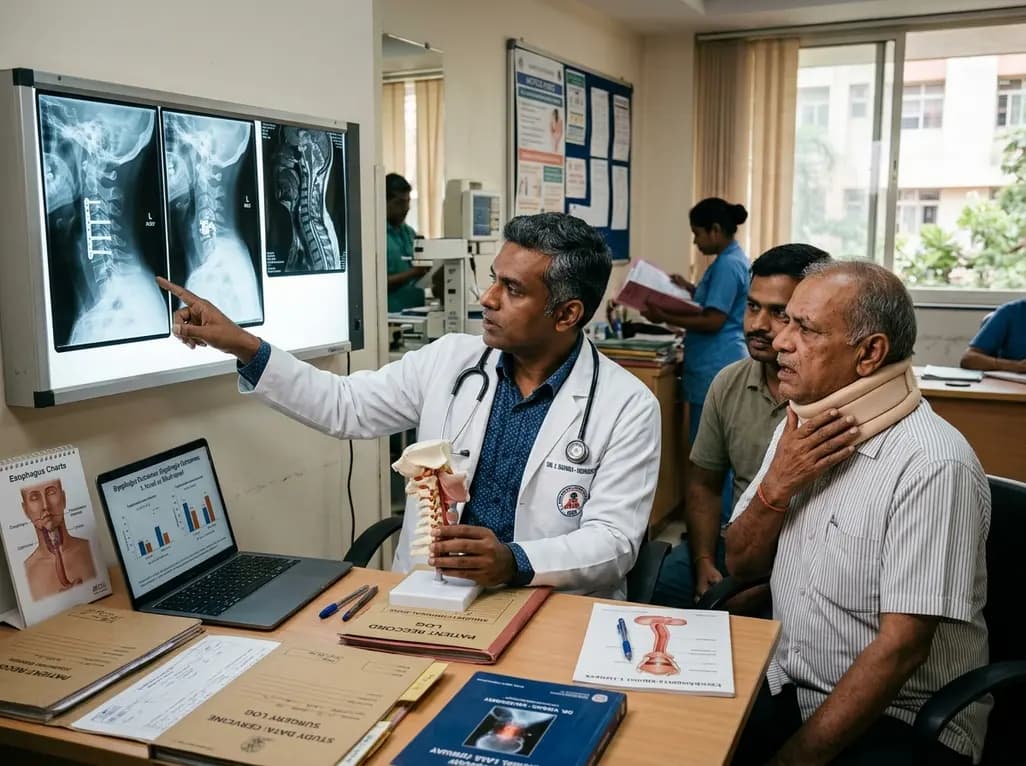
A large registry study reveals that postoperative dysphagia occurs more frequently and persists longer after multilevel anterior cervical spine surgery than single-level procedures. Key risk factors include baseline dysphagia, diabetes, upper cervical segment involvement, and medical comorbidities.
Today

A landmark UK Biobank study by Karolinska Institutet researchers reveals that optimal rest mitigates neurodegeneration in cardiometabolic illness. Patients maintaining high sleep quality demonstrated superior cognitive scores and larger brain volumes, highlighting sleep optimization as an actionable clinical strategy.
Today
