.webp&w=384&q=75)

Loading, please wait...
Loading, please wait...
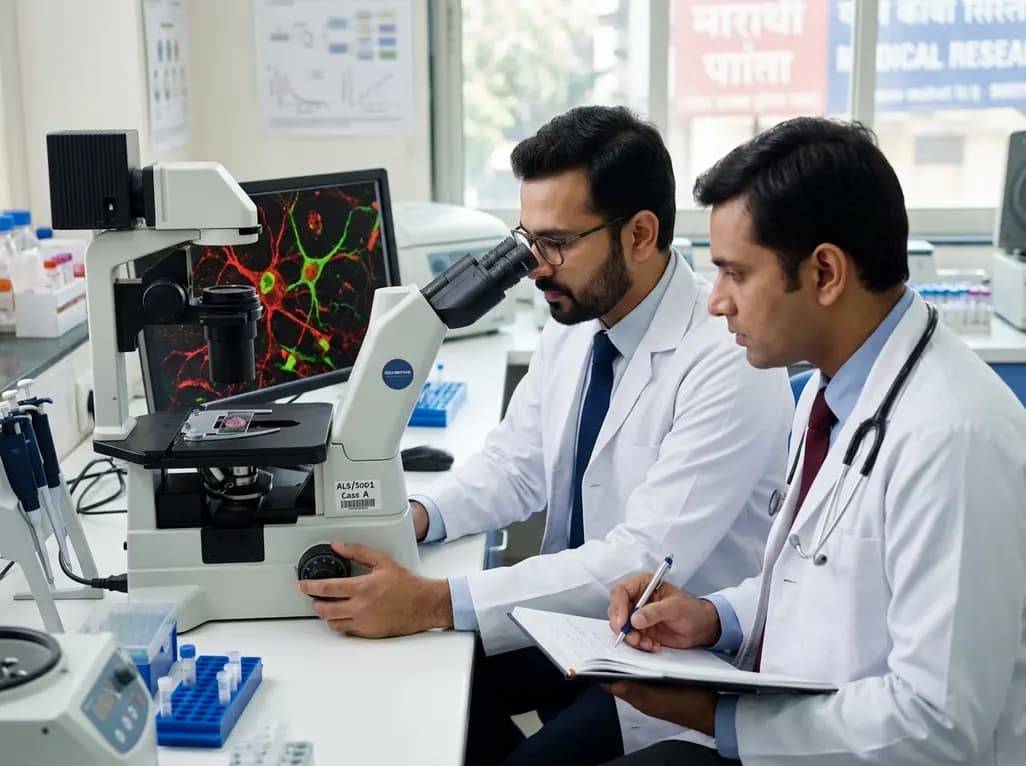
Amyotrophic lateral sclerosis (ALS) represents a fatal neurodegenerative disorder characterized by the progressive degeneration of upper and lower motor neurons. Among the diverse genetic etiologies identified, mutations in the copper-zinc superoxide dismutase-1 (SOD1) gene remain a cornerstone of familial ALS research. Historically, most SOD1 variants follow an autosomal dominant inheritance pattern; however, the highly prevalent D90A mutation uniquely presents as an autosomal recessive trait in specific geographical cohorts. Emerging neuropathological investigations strongly indicate that non-native protein misfolding and prion-like propagation drive neurodegeneration. Consequently, understanding how SOD1 aggregation in ALS initiates, self-templates, and disseminates across neural tissue has become central to defining therapeutic targets. Recent translational investigations have provided conclusive evidence that tissue derived from homozygous D90A ALS patients harbors competent pathological seeds capable of transmitting conformational templating and precipitating fatal motor neuron disease in transgenic recipient models.
The SOD1 D90A mutation exhibits distinctive clinical and epidemiological characteristics compared to classic penetrant variants such as A4V or G93A. In homozygous carriers, the clinical phenotype frequently involves a remarkably protracted disease duration with an initial predominantly lower motor neuron presentation. Despite this slower clinical progression, neuropathological evaluation consistently demonstrates profound ventral horn motor neuron attrition and widespread misfolded protein deposition. Researchers long questioned whether the prolonged survival in these individuals resulted from an intrinsically less aggressive aggregate conformation or alternative biochemical clearance pathways. Pathological analysis of human postmortem spinal cord tissue confirms that even end-stage, highly degenerated ventral horn tissue retains concentrated aggregate seeds. These misfolded conformers retain the capacity to direct normal, soluble native SOD1 molecules into insoluble, cytotoxic fibrillar structures. Therefore, the stable structural integrity of homozygous D90A seeds establishes a persistent template for ongoing neurotoxic cascades within the motor system.
A key biological feature of prion-like disorders is the emergence of distinct conformational strains that yield variable incubation periods and pathological phenotypes. In preclinical models, human SOD1 transgenic mice generate at least two structurally divergent aggregate strains, designated Strain A and Strain B. Strain A readily develops across multiple mutant variants, whereas Strain B emerges preferentially under specific homozygous configurations. Inoculation experiments using spinal ventral horn extracts from homozygous D90A ALS patients revealed that human seeds faithfully transmit both Strain A and Strain B aggregate profiles to transgenic recipients. Remarkably, human-derived inocula induced rapid aggregate propagation throughout the neuroaxis, substantially shortening recipient survival compared to vehicle controls. Conversely, spinal extracts from neurologically intact human controls failed to elicit pathological aggregation or clinical deficits. These findings verify that human homozygous D90A tissue contains distinct structural strains capable of independently catalyzing progressive motor neuron destruction.
The confirmation of transmissible aggregate strains highlights urgent diagnostic needs for advanced conformational assays in neurodegenerative medicine. Standard electromyography, neuroimaging, and classical cerebrospinal fluid biomarkers provide essential measures of axonal damage and denervation but fail to capture real-time conformational strain dynamics. Emerging ultra-sensitive seed amplification assays, analogous to real-time quaking-induced conversion (RT-QuIC), show great promise in identifying minute quantities of misfolded SOD1 seeds within biological fluids. Clinicians evaluating atypical, slowly progressive motor neuron syndromes must consider comprehensive genetic screening alongside conformational profiling. Differentiating between specific aggregate strains may ultimately explain phenotypic heterogeneity, variable disease progression rates, and regional vulnerabilities observed across ALS cohorts. Furthermore, identifying asymptomatic carriers who harbor latent seeding activity before extensive motor unit loss could transform early diagnostic pathways and clinical trial stratification globally.
Elucidating structural strain propagation directly informs modern therapeutic strategies aimed at mitigating SOD1 aggregation in ALS. Contemporary interventions utilize antisense oligonucleotides (ASOs) to downregulate total SOD1 transcript levels, thereby reducing substrate availability for template-directed misfolding. However, strain-specific therapies represent the next frontier in precision neurotherapeutics. Monoclonal antibodies specifically designed to recognize epitope-specific motifs of Strain A or Strain B aggregates offer passive immunization pathways to neutralize extracellular seeds during cell-to-cell spread. In parallel, small-molecule pharmacological chaperones are undergoing investigation to stabilize the native homodimeric state of SOD1, effectively raising the kinetic barrier against initial conformational collapse. Combining transcript knockdown with aggregate-clearing immunotherapies may provide a synergistic approach to halt progressive seeding across motor pathways and protect vulnerable anterior horn cells from premature destruction.
Translating preclinical seeding paradigms into actionable clinical guidelines requires careful appraisal of neuroanatomical spread versus systemic infectivity. While SOD1 misfolding exhibits classic prion-like templating at the molecular and cellular levels, clinical ALS remains strictly non-contagious between individuals under standard clinical and environmental conditions. The primary clinical utility of this framework lies in recognizing disease self-propagation across interconnected motor networks via axonal transport and trans-synaptic transmission. Neurologists managing patients with hereditary motor neuropathies must integrate genetic testing for SOD1 variants early in the diagnostic workup. Multidisciplinary supportive care, respiratory management, nutritional optimization, and timely enrollment into gene-directed clinical trials remain essential clinical priorities. As disease-modifying therapies evolve, targeting the conformational propagation of aggregate seeds stands as one of the most promising avenues in neurotherapeutics.
The prion-like mechanism describes how misfolded SOD1 proteins act as seeds that physically template the conformational conversion of normal, soluble SOD1 into insoluble aggregates. These pathogenic conformers propagate from cell to cell along interconnected motor pathways, causing self-sustaining spreading of pathology and progressive motor neuron degeneration across the spinal cord and brainstem without being infectious between humans.
Unlike most SOD1 mutations that follow an autosomal dominant inheritance, the D90A variant primarily causes clinical ALS in homozygous individuals. It is clinically characterized by a slower progression and prolonged survival. Despite this milder course, human postmortem tissue retains potent aggregate seeds that transmit rapid neurodegeneration and distinct structural strains in experimental recipient models.
Current therapeutic strategies focus on lowering target protein levels using antisense oligonucleotides such as tofersen, which decreases substrate availability for seeding. Additionally, conformational-specific monoclonal antibodies are being investigated to intercept extracellular spreading seeds, alongside small-molecule chaperones engineered to stabilize native SOD1 dimers and prevent initial misfolding cascades across the central nervous system.
Disclaimer: This content is for informational and educational purposes only and is intended for healthcare professionals. It does not constitute medical advice, diagnosis, or treatment recommendations. Refer to the latest local and national guidelines for clinical practice.
References
Henne C et al. Seeds from ALS patients homozygous for the SOD1 D90A mutation transmit two types of SOD1 aggregation and motor neuron disease. Acta Neuropathol. 2026 Sep 01. doi: undefined. PMID: 42678414.
Miller TM et al. Phase 3 trial of antisense oligonucleotide tofersen for SOD1 ALS. N Engl J Med. 2022 Sep 22;387(12):1099-1110.
Bergh J et al. Structural and functional distinctions between human SOD1 prion strains in amyotrophic lateral sclerosis. Proc Natl Acad Sci U S A. 2015 Nov 17;112(46):E6390-E6399.

Read summarized clinical updates, watch expert medical content, and earn CME certifications right from your smartphone.
Open your smartphone camera to scan and install.





New evidence demonstrates that seeds from ALS patients homozygous for the SOD1 D90A mutation transmit two distinct aggregate strains, confirming prion-like propagation as a primary driver of motor neuron degeneration.
4 weeks back

Targeting ferroptosis provides a compelling strategy to dismantle hypoxia- and acidosis-driven immunosuppression in solid tumors, enhancing response to modern immunotherapy.
Today

Findings from Project Viva indicate that sustained postpartum weight retention, rather than excessive gestational weight gain alone, directly worsens women's mid-life cardiovascular health, degrading blood pressure and glycemic parameters decades after delivery.
Today
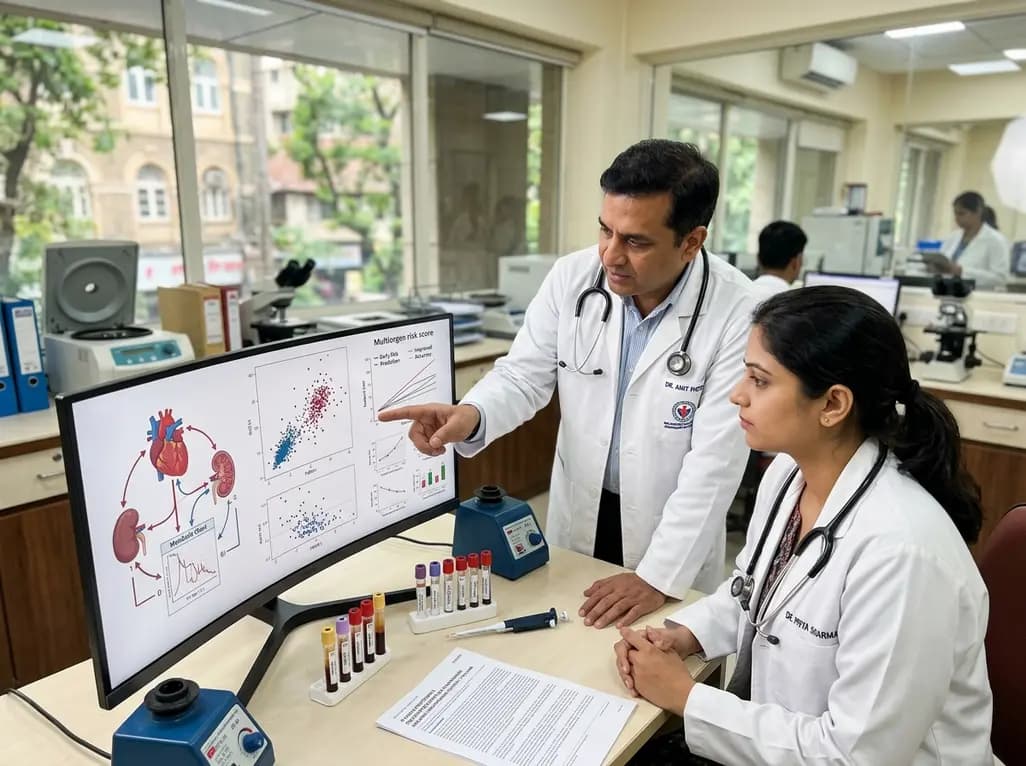
A large UK Biobank study reveals that plasma proteomic signatures capture preclinical organ damage and improve multiorgan risk prediction across early CKM syndrome stages 0 to 2 beyond traditional PREVENT clinical models.
Today

A retrospective CBCT study reveals that superior TMJ space asymmetry correlates moderately with occipital condyle-atlas-axis asymmetry in unilateral TMJ osteoarthritis, highlighting an imaging correlate between jaw biomechanics and upper cervical alignment rather than a standalone diagnostic marker.
Today

A Bayesian multilevel meta-analysis reveals that aerobic training combined with moderate carbohydrate restriction modestly lowers HbA1c in type 2 diabetes. However, sparse data and very low certainty leave incremental benefits over exercise or diet alone unproven, highlighting the need for individualized care.
Today
