.webp&w=384&q=75)

Loading, please wait...
Loading, please wait...

The United States currently faces a significant public health crisis. It has the highest rates of gun violence and per capita ownership in the developed world. Therefore, effective gun violence prevention strategies are more necessary than ever. Social workers occupy a unique position in this landscape. They deliver services in settings where clients face high risks of both victimization and perpetration. Consequently, their professional values and commitments afford them a special responsibility to intervene and save lives.
Social workers assess emerging knowledge to promote physical and mental well-being. For instance, they identify risk factors in diverse environments like schools and hospitals. Additionally, they focus on safe firearm storage to reduce accidental deaths among children. By using trauma-informed care, they also support survivors in their recovery journey. Moreover, they work to advance social equity and strengthen communities. Specifically, social workers address the structural roots of violence, such as poverty and inequality.
Social work perspectives provide a holistic approach to the problem. Because they understand the social determinants of health, they can implement long-term solutions. For example, they advocate for policy changes that restrict lethal access to firearms. Furthermore, they coordinate care across complex systems for affected families. In summary, their presence on the front lines makes them indispensable for community safety and public health.
Social workers assist by conducting risk assessments, providing trauma-informed counseling, and advocating for safe storage practices. They also work at the community level to address social inequalities that contribute to violence.
In hospital settings, social workers interface with victims of firearm injuries to provide crisis intervention. They also help families navigate the complex healthcare system and coordinate long-term mental health support.
Disclaimer: This content is for informational and educational purposes only. It is not intended to provide specific medical or legal advice. Refer to the latest local and national guidelines for clinical practice.
References
Guterman NB et al. Preventing Gun Violence: The Role of Social Work. Soc Work. 2026 Feb 07. doi: undefined. PMID: 41653415.
Grand Challenges for Social Work. Prevent Gun Violence. Available at: grandchallengesforsocialwork.org. Accessed Feb 2026.
UC Davis Health. Leveraging Social Work to Address Gun Violence: A Call to Action. The BulletPoints Project. 2022.

Read summarized clinical updates, watch expert medical content, and earn CME certifications right from your smartphone.
Open your smartphone camera to scan and install.





Explore how social workers utilize evidence-based assessments and interventions to lead gun violence prevention and support community well-being....
8 months ago
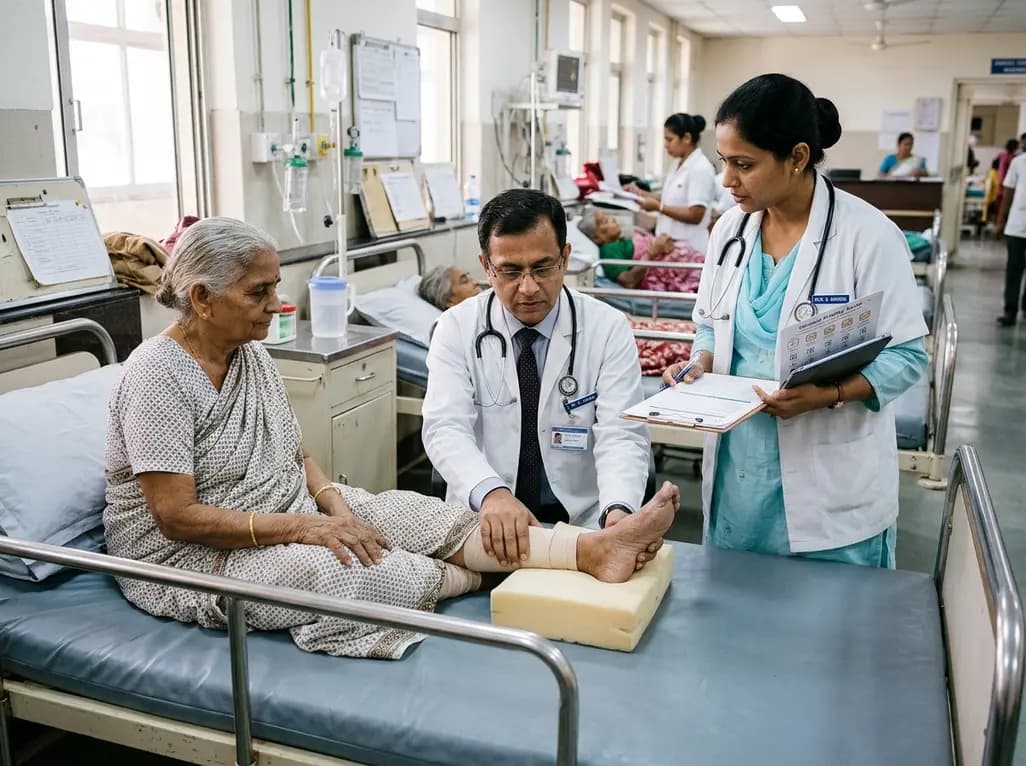
A retrospective cohort study reveals that frailty quadruples the odds of pressure injuries in hospitalized older adults. Integrating the Clinical Frailty Scale with comprehensive geriatric care is crucial for identifying vulnerability early and implementing targeted multidisciplinary prevention.
Today

Occult maternal malignancy accounts for 3.82% of persistent unreportable NIPT results with genomic noise. Multiple chromosomal aberrations, notably on chromosome 18, warrant thorough oncological evaluation and whole-body MRI to ensure timely maternal diagnosis while preserving fetal care.
Today

This article reviews the forensic and clinical complexities of acute myocarditis arising on left ventricular hypertrophy in children, highlighting early diagnostic red flags and multidisciplinary postmortem autopsy protocols.
Today

A randomized controlled trial demonstrates that an eight-week dual-task training intervention significantly improves static and dynamic postural control over standard balance exercises in individuals with chronic ankle instability, addressing critical neurocognitive deficits during athletic and daily activities.
Today

A retrospective cohort study of 7,716 ICU patients from the MIMIC-IV database demonstrates that Gradient Boosting Decision Trees significantly outperform traditional SOFA scores in predicting in-hospital mortality among patients with sepsis and diabetes, with SHAP analysis providing clinical interpretability.
Today
