.webp&w=384&q=75)

Loading, please wait...
Loading, please wait...

Recent clinical research has illuminated the complex landscape of SMARCB1 variant manifestations in individuals with intellectual developmental disorders. Specifically, pathogenic variants in the SMARCB1 gene, which encodes a critical subunit of the BAF chromatin remodeling complex, are the primary cause of Coffin-Siris Syndrome (CSS). Although clinicians have long recognized the association, the specific correlations between variant location and clinical phenotype have remained largely undefined until now.
Researchers analyzed 31 individuals using an integrated multimodal approach. This comprehensive methodology combined clinical assessments, 3D protein modeling, and advanced machine learning algorithms. Notably, the study found that variants typically cluster within two distinct regions: the N-terminal (winged-helix/SNF5) and the C-terminal (αC-helix) domains. Consequently, these regional clusters lead to varying degrees of clinical severity and different physical characteristics.
The study utilized the XGBoost classifier to determine if clinical data alone could predict the genotype. Remarkably, the algorithm achieved 96.7% accuracy in classifying the variant location based strictly on the observed phenotype. Furthermore, patients with C-terminal CSS variants exhibited more severe speech delays, microcephaly, and cleft palates. These individuals also displayed a stronger facial gestalt similarity compared to those with N-terminal variants. Therefore, while facial gestalt remains a primary diagnostic feature for C-terminal mutations, overall clinical features provide better predictive power for N-terminal cases.
These findings emphasize the necessity of multimodal assessments when evaluating developmental disorders. Because integrated modeling provides deeper insights into biological functions, it significantly enhances diagnostic strategies for rare genetic syndromes. For pediatricians and neurologists, understanding these region-specific manifestations helps in setting realistic expectations for developmental progress and specialized care needs.
C-terminal variants are generally associated with a more severe clinical presentation. This includes a higher prevalence of microcephaly, cleft palate, and significant speech delays, along with a more recognizable facial gestalt.
Yes, the study demonstrated that machine learning classifiers like XGBoost can predict the location of a SMARCB1 variant with over 96% accuracy using only phenotypic and clinical data.
Multimodal assessment integrates clinical findings with structural modeling and AI. This holistic approach provides a more precise understanding of how specific mutations affect protein function and patient outcomes, leading to better diagnostic accuracy.
Disclaimer: This content is for informational and educational purposes only. It does not constitute medical advice, diagnosis, or treatment. Always seek the advice of your physician or other qualified health provider with any questions you may have regarding a medical condition. Refer to the latest local and national guidelines for clinical practice.
References

Read summarized clinical updates, watch expert medical content, and earn CME certifications right from your smartphone.
Open your smartphone camera to scan and install.





A multimodal study reveals distinct clinical patterns for N-terminal and C-terminal SMARCB1 variants, achieving high diagnostic accuracy via machine learnin...
4 months ago
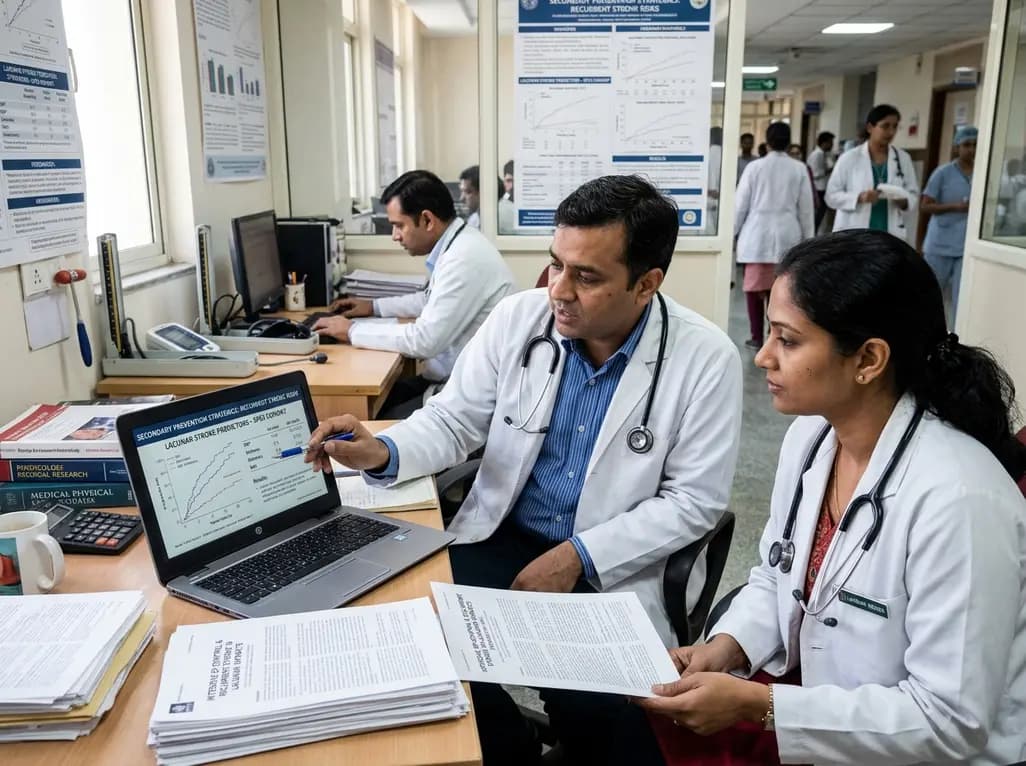
Explore vital recurrent stroke predictors in lacunar stroke patients managed with intensive blood pressure lowering. This analysis examines trial findings from SPS3 to uncover residual vascular risks, metabolic factors, and targeted secondary prevention strategies for high-risk neurological patients.
Today

A comprehensive scoping review synthesises evidence linking prenatal maternal mental health to long-term offspring neurodevelopment, evaluating neuroendocrine, inflammatory, and epigenetic pathways while highlighting clinical screening and future research priorities.
Today

The Directorate General of Health Services directs Indian states to halt the hazardous reuse and reprocessing of single-use medical devices. Discover regulatory implications under the Drugs and Cosmetics Act, critical infection risks, legal liabilities, and operational changes required across clinical specialties.
Today
Mitochondria-targeted nanoparticles self-assembled from EGCG and L-glutamic acid effectively restore mitochondrial homeostasis, suppress synovial inflammation, and attenuate chondrocyte senescence in osteoarthritis, offering a promising disease-modifying nanotherapy.
Today

India is advancing preventive healthcare by integrating genomics, artificial intelligence, and quantum technologies. With the SANGAM programme sequencing one million Indian genomes, clinicians can unlock personalized therapies, detect cardiometabolic risks early, and curb the burden of diabetes and heart disease.
Today
