.webp&w=384&q=75)

Loading, please wait...
Loading, please wait...

Primary high-grade neck neoplasms frequently present formidable diagnostic hurdles for clinicians, especially when conventional lineage markers disappear entirely. In particular, anaplastic thyroid carcinoma represents one of the most lethal endocrine malignancies encountered in oncology practice. When diagnostic biopsies reveal complete absence of classical lineage-defining proteins like TTF1 and PAX8, distinguishing a dedifferentiated thyroid primary from secondary metastatic carcinoma becomes exceptionally difficult. Therefore, clinicians must combine clinical suspicion, detailed immunohistochemical panels, and advanced genomic testing to establish the correct diagnosis.
Accurate identification of high-grade neck masses is essential because systemic regimens and surgical paradigms diverge drastically between primary and secondary lesions. When a tumor undergoes extensive dedifferentiation, it frequently loses thyroid transcription factor 1 (TTF1) and paired box gene 8 (PAX8) expression. Consequently, pathologists face a broad differential diagnosis that spans metastatic squamous carcinoma, melanoma, neuroendocrine neoplasms, and primary soft tissue sarcomas. Moreover, chromatin remodeling defects, specifically involving the SWI/SNF complex, have recently emerged as critical drivers across multiple tumor sites. While clinicians commonly recognize SMARCA4 deficiency in thoracic undifferentiated tumors, malignant rhabdoid tumors, and ovarian hypercalcemic carcinomas, its documented presence within thyroid tumors remained virtually unprecedented until now. Thus, missing these rare phenotypes can lead clinicians toward inappropriate systemic regimens or delayed palliative interventions.
A typical clinical presentation involves rapid local expansion, compression symptoms, and invasive disease. In a landmark index case, a 74-year-old male presented with a two-month history of right-sided neck swelling accompanied by progressive hoarseness. Physical examination identified a 6 cm firm, fixed mass in the right thyroid lobe. Subsequently, computed tomography imaging demonstrated prominent abutment and displacement of both the trachea and esophagus, along with extensive right cervical and upper mediastinal lymphadenopathy. Because rapid aerodigestive invasion creates substantial airway compromise risks, swift tissue acquisition becomes mandatory. Furthermore, comprehensive cross-sectional imaging helps define structural unresectability early, thereby directing the clinical team toward non-surgical, multimodal management pathways.
Histological evaluation of core biopsies often reveals an infiltrative carcinoma arranged in solid sheets, nests, and branching cords. The neoplastic cells display distinct squamoid features, focal rhabdoid morphology, extensive coagulative necrosis, and abundant desmoplastic stroma. Interestingly, overt classic anaplasia may occasionally remain absent, which further misleads initial microscopic assessments. Immunohistochemical staining in this unprecedented scenario revealed retained pancytokeratin positivity alongside complete negativity for TTF1, PAX8, p63, p40, CK20, CDX2, SOX10, AR, and synaptophysin. Furthermore, p53 demonstrated a preserved wild-type pattern. Expanded SWI/SNF profiling demonstrated intact SMARCB1 (INI1) expression but complete loss of nuclear SMARCA4 (BRG1). Consequently, this immunoprofile ruled out conventional squamous and gastrointestinal metastases while raising strong suspicion for SWI/SNF-driven dedifferentiation.
Because immunohistochemical lineage markers yielded negative results, comprehensive next-generation sequencing became indispensable for uncovering true tumor ontogeny. Molecular genomic profiling identified pathogenic activating mutations in exon 3 of the NRAS gene and exon 11 of the BRAF gene (non-V600E). Crucially, this distinctive dual mutation signature strongly supported an underlying follicular thyroid carcinoma lineage that had undergone catastrophic epigenetic and molecular dedifferentiation. Epigenetic deregulation triggered by SMARCA4 functional loss accelerates phenotypic regression, thereby stripping malignant cells of their thyroid-specific protein machinery. Therefore, high-throughput genomic assays serve as pivotal diagnostic arbiters when immunohistochemical panels fail to confirm the primary organ of origin.
Managing undifferentiated thyroid cancers with SWI/SNF complex alterations remains a challenging clinical endeavor. Because SMARCA4 loss induces rapid clinical progression, conventional cytotoxic doublets often provide only transient disease control. Consequently, palliative chemotherapy regimens, regional radiation, and timely airway stabilization form the baseline supportive approach. However, emerging translational research demonstrates that SWI/SNF-deficient malignancies may harbor unique synthetic lethal vulnerabilities. Specifically, researchers are evaluating enhancer of zeste homolog 2 (EZH2) inhibitors, aurora kinase inhibitors, and immune checkpoint inhibitors in refractory cohorts. Thus, routinely integrating SMARCA4 testing into undifferentiated cancer panels will help identify patients who might qualify for novel biomarker-driven clinical trials.
This unprecedented presentation offers vital diagnostic lessons for otolaryngologists, endocrinologists, medical oncologists, and pathologists alike. First, clinicians should not rule out a primary thyroid origin simply because standard markers like PAX8 and TTF1 are negative. Second, evaluating SWI/SNF expression via SMARCA4/BRG1 immunohistochemistry represents a critical step when assessing undifferentiated neck neoplasms showing rhabdoid or squamoid features. Third, reflex molecular profiling provides undeniable evidence of thyroid lineage while uncovering potential targetable alterations. Ultimately, multidisciplinary tumor boards must leverage rapid pathological and genomic workflows to avoid diagnostic delays, ensure timely symptom palliation, and explore targeted clinical trial opportunities.
SMARCA4 encodes the BRG1 protein, a catalytic subunit of the SWI/SNF chromatin remodeling complex. Loss of SMARCA4 disrupts regular gene expression, promoting aggressive dedifferentiation, treatment resistance, and rapid tumor expansion across thoracic, gastrointestinal, and endocrine organs.
During dedifferentiation, thyroid tumor cells undergo extensive genetic and epigenetic reprogramming. This deregulation suppresses lineage-specific transcription factors, completely extinguishing standard immunohistochemical markers such as PAX8, TTF1, and thyroglobulin, thereby mimicking uncommitted or metastatic carcinomas.
Next-generation sequencing detects lineage-characteristic driver mutations, such as alterations in NRAS, HRAS, or specific BRAF codons. Identifying these hallmark genomic alterations confirms the tumor evolved from an antecedent differentiated thyroid carcinoma, even when protein expression is absent.
Disclaimer: This content is for informational and educational purposes only. It does not constitute formal medical advice, diagnosis, or treatment recommendations. Always consult a qualified healthcare provider regarding specific medical conditions. Refer to the latest local and national guidelines for clinical practice.
References

Read summarized clinical updates, watch expert medical content, and earn CME certifications right from your smartphone.
Open your smartphone camera to scan and install.





A novel case of SMARCA4-deficient anaplastic thyroid carcinoma highlights how the complete loss of TTF1, PAX8, and BRG1 can mimic metastatic disease. Integrating immunohistochemistry with next-generation sequencing enables precise lineage identification and targeted palliative treatment strategies.
4 weeks back
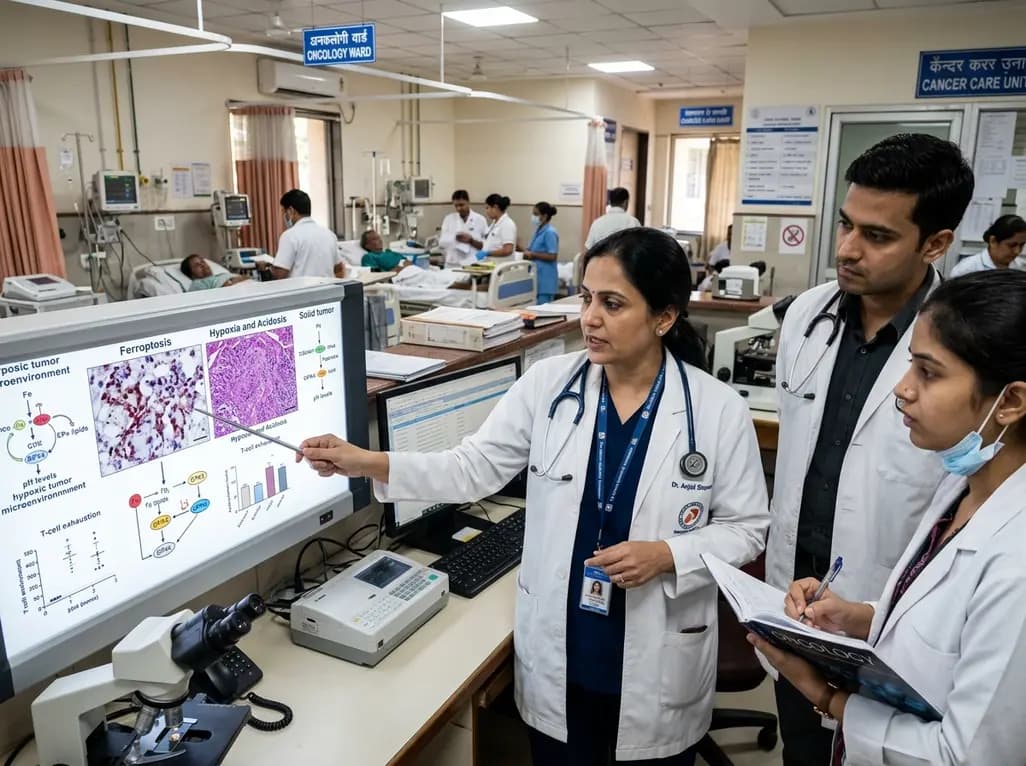
Targeting ferroptosis provides a compelling strategy to dismantle hypoxia- and acidosis-driven immunosuppression in solid tumors, enhancing response to modern immunotherapy.
Today

Findings from Project Viva indicate that sustained postpartum weight retention, rather than excessive gestational weight gain alone, directly worsens women's mid-life cardiovascular health, degrading blood pressure and glycemic parameters decades after delivery.
Today
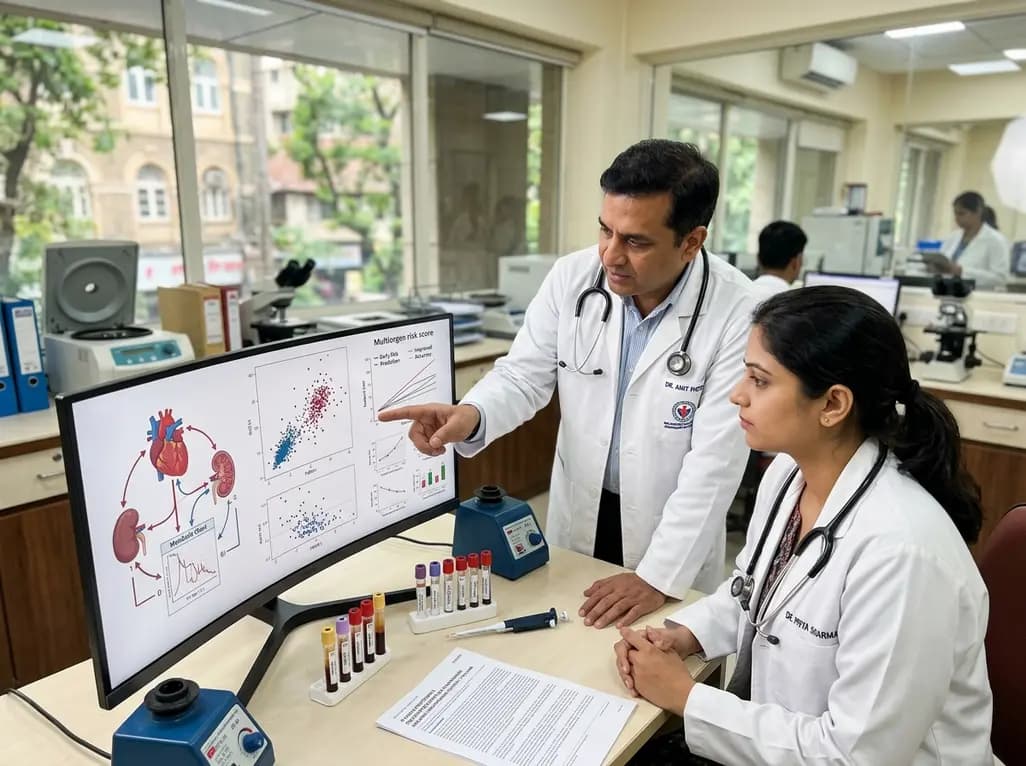
A large UK Biobank study reveals that plasma proteomic signatures capture preclinical organ damage and improve multiorgan risk prediction across early CKM syndrome stages 0 to 2 beyond traditional PREVENT clinical models.
Today

A retrospective CBCT study reveals that superior TMJ space asymmetry correlates moderately with occipital condyle-atlas-axis asymmetry in unilateral TMJ osteoarthritis, highlighting an imaging correlate between jaw biomechanics and upper cervical alignment rather than a standalone diagnostic marker.
Today

A Bayesian multilevel meta-analysis reveals that aerobic training combined with moderate carbohydrate restriction modestly lowers HbA1c in type 2 diabetes. However, sparse data and very low certainty leave incremental benefits over exercise or diet alone unproven, highlighting the need for individualized care.
Today
