.webp&w=384&q=75)

Loading, please wait...
Loading, please wait...

Multiple sclerosis is a chronic neuroinflammatory disorder characterized by demyelinating lesions, axonal injury, and progressive neurodegeneration. In recent years, neuroscientists have increasingly focused on the glymphatic system, a specialized fluid-clearance network essential for maintaining central nervous system homeostasis. Subjective sleep disturbances in MS affect a substantial proportion of patients, yet their precise impact on interstitial fluid dynamics remains under active investigation. Sleep architecture plays an indispensable role in promoting convective fluid exchange along perivascular spaces. When restorative sleep is disrupted, the clearance of neurotoxic metabolic byproducts slows down significantly. Advanced neuroimaging now allows clinicians to measure this fluid transport non-invasively using diffusion tensor imaging analysis along the perivascular space (DTI-ALPS). Recent clinical findings demonstrate that subjective sleep disruption directly correlates with reduced perivascular diffusivity, shedding new light on the interplay between sleep quality and neuroinflammation.
The glymphatic system facilitates the continuous exchange of cerebrospinal fluid and interstitial fluid throughout the brain parenchyma. Cerebrospinal fluid enters periarterial channels, percolates through the interstitial space, and exits along perivenous pathways. This organized convective flow efficiently removes metabolic waste, cellular debris, and inflammatory cytokines. In healthy physiology, slow-wave sleep expands the interstitial space, substantially accelerating glymphatic transport. However, chronic neuroinflammatory diseases like multiple sclerosis severely disrupt this clearance cascade. Persistent immune-mediated inflammation alters astrocytic aquaporin-4 water channel localization along perivascular end-feet. Consequently, reactive astrogliosis impairs fluid movement, leading to stagnant solute clearance. As toxic byproducts accumulate within neural tissue, they perpetuate localized inflammatory responses and accelerate axonal loss. Therefore, measuring glymphatic integrity provides crucial insights into the pathophysiology of demyelinating conditions.
Diffusion tensor imaging analysis along the perivascular space, known as the DTI-ALPS index, serves as an established imaging biomarker of glymphatic function. This technique measures water diffusivity parallel to medullary veins adjacent to the lateral ventricles, where perivascular channels run perpendicular to projection and association fibers. By calculating the ratio of diffusivity in these anatomical directions, clinicians obtain a quantitative measure of perivascular fluid motion. Multiple sclerosis patients consistently demonstrate a lower DTI-ALPS index compared to healthy individuals. Furthermore, patients frequently exhibit widespread structural alterations, such as elevated T2 lesion volume, cerebral atrophy, decreased fractional anisotropy, and increased mean diffusivity in normal-appearing white matter. Because the DTI-ALPS method eliminates the need for intrathecal contrast agents, it provides a safe, reproducible modality for assessing interstitial fluid dynamics in clinical practice.
Recent observational evidence highlights that subjective sleep disturbances in MS independently exacerbate perivascular diffusivity deficits. In a well-characterized cohort of seventy-seven multiple sclerosis patients and eighty-four healthy controls, over forty-one percent of patients reported poor sleep on the Pittsburgh Sleep Quality Index. Interestingly, baseline clinical variables, including disease duration, disease-modifying therapy use, clinical phenotype, and Expanded Disability Status Scale scores, did not differ between patients with and without sleep impairment. Nevertheless, patients with subjective sleep disturbances demonstrated significantly lower DTI-ALPS indices than their peers with normal sleep. Crucially, conventional magnetic resonance imaging markers, such as total lesion volume and brain parenchymal volume, remained comparable between the two patient cohorts. These findings indicate that subjective sleep quality directly influences perivascular fluid transport, beyond what traditional structural MRI metrics capture.
Fatigue is among the most prevalent and debilitating symptoms experienced by individuals with multiple sclerosis. Clinical assessments demonstrate a significant positive correlation between Pittsburgh Sleep Quality Index scores and the Modified Fatigue Impact Scale. Patients suffering from poor sleep quality and frequent nocturnal awakenings consistently report more severe physical and cognitive fatigue. The physiological connection between diminished DTI-ALPS diffusivity and elevated fatigue scores suggests that compromised interstitial clearance contributes directly to daytime exhaustion. When metabolic waste and inflammatory mediators linger in the parenchyma, synaptic transmission and neuronal efficiency decline. Furthermore, chronic fatigue often creates a self-reinforcing cycle of sedentary behavior, emotional distress, and worsening sleep disruption. Establishing an objective link between sleep quality, perivascular diffusivity, and fatigue underscores the biological basis of these pervasive clinical symptoms.
These neuroimaging insights emphasize the clinical importance of prioritizing sleep health in routine multiple sclerosis management. Clinicians frequently focus on relapse prevention, disability progression, and magnetic resonance imaging lesion burden, potentially underestimating the impact of poor sleep. However, because impaired sleep directly correlates with reduced perivascular fluid clearance, systematic screening for sleep disorders should become standard clinical practice. Treatable comorbidities, such as obstructive sleep apnea, restless legs syndrome, nocturnal spasms, and mood disorders, frequently degrade sleep architecture. Utilizing validated screening tools like the Pittsburgh Sleep Quality Index enables early detection of sleep pathology. Implementing cognitive behavioral therapy for insomnia, optimizing nocturnal symptom control, and initiating positive airway pressure therapy when indicated can restore restorative sleep stages. Enhancing sleep quality may improve fluid dynamics and help mitigate progressive neurodegeneration.
Future research must explore whether targeted therapeutic interventions for sleep disorders can actively restore perivascular diffusivity over time. While cross-sectional studies confirm a robust association between poor sleep and lower DTI-ALPS values, prospective clinical trials are necessary to prove causality. Researchers should evaluate whether continuous positive airway pressure, pharmacological sleep optimization, or structured behavioral therapies improve glymphatic clearance and reduce neuroinflammation. Additionally, correlating DTI-ALPS metrics with fluid biomarkers, including serum neurofilament light chain and glial fibrillary acidic protein, will deepen our understanding of neuroaxonal preservation. Harmonizing diffusion imaging protocols across diverse clinical centers will also accelerate the integration of perivascular diffusivity measures into clinical trials. Ultimately, addressing sleep disruption represents an accessible, modifiable avenue to support brain waste clearance and improve patient outcomes.
The DTI-ALPS index is a non-invasive magnetic resonance imaging metric that quantifies water diffusivity along perivascular spaces in the brain. It serves as an established surrogate marker for glymphatic clearance. In multiple sclerosis, lower values indicate impaired interstitial fluid transport, compromised waste clearance, and altered microvascular environment.
Sleep plays a vital role in expanding interstitial spaces to facilitate convective fluid flow and clear metabolic waste. Subjective sleep disturbances disrupt slow-wave sleep architecture, impairing perivascular fluid transport. Consequently, patients with multiple sclerosis and poor sleep show significantly reduced diffusivity along perivascular channels on diffusion tensor imaging.
Managing sleep quality is critical because subjective sleep disruption strongly correlates with reduced glymphatic clearance and increased daytime fatigue. Treating underlying sleep disorders and improving sleep hygiene may enhance interstitial waste removal, alleviate persistent fatigue, and potentially help preserve long-term cognitive and neurological function in patients with multiple sclerosis.
Disclaimer: This content is for informational and educational purposes only. It does not constitute medical advice. Refer to the latest local and national guidelines for clinical practice.
References
Jiang M et al. Subjective sleep disturbances are associated with reduced MRI-derived perivascular-space diffusivity in multiple sclerosis. J Neurol. 2026 Aug 22. doi: 10.1007/s00415-026-14070-y. PMID: 42631758.
Taoka T, Naganawa S. Glymphatic imaging using diffusion MR technique: diffusion tensor imaging analysis along the perivascular space (DTI-ALPS). Jpn J Radiol. 2020;38(4):307-313.
Rasmussen MK, Mestre H, Nedergaard M. The glymphatic pathway in neurological disorders. Lancet Neurol. 2018;17(11):1016-1024.

Read summarized clinical updates, watch expert medical content, and earn CME certifications right from your smartphone.
Open your smartphone camera to scan and install.





New MRI research reveals that subjective sleep disturbances in multiple sclerosis are strongly associated with reduced perivascular-space diffusivity (DTI-ALPS index) and heightened fatigue, occurring independently of conventional lesion burden and physical disability scores.
last month

A nationwide multicenter study identified three COPD clinical phenotypes, finding that mild smoking males experience the highest rate of rapid lung function decline. A CatBoost model using six routine clinical and socioeconomic variables accurately stratifies high-risk patients for early therapeutic intervention.
Today
Discover the crucial distinctions between mesonephric and mesonephric-like proliferations of the female genital tract. Learn the key histomorphologic, immunohistochemical, and molecular differences essential for accurate diagnosis and clinical management.
Today
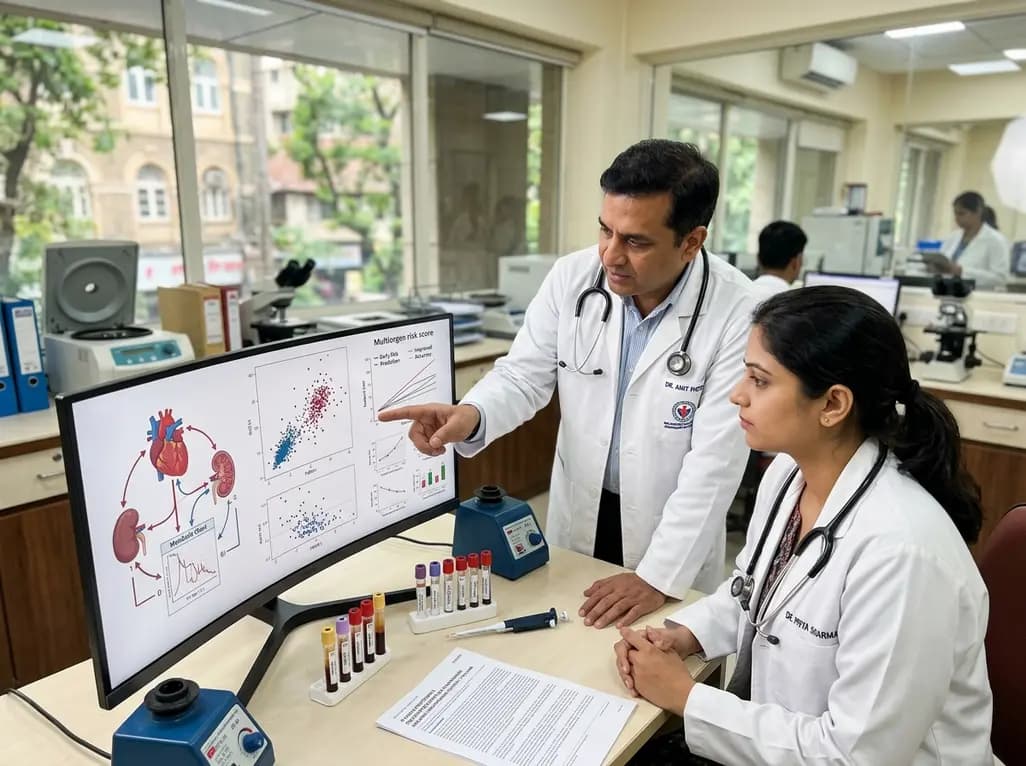
A large UK Biobank study reveals that plasma proteomic signatures capture preclinical organ damage and improve multiorgan risk prediction across early CKM syndrome stages 0 to 2 beyond traditional PREVENT clinical models.
Today
A narrative review investigates whether the articularis genus muscle functions as an independent anatomical entity or blends with the vastus intermedius. We evaluate its morphology, role in retracting the suprapatellar bursa, and direct clinical significance in anterior knee pain and arthroplasty.
Today

A Bayesian multilevel meta-analysis reveals that aerobic training combined with moderate carbohydrate restriction modestly lowers HbA1c in type 2 diabetes. However, sparse data and very low certainty leave incremental benefits over exercise or diet alone unproven, highlighting the need for individualized care.
Today
