.webp&w=384&q=75)

Loading, please wait...
Loading, please wait...
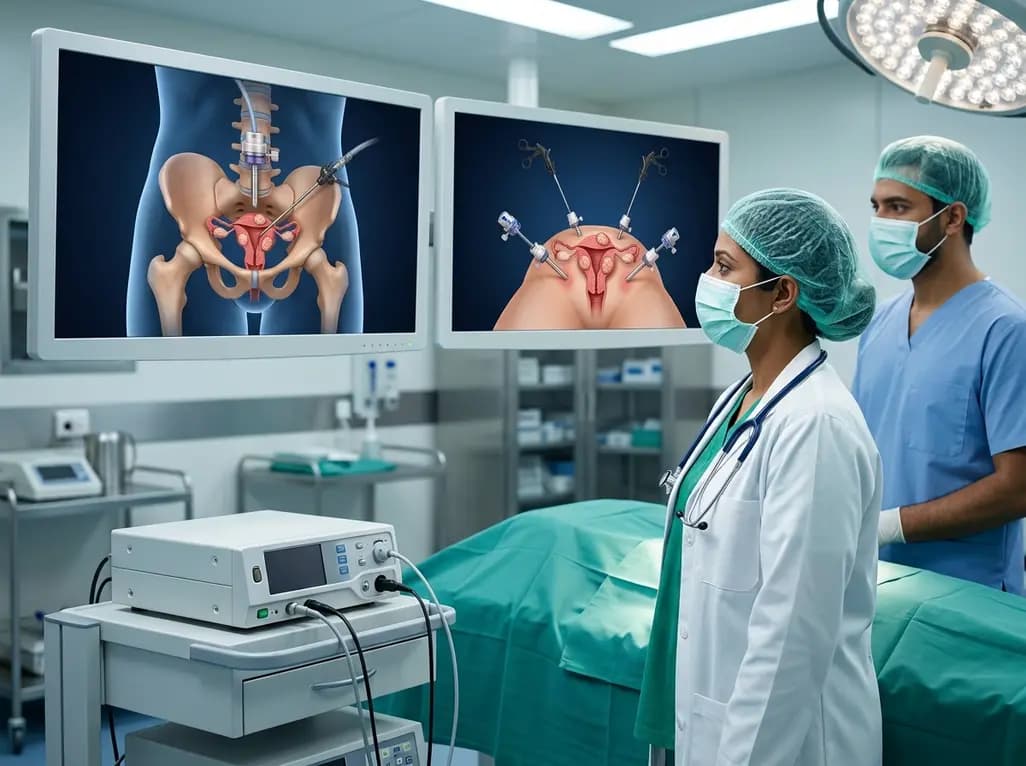
Uterine leiomyomata remain the most prevalent neoplasms affecting women during their reproductive years, often necessitating surgical intervention to alleviate symptoms such as menorrhagia or pelvic pressure. For patients prioritizing fertility preservation or uterine retention, laparoscopic myomectomy has long been the preferred minimally invasive approach. Traditionally, this procedure requires multiple abdominal incisions to accommodate various surgical instruments. However, the surgical landscape is evolving with the introduction of single-site laparoscopic myomectomy, a technique that utilizes a single transumbilical entry point. Consequently, clinicians are increasingly scrutinizing whether this newer modality matches the safety and efficacy of conventional multi-port laparoscopy. Recent evidence from a large-scale retrospective study suggests that the single-site approach is not only feasible but offers distinct advantages in specific perioperative metrics. Furthermore, the clinical community has eagerly awaited robust data to compare these two techniques across a significant patient population. By examining outcomes from over 3,900 patients, researchers have provided much-needed clarity on the comparative risks and benefits. This evidence is particularly relevant for surgeons who must balance technical difficulty with patient-reported outcomes. Ultimately, the goal is to optimize recovery without compromising the meticulous surgical standards required for myoma excision and uterine reconstruction.
Safety remains the paramount concern when introducing surgical innovations into routine clinical practice. In a massive single-center study involving 1437 single-site and 2514 multi-port patients, researchers analyzed intraoperative adverse events with high precision. Specifically, they categorized complications into Grade I events, such as organ injury, and Grade II events, including significant bleeding requiring transfusion. Interestingly, the data revealed no statistically significant differences between the two groups. The incidence of Grade I events was 0.70% for single-site surgery compared to 0.44% for the multi-port approach. Similarly, Grade II adverse events occurred in 6.75% of single-site cases and 6.24% of multi-port cases. These findings indicate that single-site laparoscopic myomectomy does not inherently increase the risk of surgical injury or hemorrhage. Furthermore, surgeons can feel confident that transitioning to a single-port technique does not jeopardize the patient's immediate intraoperative safety. Nevertheless, achieving these results requires a high level of surgical proficiency and familiarity with the unique ergonomics of single-site instruments. Moreover, the study underscores the importance of standardized reporting for complications in gynecological surgery. Therefore, the safety profile of the single-site approach appears robust enough to support its widespread adoption in experienced surgical centers. Consequently, surgeons can offer this option to patients without fear of compromising fundamental safety benchmarks.
Beyond intraoperative safety, the efficiency of postoperative recovery is a critical metric for both patients and healthcare systems. The study highlighted significant differences in several Enhanced Recovery After Surgery (ERAS) indicators favoring the single-site group. Notably, patients who underwent the single-site procedure experienced a shorter average postoperative hospital stay of 2.21 days, compared to 2.70 days for those in the multi-port group. Additionally, the time to first flatulence, which serves as a proxy for the return of bowel function, was significantly faster in the single-site cohort. Specifically, these patients regained bowel activity in approximately 21.40 hours, whereas multi-port patients required 23.96 hours. These improvements in recovery time likely stem from reduced peritoneal irritation and smaller total wound areas. Furthermore, shorter hospitalization periods decrease the risk of hospital-acquired infections and reduce the overall economic burden on patients. Surgeons should also consider that faster recovery correlates strongly with higher patient morale and earlier return to daily activities. Therefore, the single-site approach aligns perfectly with modern surgical goals of minimizing trauma and maximizing efficiency. In conclusion, the physiological recovery after a single-site procedure appears superior to conventional methods. Thus, clinicians should prioritize this approach when patient-specific factors allow for its safe implementation.
One of the most compelling arguments for single-site laparoscopic myomectomy is the improvement in patient-reported outcomes, particularly regarding pain and aesthetics. The study utilized Visual Analog Scale (VAS) scores to measure surgery-related pain, revealing that single-site patients reported significantly lower pain levels on the first postoperative day. Moreover, the aesthetic satisfaction scores were notably higher in the single-site group, averaging 9.53 compared to 8.64 in the multi-port group. Because the single incision is hidden within the natural folds of the umbilicus, the result is often a virtually scarless abdomen. This cosmetic advantage is frequently a primary motivator for patients choosing the single-site option. Additionally, lower pain levels reduce the requirement for postoperative opioids, which further accelerates the recovery process. Transitioning to a single-site technique requires surgeons to adapt to reduced triangulation and potential instrument clashing; however, the clinical benefits for the patient are substantial. Furthermore, high satisfaction scores often translate into better overall quality of life and higher ratings for surgical care. Consequently, the psychological benefit of a hidden scar should not be underestimated in women's health. Ultimately, the combination of reduced pain and superior cosmetic outcomes makes the single-site approach a highly attractive alternative for symptomatic fibroid management. Therefore, it represents a significant step forward in patient-centered surgical care.
For many women undergoing myomectomy, the ultimate goal is future pregnancy and a safe delivery. A critical component of the research focused on obstetric outcomes, including pregnancy rates, miscarriage rates, and the incidence of uterine rupture. Importantly, the study found no significant differences between the single-site and multi-port groups in any of these parameters. For instance, the pregnancy rate and the frequency of cesarean sections remained comparable across both cohorts. Furthermore, no cases of uterine rupture during pregnancy were reported in either group, which is a vital safety signal for fertility-preserving surgery. This suggests that the quality of uterine suturing—a crucial step for preventing rupture—is not compromised by the technical constraints of the single-site approach. Moreover, the long-term fertility prospects for these patients appear stable regardless of the laparoscopic technique used. Surgeons can therefore reassure patients that choosing a single-site procedure will not negatively impact their future reproductive goals. Additionally, the study's large sample size adds significant weight to these findings, providing a higher level of evidence than previous smaller series. Consequently, the fear that single-port surgery might result in weaker uterine scars seems unfounded. Thus, the single-site technique is a safe choice for women planning future families. In summary, obstetric safety remains a pillar of both surgical modalities.
While the benefits of single-site surgery are clear, the technical challenges involved cannot be ignored by the surgical community. The loss of triangulation and the proximity of instruments often lead to clashing, which can increase the complexity of the procedure. However, advancements in specialized ports and articulating instruments have mitigated many of these difficulties. Additionally, surgeons who are already proficient in conventional laparoscopy can usually overcome the learning curve within a reasonable number of cases. It is also worth noting that the study showed that operative times were manageable, although they often require a dedicated and experienced surgical team. Furthermore, the transumbilical approach requires meticulous closure of the umbilical defect to prevent incisional hernias. Despite these hurdles, the consistent safety data and high patient satisfaction justify the effort required to master the technique. Moreover, as more surgical centers adopt this modality, training programs will likely become more standardized and effective. Ultimately, the evolution of minimally invasive surgery continues to push the boundaries of what is possible through a single incision. Therefore, clinicians should embrace these innovations as part of a commitment to continuous improvement in surgical practice. In conclusion, single-site laparoscopic myomectomy is a viable, safe, and patient-preferred alternative that is here to stay.
The primary benefits of the single-site approach include significantly higher cosmetic satisfaction due to the hidden umbilical scar and a reduction in early postoperative pain. Clinical data also indicates a shorter hospital stay and a faster return of bowel function. These advantages contribute to a more efficient recovery process and improved patient morale, making it a preferred choice for many women seeking minimally invasive fibroid removal.
According to a large-scale retrospective study of nearly 4,000 patients, there is no statistically significant increase in intraoperative adverse events, such as organ injury or major bleeding, with the single-site technique. Both Grade I and Grade II complications occurred at similar rates in both single-site and multi-port groups. This suggests that the single-site approach is just as safe as traditional laparoscopy when performed by experienced surgical teams.
The choice between single-site and multi-port laparoscopy does not appear to significantly impact future obstetric outcomes. Research shows that pregnancy rates, miscarriage rates, and modes of delivery are comparable between the two groups. Crucially, no significant difference in the risk of uterine rupture was found, suggesting that the integrity of the uterine repair is maintained regardless of the number of laparoscopic incisions made during the myomectomy.
Disclaimer: This content is for informational and educational purposes only. It does not constitute medical advice or establish a doctor-patient relationship. Always seek the advice of a qualified healthcare provider regarding any medical condition or treatment. Refer to the latest local and national guidelines for clinical practice.
References
Yang X et al. Transumbilical laparoendoscopic single-site surgery versus conventional multi-port laparoscopy for myomectomy: A large single-center retrospective study. Acta Obstet Gynecol Scand. 2026 Jul 14. doi: 10.1111/aogs.70309. PMID: 42444532.
Xie W, Zhang Z, Wang Z, Wang L, Tang R. Laparoendoscopic single site myomectomy versus conventional laparoscopic myomectomy for uterine myomas: a systematic review and meta-analysis. Int J Surg. 2025 Aug 1;111(8):5485-5501. doi: 10.1097/JS9.0000000000002590.
Song T, Kim TJ, Lee SH, Kim TH, Kim WY. Laparoendoscopic single-site myomectomy compared with conventional laparoscopic myomectomy: a multicenter, randomized, controlled trial. Fertil Steril. 2015 Nov;104(5):1325-31. doi: 10.1016/j.fertnstert.2015.07.1137.

Read summarized clinical updates, watch expert medical content, and earn CME certifications right from your smartphone.
Open your smartphone camera to scan and install.





A comprehensive retrospective study comparing transumbilical single-site laparoscopy and multi-port laparoscopy for myomectomy demonstrates that single-site surgery offers comparable safety, shorter hospital stays, and superior cosmetic results for patients seeking fertility preservation.
3 months ago

A retrospective cohort study of 7,716 ICU patients from the MIMIC-IV database demonstrates that Gradient Boosting Decision Trees significantly outperform traditional SOFA scores in predicting in-hospital mortality among patients with sepsis and diabetes, with SHAP analysis providing clinical interpretability.
Today

A prenatal case highlights severe glutaric acidemia type II presenting as bilateral hyperechoic cystic kidneys at 18 weeks. Whole-exome sequencing revealed a novel homozygous ETFDH frameshift variant, demonstrating the power of rapid genetic testing in fetal renal anomalies.
Today
This article reviews the forensic and clinical complexities of acute myocarditis arising on left ventricular hypertrophy in children, highlighting early diagnostic red flags and multidisciplinary postmortem autopsy protocols.
Today

This comparative study evaluates posterior labral tears with and without glenohumeral instability, highlighting distinct demographic patterns, MRI underestimation in stable shoulders, and successful arthroscopic repair outcomes.
Yesterday

A clinical study demonstrates that early intervention with tocilizumab, either as monotherapy or bridged with corticosteroids, achieves significant proptosis reduction and resolves active inflammation in treatment-naive thyroid eye disease.
Yesterday
