.webp&w=384&q=75)

Loading, please wait...
Loading, please wait...

Cerebrovascular diseases exhibit marked disparities between men and women in disease presentation, clinical progression, and therapeutic outcomes. In neurointerventional surgery, endovascular aneurysm treatment has revolutionized the management of both ruptured and unruptured intracranial aneurysms. However, clinical teams frequently debate whether patient sex influences procedural safety. Recent findings from the fourth nationwide Japanese Registry of Neuroendovascular Therapy offer crucial clarity regarding sex-specific periprocedural hazards.
The JR-NET4 study represents one of the largest prospective multicenter databases in neuroendovascular medicine. Researchers evaluated 22,192 consecutive patients who underwent endovascular intervention between January 2015 and December 2019. Furthermore, the investigators stratified all analyses by aneurysm rupture status to account for baseline clinical severity. The final cohort comprised 7,989 patients presenting with ruptured aneurysms and 14,203 individuals with unruptured lesions. Notably, women constituted the majority in both cohorts, accounting for 69 percent of ruptured cases and 74 percent of unruptured presentations. Consequently, this vast sample size provides sufficient statistical power to uncover subtle sex differences that smaller cohorts failed to detect. In addition, the registry systematically captured periprocedural ischemic deficits, intraprocedural extravasations, and short-term functional recovery metrics. These rigorous protocols established an ideal framework to assess whether biological sex independently alters procedural safety margins during neurointervention.
Ischemic stroke secondary to thromboembolism remains a primary hazard during catheter navigation and coil placement. The primary study endpoint focused on ischemic complications associated with neurological deterioration, defined as an increase of at least one point on the modified Rankin Scale. Interestingly, the registry data demonstrated comparable rates of ischemic deficits between male and female patients. Among patients presenting with ruptured aneurysms, ischemic complications occurred in 3.5 percent of women and 4.1 percent of men. Multivariate logistic regression confirmed that this difference was not statistically significant after adjusting for baseline covariates. Similarly, in patients treated for unruptured aneurysms, ischemic event rates remained virtually identical, occurring in 1.6 percent of women and 1.5 percent of men. Therefore, neurointerventionists can reassure patients that female sex does not increase thromboembolic risk. Modern antiplatelet regimens and standard heparinization protocols appear equally protective across both sexes during complex catheter maneuvers.
While ischemic events occurred at equal frequencies, hemorrhagic complications revealed a stark disparity between sexes. Intraprocedural aneurysm perforation or acute intracranial hemorrhage occurred significantly more often in women. Specifically, in the ruptured aneurysm cohort, hemorrhagic complications developed in 1.8 percent of women compared to 1.1 percent of men. Adjusted regression models indicated that women faced a 57 percent higher risk of hemorrhage during these emergency interventions. Moreover, the disparity became even more prominent in elective settings. Among patients with unruptured aneurysms, 0.9 percent of women experienced hemorrhagic complications compared to only 0.4 percent of men. Consequently, female patients undergoing elective coiling exhibited more than twice the odds of hemorrhagic complications. These findings underscore a reproducible anatomical or biological vulnerability. Hence, neurosurgeons must recognize female sex as an independent risk factor for intraoperative bleeding events during endovascular aneurysm treatment.
Several physiological and anatomical mechanisms likely drive the elevated hemorrhagic vulnerability observed in women. First, female patients typically possess smaller parent vessels and tortuous intracranial arterial trajectories. These narrower vessel calibers increase mechanical friction during microcatheter manipulation and balloon-assisted coiling. Second, postmenopausal estrogen depletion alters the microstructural composition of cerebral arteries. Specifically, estrogen decline reduces vascular collagen density, degrades elastin fibers, and disrupts extracellular matrix remodeling. As a result, the arterial wall becomes significantly thinner and more friable. Third, female aneurysms frequently develop at distinct arterial bifurcations with thinner dome morphology. Therefore, introducing microcoils or expanding intracranial stents generates higher wall tension against structurally delicate tissue. Furthermore, microcatheter kickback or accidental coil protrusion carries a higher likelihood of rupture when aneurysm walls lack robust connective tissue support.
Despite experiencing higher rates of periprocedural hemorrhage, female patients achieved remarkably favorable recovery metrics. Investigators assessed functional independence at thirty days post-procedure, defining success as a modified Rankin Scale score of 0 to 2. In patients with ruptured aneurysms, women achieved significantly higher rates of functional independence than men. Multivariate analysis confirmed an adjusted odds ratio of 1.21 favoring female recovery. Furthermore, all-cause mortality showed no significant difference between men and women in either ruptured or unruptured groups. This paradoxical preservation of functional status suggests biological resilience against secondary brain injury. Alternatively, prompt recognition and aggressive management of periprocedural extravasation may prevent permanent neurological deficits. Nonetheless, these findings indicate that while women face higher acute hemorrhagic risk, their overall therapeutic trajectory remains highly encouraging.
The JR-NET4 evidence demands tailored procedural strategies to minimize hemorrhagic complications in women. Interventional neuroradiologists must exercise heightened technical caution during microcatheter shaping and dome navigation. Specifically, operators should select softer, smaller framing coils to mitigate excessive radial force against fragile aneurysm domes. Additionally, clinicians should consider gentler balloon inflation pressures when performing balloon-assisted neck remodeling in female patients. Furthermore, pre-procedural imaging review must meticulously evaluate parent vessel caliber and aneurysm wall thickness. In emergency cases of ruptured aneurysms, teams should maintain immediate readiness for rapid protamine reversal and balloon occlusion. Moreover, post-procedural monitoring protocols should incorporate rapid neuroimaging protocols to detect subtle extravasations early. By adopting sex-conscious interventional precautions, neurointerventional teams can effectively diminish procedural morbidity while preserving exceptional clinical recovery.
Female patients often present with distinct vascular characteristics, including smaller parent arterial diameters and thinner intracranial vessel walls. In addition, postmenopausal hormonal shifts alter collagen integrity and vessel elasticity. Consequently, microcatheter manipulation and coil deployment exert higher mechanical stress on fragile arterial walls, increasing the probability of intraprocedural arterial perforation.
No, the nationwide JR-NET4 registry demonstrated comparable ischemic complication rates between men and women. Specifically, thromboembolic events causing neurological worsening occurred in 3.5 percent of women versus 4.1 percent of men with ruptured aneurysms. Similarly, unruptured cohorts exhibited virtually identical ischemic rates, confirming that sex does not influence periprocedural thromboembolism.
Interestingly, women who underwent treatment for ruptured aneurysms achieved higher rates of functional independence at thirty days than men. Although women experienced more periprocedural hemorrhages, adjusted analyses demonstrated an odds ratio of 1.21 for favorable functional recovery. Furthermore, all-cause mortality rates remained indistinguishable between sexes across the entire study population.
Disclaimer: This content is for informational and educational purposes only... Refer to the latest local and national guidelines for clinical practice.
References
Baba D et al. Sex differences in periprocedural complications of endovascular treatment for intracranial aneurysms: An analysis based on JR-NET4. Clin Neurol Neurosurg. 2026 Oct. doi: 10.1016/j.clineuro.2026.109551. PMID: 42335864.
Sasaki N et al. Iatrogenic Vessel Dissection in Neuroendovascular Therapy: A JR-NET4 Nationwide Registry Analysis. AJNR Am J Neuroradiol. 2026 Sep 3. doi: 10.3174/ajnr.A9620.
Shindo K et al. Sex differences in outcomes of dural arteriovenous fistula treatment in Japan: Analysis of the Japanese Registry of Neuroendovascular Therapy (JR-NET 4). Clin Neurol Neurosurg. 2026 Aug. doi: 10.1016/j.clineuro.2026.109607. PMID: 42556066.

Read summarized clinical updates, watch expert medical content, and earn CME certifications right from your smartphone.
Open your smartphone camera to scan and install.





A nationwide registry analysis of over 22,000 patients from JR-NET4 highlights sex differences in endovascular treatment for intracranial aneurysms. While ischemic stroke rates remained equal between sexes, female patients experienced twice the risk of periprocedural hemorrhagic complications.
Today

The CARE study protocol introduces a multilingual, RAG-powered conversational interface designed by IIT Bombay to support tobacco cessation in India. Evaluating feasibility and behavioral outcomes across three cessation centers, this digital health initiative aims to enhance quitting support for diverse users.
Today

A large UK cohort study of 1.4 million women shows that pregnancy complications, including gestational diabetes, hypertension, and preterm birth, substantially raise long-term risks for hypertension, chronic kidney disease, type 2 diabetes, and cardiovascular events, highlighting early postpartum intervention needs.
Today
A cross-sectional study reveals that hypertension knowledge, illness perceptions, depression, and substance use significantly predict self-care behaviors. Addressing mental health and cognitive beliefs in primary care is crucial for optimal blood pressure control and cardiovascular disease prevention.
Today
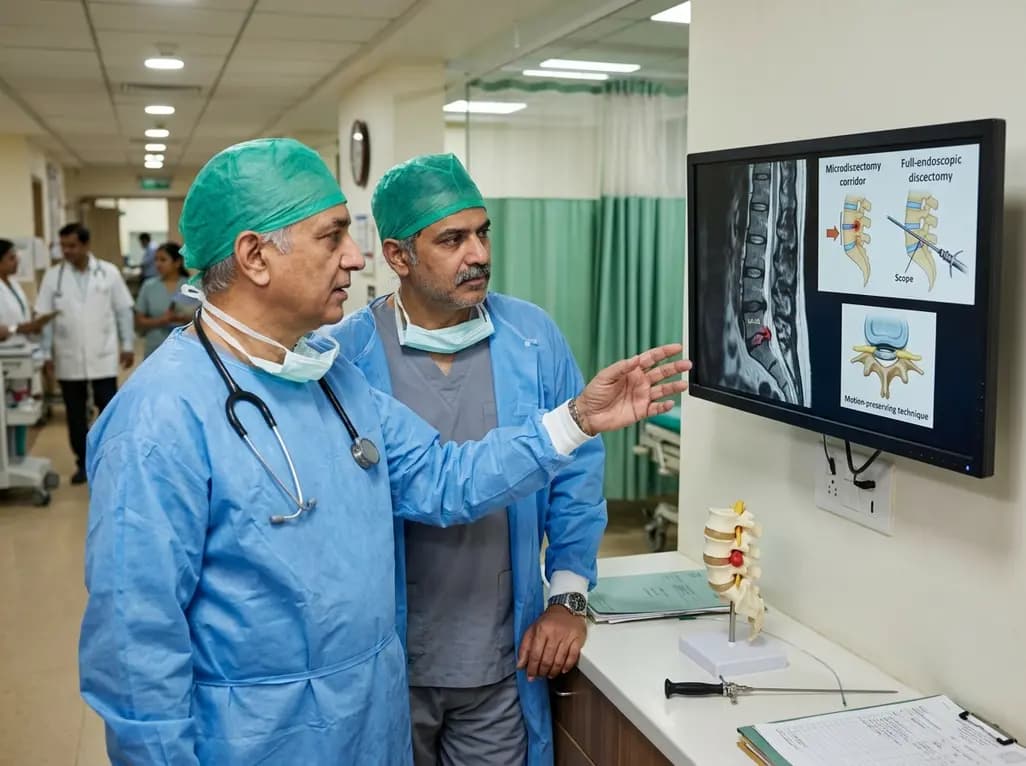
This clinical overview examines recent advancements in lumbar disc herniation surgery, comparing microscopic and full-endoscopic discectomy while highlighting biportal techniques and emerging motion-preserving innovations for spine specialists.
Today

Small interfering RNA (siRNA) therapeutics harness RNA interference to degrade disease-causing messenger RNA. By delivering hepatocyte-targeted, durable gene silencing, agents targeting PCSK9, LPA, and angiotensinogen offer potent cardiovascular risk reduction with infrequent, biannual dosing schedules.
Today
