

Loading, please wait...
Loading, please wait...

Neuropsychiatric disorders pose immense diagnostic and therapeutic challenges across modern clinical practice. Clinicians currently evaluate major depressive disorder, seizures, and schizophrenia through subjective clinical assessments. Consequently, identifying reliable laboratory indicators remains an urgent medical priority. A prospective observational study highlights the serum isatin biomarker as a promising tool for clinical medicine. Isatin acts as an endogenous stress-responsive indole and a native monoamine oxidase inhibitor. Therefore, circulating levels offer crucial insight into neurochemical dysregulation across complex neuropsychiatric conditions.
Isatin is a naturally occurring indole derivative synthesized within mammalian tissues. Researchers identify it primarily as an endogenous metabolic product linked to tryptophan metabolism and monoaminergic signaling. Under physiological conditions, isatin selectively inhibits monoamine oxidase type B while modulating natriuretic peptide receptors. Moreover, experimental models demonstrate that cellular stress and oxidative injury trigger notable increases in endogenous isatin concentrations. Because acute stress profoundly influences neurochemical balance, circulating isatin reflects ongoing central nervous system perturbation. Furthermore, investigators recognize that neuroinflammation and monoamine disruption represent core pathogenic mechanisms in major depression, psychosis, and epileptogenesis.
When brain homeostasis deteriorates, metabolic pathways shift significantly, altering indole clearance and peripheral blood levels. Consequently, measuring this molecule provides direct physiological information about metabolic stress. Historically, laboratory teams struggled to quantify trace indole levels with sufficient clinical accuracy. However, modern high-performance liquid chromatography techniques now allow robust quantification of isatin in human serum. As a result, clinicians can finally explore its translational utility across heterogeneous mental health disorders. Understanding these neurobiological dynamics establishes a strong scientific foundation for utilizing isatin as a clinical monitoring tool.
To rigorously assess the biomarker potential of isatin, investigators conducted a prospective observational trial at a tertiary care institution. The researchers enrolled 120 adult participants divided equally into four well-characterized cohorts. Specifically, the study included 30 patients with major depressive disorder, 30 with active seizure disorders, and 30 with schizophrenia. Additionally, the investigators recruited 30 age-matched and sex-matched healthy controls to establish baseline normative benchmarks. Standard psychiatric rating instruments and neurological evaluations confirmed all clinical diagnoses before patient enrolment.
The medical team collected peripheral venous blood samples from every participant at baseline under standardized fasting conditions. Subsequently, laboratory specialists measured serum isatin concentrations using validated reversed-phase high-performance liquid chromatography. Patients then received guideline-directed standard pharmacotherapy for 12 consecutive weeks under close clinical supervision. Specifically, psychiatrists prescribed evidence-based antidepressants or second-generation antipsychotics, while neurologists administered appropriate antiseizure medications. After completing the 12-week therapeutic regimen, investigators conducted repeat clinical assessments and drew follow-up blood samples. Clinicians classified therapeutic outcomes using validated disease-specific scales to identify treatment responders and non-responders. Thus, the rigorous study design provided comprehensive data spanning baseline presentation and treatment response.
The baseline laboratory evaluations revealed striking differences between clinical cohorts and healthy control subjects. Baseline serum isatin concentrations were markedly elevated in all three neuropsychiatric conditions compared to control values. Most notably, receiver operating characteristic curve analysis demonstrated exceptional diagnostic discrimination across every evaluated pathology. The serum isatin biomarker achieved area under the curve values ranging between 0.996 and 1.000 for distinguishing patients from healthy individuals. Consequently, these metrics indicate near-perfect diagnostic accuracy during acute presentations.
In clinical practice, distinguishing early psychiatric episodes from unaffected states frequently poses substantial challenges for practitioners. Therefore, having an objective blood test that clearly separates pathological states from health represents a significant diagnostic advancement. Furthermore, the baseline elevation highlights isatin as an intrinsic metabolic signal reflecting acute neuronal distress and monoaminergic disruption. Although clinicians must not rely on single markers in isolation, these findings demonstrate remarkable diagnostic separation. In addition, the consistency across depression, epilepsy, and schizophrenia underscores a shared pathophysiological stress response. Ultimately, these robust baseline findings position serum isatin as a sensitive diagnostic indicator in acute clinical environments.
Following 12 weeks of guideline-directed treatment, repeat biochemical measurements revealed significant reductions in circulating isatin levels across all three disease groups. This systemic drop indicates that effective pharmacotherapy dampens the underlying neurochemical stress response. Interestingly, patients with schizophrenia exhibited the most substantial decline, showing an average reduction of 23.91 ± 15.43 nmol/L. Patients with major depression and seizure disorders also demonstrated clear, statistically significant reductions in serum concentrations.
Moreover, the investigators observed a critical pattern when evaluating treatment response categories. In every disease group, clinical responders demonstrated significantly greater isatin reductions than non-responders. Thus, declining serum levels directly track clinical recovery and symptom alleviation. When pharmacotherapy successfully restores neurotransmitter balance and controls seizure activity, metabolic stress abates proportionally. Consequently, serum isatin functions as a sensitive pharmacodynamic marker capable of tracking biological response over time. Therefore, serial monitoring of isatin levels could provide objective confirmation of therapeutic efficacy in everyday clinical practice.
Beyond diagnostic and pharmacodynamic utility, serum isatin delivers critical prognostic insights that can guide clinical management. In patients presenting with seizures, baseline isatin levels accurately predicted therapeutic non-response, yielding an impressive AUC of 0.814. Specifically, individuals with higher baseline concentrations faced significantly greater odds of treatment failure. To uncover underlying mechanisms, investigators performed advanced mediation analyses. Remarkably, this analysis identified two competing biological pathways operating simultaneously during pharmacotherapy.
On one hand, elevated baseline isatin drove a greater absolute reduction in biomarker levels during treatment. On the other hand, high baseline levels independently exerted a direct negative effect, impairing clinical response. Furthermore, multivariable regression identified baseline isatin as the single strongest predictor of 12-week follow-up concentrations (beta = 0.814). These complex kinetics demonstrate that severe initial metabolic perturbation creates biological resistance against standard pharmacological agents. As a result, patients with exceptionally high baseline isatin may require more aggressive initial regimens or multi-mechanistic therapeutic strategies. Ultimately, identifying therapeutic resistance before treatment failure occurs can prevent unnecessary disease progression and disability.
The integration of biochemical markers into routine neuropsychiatric care represents a transformative clinical milestone. Currently, clinicians manage mental health and seizure disorders through empiric trial-and-error treatment protocols. However, objective biomarkers like serum isatin can streamline diagnostic classification, predict therapeutic resistance, and verify pharmacological response. In resource-conscious healthcare environments such as India, establishing affordable HPLC testing protocols could enhance patient stratification in tertiary academic centers.
Nevertheless, clinicians must interpret these findings within realistic clinical parameters. Because this study examined 120 individuals, larger multicenter trials must validate the diagnostic thresholds across diverse demographic populations. Additionally, researchers should explore whether combining isatin with neuroimaging modalities or other serum biomarkers enhances prognostic precision. As prospective validation continues, serum isatin may soon bridge the long-standing gap between biochemical research and bedside neuropsychiatric practice.
Isatin is an endogenous indole synthesized in mammalian tissues that acts as a natural inhibitor of monoamine oxidase B. Physiological stress, neuroinflammation, and oxidative cellular injury stimulate its synthesis within brain networks. Consequently, elevated circulating isatin levels reflect pronounced neurochemical disruption and heightened metabolic stress across psychiatric and neurological diseases. Tracking this indole molecule gives clinicians an objective window into the underlying central nervous system dysfunction seen in depression, schizophrenia, and epilepsy.
In clinical trials, baseline serum isatin demonstrated strong prognostic accuracy for identifying antiepileptic pharmacoresistance, achieving an area under the curve of 0.814. Mediation analysis revealed that higher baseline isatin independently impairs therapeutic responsiveness, despite prompting greater overall biomarker reduction during pharmacotherapy. Therefore, patients exhibiting markedly elevated baseline levels face an increased risk of treatment non-response. Clinicians can utilize this biochemical information early to consider tailored dosing schedules or alternative therapeutic combinations.
Yes, serial measurements indicate that clinical responders experience substantially greater reductions in serum isatin concentrations compared to non-responders across all evaluated conditions. Following 12 weeks of standard pharmacotherapy, patients achieving symptom remission demonstrated marked biochemical normalization, with the largest reductions occurring in schizophrenia. Because biomarker decreases mirror clinical improvement, monitoring isatin dynamics provides doctors with an objective laboratory metric to verify therapeutic efficacy alongside routine bedside psychiatric or neurological evaluations.
Disclaimer: This content is for informational and educational purposes only and should not be considered medical advice. Healthcare professionals must exercise independent clinical judgment. Refer to the latest local and national guidelines for clinical practice.
References

Read summarized clinical updates, watch expert medical content, and earn CME certifications right from your smartphone.
Open your smartphone camera to scan and install.





A prospective study of 120 participants reveals that serum isatin is a potent biomarker for major depressive disorder, seizures, and schizophrenia. It offers near-perfect diagnostic discrimination, tracks treatment response after 12 weeks, and predicts therapeutic non-response in patients with seizures.
Today

A scoping review of 130 studies reveals that chronic preoperative benzodiazepine use is linked to increased postoperative opioid needs and delirium. Despite widespread use, inconsistent definitions highlight the need for standardized perioperative medication optimization protocols.
Today

An intracranial EWSR1::CREM fusion sarcoma in a 31-year-old female manifested as a paraneoplastic inflammatory syndrome with anemia and secondary infertility. The dural mass mimicked meningioma, but gross-total resection resolved her systemic inflammation and restored natural fertility within one month.
Today

The DOMINO study protocol presents a multidisciplinary implementation mapping approach to overcome provider, patient, and payer barriers to antiobesity medications, offering vital insights for Indian clinicians managing the growing diabesity burden.
Today
An age-matched cross-sectional study reveals that lower muscle quality and impaired lower-extremity function strongly correlate with an increased fear of falling in older women, highlighting the necessity of targeted resistance training and balance interventions in geriatric care.
Today
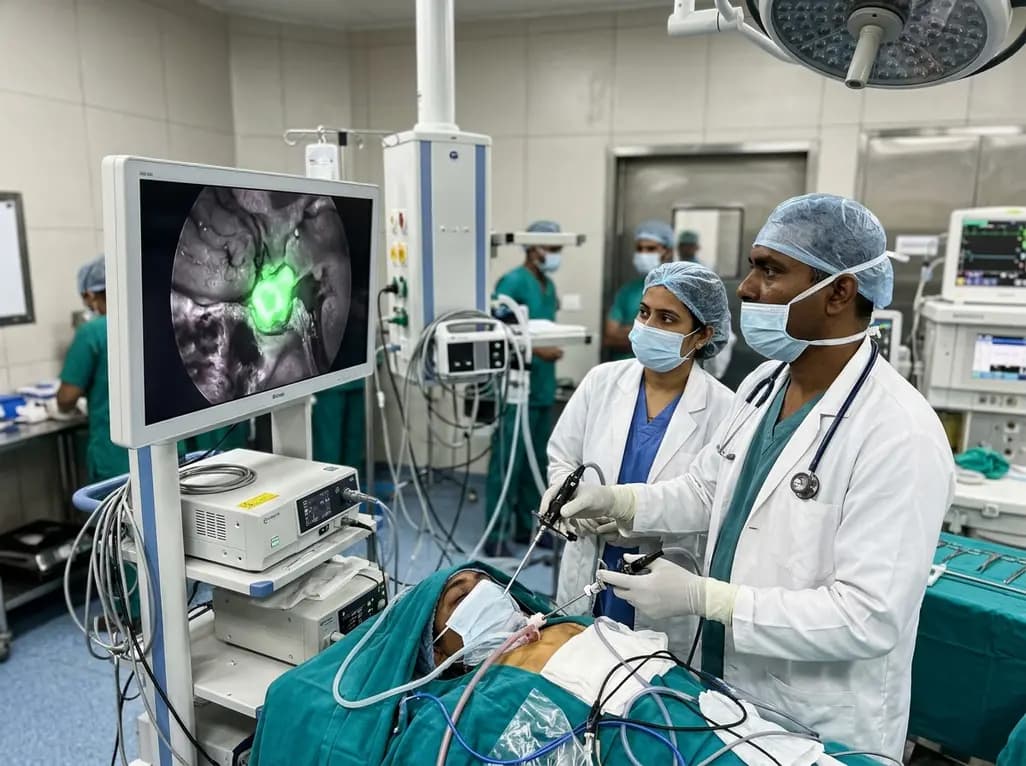
Near-infrared autofluorescence provides real-time label-free optical guidance during endoscopic transsphenoidal pituitary surgery. By highlighting stark signal contrasts between normal pituitary gland and adenomas, this technique aids gross-total tumor resection while safeguarding critical endocrine function.
Today
