.webp&w=384&q=75)

Loading, please wait...
Loading, please wait...
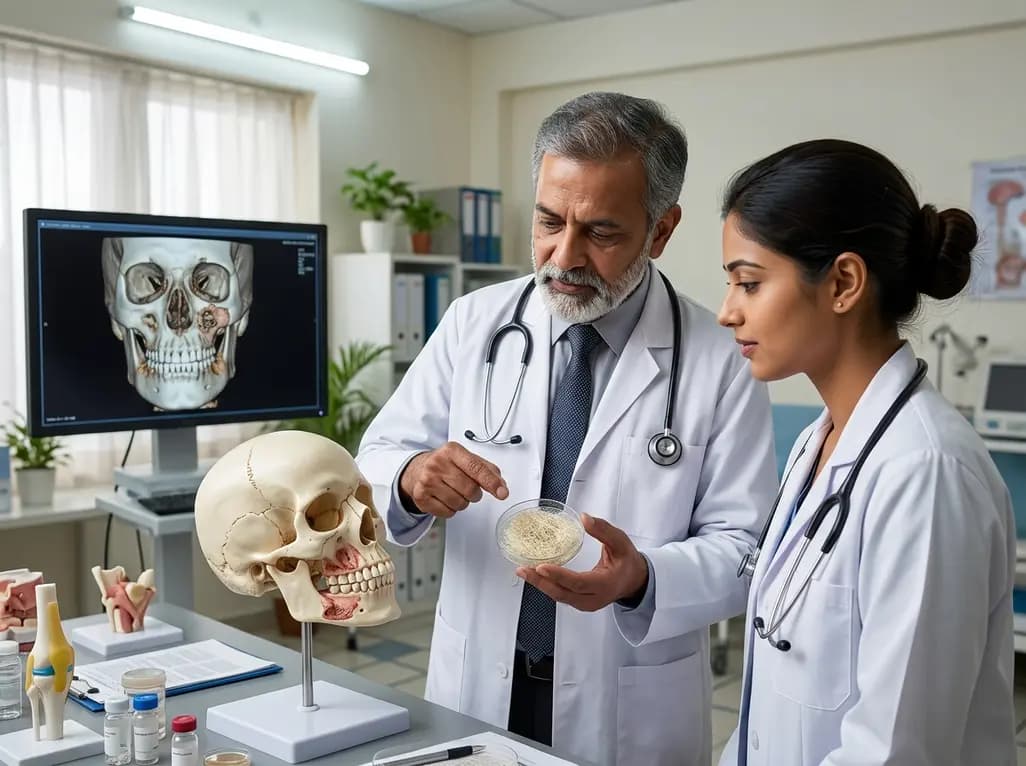
Managing significant craniomaxillofacial (CMF) bone defects remains a formidable challenge for surgeons. These defects often arise from trauma, tumor resections, or congenital conditions. Consequently, researchers are investigating next-generation biomaterials to improve surgical outcomes. Sericin, a protein derived from silk, has emerged as a promising candidate. Current evidence highlights the potential of sericin craniomaxillofacial regeneration strategies to stimulate natural bone formation and tissue integration.
Sericin actively promotes the differentiation of osteoprogenitor cells. It upregulates essential osteogenic markers such as Runx2, osteocalcin, and osteopontin. Furthermore, this protein facilitates the organized deposition of the mineralized extracellular matrix. These cellular interactions are vital for stable bone healing. Researchers have also observed that sericin supports angiogenesis, which ensures a sufficient blood supply to the regenerating tissue. Therefore, it provides a comprehensive biological environment for structural repair.
Beyond bone formation, sericin exhibits a favorable biocompatibility profile. It exerts significant anti-inflammatory effects by promoting the polarization of M2 macrophages. This pro-healing shift reduces the expression of inflammatory cytokines like TNF-α. Additionally, some studies suggest that sericin-based biomaterials possess antimicrobial potential. However, clinical validation of these properties in grafts and scaffolds is still ongoing. Such immunomodulatory benefits are crucial for minimizing graft rejection and enhancing recovery in complex CMF cases.
In animal models, sericin-based biomaterials have delivered impressive results. Studies demonstrate statistically significant improvements in healing calvarial, alveolar, and long bone defects. These findings provide a strong foundation for future human applications. Notably, the success of sericin craniomaxillofacial regeneration in preclinical settings bridges the gap between laboratory research and clinical practice. Despite these successes, human clinical trials remain limited to minor oral surgery applications at this time.
Sericin stimulates the differentiation of bone-forming cells and upregulates key proteins like Runx2. It also promotes a healthy immune environment by encouraging anti-inflammatory macrophage activity.
While preclinical results are strong, clinical use is currently limited to a few specific applications in oral surgery. More human studies are needed before it becomes a standard treatment for large CMF defects.
Disclaimer: This content is for informational and educational purposes only. It does not constitute medical advice or establish a doctor-patient relationship. Refer to the latest local and national guidelines for clinical practice.
References
1. Mazurek Ł et al. Sericin-based biomaterial for craniomaxillofacial regeneration: Preclinical evidence and translational potential. J Biomater Appl. 2026 Jun 06. doi: 10.1177/08853282261459552. PMID: 42250217.
2. Zhang X et al. Relevant Properties and Potential Applications of Sericin in Bone Regeneration. MDPI. 2023 Aug 15. doi: 10.3390/cimb45080426.
3. Wang Y et al. Sericin/Nano-Hydroxyapatite Hydrogels for Effective Bone Regeneration via Immunomodulation. Taylor & Francis. 2023 Apr 06. doi: 10.1080/09205063.2023.2195021.

Read summarized clinical updates, watch expert medical content, and earn CME certifications right from your smartphone.
Open your smartphone camera to scan and install.





New review highlights sericin's potential in bone healing, focusing on its osteogenic and immunomodulatory roles in craniomaxillofacial regeneration....
4 months ago

As monsoon seasons elevate arboviral disease threats, Tamil Nadu has initiated an ICMR-monitored evaluation of the tetravalent dengue vaccine in Tenkasi district. Clinicians emphasize clinical monitoring, public prevention, and high-quality early pediatric care to reduce disease morbidity across endemic regions.
Today

Leucine Rich Bio has introduced South Asia's first comprehensive vaginal microbiome test, BugSpeaks. By profiling microbial dysbiosis, pathogens, and antimicrobial resistance, this next-generation diagnostic platform provides clinicians with deeper insights into recurrent infections, fertility, and reproductive health.
Today

Review how tailored exercise programs benefit frail older patients with heart failure. Explore pathophysiological mechanisms, individualized training prescriptions, and strategies to overcome adherence barriers in clinical practice.
Today

This comparative study evaluates posterior labral tears with and without glenohumeral instability, highlighting distinct demographic patterns, MRI underestimation in stable shoulders, and successful arthroscopic repair outcomes.
Today

A clinical study demonstrates that early intervention with tocilizumab, either as monotherapy or bridged with corticosteroids, achieves significant proptosis reduction and resolves active inflammation in treatment-naive thyroid eye disease.
Today
