

Loading, please wait...
Loading, please wait...
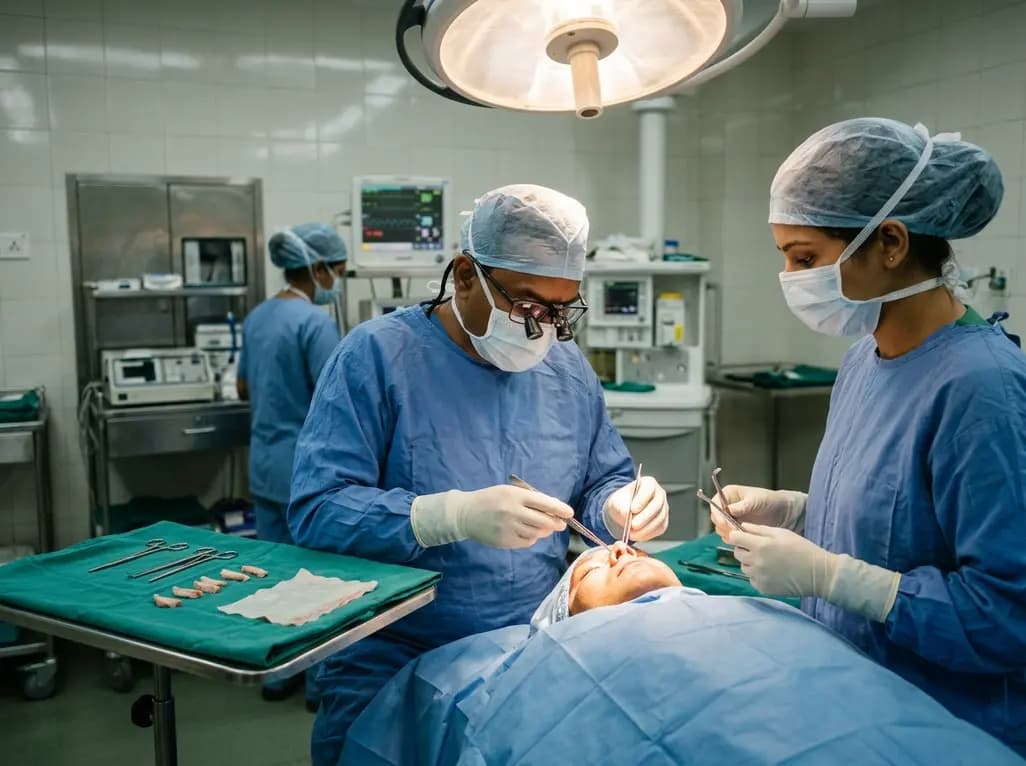
Symptomatic nasal septal perforations present significant clinical and technical challenges for otorhinolaryngologists and facial plastic surgeons worldwide. Patients frequently endure distressing symptoms, including persistent epistaxis, nasal whistling, chronic crusting, and severe subjective obstruction due to turbulent airflow. While conservative management provides transient relief, definitive anatomical restoration requires surgical closure. Consequently, finding a dependable surgical technique remains paramount, particularly for challenging medium and large defects. Recent reconstructive advancements highlight the value of autologous composite grafting. Specifically, an innovative technique for septal perforation repair utilizing an autologous costal cartilage and abdominal rectus muscle fascia sandwich graft provides durable structural and mucosal reconstitution.
Repairing nasal septal defects has historically yielded variable success rates, particularly when mucosal margins retract and devitalize. Minor perforations often close successfully with local mucosal advancement flaps. However, larger perforations exceeding one to two centimeters create immense technical hurdles. Bilateral mucosal tension frequently causes suture line dehiscence, which leads to surgical recurrence. Furthermore, previous septoplasties or nasal trauma often deplete local septal cartilage, leaving surgeons without adequate structural support. Without an interpositional barrier, opposing mucosal flaps risk reperforation due to persistent mechanical shearing. Additionally, chronic inflammation and compromised mucosal microvasculature impair tissue healing. In response to these issues, surgeons have explored diverse biomaterials, including temporal fascia, acellular dermal matrices, and polydioxanone plates. Unfortunately, thin grafts often lack sufficient rigidity, whereas synthetic sheets carry extrusion risks. Therefore, surgeons need a reliable autologous construct that combines rigid structural support with a highly vascularizable biologic scaffold. Achieving tension-free closure while preserving mucosal viability remains the core objective during any complex septal reconstruction.
The sandwich graft approach fundamentally addresses the anatomical deficits inherent to large septal perforations. Structurally, the nasal septum requires central rigidity to maintain laminar airflow. Costal cartilage provides an exceptional autologous source of sturdy cartilage that resists resorption and withstands negative intranasal inspiratory pressures. However, cartilage alone cannot foster rapid mucosal re-epithelialization across large gaps. To overcome this limitation, surgeons combine carved rib cartilage with rectus abdominis muscle fascia. Fascia serves as a supple bed that promotes neovascularization and cellular migration from surrounding mucoperichondrial edges. Moreover, harvesting rectus fascia offers substantial surface area, allowing the graft to extend well beyond perforation margins. When surgeons place the cartilage core between sheets of rectus fascia, they create an optimal trilaminar substitute for native septal tissue. Consequently, this composite interposition protects against recurrent perforation even if slight mucosal dehiscence occurs postoperatively. By bridging mechanical stability with robust biological integration, the sandwich construct facilitates complete mucosal healing across extensive septal defects.
Executing this reconstructive technique requires precise surgical choreography and meticulous tissue handling. First, the surgical team approaches the nasal framework through an external open rhinoplasty incision, providing wide exposure of the caudal and dorsal septum. The surgeon carefully elevates bilateral mucoperichondrial flaps away from the perforation perimeter, releasing mucosal adhesions. Simultaneously, the team harvests autologous costal cartilage and rectus muscle fascia through a single subcostal incision. This co-localized donor site substantially streamlines the harvesting process and minimizes operative time. Next, the surgeon thins the rib cartilage to approximately one millimeter to prevent airway narrowing. The fascia is then wrapped around the cartilaginous scaffold, creating a sandwich graft that exceeds perforation borders by approximately one centimeter. Afterward, the surgeon securely sutures the composite graft between the bilateral flaps using absorbable sutures. Finally, silastic splints stabilize the reconstructed septum and protect the regenerating mucosa throughout the critical initial healing phase.
A retrospective clinical investigation evaluated the efficacy of this novel costal cartilage and rectus fascia sandwich graft. The study cohort comprised 15 symptomatic patients, including six females and nine males with a mean age of 36.4 years. All participants presented with symptomatic medium defects between 0.5 and 2.0 centimeters or large defects measuring 2.0 to 2.5 centimeters. Following open septoplasty repair, researchers monitored patients for anatomical closure and postoperative complications. Remarkably, complete perforation closure occurred in 12 of the 15 patients, achieving an 80% primary success rate. Among the three failures, two involved large defects and one involved a medium perforation. Statistical analyses revealed no significant association between surgical outcome and patient age, sex, smoking status, or defect dimensions. Crucially, no intraoperative or postoperative complications, such as donor site hematoma or graft extrusion, developed in any patient. These clinical findings demonstrate that autologous composite sandwich grafting provides a reliable solution for repairing challenging septal perforations.
These clinical findings provide valuable insights for otorhinolaryngologists managing recurrent or extensive septal defects. Traditionally, large perforations exceeding two centimeters have carried daunting failure rates and significant patient morbidity. However, the rectus fascia and costal cartilage technique offers several distinct advantages over older grafting protocols. Because surgeons harvest both rib cartilage and rectus fascia from one surgical site, they avoid secondary donor morbidities associated with separate temporalis incisions. Furthermore, the structural resilience of costal cartilage prevents contracture and preserves external nasal support, minimizing cosmetic deformities. Clinicians should nevertheless emphasize thorough patient selection and meticulous preoperative counseling. Patients must cease smoking and aggressively manage underlying inflammatory conditions before undergoing reconstruction. In addition, surgeons must counsel candidates regarding donor site expectations and postoperative care regimens. As reconstructive surgeons continually refine rhinologic interventions, integrating composite sandwich autografts expands the therapeutic armamentarium, delivering dependable structural restoration and durable relief.
Costal cartilage provides superior structural rigidity that resists respiratory pressure changes and prevents graft resorption over time. Meanwhile, rectus abdominis muscle fascia acts as a supple biological scaffold with exceptional vascular compatibility. When combined, the cartilage restores missing septal framework, while the fascia promotes rapid epithelial migration and neovascularization from surrounding mucosa. Additionally, harvesting both autografts from a single surgical incision minimizes donor morbidity and significantly reduces overall operative duration.
Larger perforations traditionally present higher failure risks due to extensive mucosal tension and limited local vascular supply. In this clinical evaluation, patients with medium and large defects achieved an overall 80% closure rate. Although two failures occurred in large perforations and one in a medium defect, statistical analysis demonstrated no significant association between perforation size and surgical success. Therefore, the sandwich graft provides dependable structural coverage across varied defect dimensions.
Optimal postoperative management requires bilateral silastic splint placement to shield healing mucosal flaps from airflow turbulence and shearing forces. Surgeons typically maintain internal splints for several weeks while prescribing frequent sterile saline irrigations to prevent crusting and infection. Furthermore, patients must avoid vigorous nose blowing, digital trauma, strenuous exertion, and nicotine exposure during recovery. Regular endoscopic evaluations ensure adequate epithelialization and allow prompt removal of obstructive crusts without disrupting delicate healing margins.
Disclaimer: This content is for informational and educational purposes only... Refer to the latest local and national guidelines for clinical practice.
References

Read summarized clinical updates, watch expert medical content, and earn CME certifications right from your smartphone.
Open your smartphone camera to scan and install.





A retrospective clinical study evaluates a novel sandwich graft combining autologous costal cartilage and rectus abdominis muscle fascia for nasal septal perforation repair. The technique achieved an 80% successful closure rate in medium and large defects without intraoperative or postoperative complications.
Today

Explore the three-tier harness framework for clinical LLM agents. Learn how orchestration, clinical adaptation, and failure-driven evaluation surpass raw model capability to deliver safe, reliable healthcare AI integration.
Today
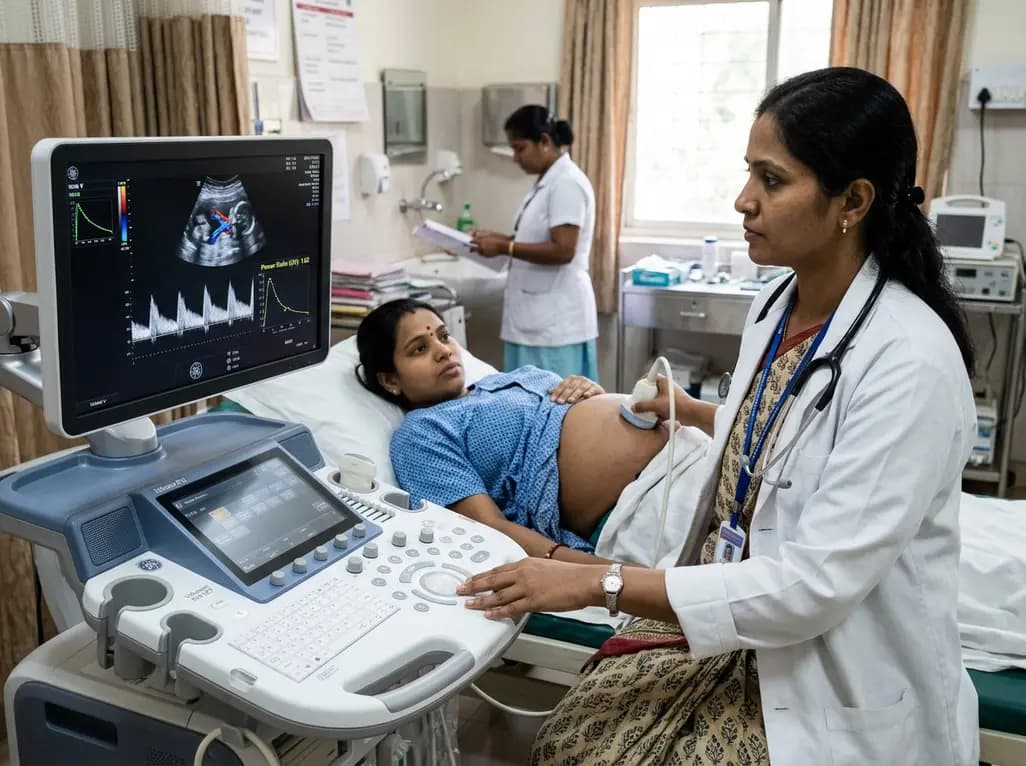
Adaptive spectral analysis of umbilical venous Doppler recordings reveals that an elevated second-trimester maternal-fetal power ratio can distinguish pregnancies at risk of preeclampsia, offering a novel biophysical approach to enhance early vascular risk stratification.
Today

A real-world cohort study of 6,537 patients from the FOUNTAIN platform demonstrates that initiating finerenone significantly reduces albuminuria by 40.7% with minimal eGFR decline and manageable hyperkalemia risk, confirming its practical effectiveness and safety in diabetic kidney disease.
Today

A comprehensive analysis of MAP therapy resistance in osteosarcoma, examining canonical and non-canonical mechanisms across damage avoidance, enhanced DNA repair, and replication stress tolerance to identify novel vulnerabilities.
Today
Near-infrared autofluorescence provides real-time label-free optical guidance during endoscopic transsphenoidal pituitary surgery. By highlighting stark signal contrasts between normal pituitary gland and adenomas, this technique aids gross-total tumor resection while safeguarding critical endocrine function.
Today
