.webp&w=384&q=75)

Loading, please wait...
Loading, please wait...
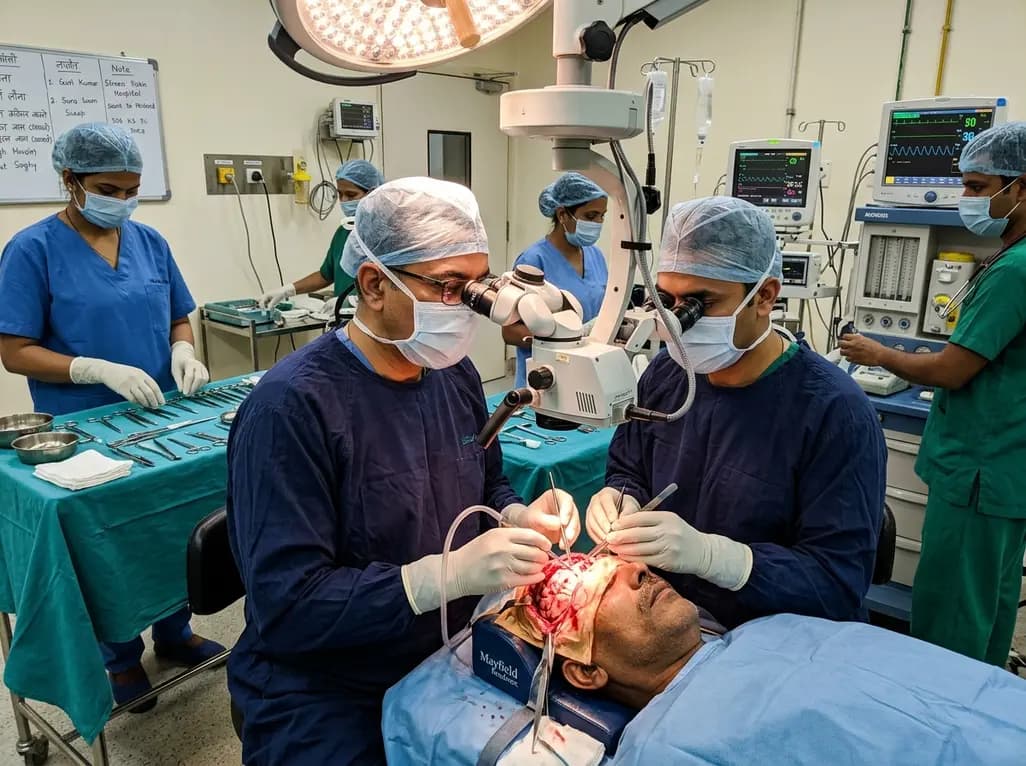
Neurofibromatosis type 2-related schwannomatosis (NF2-SWN) presents profound surgical challenges, particularly when multiple adjacent neoplasms coalesce into massive skull base lesions. Achieving gross total removal in these complex scenarios often leads to devastating neurological deficits. Consequently, clinicians increasingly favor selective resection in NF2 to decompress critical neural structures while deliberately preserving residual benign tissue.
Collision tumors occur when distinct neoplasms, such as vestibular schwannomas and meningiomas, coalesce into a single mass. In NF2-SWN, these complex lesions frequently span multiple intracranial compartments. Consequently, they obliterate normal arachnoid dissection planes and encase vital cranial nerves. When tumors reach giant proportions of 4.0 centimeters or larger, radical surgical clearance becomes hazardous. Total excision carries a high risk of permanent lower cranial neuropathies, facial paralysis, and vascular injury. Furthermore, patients with NF2-SWN face a lifelong burden of recurrent neoplastic growth across the central nervous system. Because aggressive surgery cannot provide a permanent cure, surgical teams must carefully prioritize patient safety. Surgeons increasingly reject aggressive cytoreduction when it threatens functional independence. Instead, modern neurosurgical strategies focus on selective debulking to alleviate brainstem compression. Therefore, understanding long-term durability following partial resection is essential for guiding clinical decision-making.
A landmark longitudinal investigation examined the efficacy of planned selective resection in NF2 across a cohort of thirteen patients with giant skull base collision tumors. The cohort presented with a mean tumor diameter of 5.0 centimeters, and nearly seventy percent had undergone prior surgery or radiotherapy. Surgical teams targeted only symptomatic or high-risk tumor components while deliberately leaving stable residual disease intact. Across thirty-one operations, surgeons never attempted gross total resection. Instead, the surgical team focused on brainstem decompression and preservation of cranial nerve integrity. Notably, this conservative surgical philosophy provided substantial symptom relief without inducing debilitating new deficits. Furthermore, the approach preserved critical dissection corridors for anticipated future procedures. By avoiding extensive manipulation of adherent cranial nerves, surgeons minimized operative morbidity. Consequently, this study demonstrates that planned subtotal cytoreduction serves as a viable, repeatable intervention throughout the patient's lifelong disease course.
A primary concern regarding subtotal resection is the durability of tumor control. However, long-term follow-up data demonstrate favorable reoperation-free survival. Over an average follow-up period of 9.4 years, Kaplan-Meier analysis revealed a five-year reoperation-free survival rate of 61.5%. Moreover, the median reoperation-free survival reached 6.1 years. The mean interval between necessary surgical reinterventions was 4.8 years, with a median of 3.9 years. These findings indicate that deliberate partial resection provides extended disease stability before symptom recurrence necessitates additional surgery. Importantly, overall survival remained remarkably high, reaching 100% at five years and 88% at ten years. Thus, accepting residual disease does not compromise patient longevity. In contrast, it grants young adults long periods of symptom stability and professional productivity. These longitudinal metrics confirm that subtotal intervention offers durable local control without accelerating tumor kinetics.
Beyond oncologic durability, functional preservation represents the ultimate measure of successful surgical management in NF2-SWN. Patients in this study demonstrated a median postoperative Karnofsky Performance Status of 70 at their final follow-up. This score reflects functional independence and the ability to carry out activities of daily living despite extensive disease burden. Because NF2-SWN predominantly affects young adults, maintaining neurological capability directly influences education, employment, and social engagement. In addition, avoiding severe neurological deficits decreases long-term care dependency. Postoperative cranial nerve deficits, such as severe dysphagia or corneal exposure keratopathy, severely reduce patient quality of life. By terminating resection before compromising critical neurovascular interfaces, surgeons protect baseline function. Therefore, selective resection successfully balances adequate mass reduction with the preservation of functional neurological reserve.
Managing giant skull base collision tumors requires an adaptable, lifelong multimodal framework. In patients with NF2-SWN, surgical debulking operates alongside targeted pharmacotherapies, including bevacizumab, and focused stereotactic radiation. However, clinicians must deploy radiation cautiously due to risks of malignant transformation and secondary radiation-induced neuropathies. Furthermore, sequential surgeries are frequently necessary over decades. Staged or planned repetitive resections allow clinicians to address progressive components without compounding surgical risk during a single procedure. Multidisciplinary teams, including skull base neurosurgeons, neurotologists, and neuro-oncologists, must regularly monitor patients with serial high-resolution MRI scans. This continuous surveillance ensures timely intervention before neurological deficits become irreversible. Consequently, planned selective resection functions not as a definitive cure, but as a foundational pillar within an enduring, personalized management pathway.
The management of giant skull base collision tumors in NF2-SWN requires a fundamental shift away from aggressive radical resection toward functional preservation. Clinicians should recognize that collision tumors exhibit unpredictable growth patterns and lack clear arachnoid planes. Therefore, targeting exclusively high-risk, mass-occupying portions provides safe, meaningful decompression. Furthermore, clinicians can reassure patients that planned subtotal resection provides a median disease control duration exceeding six years. Multidisciplinary coordination remains essential to integrate systemic therapies, supportive rehabilitation, and timely reoperations when tumor expansion recurs. Ultimately, prioritizing patient performance status over radiographic completeness ensures superior lifelong outcomes for this vulnerable patient population.
A skull base collision tumor occurs when two or more distinct, adjacent intracranial neoplasms, commonly vestibular schwannomas and meningiomas, coalesce into a single mass. In NF2-SWN, these hybrid lesions obliterate normal anatomical planes, complicating surgical dissection and substantially increasing the risk of surgical injury to cranial nerves.
Gross total resection is rarely attempted because aggressive tumor clearance carries an unacceptable risk of devastating neurological morbidity. These giant lesions firmly adhere to critical neurovascular structures and brainstem tissue. Consequently, planned selective resection prioritizes cranial nerve preservation and functional quality of life over complete radiographic removal.
Planned selective resection provides substantial long-term durability. Longitudinal data demonstrate a median reoperation-free survival of 6.1 years, with a five-year reoperation-free survival rate of 61.5%. Furthermore, overall patient survival reaches 88% at ten years, confirming that accepting residual tumor safely supports extended disease stability.
Disclaimer: This content is for informational and educational purposes only and does not constitute medical advice, diagnosis, or treatment regimens. Clinical decisions should always be made by qualified healthcare professionals based on individual patient circumstances and relevant clinical guidelines. Refer to the latest local and national guidelines for clinical practice.
References

Read summarized clinical updates, watch expert medical content, and earn CME certifications right from your smartphone.
Open your smartphone camera to scan and install.





Managing giant skull base collision tumors in NF2-related schwannomatosis requires balancing cytoreduction with functional preservation. A longitudinal study shows that planned selective resection achieves durable tumor control and maintains functional independence in heavily pretreated young patients.
last month

Targeting ferroptosis provides a compelling strategy to dismantle hypoxia- and acidosis-driven immunosuppression in solid tumors, enhancing response to modern immunotherapy.
Today

Findings from Project Viva indicate that sustained postpartum weight retention, rather than excessive gestational weight gain alone, directly worsens women's mid-life cardiovascular health, degrading blood pressure and glycemic parameters decades after delivery.
Today
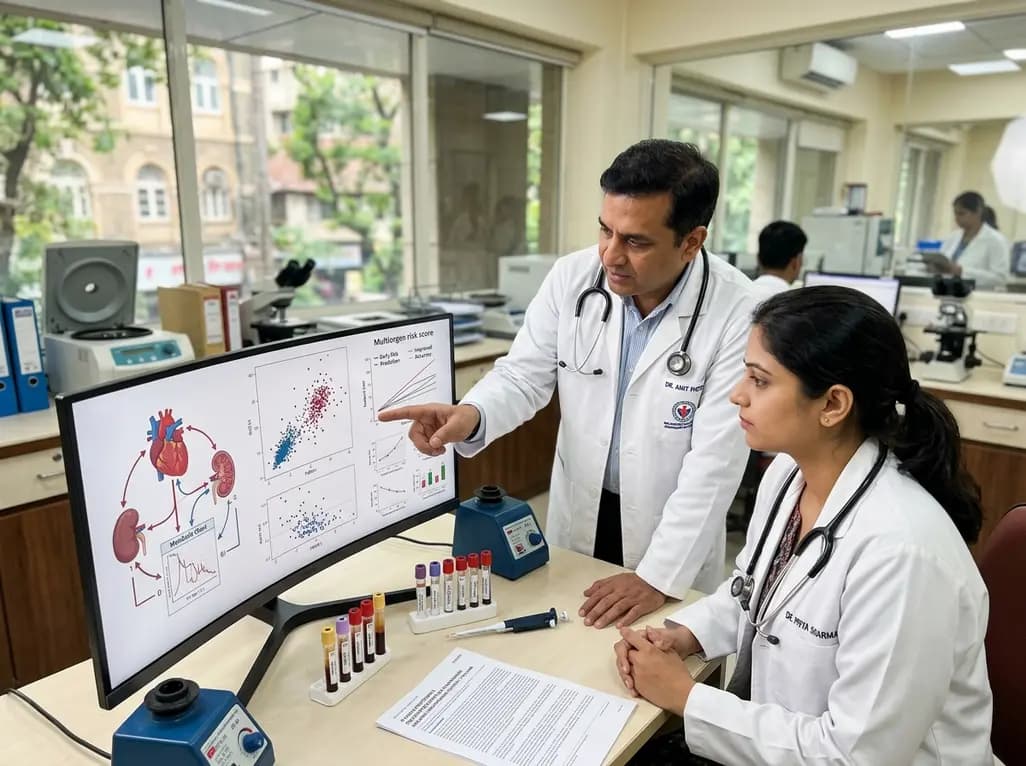
A large UK Biobank study reveals that plasma proteomic signatures capture preclinical organ damage and improve multiorgan risk prediction across early CKM syndrome stages 0 to 2 beyond traditional PREVENT clinical models.
Today

A retrospective CBCT study reveals that superior TMJ space asymmetry correlates moderately with occipital condyle-atlas-axis asymmetry in unilateral TMJ osteoarthritis, highlighting an imaging correlate between jaw biomechanics and upper cervical alignment rather than a standalone diagnostic marker.
Today

A Bayesian multilevel meta-analysis reveals that aerobic training combined with moderate carbohydrate restriction modestly lowers HbA1c in type 2 diabetes. However, sparse data and very low certainty leave incremental benefits over exercise or diet alone unproven, highlighting the need for individualized care.
Today
