.webp&w=384&q=75)

Loading, please wait...
Loading, please wait...

Spastic cerebral palsy (CP) often presents significant challenges for mobility in developing children. For many patients, selective dorsal rhizotomy benefits offer a transformative surgical option to manage pathologically active reflexes. This gain-of-function procedure involves the selective sectioning of dorsal rootlets in the spinal cord. Consequently, clinicians can effectively decrease spasticity while preserving or enhancing motor functionality in ambulatory children.
A recent longitudinal study focused on children within the Gross Motor Function Classification System (GMFCS) levels I through III. These children, who are primarily ambulatory, underwent serial gait mapping before and after the procedure. Researchers observed that the selective dorsal rhizotomy benefits extended across multiple dimensions of motor performance. Specifically, the data revealed significant increases in mean ambulation velocity, step length, and stride length. Furthermore, patient-reported and family-reported outcomes improved consistently across the cohort, highlighting the real-world impact of the surgery.
Moreover, the study noted that improvements in gait parameters often appear asymmetrical. While both legs generally show progress, the degree of change in step and stride length can vary between limbs. This finding suggests that postoperative physical therapy must be highly tailored. Indeed, clinical consensus supports the idea that school-age children derive the most substantial functional gains from this intervention. However, the exact impact on complex gait mechanics requires further longitudinal exploration to optimize surgical protocols.
Accurate patient selection remains a cornerstone of successful neurosurgical outcomes. Most experts agree that children with GMFCS levels I to III are the most suitable candidates. Although some evidence suggests SDR can help nonambulatory children, the functional improvements are most pronounced in those with some baseline mobility. Ultimately, combining SDR with intensive rehabilitation ensures that the reduction in spasticity translates into better movement and quality of life.
The primary goal is to permanently reduce spasticity in the lower limbs. This is achieved by cutting specific sensory nerve fibers that contribute to overactive muscle reflexes.
Ambulatory school-age children, specifically those in GMFCS levels I, II, and III, typically see the greatest improvements in gait and motor function.
No, physical therapy is vital after surgery. It helps the child learn new movement patterns and build strength now that the spasticity has been reduced.
Disclaimer: This content is for informational and educational purposes only and does not constitute medical advice or a professional relationship. Always seek the advice of a physician or other qualified health provider with any questions you may have regarding a medical condition. Refer to the latest local and national guidelines for clinical practice.
References
Budnick H et al. Selective dorsal rhizotomy mediating multidimensional improvement in ambulatory children with spastic cerebral palsy: a longitudinal case series. J Neurosurg Pediatr. 2026 Mar 06. doi: 10.3171/2025.10.PEDS25155. PMID: 41791119.
Ilo K, et al. The Effect of Selective Dorsal Rhizotomy on Gait Outcomes for Children with Cerebral Palsy. J Surg. 2023; 3:1-6.
Rumberg F, et al. The Effects of Selective Dorsal Rhizotomy on Balance and Symmetry of Gait in Children with Cerebral Palsy. PLoS ONE. 2016; 11(4): e0152930.

Read summarized clinical updates, watch expert medical content, and earn CME certifications right from your smartphone.
Open your smartphone camera to scan and install.





Longitudinal study shows selective dorsal rhizotomy (SDR) improves gait velocity and step length in ambulatory children with spastic cerebral palsy....
7 months ago

Following regulatory scrutiny from FSSAI regarding promotional representations and lean muscle preservation claims, Dr. Reddy's Laboratories and Nestlé Health Science are currently reviewing the branding and marketing strategy for their joint nutritional supplement Celevida GLP+.
Today
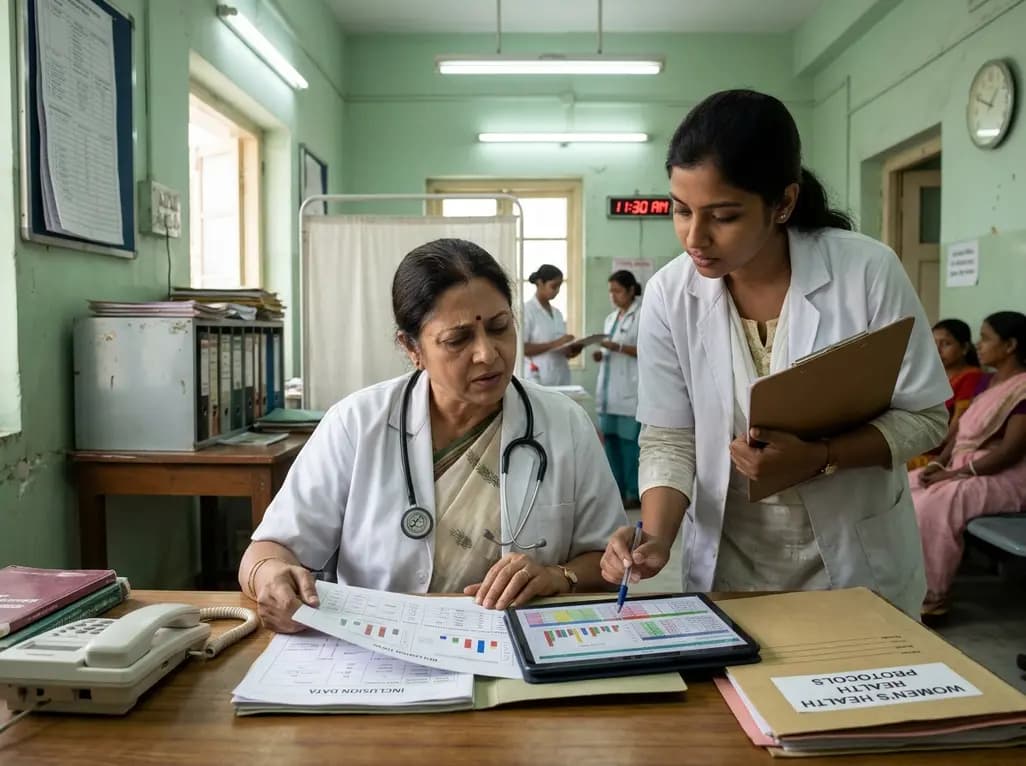
Demanding exhaustive hormonal profiling can inadvertently discourage clinical studies involving females. Methodological standards must align with the specific scientific question to expand, not restrict, equitable evidence for women.
Today

The Directorate General of Health Services directs Indian states to halt the hazardous reuse and reprocessing of single-use medical devices. Discover regulatory implications under the Drugs and Cosmetics Act, critical infection risks, legal liabilities, and operational changes required across clinical specialties.
Today
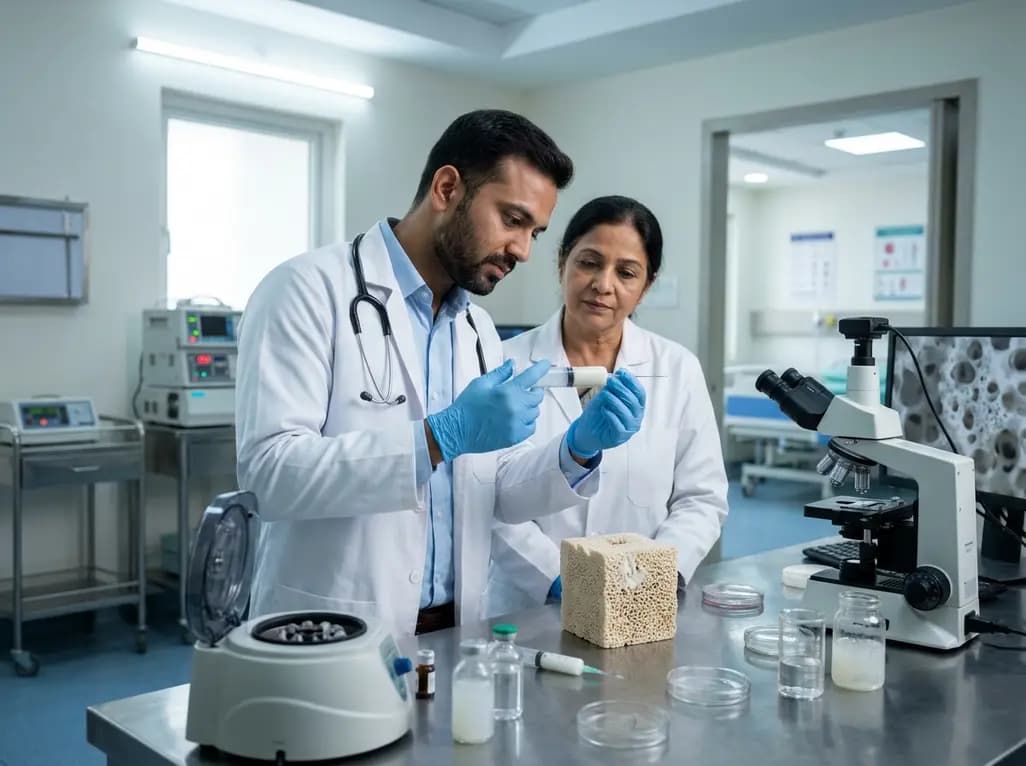
A novel calcium polyphosphate coacervate enables injectable bone implants with in situ hierarchical porosity via phase separation and gas foaming, significantly enhancing cell proliferation, energy metabolism, and osteogenic differentiation for minimally invasive bone defect repair.
Today

India is advancing preventive healthcare by integrating genomics, artificial intelligence, and quantum technologies. With the SANGAM programme sequencing one million Indian genomes, clinicians can unlock personalized therapies, detect cardiometabolic risks early, and curb the burden of diabetes and heart disease.
Today
