.webp&w=384&q=75)

Loading, please wait...
Loading, please wait...
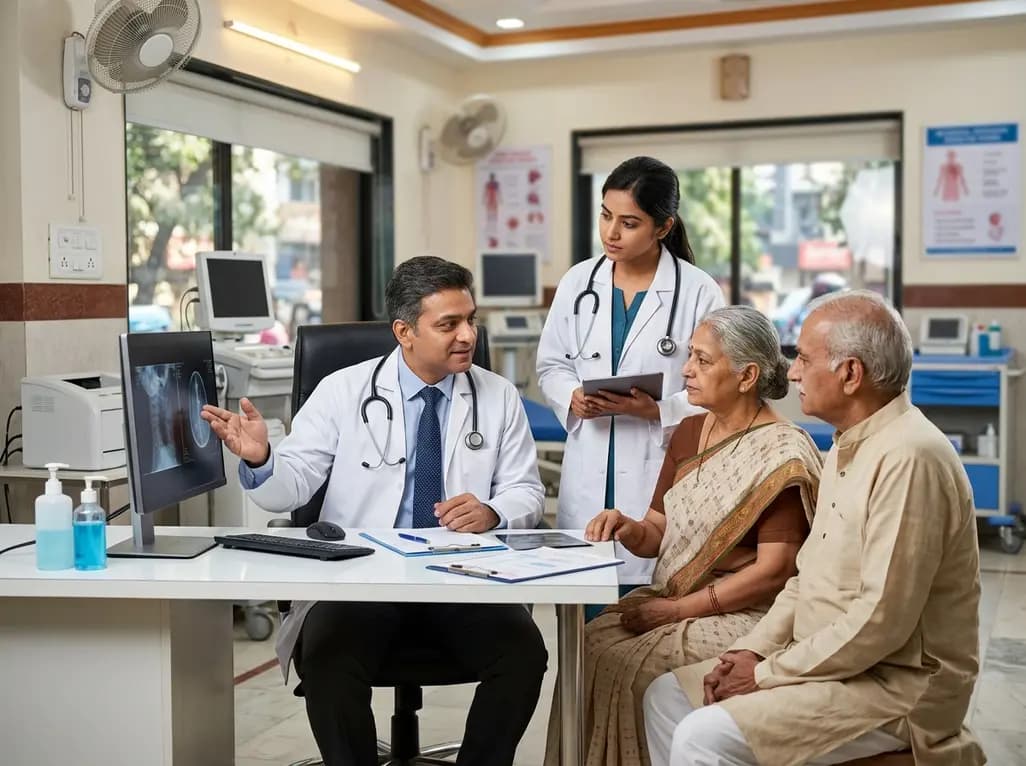
Understanding the various medical research participation factors is essential for clinicians and researchers aiming to advance evidence-based medicine. Public participation in clinical trials remains the cornerstone of therapeutic innovation, yet recruitment often faces significant hurdles. Recent studies highlight that a person's willingness to engage in research is not merely a product of their health status or financial incentives. Instead, it is deeply rooted in their scientific literacy and their underlying beliefs about the medical community. In countries like India, where the clinical trial landscape is rapidly expanding, identifying these drivers is crucial. By examining how individuals perceive the nature of science and how they process scientific information, healthcare providers can better tailor their communication strategies. This article explores the intricate pathways through which literacy, trust, and interest intersect to influence an individual's decision to join a medical study.
Scientific literacy is often misunderstood as a simple accumulation of factual knowledge about biology or physics. However, experts define it as a multidimensional construct encompassing an understanding of the nature of science, scientific reasoning, and a general interest in scientific progress. Positive beliefs about science serve as a strong motivator for research engagement. When individuals perceive science as a beneficial force for society, they are more likely to view participation as an altruistic contribution. Conversely, a lack of interest in science often translates to a lack of motivation to participate in complex medical trials. Research indicates that interest in science has a direct and total association with participation intent. For the medical educator, this means that fostering a general appreciation for scientific inquiry in the community may be just as important as explaining a specific trial protocol. Furthermore, scientific reasoning allows potential participants to weigh the risks and benefits of a study more effectively, reducing the fear associated with the unknown aspects of experimental medicine.
Interestingly, some dimensions of scientific literacy do not directly lead to a willingness to participate but work through indirect pathways. An understanding of the nature of science—specifically how scientific knowledge is generated, tested, and revised—operates primarily through the mediation of trust. If a person understands that science is a rigorous, self-correcting process rather than a static set of rules, they are more likely to trust the researchers conducting the work. Similarly, scientific reasoning helps individuals filter out misinformation and logical fallacies. These cognitive skills act as a shield against the conspiracy theories that often circulate regarding medical experimentation. When these indirect pathways are strong, they significantly reduce the impact of negative medical research participation factors, such as the suspicion of being treated as a \"lab rat.\" Consequently, clinicians must focus on educating the public not just on trial results, but on the systematic process that ensures safety and ethical conduct throughout a study.
In the Indian healthcare landscape, medical research participation factors are uniquely influenced by diverse socio-economic and cultural variables. India possesses a vast and diverse patient pool, yet participation rates often struggle due to low health literacy and historical distrust. Many potential participants in rural or underserved areas may view clinical trials with skepticism, often fueled by past reports of ethical lapses or a lack of clear communication during the informed consent process. Studies show that between 60% and 75% of the Indian population may be insufficiently informed about how clinical trials actually work. This knowledge gap creates a vacuum that is frequently filled by misinformation or local myths. Moreover, logistical challenges like travel costs and loss of daily wages further complicate the decision-making process. For an Indian physician, addressing these barriers requires a culturally sensitive approach that prioritizes transparency and the building of long-term community trust. Engaging local leaders and providing information in vernacular languages can bridge the gap between scientific complexity and patient understanding.
Trust remains the single most powerful predictor of a person's willingness to join a medical study. When trust in medical researchers is high, individuals are far more receptive to the potential benefits of research. However, trust is frequently undermined by conspiracy beliefs, which suggest that researchers are driven by hidden agendas or corporate greed rather than patient welfare. These beliefs often stem from a lack of scientific literacy and a misunderstanding of how trials are funded and regulated. Addressing these conspiracy theories head-on is a delicate but necessary task for medical professionals. Instead of dismissing such concerns, researchers should provide clear evidence of institutional oversight, the role of ethics committees, and the rigorous safety protocols in place. By demonstrating that participant safety is the primary priority, investigators can neutralize the influence of negative beliefs. Trust-building is not a one-time event but a continuous process of engagement that begins long before a patient is asked to sign a consent form.
To optimize recruitment and retention, the medical community must shift toward a patient-centered model that prioritizes health literacy. This involves simplifying the informed consent process, which is often cited as a major deterrent due to its length and complexity. Using visual aids, plain language summaries, and interactive digital tools can make trial information more accessible to a broader audience. Furthermore, healthcare providers should encourage questions and foster a collaborative environment where patients feel like active partners in the research process. When patients understand the \"why\" behind a study, their intrinsic motivation increases, leading to higher rates of compliance and better data quality. Ultimately, the goal is to create a culture of research awareness where participation is seen as a standard part of high-quality healthcare. By focusing on the psychological and educational drivers identified in recent literature, we can overcome the traditional barriers and ensure that medical research continues to thrive and benefit all segments of society.
Scientific literacy affects the decision-making process by providing patients with the tools to evaluate the validity of scientific claims. It helps them understand that medical research is a systematic and ethical pursuit of knowledge. When patients possess higher scientific reasoning skills, they can better distinguish between factual trial information and medical misinformation. This clarity reduces anxiety and increases the likelihood that they will view research participation as a safe and meaningful contribution to healthcare.
Trust acts as a vital mediator between a person's understanding of science and their willingness to participate. Even if an individual has high scientific knowledge, they may still decline participation if they do not trust the motives of the researchers or the institutions involved. High scientific literacy often bolsters trust because it allows the individual to appreciate the rigorous checks and balances, such as peer review and ethical oversight, that govern the scientific community.
Conspiracy beliefs are significant because they create a deep-seated suspicion toward institutional authority and scientific experts. These beliefs often suggest that clinical trials are used to exploit vulnerable populations or prioritize profits over safety. Such narratives spread quickly in the digital age and can deter even well-informed individuals from participating. Overcoming these barriers requires researchers to practice extreme transparency and actively engage in community outreach to debunk myths and demonstrate ethical integrity.
Disclaimer: This content is for informational and educational purposes only... Refer to the latest local and national guidelines for clinical practice.
References
Sedlár M et al. Willingness to participate in medical research: Unraveling the roles of scientific literacy and beliefs about medical researchers. Public Underst Sci. 2026 Jun 23. doi: 10.1177/09636625261452154. PMID: 42334854.
Bhattacherjee S, Datta S. Perception and Barriers toward Scientific Research Participation among Undergraduate Medical Students. J Assoc Physicians India 2026;74(5):e1-e5.
Pillai GS et al. Knowledge and awareness of clinical trials among trial participants in India: A multicentric questionnaire-based cross-sectional study. Indian J Med Res. 2024.

Read summarized clinical updates, watch expert medical content, and earn CME certifications right from your smartphone.
Open your smartphone camera to scan and install.





This article examines the complex relationship between scientific literacy, trust, and willingness to participate in medical research. Highlighting findings from recent studies, it analyzes how conspiracy beliefs act as barriers and offers actionable insights for clinicians to improve trial recruitment.
4 months ago

A retrospective cohort study of 7,716 ICU patients from the MIMIC-IV database demonstrates that Gradient Boosting Decision Trees significantly outperform traditional SOFA scores in predicting in-hospital mortality among patients with sepsis and diabetes, with SHAP analysis providing clinical interpretability.
Today

A prenatal case highlights severe glutaric acidemia type II presenting as bilateral hyperechoic cystic kidneys at 18 weeks. Whole-exome sequencing revealed a novel homozygous ETFDH frameshift variant, demonstrating the power of rapid genetic testing in fetal renal anomalies.
Today
This article reviews the forensic and clinical complexities of acute myocarditis arising on left ventricular hypertrophy in children, highlighting early diagnostic red flags and multidisciplinary postmortem autopsy protocols.
Today

This comparative study evaluates posterior labral tears with and without glenohumeral instability, highlighting distinct demographic patterns, MRI underestimation in stable shoulders, and successful arthroscopic repair outcomes.
Yesterday

A clinical study demonstrates that early intervention with tocilizumab, either as monotherapy or bridged with corticosteroids, achieves significant proptosis reduction and resolves active inflammation in treatment-naive thyroid eye disease.
Yesterday
