.webp&w=384&q=75)

Loading, please wait...
Loading, please wait...
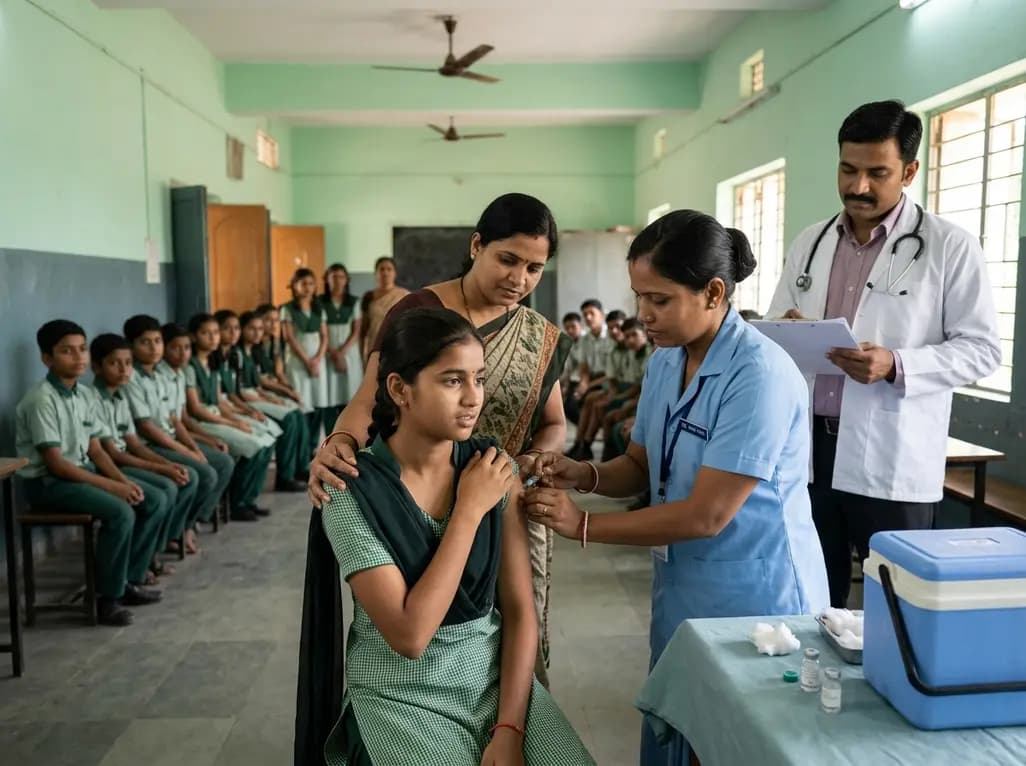
Adolescent immunization remains one of the most cost-effective and powerful public health interventions to prevent oncogenic infections. Specifically, improving adolescent HPV vaccination uptake provides long-term protection against cervical, anogenital, and oropharyngeal malignancies. However, public health agencies worldwide continue to grapple with suboptimal coverage rates due to vaccine hesitancy, fragmented healthcare delivery, and missed clinical opportunities. Policy interventions, such as school-entry mandates, represent institutional mechanisms designed to achieve uniform coverage across diverse socio-economic strata. A nationwide quasi-experimental study published in the American Journal of Public Health now provides rigorous empirical evidence demonstrating how school-entry policies directly enhance immunization rates among adolescents over a 15-year period.
To evaluate whether regulatory requirements meaningfully shift immunization rates, researchers analyzed provider-verified records from the 2008 to 2023 National Immunization Survey-Teen. The investigators examined data encompassing 240,616 adolescents aged 13 to 17 years across the United States. Consequently, the study utilized a robust difference-in-differences quasi-experimental framework to compare jurisdictions with active school-entry mandates against non-mandate states and territories. This analytical approach accounted for staggered policy rollouts over time, while simultaneously adjusting for demographic and socioeconomic variables. By isolating policy-induced changes from broader secular trends in vaccine acceptance, the study provides an unprecedented assessment of population-level immunization policies. The findings confirm that institutional requirements generate meaningful, population-wide improvements in adolescent vaccination initiation.
The statistical models demonstrated substantial increases in vaccine initiation following mandate implementation. Specifically, school-entry mandates were associated with a 6.4 percentage-point higher probability of receiving at least one dose among adolescent girls. Furthermore, the analysis revealed a 3.4 percentage-point increase in vaccine uptake among adolescent boys. Because the dataset relied exclusively on provider-verified records rather than parental recall, the observed effect sizes offer high internal validity. In addition, the quasi-experimental design controlled for confounding macroeconomic and healthcare delivery shifts across regions. Thus, the data clearly indicate that institutional mandates overcome common passive barriers to immunization, transforming routine healthcare interactions into actionable preventive opportunities.
Interestingly, the longitudinal data revealed distinct temporal patterns between sexes following policy enactment. Among adolescent girls, the association between school-entry mandates and vaccine initiation strengthened progressively over successive years. This sustained trajectory reflects growing community normalization, integrated school tracking, and persistent primary care reinforcement. In contrast, male adolescents experienced an immediate surge in uptake during the initial years after policy introduction, but these associations attenuated over time. This attenuation among boys highlights potential differences in long-term public health communication, perceived oncologic risk, and enforcement rigor. Therefore, sustaining robust immunization gains across all demographics requires continuous clinical education alongside statutory policies.
From an oncologic standpoint, achieving high baseline coverage during early adolescence delivers optimal immunological protection before potential viral exposure. Human papillomavirus types 16 and 18 cause the vast majority of cervical carcinomas and substantial proportions of anal, penile, and head and neck cancers. Consequently, closing vaccination gaps during early adolescence produces substantial downstream reductions in high-grade precancerous intraepithelial lesions and invasive malignancies. Although mandates provide structured accountability, authors emphasize that mandates alone cannot achieve ideal national prevention targets. Clinicians must actively reinforce vaccine safety, dispel myths regarding sexual behavior, and frame the vaccine strictly as cancer prevention during routine clinical consultations.
These findings offer critical insights for low- and middle-income countries, particularly India, which shoulders a disproportionately high burden of global cervical cancer mortality. With the introduction of indigenously developed vaccines and targeted Universal Immunization Programme rollouts, institutional delivery mechanisms are vital. Implementing school-based screening and coordinated vaccination campaigns can bridge urban-rural disparities and overcome logistical bottlenecks. However, programmatic success in India also demands comprehensive community outreach to reach out-of-school girls and vulnerable populations. Combining educational awareness campaigns, school health wellness initiatives, and strong primary care provider recommendations will maximize adolescent coverage nationwide.
While administrative mandates establish a vital foundation, comprehensive public health infrastructure must support them to ensure lasting success. Health systems must implement automated electronic recall notifications, expand opportunistic vaccination during acute care visits, and eliminate out-of-pocket financial barriers. Moreover, continuous provider training remains essential to empower clinicians with clear, confident conversational strategies for vaccine-hesitant families. By integrating institutional policies with empathetic clinical advocacy, health systems can establish durable herd protection. Ultimately, multi-layered strategies protect future generations from preventable oncogenic diseases.
School-entry mandates establish institutional requirements that prompt parents and providers to ensure adolescents are up to date on recommended immunizations prior to enrollment. By standardizing vaccination checks and providing structured deadlines, mandates significantly increase first-dose initiation rates and reduce missed clinical opportunities across diverse socioeconomic populations.
Male adolescents initially experienced significant uptake gains due to initial policy enforcement and heightened awareness campaigns. However, associations attenuated over time due to lingering parental perceptions that HPV vaccines primarily benefit females, variations in policy enforcement across school districts, and less frequent routine adolescent health visits among older boys.
Clinicians should utilize presumptive, bundled recommendations, presenting the HPV vaccine alongside other routine adolescent immunizations on the same day. Emphasizing that the vaccine provides lifelong cancer prevention, addressing specific safety questions with clear evidence, and maintaining empathetic communication effectively dispels misconceptions and improves parental acceptance.
Disclaimer: This content is for informational and educational purposes only. It is not intended to provide medical advice, diagnosis, or treatment and should not be used as a substitute for professional clinical judgment. Health professionals should verify all medical information independently and refer to the latest local and national guidelines for clinical practice.
References

Read summarized clinical updates, watch expert medical content, and earn CME certifications right from your smartphone.
Open your smartphone camera to scan and install.





A 15-year quasi-experimental study demonstrates that school-entry vaccination mandates significantly enhance adolescent HPV vaccination uptake, yielding sustained gains for girls and initial surges among boys, providing crucial policy lessons for oncologic prevention.
last month

This clinical review examines the dangerous intersection of climate change and antimicrobial resistance (AMR). It highlights thermal selection, altered transmission pathways, and the imperative for One Health and Planetary Health adaptation frameworks to preserve therapeutic efficacy.
Today
Discover the crucial distinctions between mesonephric and mesonephric-like proliferations of the female genital tract. Learn the key histomorphologic, immunohistochemical, and molecular differences essential for accurate diagnosis and clinical management.
Today
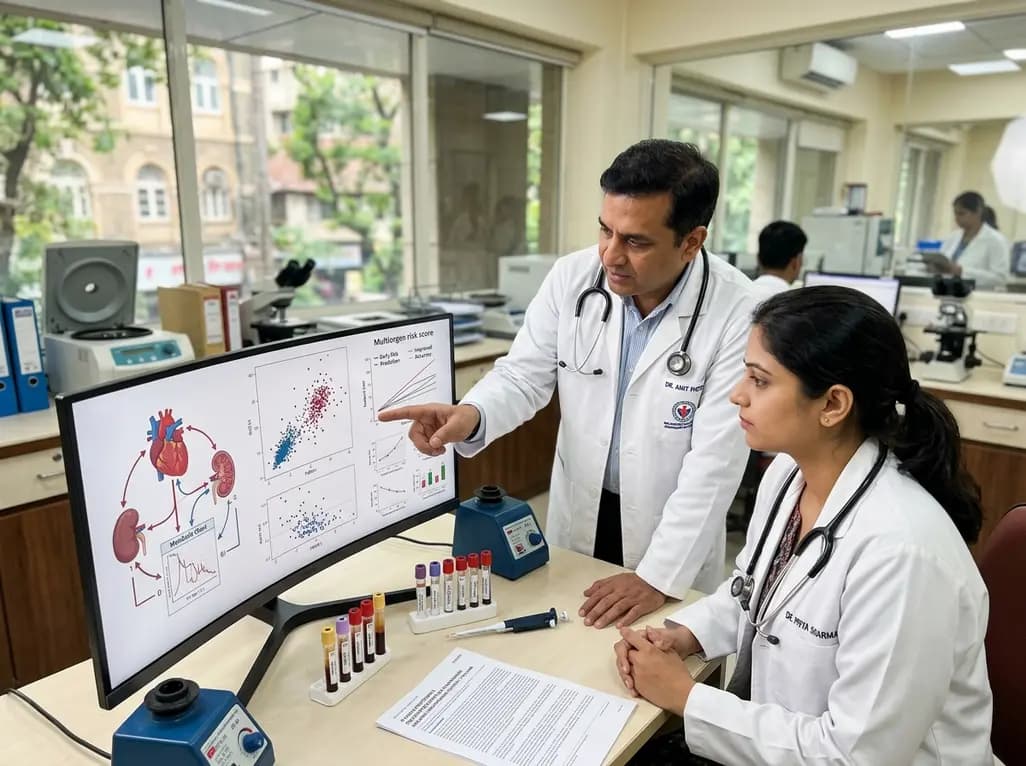
A large UK Biobank study reveals that plasma proteomic signatures capture preclinical organ damage and improve multiorgan risk prediction across early CKM syndrome stages 0 to 2 beyond traditional PREVENT clinical models.
Today

A narrative review investigates whether the articularis genus muscle functions as an independent anatomical entity or blends with the vastus intermedius. We evaluate its morphology, role in retracting the suprapatellar bursa, and direct clinical significance in anterior knee pain and arthroplasty.
Today

A Bayesian multilevel meta-analysis reveals that aerobic training combined with moderate carbohydrate restriction modestly lowers HbA1c in type 2 diabetes. However, sparse data and very low certainty leave incremental benefits over exercise or diet alone unproven, highlighting the need for individualized care.
Today
