.webp&w=384&q=75)

Loading, please wait...
Loading, please wait...

Chronic active Epstein-Barr virus infection represents a severe EBV-positive T-cell or natural killer-cell lymphoproliferative disorder. When patients develop secondary hemophagocytic lymphohistiocytosis, clinicians encounter a life-threatening medical emergency. In this setting, measuring the sCD25-to-ferritin ratio provides indispensable biological clarity. The persistent viral infection drives clonal lymphocyte expansion alongside massive systemic inflammation. Consequently, patients present with unremitting fever, hepatosplenomegaly, progressive cytopenias, and liver dysfunction. Because the condition overlaps with acute sepsis and lymphoma, clinicians frequently face severe diagnostic delays. Furthermore, secondary hyperinflammation rapidly triggers multiorgan failure if left unchecked. Traditional diagnostic systems like the HLH-2004 guidelines provide categorical criteria but often fail to capture dynamic disease progression. Therefore, medical teams require precise prognostic biomarkers at initial clinical presentation. In countries like India, where complex infections and diagnostic barriers coexist, early risk stratification remains paramount. Identifying high-risk individuals allows prompt escalation to immunosuppressive therapy and timely stem cell transplantation. Ultimately, dissecting the dual mechanisms of viral lymphoproliferation and macrophage hyperactivation transforms contemporary patient care. Moreover, distinguishing aggressive lymphoproliferative activity from ordinary infection protects patients from irreversible multi-organ decompensation.
Soluble CD25 and serum ferritin represent two foundational laboratory pillars in hemophagocytic syndromes. However, each biomarker reflects fundamentally distinct arms of the disordered immune cascade. Soluble CD25, shed from activated interleukin-2 receptors, mirrors the clonal expansion and activation of EBV-infected T or natural killer cells. In contrast, serum ferritin directly quantifies extreme macrophage activation and severe systemic cytokine release. When evaluating CAEBV-HLH, relying on a single inflammatory marker provides incomplete biological perspective. Therefore, calculating the sCD25-to-ferritin ratio integrates lymphoid neoplastic activity with myeloid hyperinflammation. A disproportionately elevated ratio signals robust cytotoxic lymphocyte proliferation outpacing reactive macrophage scavenging. Conversely, markedly isolated hyperferritinemia often points to septic macrophage activation or liver damage. Furthermore, this integrated metric illuminates the underlying lymphoproliferative burden driving the hemophagocytic episode. Clinicians can thus distinguish aggressive virus-driven clonal expansion from general secondary inflammation. Consequently, this biochemical quotient serves as a dual-action surveillance lens. As a result, hematologists gain vital insight into underlying immunopathology before complex cytogenetic results return. Accordingly, treating physicians obtain actionable answers far earlier in the course of patient management.
To establish the clinical utility of this index, investigators conducted a multicenter retrospective cohort study across tertiary centers. The study examined 108 patients with confirmed CAEBV-HLH diagnosed between January 2015 and February 2026. Researchers calculated baseline biomarker levels at initial diagnosis and monitored cumulative all-cause mortality across a 12-month follow-up window. During this observation period, 43 patients died, representing a formidable 39.81 percent mortality rate. Crucially, baseline quotient values were significantly higher in non-survivors than in survivors. Time-restricted Cox regression analysis demonstrated that the metric strongly predicted mortality from month 3 onward. Specifically, each incremental elevation yielded an adjusted hazard ratio of 1.23 with stable prognostic estimates through month 12. Moreover, time-dependent receiver operating characteristic curves confirmed that the marker maintained excellent discriminative precision over time. In contrast to static scoring systems, this dynamic modeling addressed fluctuating clinical trajectories during chronic viral disease. Consequently, the findings confirm that early baseline immune imbalance exerts prolonged negative effects on one-year overall survival. Therefore, physicians can reliably anticipate medium-term outcomes shortly after hospital presentation.
Identifying an actionable clinical threshold represents a major breakthrough in risk stratification. Researchers selected the 4-month post-diagnosis window as an early, clinically informative evaluation point. At this crucial junction, conventional receiver operating characteristic analysis yielded an area under the curve of 0.705. Furthermore, bootstrap resampling across 1000 iterations successfully corrected for optimism bias and validated diagnostic robustness. Using the Youden index, investigators established an optimal baseline ratio cutoff of 27.98. Kaplan-Meier survival curves revealed that patients with baseline values exceeding 27.98 experienced markedly worse overall survival. Additionally, paired curve comparisons using DeLong's test proved that the quotient significantly outperformed the traditional HScore. While the HScore provides broad diagnostic guidance, it lacks granular specificity for chronic Epstein-Barr virus lymphoproliferation. Thus, a ratio above 27.98 flags patients in immediate need of aggressive therapeutic intensification. Clinicians can deploy this straightforward calculation without waiting for costly or delayed genomic sequencing. Consequently, this threshold furnishes intensive care teams with an objective roadmap for immediate medical intervention. Indeed, establishing clear numerical parameters empowers frontline doctors to make decisive therapeutic choices rapidly.
Allogeneic hematopoietic stem cell transplantation currently offers the only definitive curative pathway for patients with CAEBV. Nevertheless, transplant timing remains a delicate clinical dilemma due to substantial procedure-related toxicities. The researchers specifically repeated survival analyses in patients who did not undergo transplantation. Within this non-transplanted subset, elevated baseline ratios similarly predicted dismal outcomes and early death. This critical finding indicates that conservative chemotherapy or antiviral regimens rarely overcome severe underlying T/NK-cell lymphoproliferation. Therefore, clinicians should view a high baseline ratio as a compelling signal for urgent transplant evaluation. In Indian healthcare environments, resource constraints and donor search delays frequently hinder timely transplantation. Hence, early risk identification allows medical teams to initiate HLA typing and donor mobilization without delay. Furthermore, intensive bridge therapies, such as etoposide-based regimens or ruxolitinib, can suppress cytokine storms while preparing for allogeneic grafting. Consequently, integrating this ratio into routine workflows optimizes precious clinical windows, preventing catastrophic disease progression before definitive cellular therapy occurs. Ultimately, bridging patients safely to transplantation represents the ultimate benchmark of therapeutic success in CAEBV-HLH.
An elevated ratio indicates pronounced T-cell or natural killer-cell lymphoproliferation that outpaces reactive macrophage activation. In chronic active Epstein-Barr virus infection, clonal lymphoid expansion releases substantial soluble CD25. Meanwhile, serum ferritin reflects secondary macrophage-driven inflammation. Consequently, a higher ratio highlights aggressive virus-driven clonal proliferative disease rather than isolated systemic inflammation. Clinicians utilize this crucial biological signal to identify patients facing an aggressive clinical course and elevated risk of early mortality.
The 4-month evaluation window represents an essential clinical crossroads where initial immunosuppressive therapies demonstrate treatment response or failure. During this critical timeframe, patients with high baseline ratios often experience refractory cytopenias, organ dysfunction, or disease relapse. Therefore, assessing time-dependent risks at 4 months allows hematologists to identify deteriorating trajectories early. This prompt insight enables physicians to escalate targeted immunomodulatory regimens and expedite allogeneic hematopoietic stem cell transplantation before fatal complications supervene.
While the conventional HScore effectively diagnoses general hemophagocytic lymphohistiocytosis, it evaluates diverse inflammatory variables without weighting primary lymphocyte proliferation. In contrast, the sCD25-to-ferritin ratio specifically captures the clonal viral expansion underlying CAEBV-HLH. Multicenter paired receiver operating characteristic comparisons demonstrated that this ratio delivers superior discriminative precision for mortality compared to the HScore. Consequently, calculating the quotient provides hematologists with a more reliable prognostic tool for risk stratification.
Disclaimer: This content is for informational and educational purposes only... Refer to the latest local and national guidelines for clinical practice.
References

Read summarized clinical updates, watch expert medical content, and earn CME certifications right from your smartphone.
Open your smartphone camera to scan and install.





A multicenter study reveals the baseline sCD25-to-ferritin ratio as a key time-dependent prognostic biomarker in CAEBV-HLH, with a cutoff of 27.98 effectively stratifying 1-year mortality risk.
Today
Explore the emerging role of glucose metabolic reprogramming in exercise-attenuated osteoporosis, examining how physical activity influences osteoblast glycolysis, osteoclast bioenergetics, and skeletal remodeling pathways to improve bone mineral density.
Today

A systematic review and transcriptomic cross-study consensus analysis illuminates the role of necroptosis in cervical cancer. By promoting anti-tumor immunogenicity and resolving apoptosis resistance, necroptotic pathways offer actionable prognostic signatures and promising avenues for combination immunotherapy.
Today
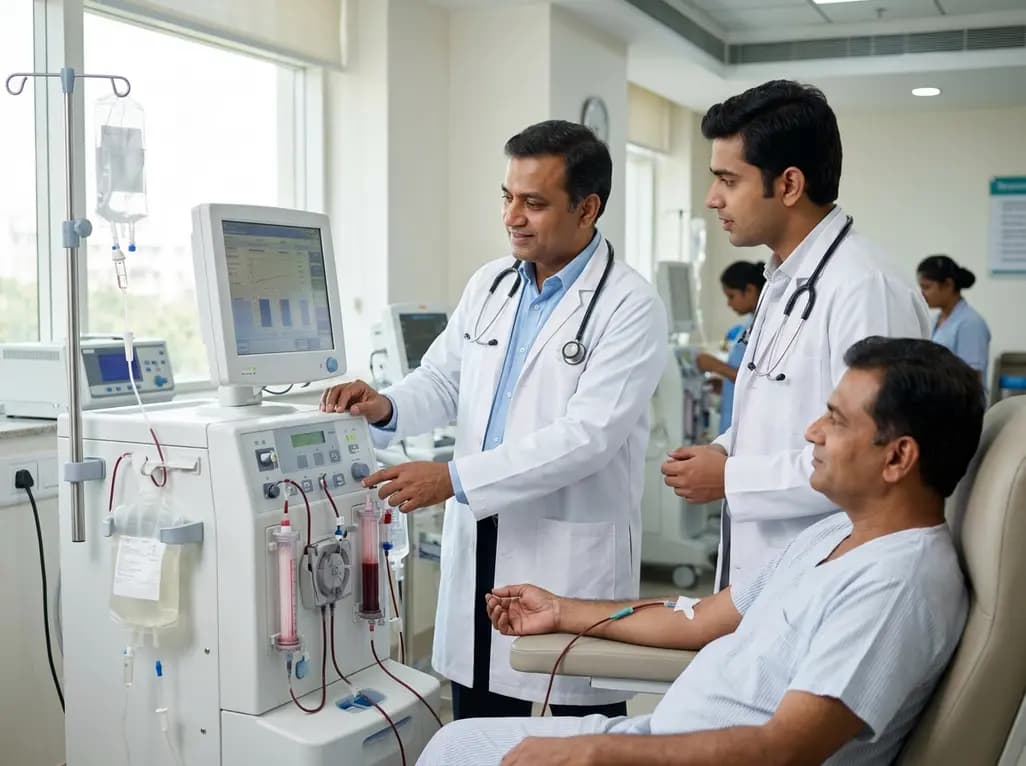
A systematic review and meta-analysis of 33 studies evaluates the effectiveness of LDL apheresis techniques in familial hypercholesterolemia. Double-filtration plasmapheresis demonstrated the greatest reductions in total cholesterol and LDL-C, while safety and clinical feasibility guide individual therapy.
Today

A scoping review of 964 studies on warm-up in athletes reveals that research heavily emphasizes acute performance proxies while significant gaps remain in injury prevention, dosage parameters, and real-world implementation.
Today

In severe acute pancreatitis, initial normal calcium levels can mask primary hyperparathyroidism due to saponification. This case report highlights how serial calcium monitoring unmasked severe hypercalcemia, guiding life-saving emergency medical therapy and curative parathyroidectomy.
Today
