.webp&w=384&q=75)

Loading, please wait...
Loading, please wait...

Optimizing pre-exercise readiness is fundamental to athletic performance and sports medicine. Athletes across all disciplines routinely perform pre-competition routines to enhance neuromuscular function and reduce physical vulnerability. However, sports medicine clinicians and conditioning specialists often face conflicting recommendations regarding the optimal design and duration of these protocols. A landmark scoping review evaluating warm-up in athletes synthesizes over five decades of research through an Evidence Gap Map. This massive evaluation encompasses 964 studies published between 1972 and 2026, offering unprecedented clarity regarding what exercise science has established and what remains unproven.
The scoping review utilized rigorous PRISMA-ScR methodologies to evaluate peer-reviewed records across major biomedical databases. Initially, investigators screened 27,644 records from PubMed, Scopus, SPORTDiscus, and the Web of Science Core Collection. After removing duplicate entries and applying strict eligibility criteria, researchers selected 964 primary publications for final mapping. This comprehensive analysis charted athletic populations across various competitive levels, developmental stages, and sporting disciplines.
Historically, clinicians assumed that warm-up literature provided a robust foundation for all aspects of athletic preparation. However, the evidence gap map reveals significant structural imbalances across the scientific literature. Most investigations focus almost exclusively on healthy adult male athletes participating in a few popular sports, such as soccer and track disciplines. Consequently, female athletes, pediatric cohorts, and master competitors remain noticeably underrepresented in high-quality trials.
Furthermore, dynamic movement preparation and muscle activation drills dominate recent intervention literature. In contrast, classic methodologies like static stretching have experienced declining scientific favor. Interestingly, widely popularized coaching frameworks, such as the RAMP protocol, rarely appear within rigorous experimental designs. Therefore, sports medicine practitioners must recognize that widespread clinical assumptions frequently lack comprehensive, sport-specific trial data across diverse participant demographics.
When examining reported outcomes, the vast majority of studies prioritize short-term laboratory proxy measures rather than direct athletic success. Specifically, explosive jump performance serves as the primary endpoint in over four hundred included publications. Researchers routinely evaluate countermovement jumps, squat jumps, and drop jumps to measure acute mechanical power output. Similarly, sprint velocity over short distances and change-of-direction tests appear frequently across the scientific literature.
Physiological and neuromuscular mechanisms also represent heavily charted territories within the evidence gap map. Investigators consistently track muscle temperature elevation, electromyographic activity, nerve conduction velocity, and oxygen uptake kinetics. These acute surrogate markers reliably demonstrate that active preparation elevates core temperature and stimulates post-activation performance enhancement.
Nonetheless, these immediate laboratory enhancements do not automatically translate into sustained competitive advantages. Most experimental trials assess athletes within artificial testing environments under tightly controlled recovery windows. Consequently, researchers rarely measure whether acute physiological potentiation persists during actual match play. Furthermore, critical competition-referent outcomes, such as decision-making speed, tactical execution, and late-game fatigue resistance, remain virtually unaddressed. Therefore, while dynamic warm-up routines consistently improve acute power proxies, their direct transfer to game outcomes requires much deeper investigation.
Although injury reduction remains a primary clinical objective of athletic preparation, empirical evidence in this domain remains strikingly sparse. Most coaches and athletes believe that structured routines naturally prevent muscle tears and joint sprains. However, the scoping review reveals that direct injury surveillance accounts for an extremely small fraction of the total evidence base. This disparity highlights a major disconnect between everyday athletic beliefs and validated clinical evidence.
Notably, a fundamental conceptual divide separates acute warm-up effects from longitudinal neuromuscular injury prevention programs. Structured programs like the FIFA 11+ achieve risk reduction through cumulative adaptations acquired over months of consistent participation. These benefits stem from progressive neuromuscular control, improved landing mechanics, and eccentric hamstring strength. In contrast, an acute pre-match warm-up primarily induces transient metabolic and thermal adjustments.
Consequently, evaluating whether a single warm-up routine directly prevents acute musculoskeletal injury requires large, prospective cohort trials with detailed exposure tracking. Such surveillance studies demand extensive resources, high participant numbers, and long follow-up periods. Because acute laboratory trials are much easier to conduct, researchers frequently neglect long-term injury endpoints. Therefore, sports physicians must exercise caution when attributing acute injury risk mitigation solely to brief pre-game warm-up protocols without structured, ongoing neuromuscular training.
Beyond outcome disparities, the evidence gap map highlights widespread deficiencies in intervention reporting and protocol transparency. Effective exercise prescription in sports medicine depends directly upon precise variables, including duration, intensity, exercise volume, and recovery intervals. However, nearly forty percent of all published warm-up studies fail to report total intervention duration adequately. Without this baseline metric, clinicians cannot replicate successful protocols or compare competing methodologies accurately.
Furthermore, approximately one-quarter of the analyzed publications provide no quantifiable intensity data. Authors frequently employ ambiguous descriptors such as light cardiovascular activity or progressively increasing effort instead of objective physiological markers. In contrast, high-quality sports medicine research requires standardized anchors such as percentage of maximum heart rate, blood lactate concentrations, or velocity metrics.
Similarly, researchers rarely document the critical transition phase between warm-up completion and actual competitive execution. In competitive sports, athletes frequently endure extended delays in locker rooms or call rooms before match play begins. During these prolonged sedentary periods, muscle temperature drops and acute neuromuscular potentiation quickly declines. Because published trials rarely mimic these real-world intervals, sports scientists struggle to recommend optimal timing strategies for competitive athletes. Standardized reporting guidelines must emerge to address these critical prescription gaps.
A major limitation highlighted by the evidence gap map involves ecological validity and implementation science. Most published trials evaluate warm-up protocols under strict laboratory conditions that bear little resemblance to real sports environments. For instance, teams frequently face constrained field space, inclement weather, and strict pre-match administrative schedules. When warm-up protocols require extensive specialized equipment or rigid timelines, real-world adherence predictably declines.
Moreover, implementation research examining coach education, athlete compliance, and organizational buy-in remains virtually nonexistent in this body of literature. Even the most biomechanically sound warm-up protocol fails if coaches alter exercises or skip high-intensity potentiation drills. Therefore, evaluating program feasibility and behavioral fidelity is just as important as quantifying physiological readiness.
In addition, individual athlete characteristics heavily influence the delicate balance between neuromuscular potentiation and accumulated muscular fatigue. Stronger and more mature athletes typically experience greater potentiation, whereas developing or unconditioned athletes may experience premature exhaustion. Consequently, sports practitioners cannot apply uniform warm-up protocols across an entire roster without adjusting for individual fitness and training status. Future research must evaluate how customizable warm-up routines perform under actual competitive constraints to enhance ecological relevance.
For sports physicians, orthopedic surgeons, and physiotherapists, this comprehensive scoping review provides crucial practical insights. Clinicians must educate athletes that a brief warm-up alone cannot replace comprehensive, multi-component injury prevention programs. While dynamic warm-up protocols effectively optimize acute power, sprint speed, and joint mobility, sustained injury resistance requires persistent neuromuscular training. Therefore, sports medicine teams should integrate balance, plyometrics, and eccentric strengthening into weekly training schedules.
Additionally, team clinicians should advocate for personalized warm-up prescription tailored to sport-specific demands and environmental conditions. Physicians must also help athletes manage post-warm-up transition intervals during competitive events. Utilizing passive heat-retention garments during prolonged pre-match delays preserves core temperature and maintains neuromuscular readiness. Ultimately, sports physicians should interpret the literature critically, recognizing that proxy performance metrics do not substitute for rigorous clinical trials and robust injury surveillance.
A dynamic warm-up enhances athletic performance primarily by elevating muscle temperature and increasing core metabolic activity. These thermal changes accelerate nerve conduction velocity, enhance oxygen delivery, and reduce muscle viscosity. Furthermore, active movement drills trigger post-activation performance enhancement, which primes the neuromuscular system for explosive output. Consequently, athletes experience immediate improvements in vertical jump height, sprinting speed, and agility metrics during subsequent high-intensity athletic tasks without the performance impairments often linked to static stretching.
Direct injury prevention research requires large prospective cohort studies with long-term exposure tracking, making these trials expensive and difficult to execute. In contrast, short-term performance proxy studies are simpler to conduct in controlled laboratory environments. Additionally, acute warm-ups induce transient physiological changes, whereas injury risk reduction typically stems from cumulative neuromuscular adaptations. Consequently, the scientific literature contains abundant data on acute jumping and sprinting, while high-quality trials directly evaluating injury reduction endpoints remain exceptionally scarce.
Coaches and clinicians must precisely specify total exercise duration, movement volume, exercise sequence, and intensity targets using objective physiological anchors. Furthermore, practitioners should account for athlete-specific factors, such as training age, strength levels, and biological maturation. Finally, warm-up designs must address the transition interval between routine completion and competition onset. Managing this transition window prevents temperature loss and ensures that neuromuscular potentiation remains elevated throughout the start of the athletic competition.
Disclaimer: This content is for informational and educational purposes only, and does not constitute medical advice or establish a doctor-patient relationship. Healthcare professionals must exercise independent clinical judgment. Refer to the latest local and national guidelines for clinical practice.
References

Read summarized clinical updates, watch expert medical content, and earn CME certifications right from your smartphone.
Open your smartphone camera to scan and install.





A scoping review of 964 studies on warm-up in athletes reveals that research heavily emphasizes acute performance proxies while significant gaps remain in injury prevention, dosage parameters, and real-world implementation.
Today

A fatal case involving a research technician at a Siberian anti-plague facility has triggered global surveillance inquiries. While tests rule out high-threat pathogens like plague and show no onward spread, the missing definitive diagnosis highlights crucial challenges in laboratory biosafety and clinical workups.
Today
A systematic review and transcriptomic cross-study consensus analysis illuminates the role of necroptosis in cervical cancer. By promoting anti-tumor immunogenicity and resolving apoptosis resistance, necroptotic pathways offer actionable prognostic signatures and promising avenues for combination immunotherapy.
Today
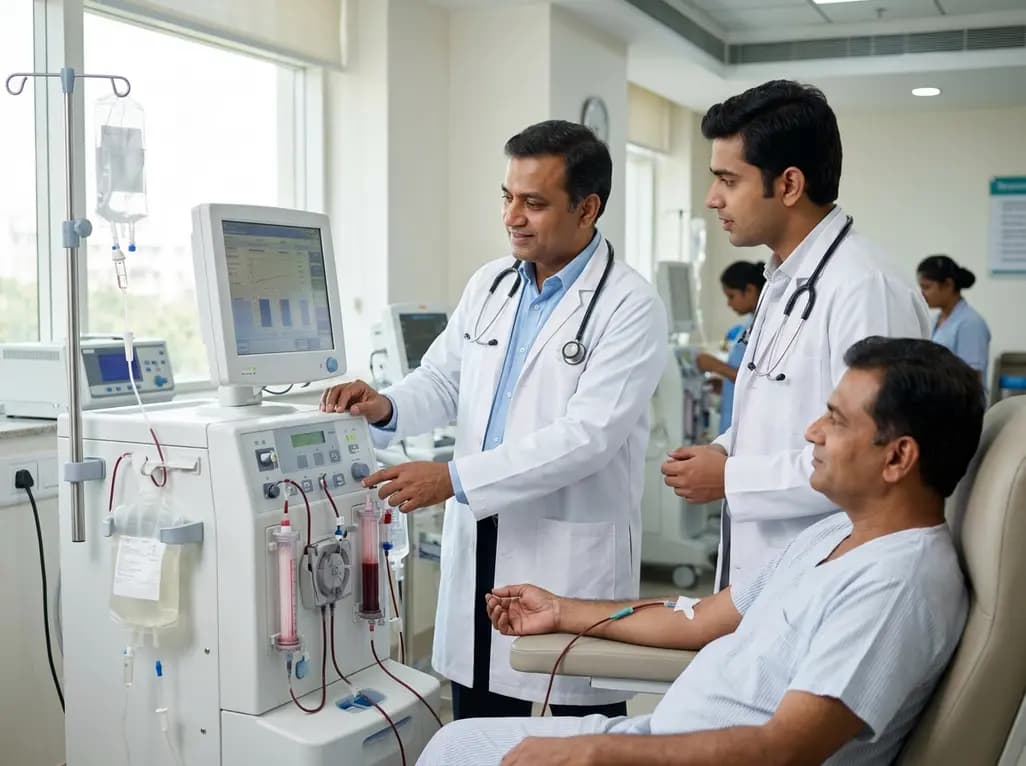
A systematic review and meta-analysis of 33 studies evaluates the effectiveness of LDL apheresis techniques in familial hypercholesterolemia. Double-filtration plasmapheresis demonstrated the greatest reductions in total cholesterol and LDL-C, while safety and clinical feasibility guide individual therapy.
Today

In severe acute pancreatitis, initial normal calcium levels can mask primary hyperparathyroidism due to saponification. This case report highlights how serial calcium monitoring unmasked severe hypercalcemia, guiding life-saving emergency medical therapy and curative parathyroidectomy.
Today
