.webp&w=384&q=75)

Loading, please wait...
Loading, please wait...
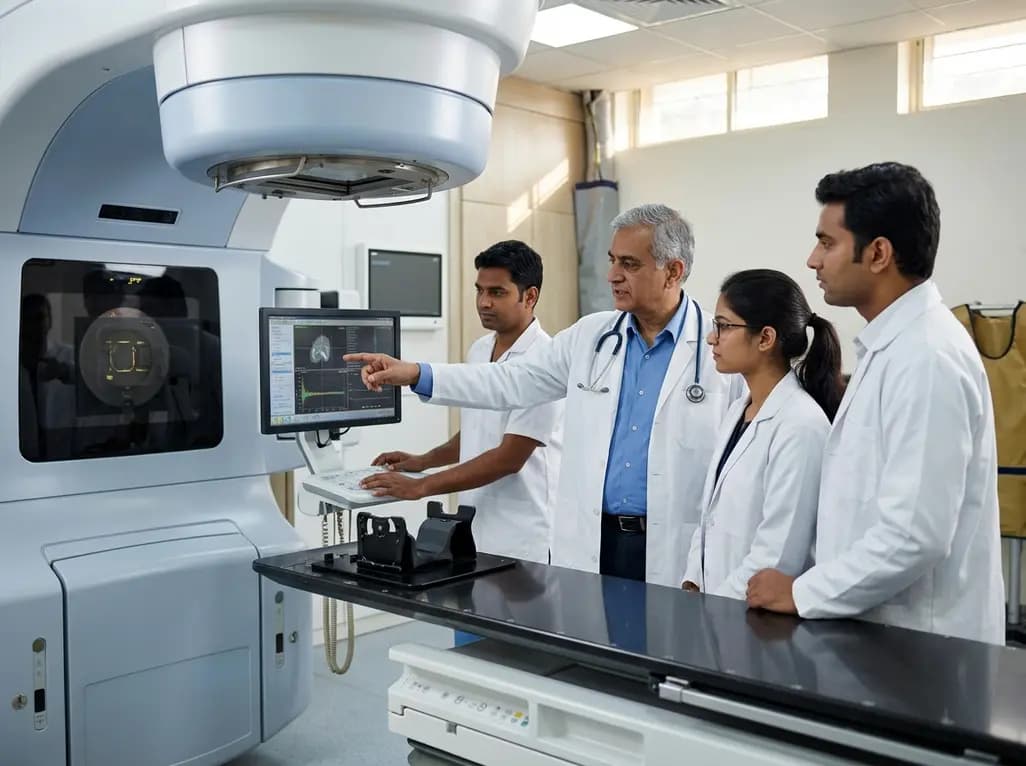
The landscape of radiation oncology is currently undergoing a radical transformation, primarily driven by SBRT technology modernization. Stereotactic Body Radiotherapy (SBRT) has emerged as a cornerstone in the curative treatment of various primary and metastatic malignancies, offering high-dose precision with minimal toxicity. Recently, a significant nationwide survey conducted in Italy has provided a deep dive into how large-scale national funding, specifically through the National Recovery and Resilience Plan (NRRP), has reshaped the technical standards of radiotherapy centers. For medical professionals and oncologists in India, where healthcare infrastructure is also seeing unprecedented growth through schemes like Ayushman Bharat, these insights are particularly relevant. The study highlights that while financial injections can rapidly upgrade hardware, the true success of technological adoption depends on a holistic approach that includes software integration and personnel expertise.
Specifically, the survey analyzed the pre-investment status and the innovation needs of Italian radiotherapy centers between 2020 and 2025. It gathered perspectives from medical physicists, who are the primary custodians of radiotherapy technology. Interestingly, the data revealed that most centers expected a 10% to 25% increase in SBRT activity following these investments. This growth underscores the increasing clinical reliance on hypofractionated treatments. However, the transition from older technology to modern platforms involves more than just purchasing new machines. It requires a fundamental shift in how departments manage patient flow, dosimetry, and quality assurance. As India expands its regional cancer centers, understanding these European benchmarks helps in planning sustainable oncology programs that balance technological prowess with operational efficiency.
National funding serves as the primary catalyst for closing the gap between outdated equipment and cutting-edge clinical needs. In the Italian context, the NRRP-funded acquisitions were reported by 78% of public institutions, demonstrating the massive scale of government intervention. These funds were primarily directed toward the replacement of aging linear accelerators (linacs) and the acquisition of advanced imaging technologies. Without such structured financial support, many public centers would struggle to keep pace with the rapid advancements seen in the private sector. This pattern is mirrored in various global health systems where public-private disparities in cancer care can only be bridged through state-led modernization initiatives. Furthermore, the survey noted that while NRRP funds covered major hardware, non-NRRP funding sources were often utilized for software-based innovations and workflow optimization tools.
This dual-funding approach reveals a strategic nuance: government grants often target the high-capital hardware, while individual hospital budgets must cover the specialized software that makes the hardware effective. For example, AI-driven contouring and advanced treatment planning systems are frequently acquired through separate operational budgets. Consequently, hospital administrators must plan for these 'hidden' costs well in advance. In many developing oncology markets, the focus remains heavily on the initial purchase of the linac. Nevertheless, the Italian experience suggests that a failure to invest in the accompanying software can lead to a 'technology paradox' where advanced machines are underutilized because the workflow remains stuck in the past. Therefore, a harmonized investment strategy must account for both the physical and digital components of modern radiotherapy.
One of the most striking findings of the recent survey was the marked increase in the availability of advanced delivery platforms and volumetric image guidance. Modern SBRT technology modernization relies heavily on the ability to visualize the tumor in three dimensions immediately before treatment. Technologies such as volumetric modulated arc therapy (VMAT) and cone-beam CT (CBCT) have now become standard in a significant portion of Italian centers. Moreover, the adoption of six-degree-of-freedom (6-DoF) couches has increased, allowing for precise rotational corrections that were previously impossible. These technical upgrades are essential for delivering the ablative doses required in SBRT while sparing adjacent critical organs like the spinal cord or bowel.
In addition to hardware, the study identified a shift toward type-C calculation algorithms, which provide more accurate dose predictions in heterogeneous tissues like the lungs. This is a critical advancement because SBRT is frequently used for early-stage lung cancer and oligometastatic lung disease. Accurate dosimetry in these cases can be the difference between a successful cure and a grade 3 radiation pneumonitis. Interestingly, despite these widespread technical upgrades, the perceived impact on daily practice was only reported as moderate by medical physicists. This suggests that the mere presence of high-end technology does not automatically translate into a streamlined clinical experience. The integration of 4D-CT motion management and real-time tracking remains a complex task that requires more than just the machine itself. For Indian centers, this serves as a reminder that the acquisition of 6-DoF couches and advanced linacs must be paired with rigorous commissioning and clinical protocol development.
A critical revelation from the survey was that approximately 50% of respondents identified personnel education and dosimetry tools as their most relevant needs. This finding highlights a global challenge in oncology: the technological 'brain drain' or the lag between equipment acquisition and staff proficiency. As SBRT becomes more technically demanding, the role of the medical physicist and the radiation oncologist evolves. They are no longer just planning a simple treatment; they are managing complex datasets, AI algorithms, and motion-tracking systems. Without sustained investment in professional development, the risks of treatment errors or suboptimal outcomes increase significantly. Education is not a one-time event but a continuous requirement as software updates and new modalities emerge.
Furthermore, the survey emphasized that organizational changes are just as important as technical training. Implementing a high-volume SBRT program requires a rethink of the entire patient pathway, from simulation to follow-up. Many centers reported that additional organizational investments are needed to fully exploit the new technologies they have acquired. This includes dedicated time for quality assurance (QA) and interdisciplinary meetings where physicists and clinicians can refine treatment protocols. In many busy departments, the pressure to treat a high volume of patients can sometimes overshadow the need for these essential 'quiet' tasks. Consequently, the modernization process must include a budget for human resources, ensuring that staff have the time and the tools to maintain the high standards of safety required for stereotactic treatments. Ultimately, the quality of a radiotherapy program is defined by the expertise of the people operating the technology.
As we look toward the future, the Italian survey provides a roadmap for other nations seeking to modernize their cancer care infrastructure. The study concludes that while funding can accelerate technological adoption, sustained and harmonized practice requires complementary investments in three key areas: training, workflow integration, and organizational capacity. It is not enough to replace an old linac with a new one; the entire ecosystem must be ready for the change. This includes everything from the IT infrastructure that supports large imaging files to the administrative staff who manage the increased patient throughput. Notably, the perceived impact of the technology was dampened by the lack of these organizational supports, suggesting a mismatch between clinical potential and practical implementation.
For healthcare providers in India, the lesson is clear: strategic planning must be multi-dimensional. As public and private sectors continue to invest in advanced SBRT and SRS platforms, they must also focus on creating regional training hubs. These hubs can serve as centers of excellence where physicists and oncologists can learn the nuances of 4D planning and adaptive radiotherapy. Moreover, harmonizing protocols across different institutions can help ensure that a patient in a rural center receives the same quality of SBRT as one in a metropolitan hospital. By focusing on both the hardware and the human-organizational interface, healthcare systems can ensure that their investments lead to tangible improvements in patient survival and quality of life. Modernization is a journey of continuous improvement rather than a single destination reached by a purchase order.
National funding, such as the NRRP in Italy, acts as a critical financial bridge that allows public hospitals to replace obsolete equipment with advanced linear accelerators and volumetric imaging systems. This level of investment is often too large for individual hospital budgets to handle alone. By centralizing the funding, governments can ensure a more equitable distribution of high-precision radiotherapy across different geographic regions, narrowing the gap between public and private healthcare quality.
The most notable technical advancements include the widespread adoption of Volumetric Modulated Arc Therapy (VMAT), six-degree-of-freedom (6-DoF) couches, and type-C calculation algorithms. These tools allow for unprecedented precision in dose delivery and target localization. Additionally, there has been a significant increase in the use of 4D-CT and volumetric image guidance, which are essential for managing tumor motion during treatment, particularly in lung and abdominal SBRT cases where organ movement is a constant challenge.
As radiotherapy equipment becomes more sophisticated, the complexity of planning and quality assurance increases exponentially. Many departments find that while they can purchase new machines, their existing staff may lack the specialized training required to use all the advanced features safely and effectively. Without dedicated time and resources for professional education, these high-end machines may be underutilized, and the clinical impact on patient outcomes may remain moderate rather than transformative for the oncology department.
Disclaimer: This content is for informational and educational purposes only. It is not intended as a substitute for professional medical advice, diagnosis, or treatment. Always seek the advice of your physician or other qualified health provider with any questions you may have regarding a medical condition. Refer to the latest local and national guidelines for clinical practice.
References
Caricato P et al. Impact of National Recovery and Resilience Plan funding on SBRT technology in Italy: Insights from a national survey of medical physicists. Phys Med. 2026 Jul 09. doi: undefined. PMID: 42424687.
Franzese C et al. Clinical practice, barriers to implementation, and priorities for equitable access of Stereotactic Body Radiation Therapy: An analysis of the global status by the ESTRO SBRT Focus Group. CTRO. 2025 Dec 14. doi: 10.1016/j.ctro.2025.101096.
Mihai AM et al. Technical challenges of linac-based stereotactic ablative body radiotherapy: short review for non-radiation oncologists. Ann Palliat Med. 2025 Apr 03. doi: 10.21037/apm-24-112.
"
Read summarized clinical updates, watch expert medical content, and earn CME certifications right from your smartphone.
Open your smartphone camera to scan and install.





A nationwide survey of Italian medical physicists reveals how National Recovery and Resilience Plan (NRRP) funding has accelerated SBRT technology modernization, emphasizing the need for concurrent investments in training and organizational workflow to maximize clinical efficacy.
3 months ago
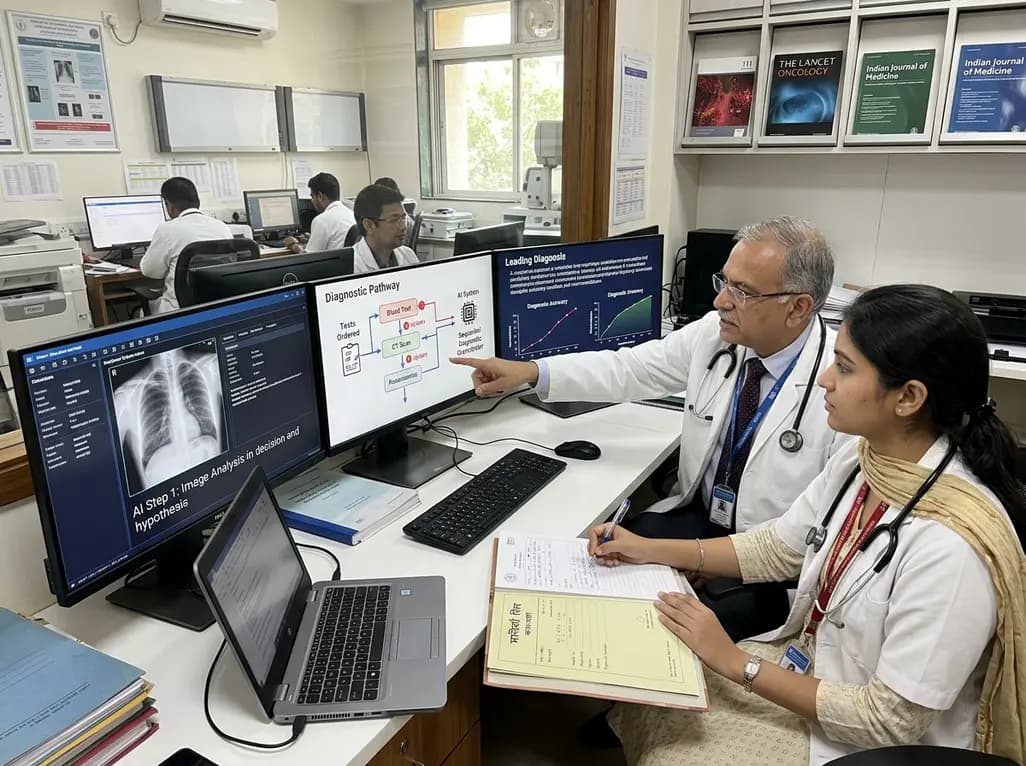
A breakthrough peer-reviewed study demonstrates that a sequential AI diagnosis system can mirror real-world clinical reasoning. By ordering stepwise tests and updating hypotheses dynamically, this multi-agent orchestrator achieved superior diagnostic accuracy while reducing investigative costs.
Today

A prenatal case highlights severe glutaric acidemia type II presenting as bilateral hyperechoic cystic kidneys at 18 weeks. Whole-exome sequencing revealed a novel homozygous ETFDH frameshift variant, demonstrating the power of rapid genetic testing in fetal renal anomalies.
Today

Review how tailored exercise programs benefit frail older patients with heart failure. Explore pathophysiological mechanisms, individualized training prescriptions, and strategies to overcome adherence barriers in clinical practice.
Yesterday

This comparative study evaluates posterior labral tears with and without glenohumeral instability, highlighting distinct demographic patterns, MRI underestimation in stable shoulders, and successful arthroscopic repair outcomes.
Yesterday

A clinical study demonstrates that early intervention with tocilizumab, either as monotherapy or bridged with corticosteroids, achieves significant proptosis reduction and resolves active inflammation in treatment-naive thyroid eye disease.
Yesterday
