.webp&w=384&q=75)

Loading, please wait...
Loading, please wait...

Biochemical recurrence following radical prostatectomy presents a critical therapeutic crossroad for genitourinary oncologists and radiation oncologists. In this curative setting, salvage radiotherapy serves as the primary standard of care capable of achieving durable disease eradication. However, delivering curative radiation doses to the prostate bed demands meticulous precision to minimize toxicity to adjacent normal tissues. Radiation oncologists constantly balance optimal target coverage against the risk of long-term gastrointestinal and genitourinary complications. Consequently, standardized dose-volume constraints from major randomized clinical trials have become essential benchmarks in daily treatment planning. Modern cloud-based quality assurance platforms now enable automated, multicenter plan verification to validate compliance with these international benchmarks.
Recurrent prostate cancer after radical prostatectomy requires swift intervention before local recurrence evolves into distant metastatic disease. Therefore, salvage radiotherapy offers patients a vital second opportunity for long-term cure. When planning treatment, clinicians target the prostatic fossa with or without elective pelvic nodal irradiation. Nevertheless, escalating target doses to ensure tumor control can inadvertently expose adjacent pelvic structures to substantial radiation. The urinary bladder, rectum, and femoral heads remain highly vulnerable to acute and chronic radiation-induced injury. In addition, previous surgical disruption alters local tissue vascularity and normal anatomical relationships. This heightened susceptibility makes post-surgical tissue more prone to late radiation fibrosis and stricture formation. Thus, clinicians require reliable, prospective dose constraints to safeguard surrounding tissues while sterilizing microscopic residual disease.
Major phase III randomized clinical trials have established rigorous dose-volume parameters to standardize treatment quality and protect organs at risk. Specifically, the NRG Oncology/RTOG 0534 SPPORT trial and the RADICALS-HD trial defined clear thresholds for critical pelvic structures. These protocols set specific volume limits for the rectum and bladder across multiple isodose levels. For instance, the SPPORT trial outlines strict intermediate and high-dose volume thresholds to prevent late rectal bleeding and persistent radiation cystitis. Similarly, the RADICALS-HD trial emphasizes stringent whole-bladder and rectal dose restrictions during salvage treatment. Modern radiotherapy techniques, including volumetric modulated arc therapy and intensity-modulated radiotherapy, aim to meet these complex multi-criteria objectives. However, evaluating how consistently multiple academic centers achieve these trial-defined benchmarks across routine practice remained an important quality assurance question.
A recent multicenter investigation evaluated 117 postprostatectomy salvage patients treated across Bavarian university medical centers within the Bavarian Cancer Research Center. The study analyzed digitized treatment plans using the cloud-based ProKnow quality assurance platform. Investigators created standardized digital scorecards incorporating explicit dose-volume objectives from both the SPPORT and RADICALS-HD protocols. Furthermore, the team assessed essential geometric and dosimetric metrics across all centers, including planning target volume, conformality index, D95, and V66. The median planning target volume was 213.9 cubic centimeters, with a median D95 of 64.5 Gy. Additionally, the median volume receiving 66 Gy was 192.62 cubic centimeters. By centralizing plan metrics in an objective software environment, the researchers eliminated inter-observer variability in plan quality assessment.
The study demonstrated outstanding compliance with established trial constraints across all participating university cancer centers. Specifically, bladder dose constraints were met in 92% to 100% of plans according to RADICALS-HD criteria and in 89% to 97% under SPPORT guidelines. Furthermore, rectal sparing showed even greater consistency, with 98% to 100% of plans meeting RADICALS-HD thresholds and 95% to 100% satisfying SPPORT objectives. All evaluated treatment plans completely fulfilled the SPPORT femoral head constraint for V50. Correlation analyses demonstrated only weak associations between target parameters and bladder doses, alongside weak-to-moderate correlations with rectal doses. Consequently, these findings confirm that advanced modern planning techniques reliably maintain organ-at-risk doses well below hazardous levels even when covering substantial target volumes.
Standardized plan evaluation tools bridge the gap between rigorous clinical trial protocols and routine hospital workflows. Consequently, utilizing automated platforms like ProKnow provides immediate, objective feedback to dosimetrists and radiation oncologists before treatment delivery begins. Such tools highlight unexpected dose hotspots and pinpoint deviations from established normal tissue tolerances. Furthermore, multicenter benchmarking fosters collaborative quality improvement across regional cancer networks. In clinical environments where treatment complexity continues to increase, automated scorecard validation reduces human planning errors. As a result, adopting standardized trial constraints ensures patients receive high-quality radiation therapy that matches the superior safety profiles demonstrated in landmark randomized trials.
What is the main clinical goal of salvage radiotherapy in postprostatectomy prostate cancer?
Salvage radiotherapy aims to eradicate local microscopic residual or recurrent cancer cells in the prostatic bed following radical prostatectomy. Clinicians initiate this therapy upon detecting biochemical recurrence before distant metastases develop. Delivering precise, curative radiation doses halts tumor progression while preserving long-term urinary, bowel, and sexual functional outcomes for recovering prostate cancer patients.
Why are SPPORT and RADICALS-HD dose-volume constraints important for clinical practice?
These trial-defined dose-volume constraints provide evidence-based safety thresholds derived from large randomized patient cohorts. By defining exact volumetric limits for the rectum, urinary bladder, and femoral heads, these criteria guide inverse treatment planning. Consequently, adhering strictly to these benchmarks minimizes severe late gastrointestinal and genitourinary toxicities in daily clinical oncological practice.
How does cloud-based plan evaluation software improve radiation oncology quality assurance?
Cloud-based platforms such as ProKnow automate complex dosimetric scoring against predefined multi-institutional criteria. They aggregate planning metrics across institutions, calculate standardized conformity indices, and instantly identify organ-at-risk constraint violations. Therefore, automated evaluation streamlines peer review, eliminates subjective assessment biases, and ensures uniform treatment quality across decentralized healthcare networks.
Disclaimer: This content is for informational and educational purposes only... Refer to the latest local and national guidelines for clinical practice.
References
Keilholz M et al. Multicenter ProKnow-based plan evaluation of postprostatectomy salvage radiotherapy patients using SPPORT and RADICALS-HD trial-defined dose constraints. Strahlenther Onkol. 2026 Aug 20. doi: 10.1007/s00066-026-02584-3. PMID: 42622657.
Pollack A, Karrison TG, Balogh AG, et al. The addition of androgen deprivation therapy and pelvic lymph node treatment to prostate bed salvage radiotherapy (NRG Oncology/RTOG 0534 SPPORT): an international, multicentre, randomised phase 3 trial. Lancet. 2022;399(10338):1886-1901.
Parker CC, Kynaston H, Cook AD, et al. Duration of androgen deprivation therapy with postoperative radiotherapy for prostate cancer: a comparison of long-course versus short-course androgen deprivation therapy in the RADICALS-HD randomised trial. Lancet. 2024;403(10442):2416-2425.

Read summarized clinical updates, watch expert medical content, and earn CME certifications right from your smartphone.
Open your smartphone camera to scan and install.





A multicenter study evaluates postprostatectomy salvage radiotherapy plans across Bavarian university cancer centers using SPPORT and RADICALS-HD dose-volume constraints, demonstrating high compliance in sparing critical organs at risk.
last month

This clinical review examines the dangerous intersection of climate change and antimicrobial resistance (AMR). It highlights thermal selection, altered transmission pathways, and the imperative for One Health and Planetary Health adaptation frameworks to preserve therapeutic efficacy.
Today
Discover the crucial distinctions between mesonephric and mesonephric-like proliferations of the female genital tract. Learn the key histomorphologic, immunohistochemical, and molecular differences essential for accurate diagnosis and clinical management.
Today
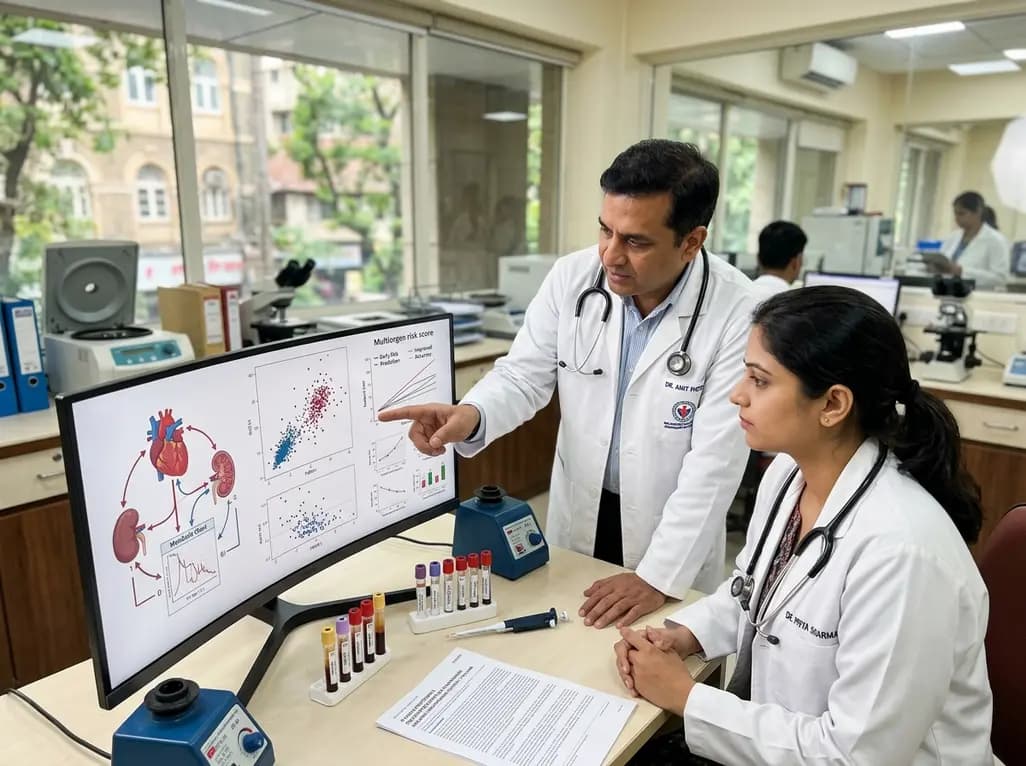
A large UK Biobank study reveals that plasma proteomic signatures capture preclinical organ damage and improve multiorgan risk prediction across early CKM syndrome stages 0 to 2 beyond traditional PREVENT clinical models.
Today

A narrative review investigates whether the articularis genus muscle functions as an independent anatomical entity or blends with the vastus intermedius. We evaluate its morphology, role in retracting the suprapatellar bursa, and direct clinical significance in anterior knee pain and arthroplasty.
Today

A Bayesian multilevel meta-analysis reveals that aerobic training combined with moderate carbohydrate restriction modestly lowers HbA1c in type 2 diabetes. However, sparse data and very low certainty leave incremental benefits over exercise or diet alone unproven, highlighting the need for individualized care.
Today
