.webp&w=384&q=75)

Loading, please wait...
Loading, please wait...

Pregnancy triggers numerous physiological shifts across the body. Understanding salivary gland changes pregnancy remains vital for comprehensive maternal care and accurate diagnostic assessments. Specifically, the salivary glands undergo hormonal and hemodynamic adaptations that may alter their structure and function. Researchers recently conducted a longitudinal prospective study to explore these variations using advanced imaging techniques. They utilized superb microvascular imaging (SMI) and shear wave elastography (SWE) to track alterations in vascularity and tissue stiffness throughout all three trimesters.
The study followed 35 healthy pregnant women, performing ultrasonography at each stage of gestation. Consequently, the team measured the vascularization index (VI) and glandular elasticity in the parotid and submandibular glands. The results revealed that while submandibular VI and stiffness did not vary significantly across trimesters, the parotid gland showed distinct patterns. Specifically, the parotid VI increased significantly in the third trimester compared to the first trimester. This elevation suggests a targeted increase in blood supply as the pregnancy progresses toward term.
Establishing normative values for glandular parameters is essential for identifying pathological states during pregnancy. Since clinicians often encounter pregnancy-related oral health issues like xerostomia, these imaging benchmarks help differentiate physiological adaptations from disease. Furthermore, the stability of submandibular stiffness throughout gestation provides a reliable baseline for clinicians. These findings underscore the precision of SMI and SWE in monitoring small-scale vascular and structural shifts. Therefore, radiologists and obstetricians can use this data to better understand the systemic impact of hormonal changes on exocrine function.
The increase in parotid vascularity likely results from systemic hemodynamic changes and hormonal surges that occur as the body prepares for delivery. This increased blood flow supports the metabolic demands of the glandular tissues during the final stages of pregnancy.
Yes, both SMI and SWE are non-invasive, non-ionizing ultrasound techniques. They provide high-resolution data on blood flow and tissue elasticity without exposing the mother or the fetus to harmful radiation.
Disclaimer: This content is for informational and educational purposes only. It does not constitute medical advice or a professional relationship. Refer to the latest local and national guidelines for clinical practice.
References
1. Şara Hİ et al. Quantitative Assessment of Vascularization and Stiffness in Salivary Glands During Pregnancy Using Superb Microvascular Imaging and Shear Wave Elastography Techniques. J Clin Ultrasound. 2026 Mar 01. doi: 10.1002/jcu.70217. PMID: 41766051.
2. Odeh M, Ophir E, Ardekian L, Bornstein J. Normal fetal salivary glands at 14-16 weeks of gestation as observed by transvaginal ultrasound imaging. J Ultrasound Med. 2010;29(4):541-545.
3. Lazzari L, et al. Changes in salivary flow rate and pH in pregnancy. Eur Rev Med Pharmacol Sci. 2021;25(4):1804-1809.

Read summarized clinical updates, watch expert medical content, and earn CME certifications right from your smartphone.
Open your smartphone camera to scan and install.





New research examines how pregnancy affects salivary gland vascularity and stiffness using SMI and SWE, highlighting significant parotid gland changes....
7 months ago

Review how tailored exercise programs benefit frail older patients with heart failure. Explore pathophysiological mechanisms, individualized training prescriptions, and strategies to overcome adherence barriers in clinical practice.
Today
Recent clinical studies reveal maternal autoantibodies targeting IL-1RA as potential triggers for preterm labor, opening avenues for targeted cytokine therapies. Concurrently, new perioperative findings show inhaled cannabis increases propofol requirements during upper endoscopy compared to oral edible consumption.
Today
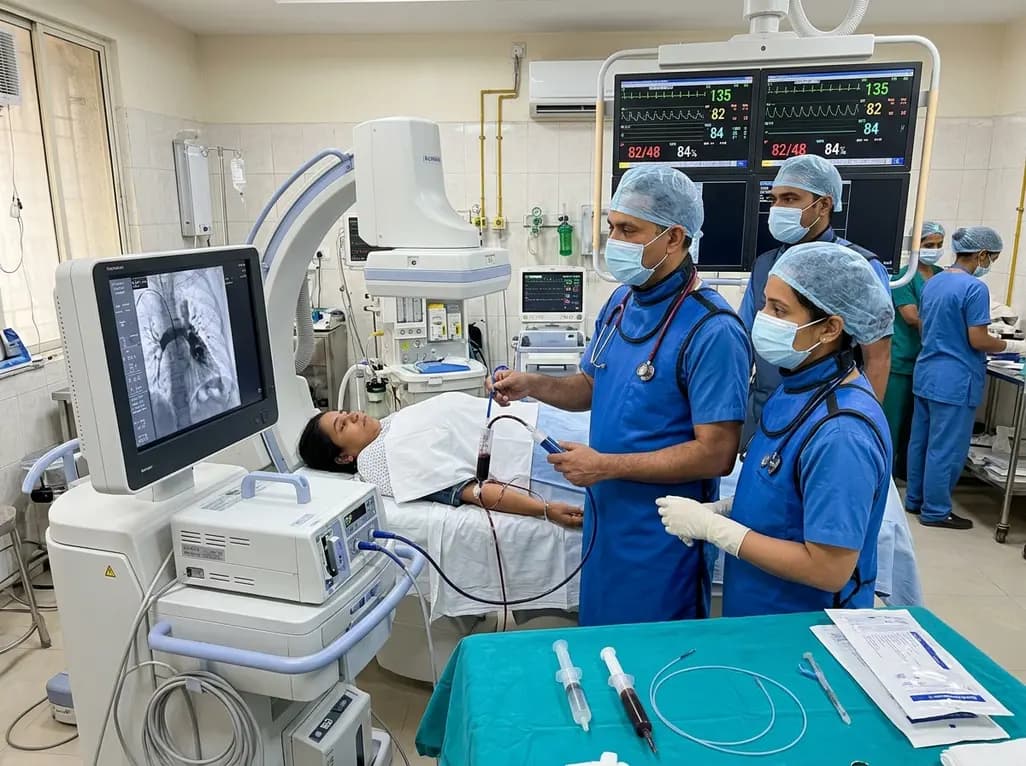
In high-risk pulmonary embolism complicated by severe anemia and active uterine bleeding, systemic thrombolysis is contraindicated. Large-bore aspiration thrombectomy provides rapid hemodynamic rescue without fibrinolysis, supported by inferior vena cava filter placement and multidisciplinary critical care.
Today

This comparative study evaluates posterior labral tears with and without glenohumeral instability, highlighting distinct demographic patterns, MRI underestimation in stable shoulders, and successful arthroscopic repair outcomes.
Today

A clinical study demonstrates that early intervention with tocilizumab, either as monotherapy or bridged with corticosteroids, achieves significant proptosis reduction and resolves active inflammation in treatment-naive thyroid eye disease.
Today
