.webp&w=384&q=75)

Loading, please wait...
Loading, please wait...

Flavonoids like rutin possess remarkable therapeutic potential, particularly due to their antioxidant and pharmacological properties. However, clinical implementation remains challenging because of rutin's poor solubility and limited bioavailability. To address these pharmacokinetic hurdles, researchers recently developed rutin spanlastic nanoparticles. This advanced nanotechnology-based platform aims to optimize drug delivery and enhance therapeutic outcomes against aggressive malignancies like breast adenocarcinoma.
The study meticulously compared the efficacy of free rutin, rutin nanocrystals, and rutin spanlastics. Consequently, researchers utilized sophisticated techniques such as transmission electron microscopy and zeta potential measurement to confirm the stability and homogeneous dispersion of the nano-formulations. Notably, the elastovesicular behavior of the spanlastic vesicles provided a superior mechanism for drug solubilization compared to traditional crystalline structures.
The experimental results revealed that rutin spanlastic nanoparticles exhibit significantly greater bioactivity than other forms. During the evaluation against the MCF-7 human breast adenocarcinoma cell line, this formulation demonstrated a powerful inhibition of cell viability. Moreover, the nanoparticles successfully induced apoptosis, which researchers confirmed through increased Caspase 3 activity and annexin-V labeling. Furthermore, the treatment triggered significant G1/0 phase cell cycle arrest, effectively halting the proliferation of cancer cells.
Additionally, the spanlastic system enhanced the antioxidant profile of rutin, as demonstrated in DPPH and ABTS radical scavenger assays. Therefore, these findings suggest that the unique elasticity of spanlastics allows for deeper cellular penetration and better therapeutic delivery. In conclusion, these innovative nanoparticles represent a major step forward in developing effective treatments for breast carcinoma, warranting further in vivo investigations.
Rutin spanlastic nanoparticles utilize elastic vesicular technology to overcome the poor solubility and low bioavailability of traditional rutin. Their flexible structure allows for better absorption and more stable delivery to targeted cancer cells.
The study showed that spanlastic formulations induced stronger apoptosis and significant G1/0 phase cell cycle arrest in MCF-7 cells compared to both free rutin and rutin nanocrystals.
Disclaimer: This content is for informational and educational purposes only. It does not constitute professional medical advice, diagnosis, or treatment. Always seek the advice of your physician or other qualified health provider with any questions you may have regarding a medical condition. Refer to the latest local and national guidelines for clinical practice.
References

Read summarized clinical updates, watch expert medical content, and earn CME certifications right from your smartphone.
Open your smartphone camera to scan and install.





Research evaluates rutin spanlastic nanoparticles as superior delivery systems for enhancing antioxidant and anticancer activity in MCF-7 breast cancer cell...
4 months ago
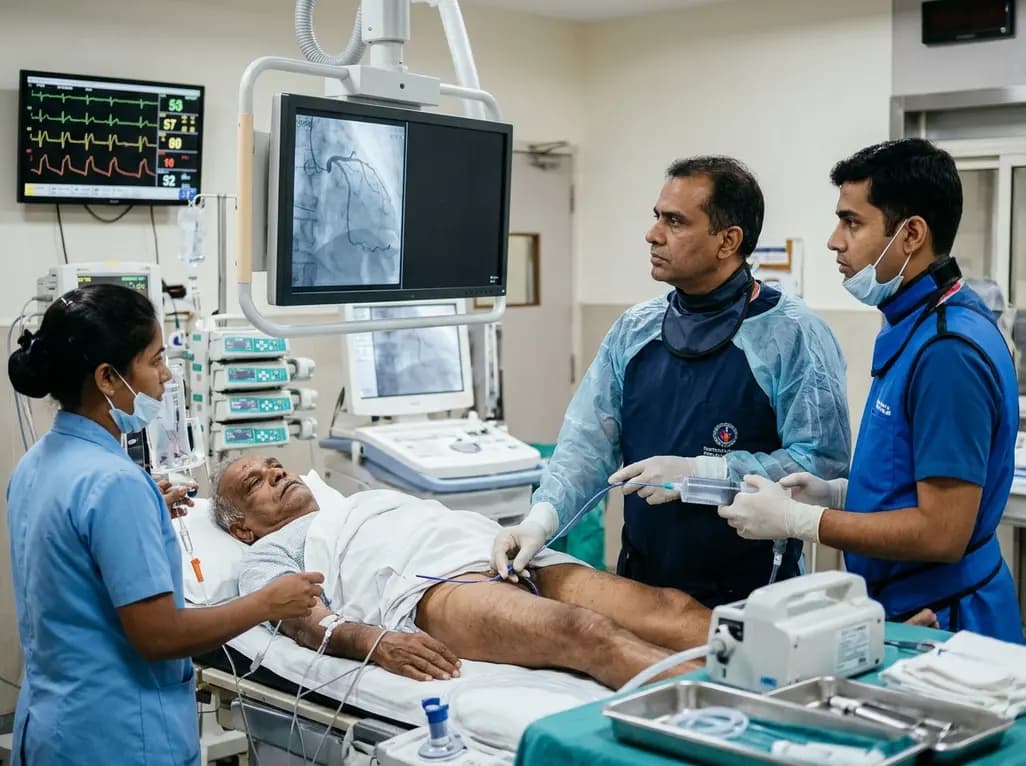
An elderly man with partially repaired Tetralogy of Fallot presented with STEMI caused by coronary embolism rather than atherosclerosis. Successful treatment with sustained mechanical aspiration thrombectomy underscores the vital need for high clinical vigilance in adult congenital heart disease.
Today

Demanding exhaustive hormonal profiling can inadvertently discourage clinical studies involving females. Methodological standards must align with the specific scientific question to expand, not restrict, equitable evidence for women.
Today

A recent study demonstrates that spinal oxygen sensors do not require mitochondrial electron transport to trigger sympathetic excitation during acute hypoxia, revealing new insights into how mitochondrial oxidative stress modulates autonomic tone in cardiovascular and neurological diseases.
Today

A comparative review of tension band wiring and intramedullary screw fixation in thumb metacarpophalangeal arthrodesis, evaluating union rates, hardware complications, and clinical outcomes.
Today

Following regulatory scrutiny from FSSAI regarding promotional representations and lean muscle preservation claims, Dr. Reddy's Laboratories and Nestlé Health Science are currently reviewing the branding and marketing strategy for their joint nutritional supplement Celevida GLP+.
Today
