.webp&w=384&q=75)

Loading, please wait...
Loading, please wait...

Recently, research has highlighted the deep-rooted nature of firearm culture in the United States. A significant study by Shepherd ME and colleagues specifically investigates rural gun ownership attitudes and their developmental origins. This research explores whether these views stem from current living conditions or early life experiences. Furthermore, the findings suggest that early socialization plays a crucial role in shaping long-term perspectives. Consequently, these childhood experiences create a lasting cultural framework. Because of this, early environments often dictate adult political and social values. Therefore, understanding childhood history is vital for analyzing current public health trends.
To reach these conclusions, the researchers analyzed extensive survey data from several decades. For instance, they utilized the American National Elections Study to track shifting demographics and beliefs. And they found that individuals raised in rural areas often maintain a strong attachment to firearms throughout their adult lives. Interestingly, this cultural tie remains firm even if they move to urban environments later. As a result, childhood upbringing appears to be a more powerful predictor of gun-related beliefs than contemporary residency. Similarly, these individuals tend to hold more conservative views on firearm policy. In addition, this relationship remains stable regardless of adult socioeconomic status. Therefore, the effect of socialization is remarkably durable over time.
For medical professionals, understanding these patterns is vital for patient-centered care and public health safety. Specifically, healthcare providers can better approach firearm safety discussions by recognizing diverse cultural backgrounds. Because of this, clinicians can communicate more effectively without appearing judgmental or dismissive. But when they understand that gun ownership is often a core part of an individual's identity, they can tailor their communication effectively. Therefore, this knowledge helps in building trust during mental health evaluations and preventive screenings. Moreover, recognizing these stable attitudes allows for more nuanced counseling regarding lethal means. Additionally, this insight is useful for psychiatrists assessing risk factors in different populations. So, practitioners should consider a patient's cultural history during every clinical intake.
No, the research indicates that individuals socialized in rural settings maintain their attachment to guns even after moving to cities. This suggests that early cultural exposure is more influential than current geographical environment.
It provides an independent and long-lasting influence on political attitudes. Because of this, childhood environment serves as a primary driver of firearm-related views throughout the lifespan.
Disclaimer: This content is for informational and educational purposes only. It does not constitute medical or legal advice. Refer to the latest local and national guidelines for clinical practice.
References
Shepherd ME et al. Don't Take Your Guns to Town? Rural Socialization and the Long-Term Politics of Firearms. J Health Polit Policy Law. 2026 Feb 12. doi: undefined. PMID: 41678267.
Rutgers Health. How Social Support Impacts Firearm Carrying and Secure Storage. Injury Prevention. 2025.
Pew Research Center. Rural and urban gun owners have different experiences, views on gun policy. 2017.

Read summarized clinical updates, watch expert medical content, and earn CME certifications right from your smartphone.
Open your smartphone camera to scan and install.





A study in the Journal of Health Politics, Policy and Law reveals how rural childhood socialization shapes lifelong gun ownership and firearm policy attitud...
8 months ago
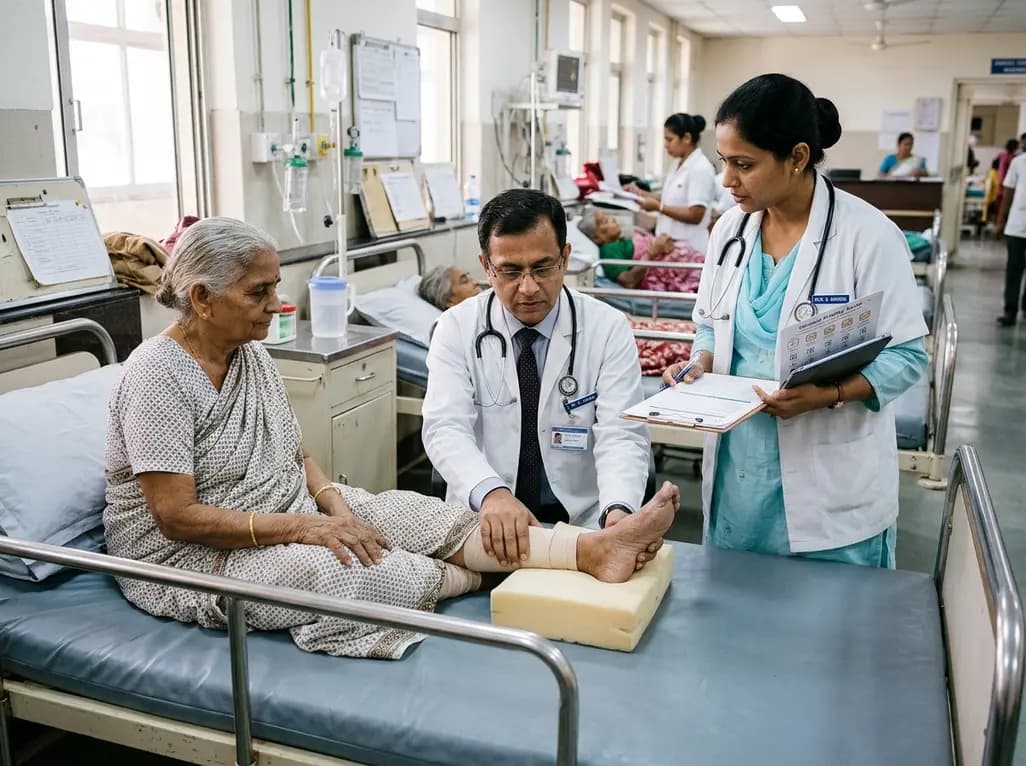
A retrospective cohort study reveals that frailty quadruples the odds of pressure injuries in hospitalized older adults. Integrating the Clinical Frailty Scale with comprehensive geriatric care is crucial for identifying vulnerability early and implementing targeted multidisciplinary prevention.
Today

Occult maternal malignancy accounts for 3.82% of persistent unreportable NIPT results with genomic noise. Multiple chromosomal aberrations, notably on chromosome 18, warrant thorough oncological evaluation and whole-body MRI to ensure timely maternal diagnosis while preserving fetal care.
Today

This article reviews the forensic and clinical complexities of acute myocarditis arising on left ventricular hypertrophy in children, highlighting early diagnostic red flags and multidisciplinary postmortem autopsy protocols.
Today

A randomized controlled trial demonstrates that an eight-week dual-task training intervention significantly improves static and dynamic postural control over standard balance exercises in individuals with chronic ankle instability, addressing critical neurocognitive deficits during athletic and daily activities.
Today

A retrospective cohort study of 7,716 ICU patients from the MIMIC-IV database demonstrates that Gradient Boosting Decision Trees significantly outperform traditional SOFA scores in predicting in-hospital mortality among patients with sepsis and diabetes, with SHAP analysis providing clinical interpretability.
Today
