.webp&w=384&q=75)

Loading, please wait...
Loading, please wait...

Cocaine use disorder (CUD) remains a major public health challenge across India and the world. Moreover, few effective pharmacological treatment options currently exist for these patients. However, rTMS for cocaine addiction has recently emerged as a promising non-invasive therapy targeting the left dorsolateral prefrontal cortex. In addition, a new longitudinal study explores how this technology induces structural changes in the brain’s white matter (WM) to improve treatment efficacy.
Specifically, researchers used longitudinal correlational tractography to assess the impact of repetitive Transcranial Magnetic Stimulation (rTMS). Consequently, they analyzed Quantitative Anisotropy (QA) from diffusion MRI data in patients who received either active or sham treatments. Interestingly, the study identified significant neuroplastic responses in the brain's internal communication network after only two weeks of therapy.
Therefore, the results showed a significant increase in QA across 9,718 tracts throughout the entire brain in the active group. Additionally, these changes occurred mainly in the left hemisphere without any observed reductions in microstructure integrity. Furthermore, the affected areas included cerebellar, commissural, associative, and projective fibers, which are vital for complex cognitive processing and motor coordination.
Hence, these widespread structural alterations suggest that rTMS may enhance the brain’s internal connectivity. Thus, by improving communication between different brain regions, the treatment potentially restores executive function and cognitive control. Because of this, rTMS helps individuals better regulate the cravings and impulsive behaviors typically associated with chronic substance use.
Nevertheless, the study authors caution that the small sample size limits the findings' generalizability. As a result, researchers emphasize the need for larger, longitudinal trials to solidify these early clinical successes. Future research will likely determine the long-term durability of these white matter improvements in diverse patient populations.
rTMS uses focused magnetic pulses to stimulate specific brain regions like the prefrontal cortex. This stimulation improves neural connectivity and strengthens the brain's executive functions, which are often damaged by chronic drug use.
Generally, patients find rTMS to be a well-tolerated and non-invasive procedure. While some may experience a slight tapping sensation on the scalp during the session, it does not require anesthesia or surgery.
Disclaimer: This content is for informational and educational purposes only and does not constitute medical advice or a professional relationship. Refer to the latest local and national guidelines for clinical practice.
References

Read summarized clinical updates, watch expert medical content, and earn CME certifications right from your smartphone.
Open your smartphone camera to scan and install.





A longitudinal study reveals that rTMS induces widespread white matter microstructure changes in CUD patients, potentially enhancing cognitive control....
8 months ago

A retrospective cohort study of 7,716 ICU patients from the MIMIC-IV database demonstrates that Gradient Boosting Decision Trees significantly outperform traditional SOFA scores in predicting in-hospital mortality among patients with sepsis and diabetes, with SHAP analysis providing clinical interpretability.
Today
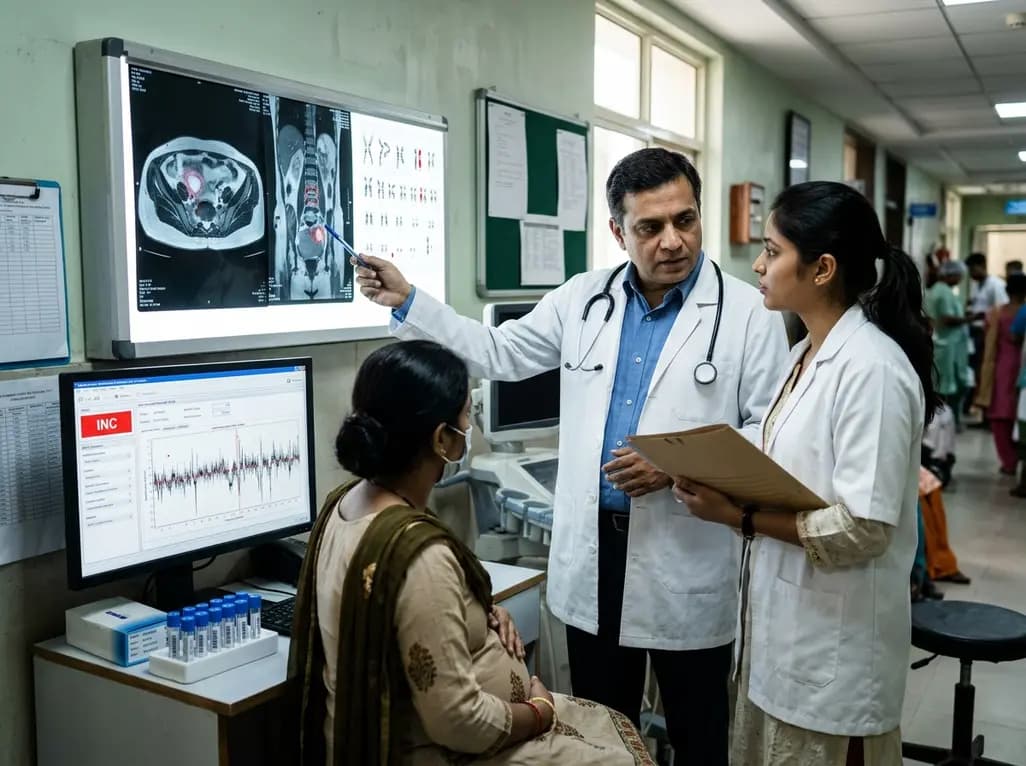
Occult maternal malignancy accounts for 3.82% of persistent unreportable NIPT results with genomic noise. Multiple chromosomal aberrations, notably on chromosome 18, warrant thorough oncological evaluation and whole-body MRI to ensure timely maternal diagnosis while preserving fetal care.
Today

This article reviews the forensic and clinical complexities of acute myocarditis arising on left ventricular hypertrophy in children, highlighting early diagnostic red flags and multidisciplinary postmortem autopsy protocols.
Today

This comparative study evaluates posterior labral tears with and without glenohumeral instability, highlighting distinct demographic patterns, MRI underestimation in stable shoulders, and successful arthroscopic repair outcomes.
Yesterday

A clinical study demonstrates that early intervention with tocilizumab, either as monotherapy or bridged with corticosteroids, achieves significant proptosis reduction and resolves active inflammation in treatment-naive thyroid eye disease.
Yesterday
