.webp&w=384&q=75)

Loading, please wait...
Loading, please wait...

Currently, the global health landscape is evolving as Respiratory Syncytial Virus (RSV) emerges as a critical pathogen for the aging population. Indeed, recent evidence highlights that RSV vaccination older adults is a vital component of modern geriatric care. Moreover, experts project significant RSV-related mortality among the elderly in India and Southeast Asia. However, current surveillance systems often fail to capture the true magnitude of this respiratory threat. Consequently, many cases remain underdiagnosed in primary care settings.
Furthermore, heterogeneity in adult immunization policies remains a significant barrier to effective disease control. Therefore, experts recently assessed surveillance and vaccination strategies across multiple regions. Specifically, they identified major gaps such as fragmented monitoring and limited recommendations for the elderly. As a result, there is an urgent need for a strategic roadmap to advance life-course immunization. In fact, fragmented policies often lead to inequitable healthcare outcomes.
To combat this rising threat, medical societies suggest a multi-pronged approach. Initially, healthcare systems must strengthen diagnostic infrastructure for accurate disease tracking. Furthermore, clinicians should prioritize RSV vaccination older adults particularly for those with chronic heart or lung conditions. In addition, professional training for healthcare providers is essential to improve vaccine awareness and uptake. Moreover, clear communication strategies can help address vaccine hesitancy.
Additionally, integrated immunization programs can streamline vaccine delivery and ensure equitable access. Similarly, healthcare providers play a pivotal role in this transition. Specifically, they must engage in shared clinical decision-making with patients. Consequently, aligning local practices with global evidence will foster more resilient healthcare systems. Finally, focusing on high-risk groups will yield the greatest public health impact.
Older adults often face immunosenescence and have underlying comorbidities like COPD, asthma, or heart failure. Consequently, RSV can trigger severe lower respiratory tract disease, leading to hospitalization and high mortality rates similar to influenza.
According to current 2026 clinical practice points, a single dose of the RSV vaccine provides substantial protection for at least two seasons. Therefore, health authorities do not currently recommend annual revaccination, though ongoing studies continue to monitor long-term immunity.
Disclaimer: This content is for informational and educational purposes only. It does not constitute medical advice or a professional relationship. Refer to the latest local and national guidelines for clinical practice.
References
1. D’Ambrosio F et al. Addressing RSV infection in older adults: implications for public health policy. Expert Rev Vaccines. 2026 Mar 11. doi: 10.1080/14760584.2026.2644348. PMID: 41811346.
2. Taylor & Francis. Potential public health impact of the adjuvanted RSVPreF3 vaccine in adults aged 60 years and older: results from a modeling study in India and Southeast Asia. 2025.
3. American College of Physicians (ACP). RSV Vaccines for Adults: New 2026 ACP Practice Points. March 2026.

Read summarized clinical updates, watch expert medical content, and earn CME certifications right from your smartphone.
Open your smartphone camera to scan and install.





A review of RSV burden in older adults and policy recommendations for strengthening surveillance and vaccination strategies to improve health outcomes....
7 months ago

Novel diimide and hydrazone scaffolds, particularly compound #C4, synergistically reactivate latent HIV-1 when combined with JQ1 or PKC activators. Demonstrating donor-matched proviral transcription ex vivo and non-canonical signaling, these findings advance shock and kill strategies toward reservoir eradication.
Today
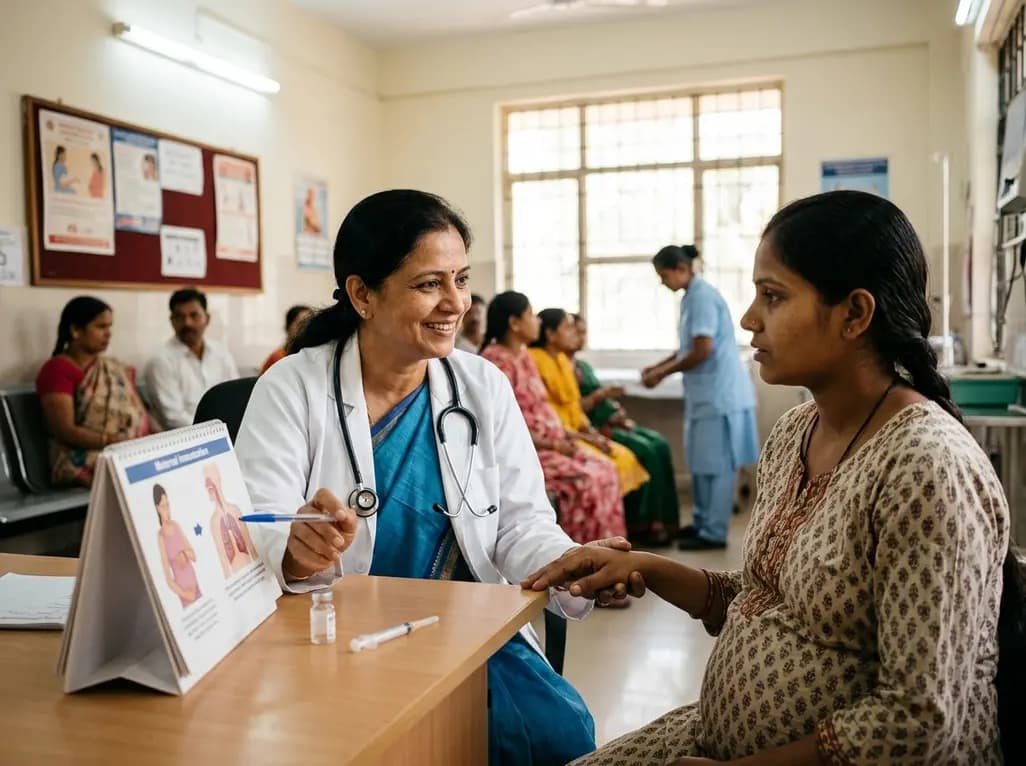
A cross-sectional study reveals that maternal RSV vaccination coverage reached only 43.7% in Argentina, with maternal vaccine knowledge being the sole independent predictor of uptake. Clinicians play a crucial role in eliminating informational and structural barriers to optimize infant health.
Today

Review how tailored exercise programs benefit frail older patients with heart failure. Explore pathophysiological mechanisms, individualized training prescriptions, and strategies to overcome adherence barriers in clinical practice.
Yesterday

This comparative study evaluates posterior labral tears with and without glenohumeral instability, highlighting distinct demographic patterns, MRI underestimation in stable shoulders, and successful arthroscopic repair outcomes.
Yesterday

A clinical study demonstrates that early intervention with tocilizumab, either as monotherapy or bridged with corticosteroids, achieves significant proptosis reduction and resolves active inflammation in treatment-naive thyroid eye disease.
Yesterday
