

Loading, please wait...
Loading, please wait...

Noninvasive clinical screening remains a paramount goal in modern respiratory oncology. Current clinical investigations rely on imaging and invasive tissue biopsies, which frequently pose logistical barriers and physical risks. Consequently, breathomics has emerged as a compelling diagnostic approach. Human breath contains numerous volatile metabolites and metabolic end-products that mirror systemic physiological dynamics. In particular, precise exhaled CO2 sensing provides vital diagnostic insights into cellular metabolism, alveolar ventilation, and respiratory pathophysiology. Traditional solid-state gas sensors, however, often demand elevated operating temperatures or suffer from baseline electrical instability. A recent breakthrough utilizes chiral metal-organic framework materials to achieve stable, room-temperature gas detection. This innovation opens realistic avenues for accurate, noninvasive pulmonary diagnostics.
Lung cancer frequently evades early detection because primary respiratory malignancies produce subtle, nonspecific symptoms during initial stages. Consequently, most patients present with locally advanced or metastatic disease, which significantly diminishes long-term curative rates. Computed tomography screening reduces mortality among high-risk individuals, yet high false-positive rates and cumulative radiation exposure limit routine population-wide utilization. Therefore, clinicians urgently need reliable, noninvasive screening modalities that can rapidly triage individuals at risk. Exhaled breath analysis addresses this unmet clinical demand by capturing volatile markers directly derived from pulmonary metabolic alterations. Aberrant cellular bioenergetics and disordered vascular perfusion in malignant pulmonary tissue alter capnodynamic profiles. However, standard clinical capnography lacks the resolution required for trace-level analytical differentiation. Metal-organic frameworks present extraordinary surface areas and customizable chemical porosity, making them ideal analytical candidates. Nevertheless, restricted ionic conduction through conventional framework matrices has previously hindered room-temperature chemiresistive operational feasibility.
To overcome ionic conductivity constraints, materials scientists engineered an innovative guest-ion assembly inside cyclodextrin-based metal-organic frameworks. Specifically, researchers encapsulated chiral amino acids, namely D-tryptophan and L-tryptophan, into gamma-cyclodextrin framework cavities. This targeted incorporation creates bioinspired, ordered anion channels that facilitate charge transport under ambient operational conditions. Notably, the experimental findings establish that host-guest chiral preference dictates sensing efficacy. The D-tryptophan configuration demonstrates superior stereochemical compatibility with the host framework compared to its L-enantiomer counterpart. Steric hindrance regulation allows D-tryptophan to arrange uniformly, establishing extensive long-range order across the entire crystal lattice. Consequently, this organized arrangement constructs robust hydrogen-bonding networks that drastically lower the energetic barrier for ion hopping. By optimizing ionic pathways, the chiral hybrid matrix delivers exceptional room-temperature chemiresistive transduction, solving a historical physical limitation of porous sensory devices.
Analytical precision and long-term durability represent crucial criteria for translating laboratory biosensors into practical clinical diagnostic tools. The engineered framework sensor demonstrates a remarkable response magnitude of 2.10 toward 1000 parts per million of carbon dioxide. Furthermore, the device achieves a practical limit of detection down to 10 parts per million. This analytical threshold easily detects subtle physiological variations that occur within human breath matrices. In addition to high sensitivity, the sensor exhibits robust selectivity against typical ambient atmospheric interferents, including volatile organic compounds and varying ambient humidity levels. More importantly, the system demonstrates unprecedented operational stability among documented room-temperature metal-organic framework sensors. The fabricated device retains approximately 90% of its initial baseline sensing response after continuous monitoring across 35 days. This extended shelf-life and ambient stability eliminate frequent recalibration requirements, offering significant advantages for busy clinical environments and ambulatory monitoring systems.
The ultimate diagnostic test for any biosensor platform involves real-world clinical validation using authentic patient biological specimens. Crucially, researchers successfully deployed the chiral sensor to analyze exhaled air collected from both healthy volunteers and diagnosed lung cancer patients. Malignant lung lesions modify local tissue respiration, accelerate anaerobic glycolysis, and trigger distinctive vascular remodeling that alters normal gas exchange kinetics. Consequently, the sensor reliably discerned distinct differences in exhaled carbon dioxide profiles between healthy cohorts and oncology patients. Because the device operates at ambient room temperature, it eliminates external heating elements, thereby minimizing power consumption and sample degradation. This diagnostic differentiation underscores the viability of utilizing high-precision capnodynamic sensors as complementary liquid or breath biopsy platforms. Although larger prospective cohort studies remain necessary, these preliminary findings substantiate the diagnostic utility of chiral framework sensors for point-of-care respiratory screening.
The burden of pulmonary diseases and thoracic malignancies remains exceptionally substantial across diverse socioeconomic segments in India. Chronic exposure to ambient air pollution, biomass fuels, and high smoking rates exacerbates late-stage lung cancer incidence nationwide. Unfortunately, secondary and tertiary diagnostic facilities equipped with advanced imaging suites and bronchoscopy units remain concentrated in urban centers. Therefore, affordable and decentralized screening technologies offer profound socioeconomic and clinical value. A compact, room-temperature breath analyzer eliminates bulky diagnostic machinery and costly technical consumables. Indian primary care clinics, rural community centers, and mobile diagnostic camps could deploy such battery-operated portable devices without complex infrastructure. Consequently, primary care physicians could perform rapid, noninvasive breath evaluations during routine consultations. When paired with structured clinical risk scores, this low-cost screening tool could expedite timely referrals to tertiary cancer centers, ultimately facilitating earlier therapeutic intervention.
The development of chirality-guided sensory frameworks marks a transformative milestone for noninvasive metabolic profiling and diagnostic medicine. Future translational efforts will likely integrate these nanoscale sensory elements into multiparametric electronic noses and digital microfluidic chips. Furthermore, combining real-time chemiresistive gas data with advanced machine learning algorithms will refine diagnostic specificity by correlating carbon dioxide kinetics with trace volatile organic biomarkers. Clinicians could also adapt such sensor platforms to monitor chronic obstructive pulmonary disease exacerbations, critical care ventilation status, and systemic metabolic disturbances. As manufacturing protocols standardize and clinical validation trials expand across heterogeneous patient demographics, handheld chemiresistive analyzers will transition from laboratory benches to clinical reality. Ultimately, these innovative diagnostic devices will empower medical professionals to detect severe respiratory illnesses earlier, safer, and far more efficiently.
Encapsulating D-tryptophan within framework cavities utilizes steric hindrance regulation to create long-range order. This chiral alignment constructs a stable, ordered hydrogen-bonding network throughout the framework pores. Consequently, the ordered matrix lowers activation energy for ion conduction and establishes efficient ion hopping pathways. These molecular modifications enable rapid, stable, and highly sensitive chemiresistive charge transfer at room temperature without requiring supplemental heating elements.
Conventional solid-state gas sensors typically require significant operating temperatures, which increases electrical power demands and necessitates bulky thermal shielding. In contrast, room-temperature chemiresistive sensors function reliably with minimal energy, enabling portable, handheld device fabrication. Furthermore, ambient operational temperatures preserve delicate volatile breath components, avoid baseline thermal drift, reduce equipment degradation, and improve patient safety during direct point-of-care breath assessments in clinical outpatient environments.
Exhaled breath sensing cannot currently replace definitive histopathology, tissue biopsy, or high-resolution thoracic imaging modalities. Instead, it serves as a noninvasive, complementary screening and triage instrument. By distinguishing subtle metabolic and gas-exchange alterations, portable breath sensors help identify individuals requiring urgent comprehensive diagnostic evaluation. This accessible approach significantly streamlines early clinical detection, particularly across resource-constrained outpatient environments where advanced radiology remains inaccessible.
Disclaimer: This content is for informational and educational purposes only and should not be taken as professional medical advice. Always consult a qualified healthcare provider for personal health concerns or diagnosis. Refer to the latest local and national guidelines for clinical practice.
References
Chang J et al. Chirality-Endowed Hydrogen-Bonding Network Enabling Long-Range Order and Enhanced Ionic Conductivity for Room-Temperature Chemiresistive CO2 Sensing. ACS Sens. 2026 Oct 30. doi: 10.1021/acssensors.6c02231. PMID: 42962161.
Dent AG, Sutedja TG, Zimmerman PV. Exhaled breath analysis for lung cancer. J Thorac Dis. 2013;5(Suppl 5):S540-S550.
Kundu A, Sikarwar S, Yadav BC. Metal-organic frameworks for breath-based sensors: a review. Microchimica Acta. 2026;193(8):480.

Read summarized clinical updates, watch expert medical content, and earn CME certifications right from your smartphone.
Open your smartphone camera to scan and install.





Explore how chirality-endowed metal-organic frameworks enable stable, room-temperature chemiresistive CO2 sensing, offering promising noninvasive diagnostic avenues for discriminating lung cancer patients from healthy controls.
Today

A 60-year-old woman presented with subacute cerebellar ataxia, dysautonomia, and hyperreflexia. Despite negative commercial antibody panels, tissue-based assays and phenotypic evolution to blepharospasm guided diagnostic resolution through specialized neuroimmunology testing.
Today

A prospective study reveals significant first-trimester trace-element alterations in pregnant women with epilepsy. Lower serum selenium independently predicted subsequent seizure recurrence despite prior remission, highlighting the vital clinical role of micronutrient profiling during antenatal care.
Today
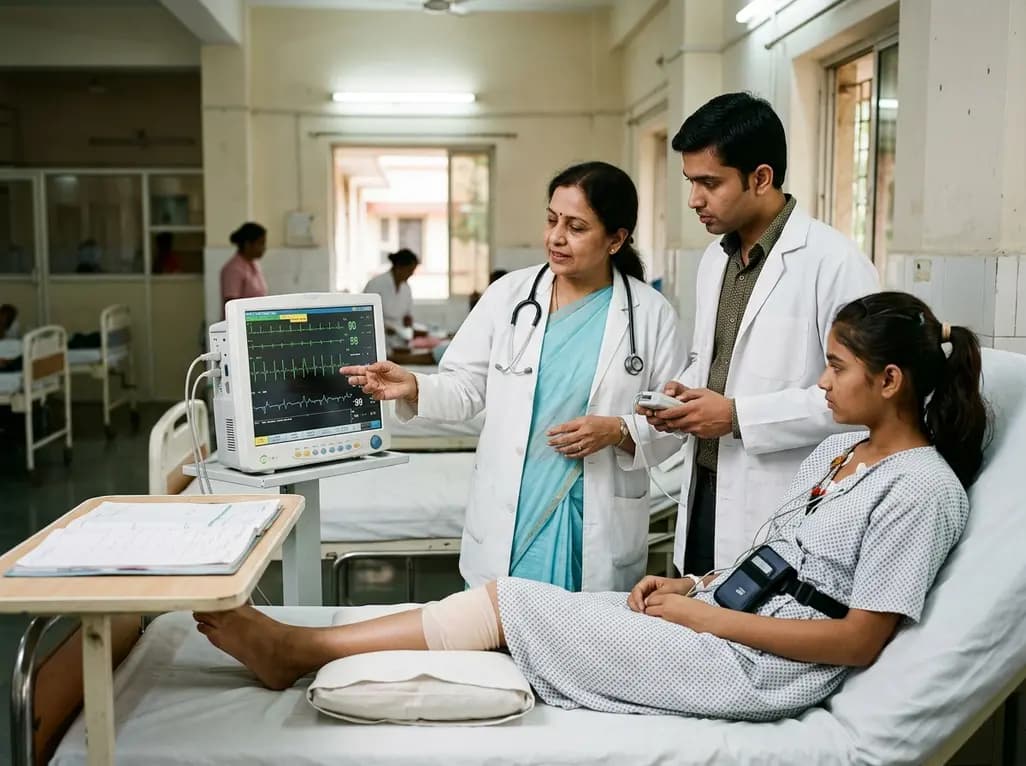
A 15-year-old patient presented with knee arthralgia and acute rheumatic fever, exhibiting complex arrhythmias including AV blocks and non-sustained ventricular tachycardia despite lacking severe valvulitis. This highlights the importance of extended Holter monitoring in pediatric rheumatic carditis.
Today
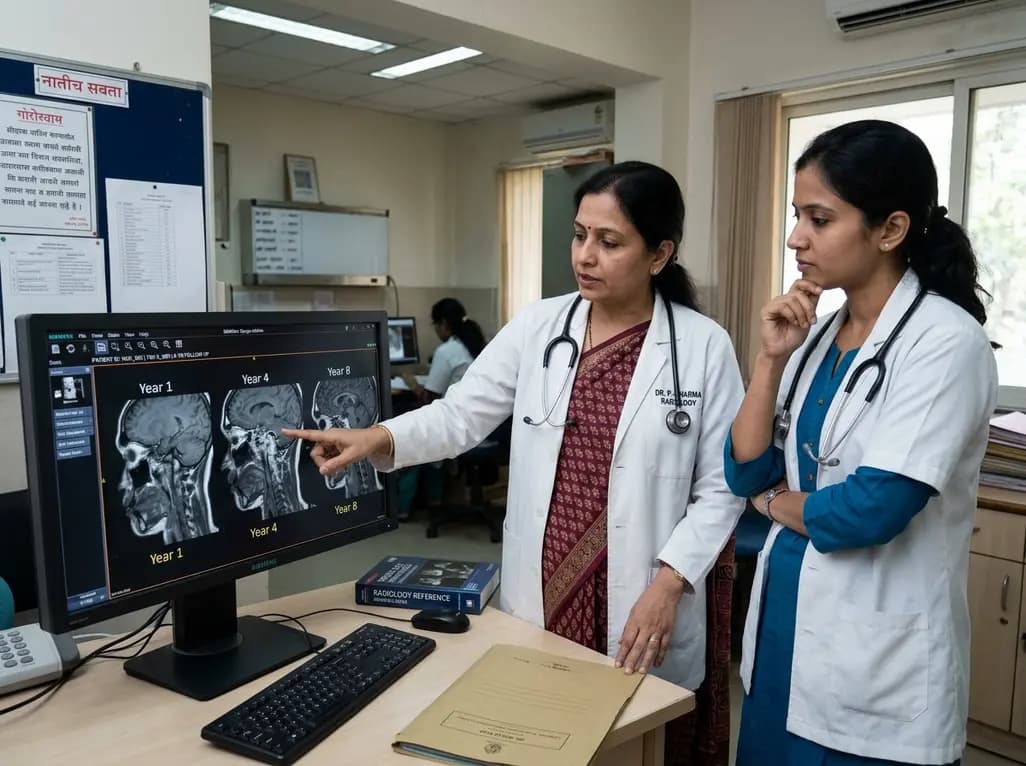
An eight-year longitudinal imaging follow-up reveals severe temporomandibular joint remodeling in nodulosis-arthropathy-osteolysis (NAO) syndrome. Despite extensive osseous destruction, the patient maintained functional jaw opening without TMJ interventions, highlighting the role of conservative management.
Today

Discover essential clinical insights into AGLP1-type amyloidosis, a rare localized complication of glucagon-like peptide-1 analog injections. Learn how histopathology and mass spectrometry differentiate benign iatrogenic amyloidomas from systemic disease, preventing misdiagnosis and unwarranted therapies.
Today
