

Loading, please wait...
Loading, please wait...
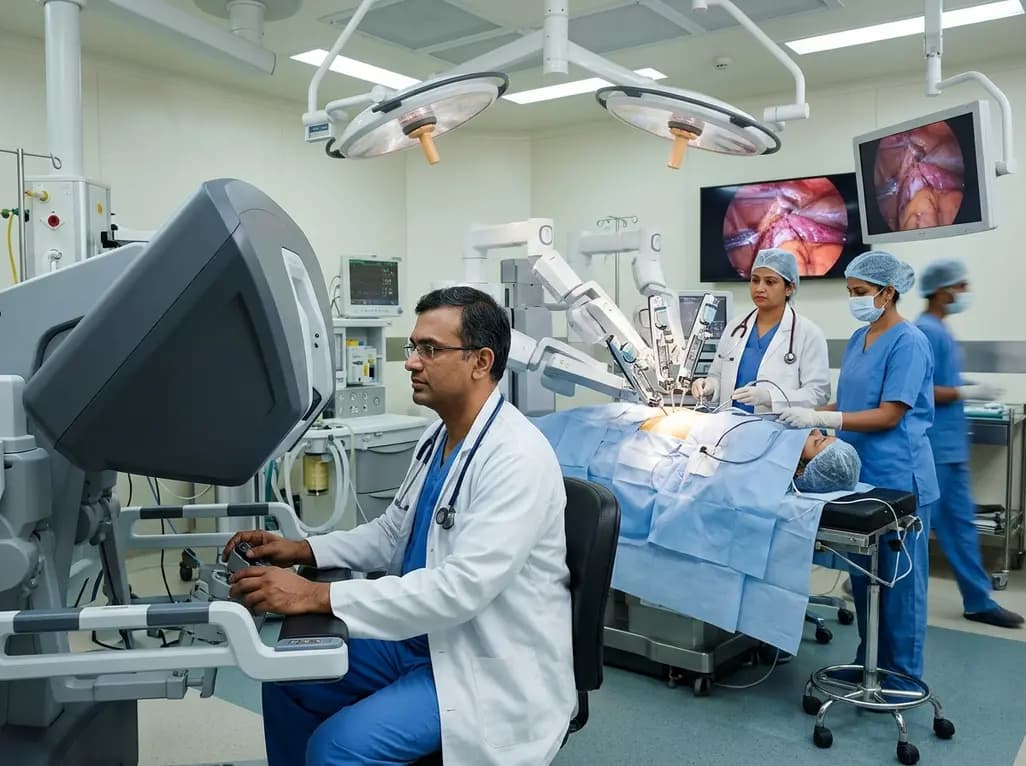
Modern surgical medicine in India is entering an era of unprecedented technological transformation. Healthcare providers increasingly deploy advanced robotic surgical systems to achieve superior intraoperative accuracy and optimize post-operative patient recovery. Furthermore, rising patient demand for minimally invasive interventions and continued capital investments are rapidly expanding robotic capabilities nationwide. Consequently, clinical specialists must examine the drivers behind this rapid adoption.
Market analysts forecast robust expansion for computer-assisted interventions across Indian medical institutions. Recent data indicates that India's market is set to grow at a compound annual growth rate of 13 percent through 2036. By 2026, the nation will likely account for nearly six percent of the entire Asia-Pacific device market. In addition, general surgery currently commands an overwhelming 94 percent share of these systems. This high concentration highlights the versatile utility of robotic arms in managing common abdominal pathologies. Moreover, escalating disease burdens and expanding health insurance coverage actively drive procedure volumes upward. Private healthcare networks consistently spearhead these capital acquisitions to gain competitive advantages in metropolitan hubs. However, public tertiary centers like the All India Institute of Medical Sciences are also embracing the technology to democratize access. Furthermore, state-level healthcare modernization initiatives support specialized device procurement. As a result, operating theaters are shifting away from traditional laparoscopy toward integrated robotic consoles. This consistent expansion underscores the growing institutional confidence in robotic outcomes across urban and semi-urban health centers. Consequently, healthcare leaders recognize that early technological adoption directly enhances clinical prestige and operational performance. Additionally, domestic hospitals now benchmark their surgical outcomes against international standards to attract medical value travelers.
Technological refinement represents a core catalyst accelerating the uptake of robotic surgical systems across Indian healthcare ecosystems. Advanced platforms have evolved far beyond basic remote manipulation devices. Modern multi-arm setups now integrate high-definition three-dimensional optics and articulated wrist mechanics that exceed human dexterity. For example, prominent health systems such as Max Super Speciality Hospital in New Delhi have recently adopted Intuitive's da Vinci 5 platform. Similarly, Nanavati Max Super Speciality Hospital in Mumbai has integrated this cutting-edge system into its surgical suites. These fifth-generation consoles feature sophisticated force-feedback sensors that provide vital tactile resistance data to operating surgeons. Thus, clinicians can calibrate tissue handling pressure with unprecedented precision during microscopic dissections. Furthermore, digital telemetry and intraoperative imaging overlays assist surgeons in navigating tortuous vasculatures safely. As a result, surgical teams experience markedly reduced physical fatigue during lengthy oncological or reconstructive interventions. In addition, intelligent software algorithms continuously filter out physiological tremors to stabilize micro-instruments. Consequently, surgeons achieve superior consistency across challenging pelvic and retroperitoneal dissections. These continuous technological upgrades firmly establish robotics as an indispensable modern clinical asset. Moreover, enhanced machine vision allows clinical specialists to preserve critical neurovascular bundles more effectively.
The therapeutic reach of robot-assisted surgery continues to widen across Indian surgical disciplines. Although general surgery currently dominates equipment usage, other specialties are expanding their procedural boundaries rapidly. In urology, for instance, robotic radical prostatectomy has become an established standard of care for localized prostate adenocarcinoma. Surgeons utilize wristed instruments to perform precise nerve-sparing dissections, which substantially improves continence and erectile preservation rates. Similarly, gynecologic surgeons increasingly employ robotic consoles to treat deep infiltrating endometriosis, complex fibroids, and early-stage endometrial malignancies. The magnified three-dimensional field enables meticulous tissue plane separation without damaging adjacent ureteral or bowel structures. Furthermore, surgical oncologists rely heavily on robotic platforms for thoracic resections and complex gastrointestinal tumors. In orthopedics, automated robotic arms assist surgeons in achieving millimeter-precise bone cuts during total knee arthroplasty. As a result, implant alignment improves significantly, promoting longer prosthesis longevity and faster ambulation for patients. In addition, pediatric surgeons are exploring miniaturized robotic ports for congenital anomaly repairs in confined anatomical cavities. Therefore, multi-specialty cross-utilization maximizes institutional investment and improves patient outcomes across diverse disease categories. Consequently, comprehensive surgical departments achieve higher operating theater productivity and reduced overall complication rates.
Despite impressive market growth projections, healthcare institutions face notable hurdles during robotic platform adoption. High capital acquisition costs and costly disposable instruments present financial barriers for smaller community hospitals. Furthermore, hospital administrators must justify substantial initial investments through consistent procedural volumes. In addition, insurance reimbursement policies historically lagged behind clinical innovation, creating out-of-pocket burdens for many patients. However, third-party payers in India increasingly recognize robotic procedures under comprehensive coverage plans. Operational workflow restructuring also presents significant institutional challenges during initial implementation phases. Operating room nursing teams and biomedical technicians require specialized training in robotic docking, sterile draping, and troubleshooting. Moreover, surgeons must navigate a steep learning curve before achieving operative speed equivalent to conventional laparoscopy. Therefore, structured institutional mentorship and credentialing pathways remain essential for clinical safety. Major hospital chains actively address these bottlenecks by establishing dedicated robotic centers of excellence. In fact, comprehensive simulation training and virtual dry-lab practice allow surgical residents to master complex movements safely. Consequently, structured integration protocols ensure seamless theater turnaround times and consistent surgical precision across operating departments. Additionally, multidisciplinary collaboration accelerates procedural familiarity among surgical fellows, scrub nurses, and circulating personnel.
The future trajectory of Indian robotic surgery points toward broader accessibility, technological convergence, and digital integration. As healthcare networks expand into tier-two cities, decentralized robotic programs will bridge regional surgical disparities. Furthermore, indigenous medtech manufacturers and competitive global vendors are developing cost-effective robotic solutions specifically tailored for resource-conscious markets. These economic alternatives will inevitably lower entry barriers for smaller healthcare institutions across the country. In addition, the integration of artificial intelligence and real-time computer vision promises to enhance intraoperative guidance. Machine learning algorithms will soon assist surgeons in identifying surgical planes and flagging aberrant anatomical structures intraoperatively. Similarly, tele-surgery and remote proctoring networks will allow expert surgeons in metropolitan centers to guide complex procedures in rural hospitals. Consequently, surgical training will become more accessible to junior residents regardless of their physical geographic location. However, practicing surgeons must prioritize continuous skills development to stay abreast of rapid technical advancements. Professional surgical societies must establish standardized competency benchmarks to maintain consistent clinical governance. Ultimately, robotic assistance represents an empowering surgical tool rather than a replacement for clinical judgment. Embracing these advanced technological capabilities will ensure Indian clinicians deliver optimal, evidence-based surgical care.
Q1: Why is general surgery driving the majority of robotic installations in India?
General surgery represents the largest volume of abdominal and pelvic procedures across Indian hospitals. Consequently, surgical teams utilize multi-quadrant robotic systems to perform complex cholecystectomies, colorectal resections, and bariatric repairs with minimal tissue trauma. Furthermore, high case volumes in general surgery allow healthcare institutions to achieve faster operational viability. Therefore, investing in versatile platforms helps surgical departments maximize device utilization while significantly reducing post-operative complications across high-demand routine procedures.
Q2: How do next-generation platforms like da Vinci 5 impact surgical precision?
Next-generation surgical platforms introduce advanced force-sensing technology, superior three-dimensional visualization, and ergonomic enhancements. As a result, operating surgeons experience enhanced tactile responsiveness and unprecedented precision during delicate tissue dissection. In addition, integrated digital analytics streamline intraoperative decision-making and support real-time adjustments. Therefore, these technological refinements substantially reduce inadvertent collateral injury, minimize intraoperative blood loss, and allow clinicians to manage complex anatomical variations with greater safety and efficiency.
Q3: What are the primary obstacles to universal robotic surgery adoption in India?
The principal barriers include elevated capital procurement costs, instrument maintenance expenses, and inadequate specialized training infrastructure. In addition, insurance reimbursement schemes across regional markets often provide uneven coverage for robot-assisted interventions. Consequently, smaller tertiary centers and public hospitals face challenges when justifying upfront capital expenditures. Nevertheless, structured fellowship programs, indigenous manufacturing efforts, and tiered pricing models are steadily mitigating these structural hurdles across the country.
Disclaimer: This content is for informational and educational purposes only. It does not constitute medical advice or replace professional judgment. Refer to the latest local and national guidelines for clinical practice.
References

Read summarized clinical updates, watch expert medical content, and earn CME certifications right from your smartphone.
Open your smartphone camera to scan and install.





India's healthcare sector is experiencing rapid technological advancement, driven by rising demand for minimally invasive procedures. Increased adoption across tertiary centers, improved training modules, and next-generation robotic platforms are transforming clinical precision and expanding patient access.
Today
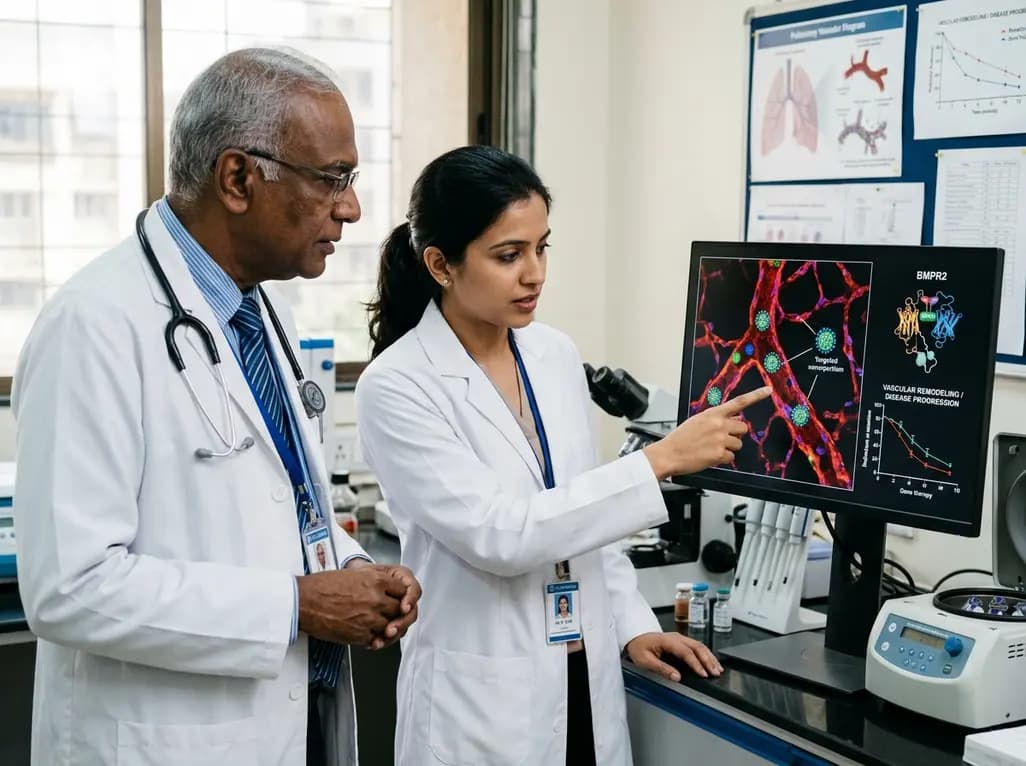
Pulmonary vascular diseases like PAH carry high mortality. While current drugs improve hemodynamics, they fail to halt remodeling. This review examines viral vector engineering and endothelial targeting strategies, highlighting BMPR2 restoration and translational challenges in achieving disease-modifying therapies.
Today

A cross-sectional study of 4,862 women highlights how metabolic phenotypes alter female reproductive impairment. Metabolically unhealthy overweight and obesity presented the greatest odds for infertility and impaired fecundity, underscoring the vital need for comprehensive cardiometabolic screening.
Today

A large network analysis of middle-aged and older adults reveals distinct sex-specific dependency pathways between lifestyle factors and cardiometabolic diseases. Physical activity, smoking, and alcohol exhibit divergent bridging roles in men and women, underscoring the need for tailored clinical prevention.
Today
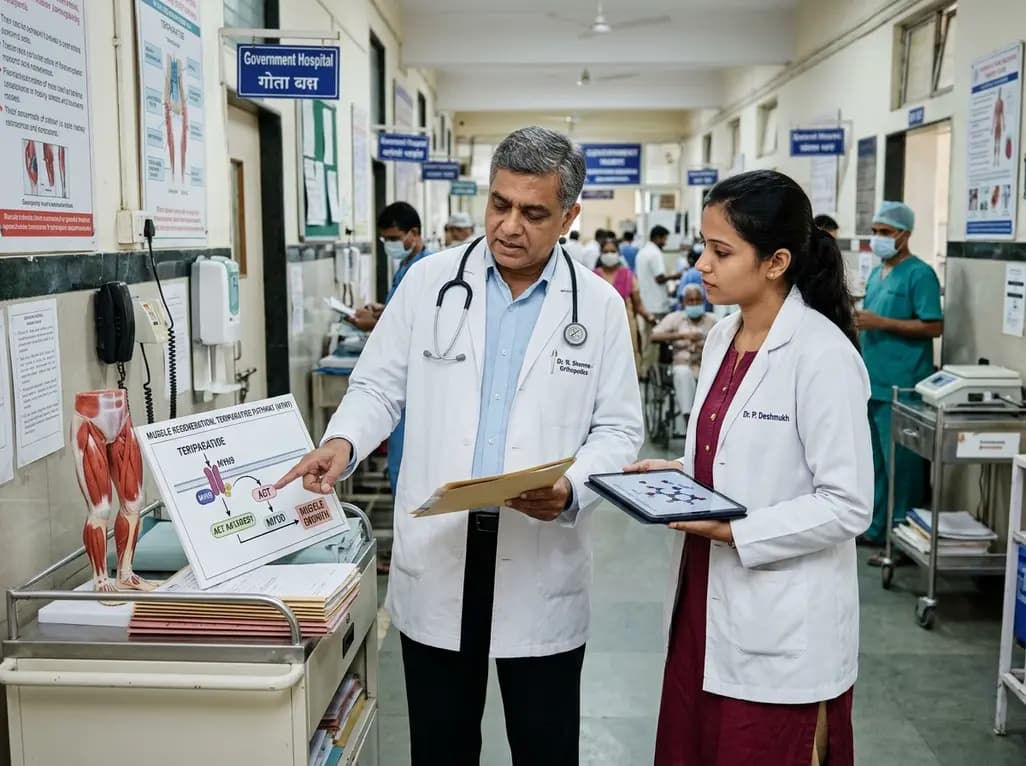
A breakthrough study reveals that teriparatide alleviates sarcopenia by binding MYH9 rather than PTH1R, activating an AKT/CREB1 axis to promote MYOD transcription and muscle regeneration. This discovery offers a promising biological rationale for repurposing bone anabolic therapies to combat age-related muscle loss.
Today

Researchers have engineered a resilient LC-PAM hydrogel that resolves the trade-off between toughness and elasticity. Incorporating lignin and cellulose nanoparticles alongside selenium, this biomaterial offers durable adhesion and antibacterial activity for complex infected and diabetic wound care.
Today
