

Loading, please wait...
Loading, please wait...
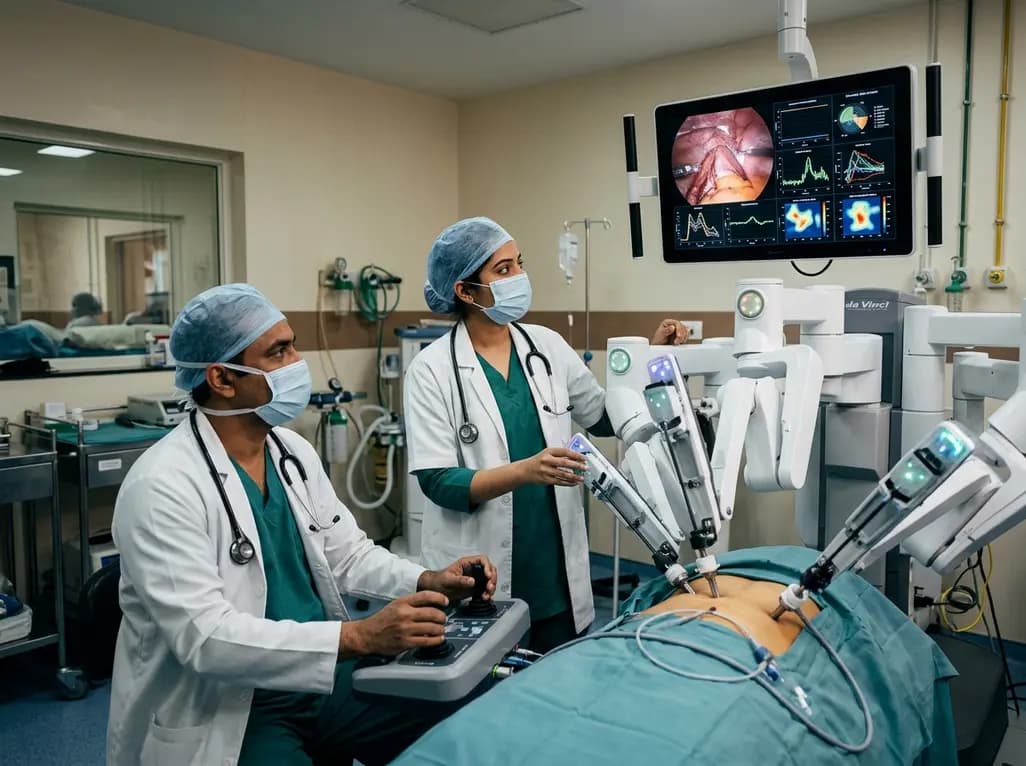
Objective evaluation of technical skill remains a vital necessity in surgical education and quality assurance. For decades, mentors evaluated trainees using subjective assessment scales, which frequently introduced observer bias. Today, robotic surgery kinematic data provides an unprecedented opportunity to capture granular, objective performance indicators directly from instrument motions. Modern robotic consoles record continuous spatial coordinates, velocities, accelerations, and grip angles during operative maneuvers. Despite this technological capability, early multimodal studies suggested that kinematic variables added marginal predictive value over preoperative clinical factors. Consequently, clinicians questioned whether recording instrument motion justified the computational overhead in operating rooms.
However, previous investigations evaluated instrument metrics across entire operations rather than isolating decisive operative phases. Whole-procedure aggregation often dilutes critical technical signals, because routine steps obscure complex maneuvers. Recent advances in surgical data science now enable automated step segmentation, permitting targeted evaluation of specific, high-stakes tasks. Therefore, researchers can isolate critical phases where technical skill directly influences clinical margins. By focusing directly on task-specific metrics, surgical educators can objectively benchmark surgical competency, refine operative efficiency, and guide credentialing benchmarks.
Earlier investigations into objective performance indicators evaluated continuous kinematic data across entire surgical cases. For instance, aggregating path lengths and idle times across an entire cholecystectomy mixes port insertion with delicate hepatobiliary dissection. Consequently, distinct nuances of expert handling disappear within cumulative procedural noise. When researchers aggregate kinematic variables across diverse steps, model performance suffers from excessive variance. Conversely, isolating task-level metrics concentrates analytical power on critical surgical junctures.
In robotic cholecystectomy, dissection within Calot’s triangle represents the decisive phase that dictates operative success and bile duct preservation. Analyzing instrument motion during this specific window reveals fine motor economy, tissue tension handling, and trajectory smoothness. Furthermore, task-level kinematic parameters differentiate purposeful anatomical exposure from hesitant tissue manipulation. Skilled surgeons demonstrate shorter total path lengths, controlled velocity profiles, and reduced uncoordinated movements during tissue traction. Therefore, restricting feature extraction to defined anatomical steps removes confounding operative interruptions. This targeted methodology allows machine learning algorithms to capture authentic technical proficiency without interference from unrelated procedural delays.
To test the true utility of task-specific indicators, investigators designed a rigorous multimodal study analyzing Calot’s triangle dissections. Specifically, the cohort comprised 234 robotic cholecystectomy procedures, contrasting 198 dissections performed by experienced attending surgeons against 36 performed by surgical trainees. The researchers systematically constructed three distinct feature configurations for each predictive target. First, they compiled a clinical-only feature set containing ten preoperative demographic and disease variables. Second, they engineered an objective performance indicator set comprising ten target-specific kinematic features extracted during Calot's dissection.
Third, they assembled a combined multimodal model merging both feature domains. To guarantee methodological rigor and prevent data leakage, the investigators implemented a nested five-seed by five-fold cross-validation scheme. Furthermore, they benchmarked five diverse machine learning architectures, including logistic regression, support vector machines, random forests, XGBoost, and LightGBM. The team compared discriminative accuracy using fold-level area under the receiver operating characteristic curve with paired Wilcoxon signed-rank tests. Additionally, they deployed SHapley Additive exPlanations analysis to quantify exact feature contributions.
The study revealed striking insights regarding the predictive capacity of task-isolated kinematic features. For predicting surgeon experience, objective performance indicators alone achieved an exceptional AUROC of 0.967, closely matching the combined multimodal model at 0.964. Crucially, kinematic features dramatically outperformed the clinical-only models, demonstrating that preoperative patient variables cannot substitute for technical execution. Similarly, in predicting case complexity, kinematic metrics alone delivered an AUROC of 0.791, mirroring the combined model while significantly exceeding clinical predictions alone.
When predicting composite adverse outcomes, the multimodal approach showed that kinematic indicators provide actionable technical insights without sacrificing predictive accuracy. Furthermore, SHapley Additive exPlanations demonstrated that instrument economy, motion smoothness, and angular velocity deviations served as dominant determinants in the classification models. Attending surgeons exhibited optimized economy of motion, characterized by fluid trajectory curves and minimized idle instrument drift. In contrast, trainees demonstrated increased path length and intermittent velocity spikes during complex tissue traction. Consequently, machine learning models leveraged these specific kinematic signatures to establish robust distinctions between skill levels.
As robotic surgical platforms expand across tertiary healthcare systems in India, establishing standardized training programs becomes essential. Currently, many Indian centers rely on case volumes and senior proctorship to verify surgical competency. However, procedural volume alone correlates imperfectly with genuine technical skill, and manual video review requires significant faculty time. Integrating automated objective performance indicators offers a scalable solution to objective credentialing in Indian surgical academia.
For example, surgical residents and fellows can receive automated, metric-driven debriefs immediately following robotic cholecystectomy or pelvic dissections. These real-time dashboards highlight excessive instrument acceleration, unnecessary movements, or erratic instrument paths before adverse events occur. Moreover, understanding task-level kinematics assists surgical teams in identifying complex anatomy dynamically during surgery. When kinematic parameters indicate rising case complexity, teams can proactively alter surgical strategy or seek senior assistance. Furthermore, standardized kinematic benchmarks can harmonize surgical training across high-volume robotic centers in metropolitan cities and evolving medical colleges.
Robotic surgery kinematic data captures fine instrument movements, including acceleration, velocity, path length, and spatial smoothness. Expert surgeons exhibit purposeful tissue traction, fluid motions, and minimal redundant maneuvers. Conversely, surgical trainees frequently display irregular trajectory curves, abrupt velocity spikes, and greater idle instrument time. Machine learning algorithms analyze these granular motion signatures during critical tasks, allowing precise automated classification of operative skill that surpasses subjective clinical grading.
Earlier investigations aggregated robotic kinematic parameters across entire operations, encompassing routine steps such as port insertion, camera cleaning, and closure. Consequently, this whole-procedure averaging diluted subtle differences in technical handling seen during intricate surgical maneuvers. When researchers isolate kinematics to safety-critical steps like Calot's triangle dissection, the kinematic data demonstrates superior discriminative power, accurately reflecting surgeon expertise and operative complexity.
Objective performance indicators provide automated, standardized feedback to trainees without requiring exhaustive faculty video reviews. Residency programs can use these quantitative metrics to track psychomotor skill progression, identify specific motor inefficiencies, and establish competency-based credentialing thresholds. Furthermore, real-time kinematic feedback helps surgical residents recognize unsafe handling patterns early in their robotic training, substantially improving procedural safety and learning efficiency.
Disclaimer: This content is for informational and educational purposes only and should not be used as a substitute for professional medical advice, diagnosis, or treatment. Always seek the advice of your physician or other qualified healthcare provider with any questions you may have regarding a medical condition or surgical intervention. Refer to the latest local and national guidelines for clinical practice.
References

Read summarized clinical updates, watch expert medical content, and earn CME certifications right from your smartphone.
Open your smartphone camera to scan and install.





Task-level robotic surgery kinematic data enhances predictive modeling in robotic cholecystectomy, outperforming preoperative clinical variables to accurately determine surgeon skill, case complexity, and intraoperative efficiency.
Today
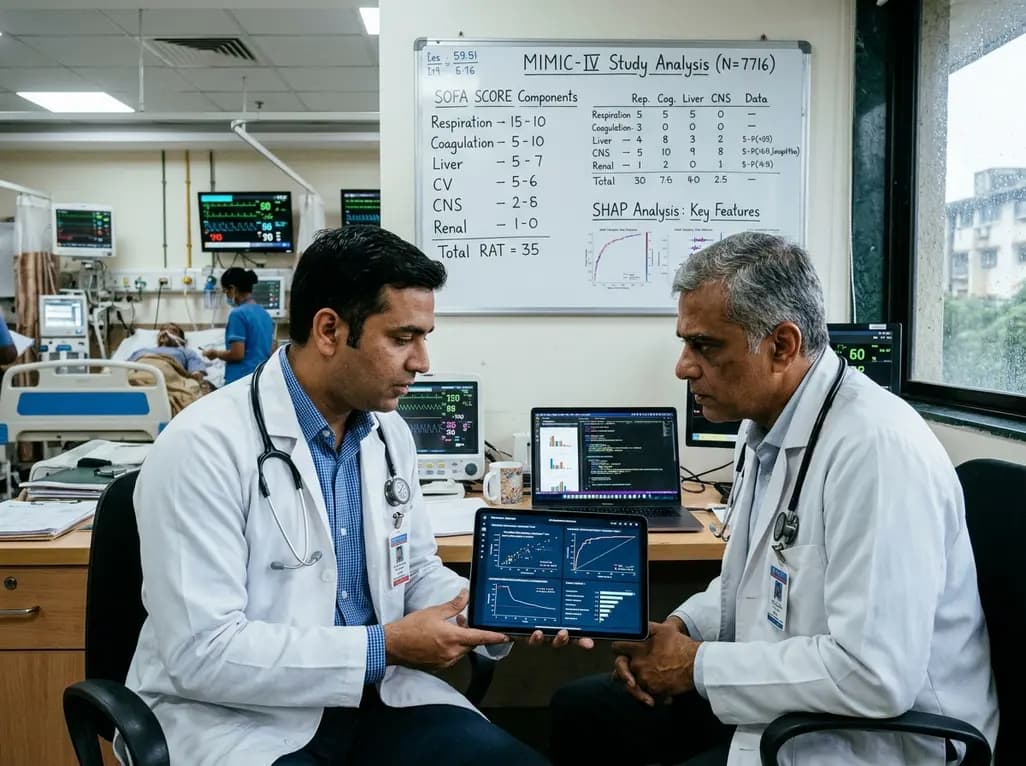
A retrospective cohort study of 7,716 ICU patients from the MIMIC-IV database demonstrates that Gradient Boosting Decision Trees significantly outperform traditional SOFA scores in predicting in-hospital mortality among patients with sepsis and diabetes, with SHAP analysis providing clinical interpretability.
Today
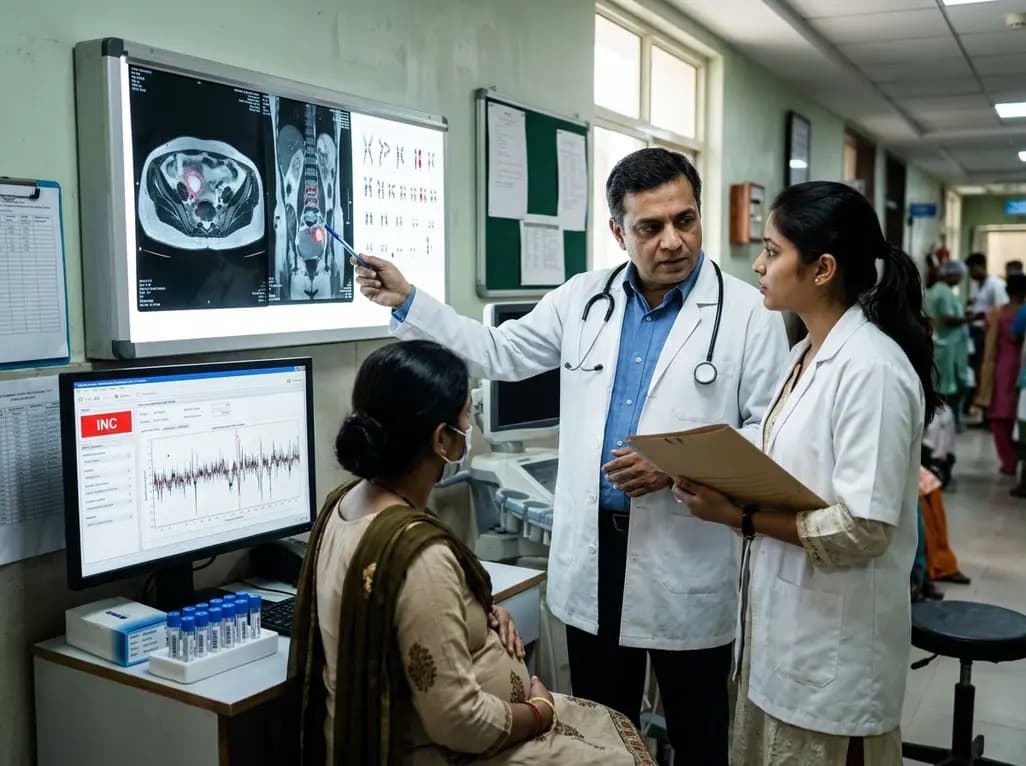
Occult maternal malignancy accounts for 3.82% of persistent unreportable NIPT results with genomic noise. Multiple chromosomal aberrations, notably on chromosome 18, warrant thorough oncological evaluation and whole-body MRI to ensure timely maternal diagnosis while preserving fetal care.
Today

This article reviews the forensic and clinical complexities of acute myocarditis arising on left ventricular hypertrophy in children, highlighting early diagnostic red flags and multidisciplinary postmortem autopsy protocols.
Today
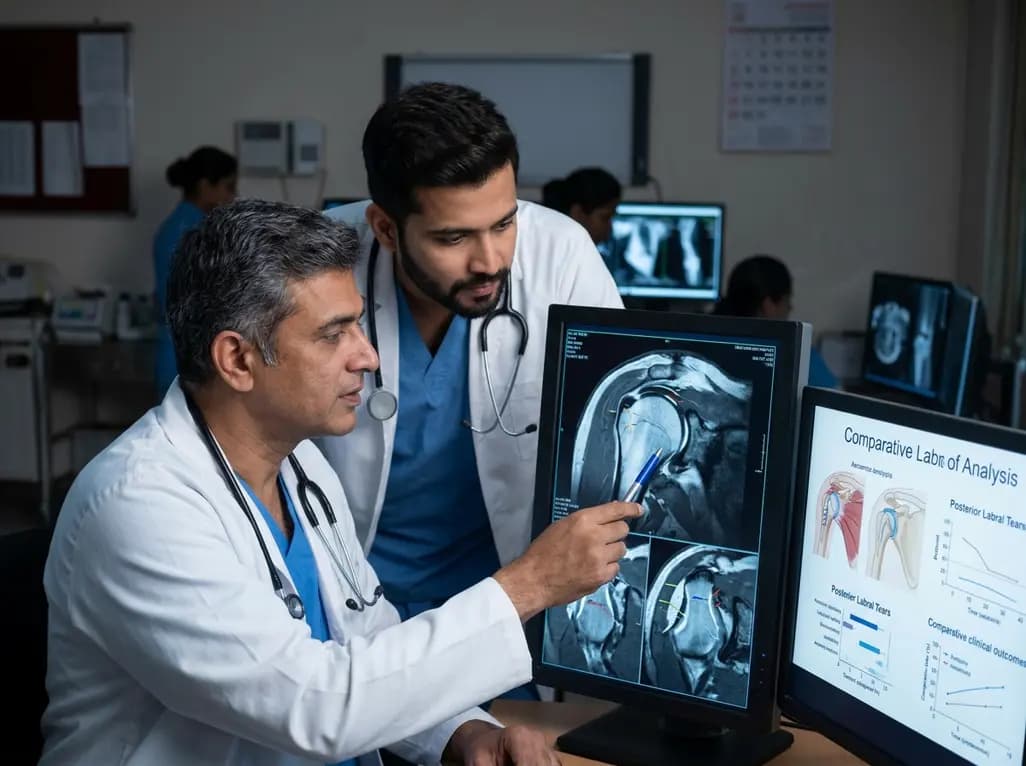
This comparative study evaluates posterior labral tears with and without glenohumeral instability, highlighting distinct demographic patterns, MRI underestimation in stable shoulders, and successful arthroscopic repair outcomes.
Yesterday

A clinical study demonstrates that early intervention with tocilizumab, either as monotherapy or bridged with corticosteroids, achieves significant proptosis reduction and resolves active inflammation in treatment-naive thyroid eye disease.
Yesterday
